• ABOUT
  • BIRDING 2018
  • Birding 2019
  • BLOG POSTS
  • Butterflies 2018
  • Resources

earthstar

~ a celebration of nature

earthstar

Category Archives: nature

More feathered friends from Forest Farm

19 Friday Feb 2016

Posted by sconzani in birds, nature, nature photography

≈ 6 Comments

Tags

birding, birds, birdwatching, blackbird, Blue tit, British birds, bullfinch, chaffinch, dunnock, Forest Farm Nature Reserve, little grebe, long-tailed tit, nuthatch, robin, wren

Many birders ignore what they consider the ordinary birds, the backyard birds, in favour of the rare and unusual. To me, that’s a bit like only being interested in famous movie stars and ignoring all the supporting actors, the bit players, the extras. I adore all birds but I am particularly charmed by the ordinary birds – every day they make me laugh and smile, their gorgeous colours and intricate plumage delight my eye, their melodies are better than any man-made music. So, for me, yesterday was another magical day with these beautiful extra-ordinary birds at Forest Farm Nature Reserve.
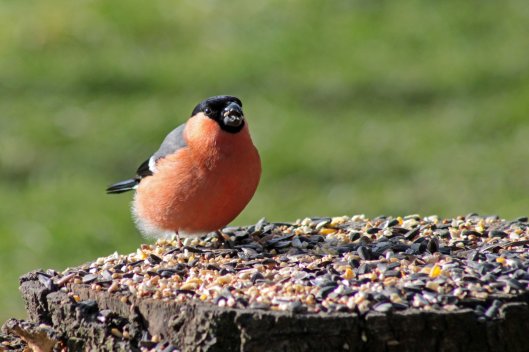
160219 (1)

a male bullfinch, such a handsome chap

160219 (2)

a little wren foraging in the undergrowth
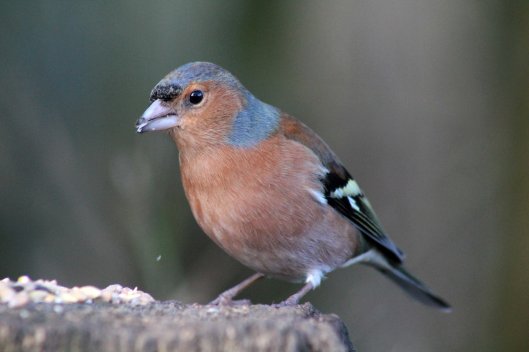
160219 (3)

another handsome fellow, a male chaffinch
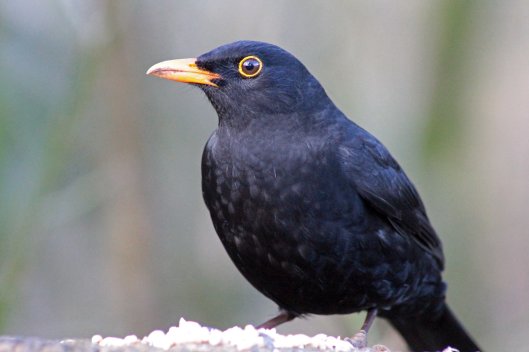
160219 (4)

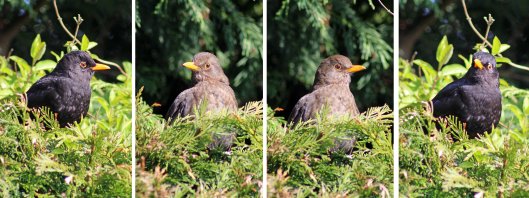
Mr Blackbird keeping an eye on me

160219 (5)

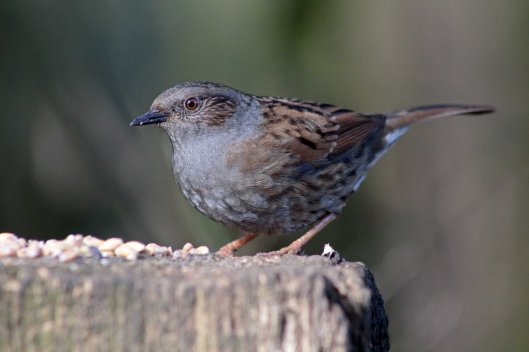
a dunnock – such a darling!

160219 (6)

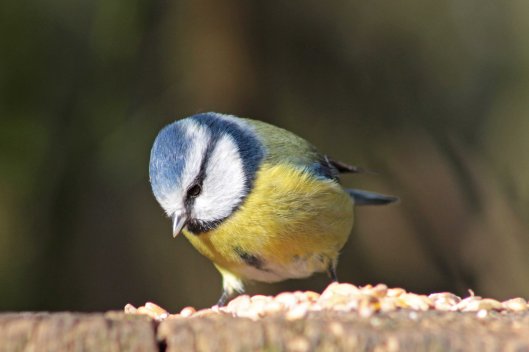
one of the cutest of them all, a blue tit
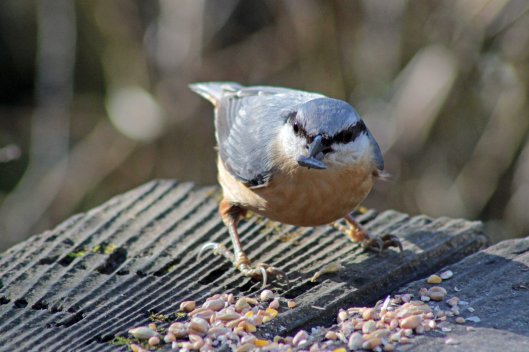
160219 (7)

Mr Greedy, the nuthatch

160219 (8)

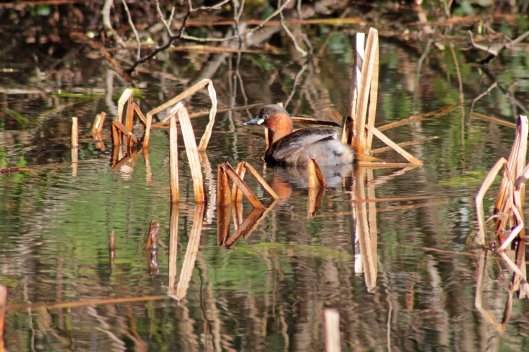
a Little grebe is well camouflaged amongst the reeds

160219 (9)

another cutie pie, a long-tailed tit

160219 (10)

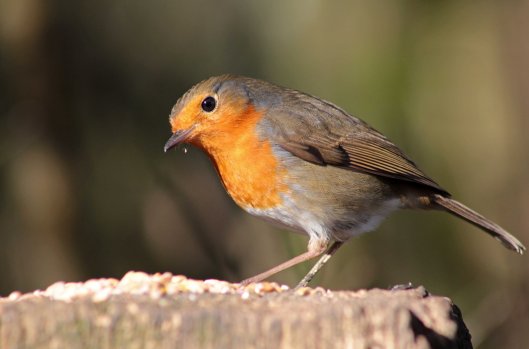
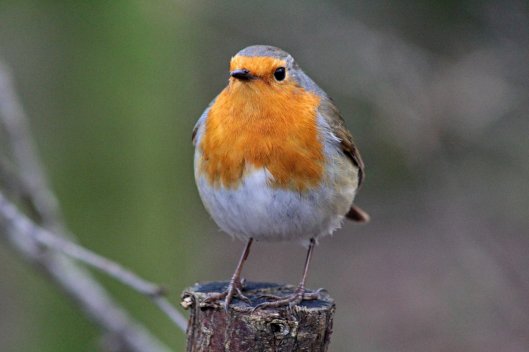
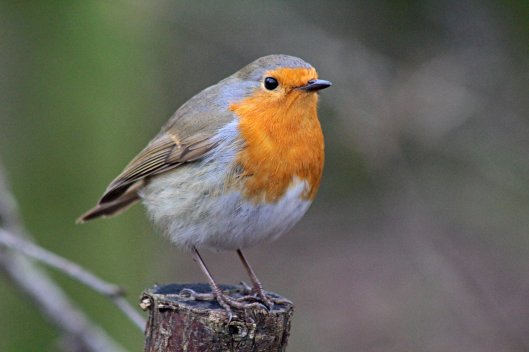
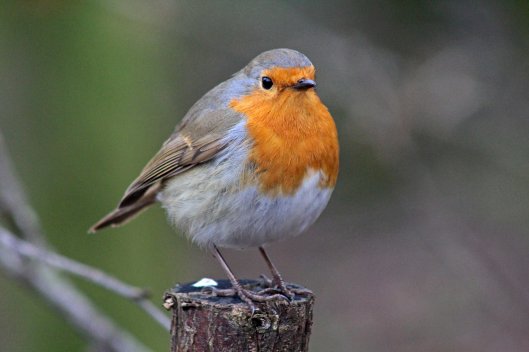
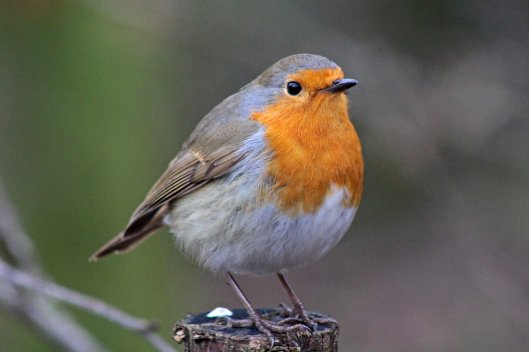
no day’s birding would be complete without a robin or three

Like Loading...

The Grey Heron

18 Thursday Feb 2016

Posted by sconzani in birds, nature, nature photography

≈ 6 Comments

Tags

Ardea cinerea, birding, birds, birdwatching, British birds, Grey heron

160218 grey heron (1)

The Grey Heron (Ardea cinerea) is the most widespread large predatory bird in Britain and it’s flourishing, with an estimated 12205 occupied nests in 2010. Herons nest communally, usually in tall mature trees, and some heronries are known to have been in continuous use for hundreds of years. The largest in Britain is in a private wood on the north side of Budworth Mere, in Cheshire, though I saw very few heron during my frequent walks along the southern shores of that lovely lake last winter.

160218 grey heron flying

This is a bird the Brits used to eat – from the early medieval period right through to the nineteenth century it was an important and relatively expensive table item. Historically, the heron was a favourite victim of falconry and, so that the wealthy could enjoy their sport, its protection was enshrined in law (being found guilty of a second offence could result in the loss of the right hand, a third in death!). Once falconry lost its popularity, the heron lost its protection and, in fact, now the bird often gets persecuted by fishermen who accuse it of taking ‘their’ fish. Personally, I think it’s the heron’s fish.

160218 grey heron (2)

Like Loading...

Pulling itself up by the bootstraps

17 Wednesday Feb 2016

Posted by sconzani in fungi, nature, nature photography

≈ 2 Comments

Tags

Armillaria mellea, bootlace fungus, bootstrap fungus, fungus, honey fungus, rhizomorphs

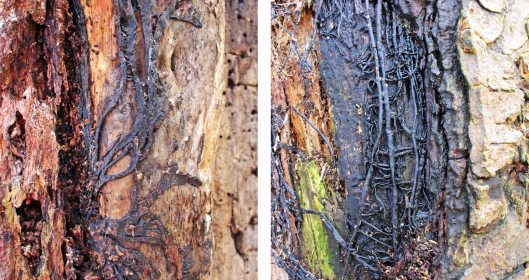
I had never seen these ‘bootstraps’ or ‘bootlaces’ until my friend Mark pointed them out to me on a recent fungi foray. They are what remains of an infestation of Honey fungus (Armillaria mellea) which may sound sweet but, believe me, is anything but. Honey actually refers to its colour, not its habits, as this fungus is a parasite and a killer.

160216 Armillaria mellea (Honey fungus) bootlaces (rhizomorphs)

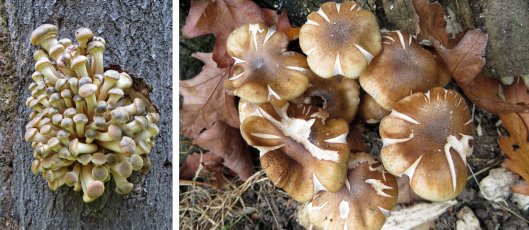
It lives on live wood and sends forth these extensive rhizomorphs, root-like filaments, between the affected tree’s inner core and its bark. When fresh, the bootstraps are a cream colour but they blacken over time. They cause the tree to rot and die so by the time the Honey fungus mushroom-like fruiting bodies emerge through holes in the bark, the tree is a goner.

160216 Armillaria mellea Honey fungus

This fungus will attack almost any type of tree from conifer to broad-leaf, softwood and hardwood. It can cause enormous damage to forests and woodlands because those rhizomorphs have been recorded up to nine metres long and they can extend through soil from one tree to the next, invading and killing as they spread.

Like Loading...

Recording the biology around us

16 Tuesday Feb 2016

Posted by sconzani in nature

≈ 8 Comments

Tags

biological recording, biological recording centre, citizen scientist, SEWBReC

Yesterday I went on a free training course, ‘An introduction to biological recording’, run by the friendly and extremely knowledgeable folk at SEWBReC, the South East Wales Biodiversity Records Centre. The course was intended to introduce the participants to:

The basics of biological recording: what we need to record and why; and
How to turn wildlife sightings into biological records which will be used to protect, conserve and enhance the local environment.

I’m sold on the idea! I had already signed on to their system to record a couple of unusual things I had seen but, of course, we shouldn’t just record the unusual, we should record everything – or, at least, as much as we possibly can of what we can positively identify.

160216 SEWBReC course

Searching for specimens to practise recording

As course instructor and SEWBReC manager Adam Rowe explained, we won’t know if something previously thought of as plentiful is in danger unless we record it and thereby, over time, notice a decline in its numbers. He gave as an example the American Passenger pigeon which once numbered between 3 and 5 billion – yes, billion! – but became extinct upon the death of the last surviving bird, ‘Martha’, in 1914.

There are biological recording centres in most countries around the world these days so, if you enjoy the natural world around you, please consider doing your bit as a citizen scientist.

Like Loading...

Conversation with robins: 3

15 Monday Feb 2016

Posted by sconzani in birds, nature, nature photography

≈ 6 Comments

Tags

birding, birds, birdwatching, British birds, conversations with robins, robin

Forest Farm Nature Reserve, a few days ago

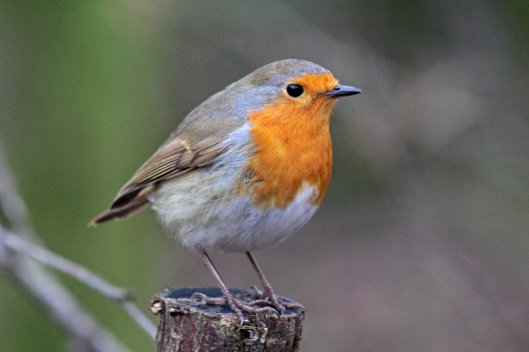
160215 robin conversation (1)

Me: ‘Hello, robin. Nice to see you again.’
Robin: ‘Hello, lady. It’s a lovely day, isn’t it?’

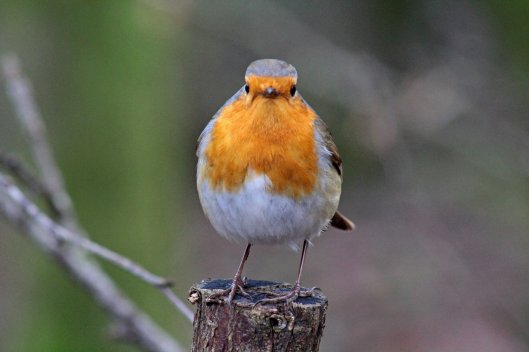
160215 robin conversation (2)

Me: ‘It sure is. And before you ask, I’ve run out of bird seed.’
Robin: ‘Whaaaaaaaaaaaaaaaaaaaaaaaaaaat???’

160215 robin conversation (3)

Me: ‘I’ve been walking for a couple of hours, and I’ve already given my seed to other birds. I’m sorry.’
Robin: ‘But it’s cold and I’m starving and I’m such a cute little robin.’

160215 robin conversation (4)

Me: ‘Yes, you are. And I’m sorry you missed out.’
Robin: ‘But I haven’t eaten anything all day.’

160215 robin conversation (5)

Me: ‘You pooped! Right in the middle of our chat, you pooped!’
Robin: ‘So? A bird’s gotta do what a bird’s gotta do!’

160215 robin conversation (6)

Me: ‘I guess you had had something to eat after all.’
Robin: ‘Oh … well … maybe something small … hours ago.’

Like Loading...

Snug as a bug

14 Sunday Feb 2016

Posted by sconzani in insects, nature, nature photography

≈ 2 Comments

Tags

carrion beetle, European carrion beetle, Phosphuga atrata, Silpha atrata

Well, these bugs were snug until I lifted up the bark they were snoozing under on a fallen tree at my local cemetery but, rest assured, I covered them back up again once I’d taken a few photos. These snug bugs are European carrion beetles (now Phosphuga atrata, originally Silpha atrata) and, yes, they do indeed feed on the decaying flesh of dead animals but are much more likely to be found chewing on snails, earthworms and insects.

160214 Carrion beetle Phosphuga atrata(1)

When disturbed, or snoozing, they retract their head so you can’t really see in my photos that the head is relatively long and perfectly adapted for reaching into snail shells. Apparently, they spray their snail prey with a digestive fluid before eating it – I guess that’s a bit like us marinating meat before we cook it, and the adult beetles also have a poisonous bite, but it doesn’t affect humans.

160214 Carrion beetle Phosphuga atrata(2)

Usually black but sometimes brown, the carrion beetle grows between 10 and 15mm long. It can be found throughout Britain and Europe but is seldom seen as it usually hunts at night and sleeps, as these were, under bark or in mossy areas during the day.

Like Loading...

Happy New Year of the Monkey!

13 Saturday Feb 2016

Posted by sconzani in animals, nature, nature photography

≈ Leave a comment

Tags

Baboon, Barbary ape, Barbary macaque, Black howler monkey, Brown capuchin monkey, Long tailed macaque, monkeys, Vervet monkey, Year of the monkey

As Asian people around the world are celebrating their New Year, the beginning of the year of the monkey, I thought I would also post a little celebration of monkeys. These are some of the beautiful creatures I have been privileged to see and photograph in the wild.

160212 argentina howlers

Black howler monkeys, at a sanctuary in Le Cumbre, Argentina

160212 cambodia long tailed macaque

In Cambodia, long-tailed macaques can be seen around the temples of Angkor Wat

160212 morocco barbary macaque

The Barbary macaque (also known as the Barbary ape) in the Atlas Mountains of Morocco

160212 peru Brown capuchin Manu

In the Peruvian Amazon, in the jungle near Manu, a brown capuchin monkey

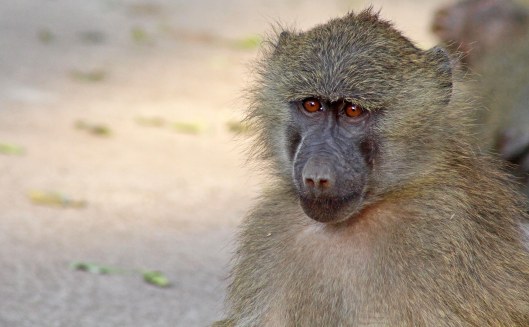
160212 tanzania baboons (1)

Baboons near the entrance to the Ngorongoro Crater, in Tanzania (above and below)

160212 tanzania baboons (3)

160212 tanzania vervet

A vervet monkey living on the Serengeti Plains in Tanzania

Like Loading...

I’m following a tree: month 1

12 Friday Feb 2016

Posted by sconzani in nature, nature photography, trees

≈ 5 Comments

Tags

Bute Park, Cardiff, Dawn redwood, I'm following a tree, Metasequoia glyptostroboides, tree following

dawn feb 2

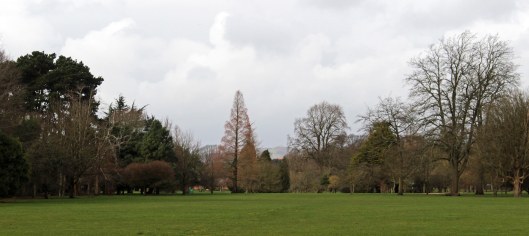
She is a statuesque beauty, tall for her 67 years, but with a very slight lean to one side – I blame the strong winds blasting inshore from the mighty Atlantic Ocean. Her name is Dawn Redwood (Metasequoia glyptostroboides, to be precise) and her kind was thought to be extinct, having only been identified in fossils until some time between 1941 and 1944 when she was rediscovered, growing in the town of Moudao, in Hubei, in south-western China. Long ago, her family and her cousins, the sequoias, could be found right across Europe, in Asia and in the Americas but all were killed off during the last ice age.

dawn feb 1

My Dawn came from the first shipment of international seeds to arrive in Britain in 1949. She grows in Bute Park, in the Welsh capital of Cardiff. She was a champion tree, the tallest of her kind in Britain, in 2005, but she has since been surpassed. Still, she has a regal air and a wonderful pyramidal shape.

dawn feb 4

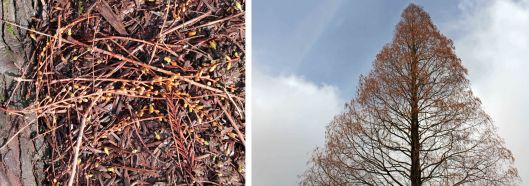
Flowers blown off during recent stormy weather

Dawn is deciduous, which is unusual for a conifer, but at the moment she is flowering, which has given her a rusty tinge – perhaps she’s blushing! In fact, she is monoecious, which means she has separate male and female flowers on the same tree. The male flowers hang in clusters at the end of her branches, while the female flowers are solitary. Over the next 12 months, I will be visiting Dawn often and will blog about her monthly.

Why not join the tree following community. You can find out more here.

dawn feb 3

Male flowers

Like Loading...

Eight interesting facts about blackbirds

11 Thursday Feb 2016

Posted by sconzani in birds, nature, nature photography

≈ 4 Comments

Tags

birding, birds, birdwatching, blackbird, British birds

160211 blackbird (1)

1 The oldest ringed blackbird to have been recovered in Britain was more than 20 years old.

2 Blackbirds most often sing after it has rained.

3 In the Roman Catholic religion, St Kevin of Glendalough is the patron saint of blackbirds. The legend goes that a blackbird laid an egg in Kevin’s hand when his arms were outstretched in prayer and he remained in that position until the baby bird hatched.

4 Albinism and leucism are common in blackbirds, and many birds have small white patches of feathers.

160211 blackbird (2)

5 The blackbird is the national bird of Sweden.

6 The blackbird is the most numerous breeding bird in the British Isles, with a population of around 6 million pairs.

7 The song Sing a song of sixpence (a pocket full of rye, four-and-twenty blackbirds, baked in a pie) was not a coded message used to recruit crew members for the notorious 18th-century pirate Blackbeard. That was an invented urban legend that many people now believe. The true meaning of the rhyme is much debated.

8 Vernacular names for the blackbird include colly (in Gloucestershire), merle (Ireland and Scotland), Zulu (in Somerset) and ouzel.

160211 blackbird (3)

Like Loading...

Sweet early Flower

10 Wednesday Feb 2016

Posted by sconzani in flowers, nature, spring, wildflowers

≈ 3 Comments

Tags

primrose, spring flowers

From Samuel Taylor Coleridge’s poem, ‘To a Primrose’

Thy smiles I note, sweet early Flower,
That peeping from thy rustic bower
The festive news to earth dost bring,
A fragrant messenger of Spring.

160210 primrose (1)

As Coleridge noted, the primrose (Primula vulgaris) is one of the first spring flowers, blooming as early as December when the weather is as mild as it has been so far this winter, and continuing on until May. The primrose was the favourite flower of British Prime Minster Benjamin Disraeli (1804-81) and so was used as the emblem for the Primrose League, an organisation founded a couple of years after Disraeli’s death and active until the 1990s, whose purpose was to promote the ideals of the Conservative Party throughout Britain.

160210 primrose (2)

In the language of flowers, the primrose has several somewhat conflicting meanings: it’s symbolic of timidity but also of fickleness, it can refer to young love but can also convey the message ‘I can’t live without you’. In Norse mythology, the primrose was sacred to Freya, the goddess of love, and in England there is a superstition that you must always bring 13 primrose flowers into the home – any more or any less means bad luck.

Like Loading...
← Older posts
Newer posts →

About me

sconzani

sconzani

I'm a writer and photographer; researcher and blogger; birder and nature lover; countryside rambler and city strider; volunteer and biodiversity recorder.

View Full Profile →

Follow earthstar on WordPress.com

Enter your email address to follow this blog and receive notifications of new posts by email.

Recent blog posts

  • Blood bees April 29, 2026
  • Nesting material April 28, 2026
  • Lifer: Box bug April 27, 2026
  • Peak Wild garlic April 26, 2026
  • First damsels of 2026 April 25, 2026

From the archives

COPYRIGHT

Unless otherwise acknowledged, the text and photographs on this blog are my own and are subject to international copyright. Nothing may be downloaded or copied without my permission.

Fellow Earth Stars!

  • Unknown's avatar
  • Unknown's avatar
  • Unknown's avatar
  • Unknown's avatar
  • Unknown's avatar
  • Unknown's avatar
  • Unknown's avatar
  • Unknown's avatar
  • Unknown's avatar
  • Unknown's avatar
  • Unknown's avatar
  • Unknown's avatar
  • Unknown's avatar
  • Unknown's avatar
  • Unknown's avatar
  • Unknown's avatar
  • Unknown's avatar
  • Unknown's avatar
  • Unknown's avatar
  • Unknown's avatar
  • Unknown's avatar
  • Unknown's avatar
  • Unknown's avatar
  • Unknown's avatar
  • Unknown's avatar
  • Unknown's avatar
  • Unknown's avatar
  • Unknown's avatar
  • Unknown's avatar
  • Unknown's avatar
  • Unknown's avatar
  • Unknown's avatar
  • Unknown's avatar
  • Unknown's avatar
  • Unknown's avatar
  • Unknown's avatar
  • Unknown's avatar
  • Unknown's avatar
  • Unknown's avatar
  • Unknown's avatar
  • Unknown's avatar
  • Unknown's avatar
  • Unknown's avatar
  • Unknown's avatar
  • Unknown's avatar
  • Unknown's avatar
  • Unknown's avatar
  • Unknown's avatar
  • Unknown's avatar
  • Unknown's avatar

Blog at WordPress.com.

Privacy & Cookies: This site uses cookies. By continuing to use this website, you agree to their use.
To find out more, including how to control cookies, see here: Cookie Policy
  • Subscribe Subscribed
    • earthstar
    • Join 642 other subscribers
    • Already have a WordPress.com account? Log in now.
    • earthstar
    • Subscribe Subscribed
    • Sign up
    • Log in
    • Report this content
    • View site in Reader
    • Manage subscriptions
    • Collapse this bar

Loading Comments...

You must be logged in to post a comment.

    %d