• ABOUT
  • BIRDING 2018
  • Birding 2019
  • BLOG POSTS
  • Butterflies 2018
  • Resources

earthstar

~ a celebration of nature

earthstar

Category Archives: nature

The sunburst lichen

30 Saturday Jan 2016

Posted by sconzani in lichen, nature, nature photography

≈ Leave a comment

Tags

lichen, lichen on trees, Xanthoria parietina

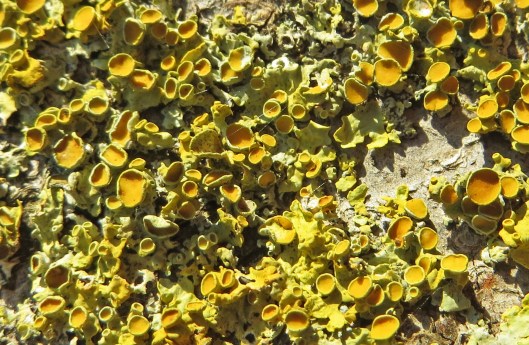
Though lichens are generally intolerant of pollution, this vibrant yellow and orange beauty is an exception and is even tolerant of heavy metal contamination. Its common names include common orange lichen, yellow scale, maritime sunburst lichen and shore lichen, from which you might correctly deduce that Xanthoria parietina is just as common on a rock at the seaside as it is on a tree in the city. It is also something of a globetrotter, being found throughout Britain and most of Europe, in North America, Africa and Asia, as well as in Australia.

xanthoria parietina (5)

Working from the belief that a plant could treat a disease it most looked like, medieval herbalists used Xanthoria parietina to treat jaundice because of its yellow colour, and scientific research has since shown that it has potent antiviral properties. And, given the intense yellow and orange colours of this lichen, it’s probably no surprise to learn that it has also been used as a dye. It is, for example, one of the traditional plant materials used to dye wool in the Scottish highlands and islands, though the colour it produces is brown, not yellow.
xanthoria parietina (1)

Like Loading...

Birding at Forest Farm

29 Friday Jan 2016

Posted by sconzani in birds, nature, nature photography

≈ 2 Comments

Tags

birding, birds, birdwatching, British birds, dunnock, Great tit, nuthatch, robin

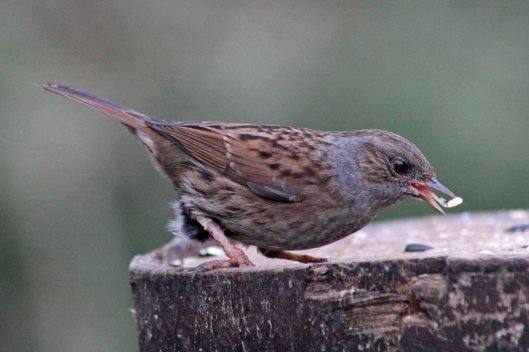
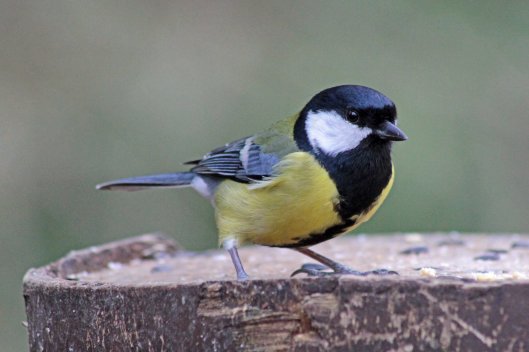
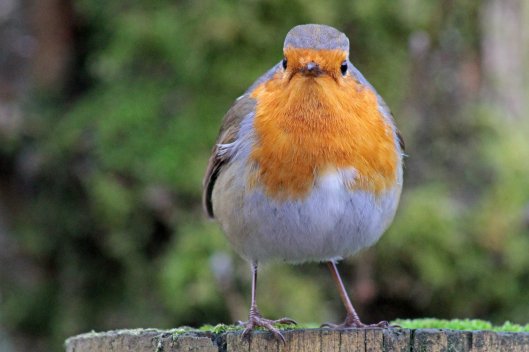
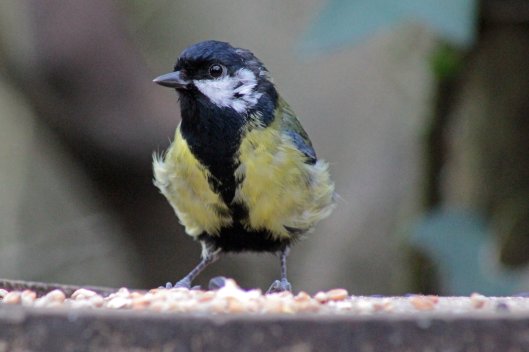
Forest Farm Nature Reserve, just north of Cardiff, is one of my favourite places, for a wander alongside the old Glamorgan Canal, for ferreting amongst the undergrowth for fungi, for enjoying the fresh air and an invigorating walk, and for photographing the local birds. With three bird hides and numerous informal feeding places scattered throughout the reserve, it’s almost impossible not to see birds. Mostly, they’re the familiar woodland and garden birds but Forest Farm is also well known for those extremely skilful anglers, the gorgeous kingfishers.

Here are some of the more common birds I photographed yesterday.

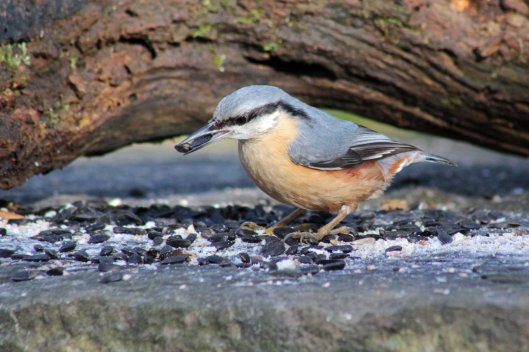
160131 1 nuthatch

Mr Greedy, the nuthatch

160131 2 dunnock

Mr Hungry, the dunnock

160131 3 great tit

Mr Handsome, the great tit

160131 4 robin

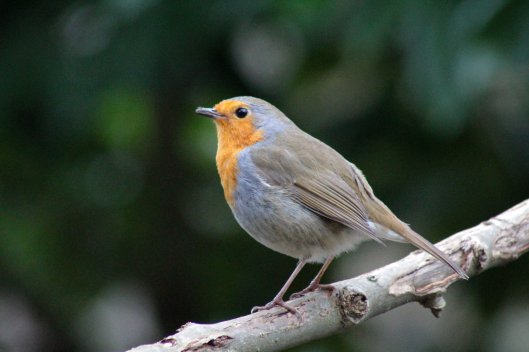
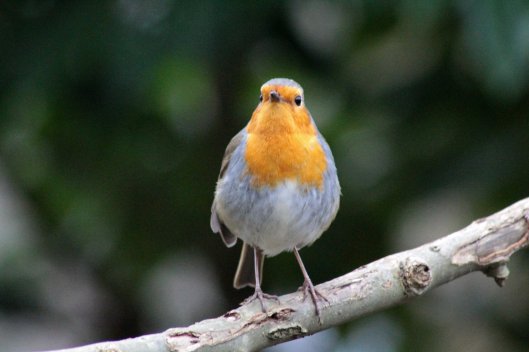
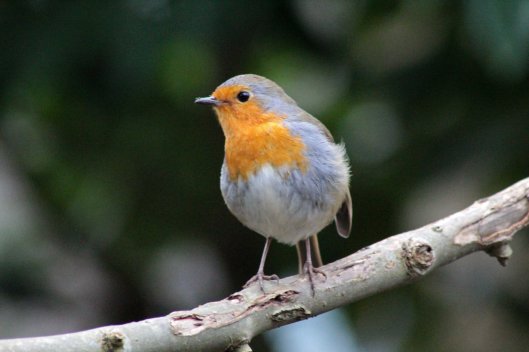
Mr Grumpy, the robin

160131 5 great tit

Mr Scruffy, the great tit

Like Loading...

Cramp balls

28 Thursday Jan 2016

Posted by sconzani in fungi, nature, nature photography

≈ 1 Comment

Tags

Cramp balls, Daldinia concentrica, fungi, fungus, King Alfred's Cakes, tinder

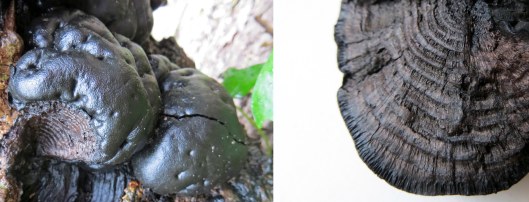
In my recent post about the fungi King Alfred’s Cakes, I mentioned that one of its other common names is cramp balls. It seems, in times past, folk believed that if you carried around these little fungi you wouldn’t suffer from night cramps. No one seems to know why they believed this!

160127 king alfreds cakes (1)

There is, however, another reason to carry cramp balls – they make good tinder. For this reason, cramp balls are also known as coal fungus and carbon balls, though they won’t light just by holding a match to them. The balls first need to be mature and very dry, and then it’s best to slice them in half and use something like a flint and steel to produce a spark. The cramp ball will smoulder, rather than produce a flame – for that you need something like straw or small twigs to start your fire.

160127 king alfreds cakes (2)

When you cut open the cramp ball, you will see concentric rings of grey and black inside (hence its scientific name Daldinia concentrica). These are similar to the growth rings inside a tree, though here they each represent a season of reproduction. Who would think that a small black lump of fungus could be so interesting?

Like Loading...

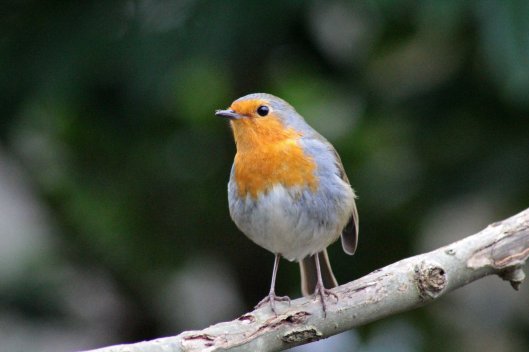
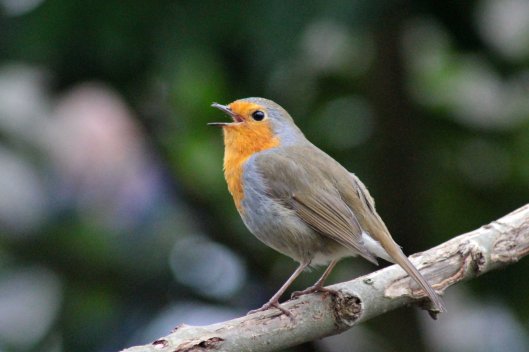
Conversations with robins: 2

27 Wednesday Jan 2016

Posted by sconzani in birds, nature, nature photography

≈ 2 Comments

Tags

birding, birds, birdwatching, British birds, robin

Roath Park Wild Gardens, after a drenching from Storm Jonas …

160128 robin (1)

Me: ‘Hello, robin. How are you doing today?’
Robin: ‘I’m a bit hungry, lady. Do you have food for me?’

160128 robin (2)

Me: ‘No, sorry, I haven’t been to the shop to buy more birdseed yet.’
Robin: ‘Well, that’s a bit slack, especially when you expect us robins to pose for your photos.’

160128 robin (3)

Me: ‘Yes, I know. I’m sorry. I could scuff up some leaves for you. There are probably plenty of worms under there.’
Robin: ‘That would be good. Your shoes are already covered in dirt so a little more wouldn’t hurt.’

160128 robin (4)

Me: ‘It is rather muddy on these paths after all the rain that came with Storm Jonas.’
Robin: ‘It wasn’t very nice for us robins with all that wind, either. But thank you for the leaf scuffing.’

160128 robin (5)

Me: ‘I’ll leave you to fly down and look for worms, then. See you again soon.’
Robin: ‘Tra la la la la.’

Like Loading...

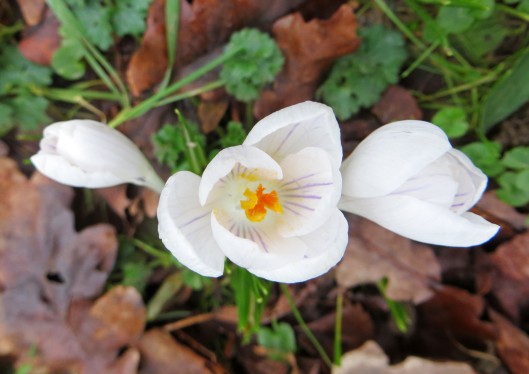
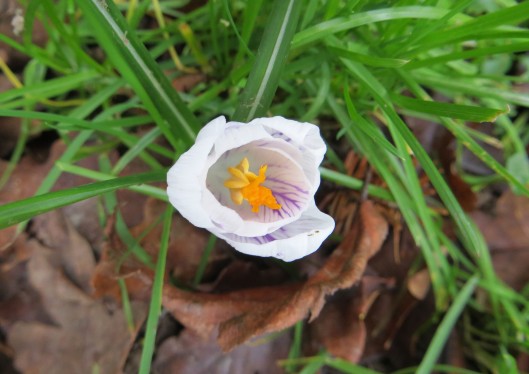
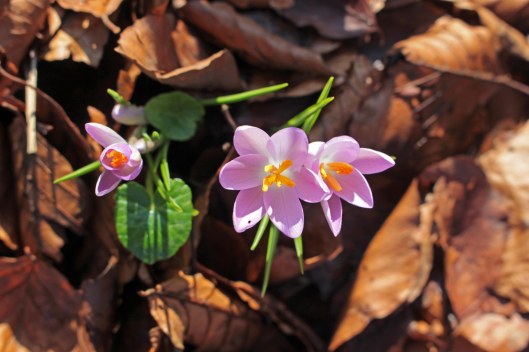
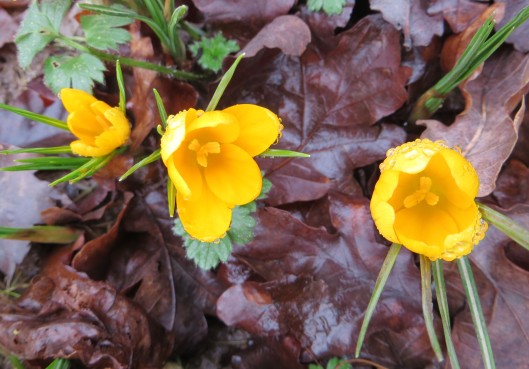
‘The Crocus’s Soliloquy’

26 Tuesday Jan 2016

Posted by sconzani in flowers, nature, nature photography, spring, wildflowers

≈ 4 Comments

Tags

crocus, spring flowers, wildflowers

160126 crocus (1)

‘Soon as the frost will get out of my bed,
From this cold dungeon to free me,
I will peer up with my little bright head;
And all will be joyful to see me.

Then from my heart will young petals diverge,
As rays of the sun from their focus;
I from the darkness of earth shall emerge
A happy and beautiful Crocus!’

From the poem ‘The Crocus’s Soliloquy’ by Miss H. F. Gould in The Poetry of Flowers and Flower of Poetry, ed. Frances Sargent Locke Osgood, J. B. Lippincott & Co, Philadelphia, 1863.

160126 crocus (2)160126 crocus (3)160126 crocus (4)160126 crocus (5)160126 crocus (6)160126 crocus (7)160126 crocus (8)

Like Loading...

Hawthorn Shield Bug

25 Monday Jan 2016

Posted by sconzani in insects, nature, nature photography

≈ 4 Comments

Tags

Hawthorn Shield Bug, minibeasts, shield bugs

Some might think the Hawthorn Shield Bug has a rather unfortunate scientific name, Acanthosoma haemorrhoidale, but it’s really quite descriptive: acantho is from the ancient Greek for thorn, soma means body, and haemorrhoida derives from the Greek for discharging blood or bleeding, so this bug has a thorn-like body with red patterning that looks like bleeding. The common name is also appropriate: it has a body shaped like the shields of knights of olden times, and the food of choice for its larvae is the hawthorn berry (though they will also eat the berries of rowan, cotoneaster and whitebeam).

160125 Hawthorn Shieldbug (3)

Growing up to 17mm (0.67in) long, the Hawthorn Shield Bug is the largest and most common of the five types of shield bug found in Britain, and is also found throughout Europe, in woodlands, parks and gardens. Its colouring means it is usually very well camouflaged and I only found these three bugs by chance today – my eye was attracted to their leaf and they were inside when I uncurled it. The adult bugs usually hibernate during the winter months but often emerge to snack on the leaves during milder weather. I curled them back up in their leaf after taking these photographs so they could continue their snooze.

160125 Hawthorn Shieldbug (2)160125 Hawthorn Shieldbug (1)


Like Loading...

Not one but three

24 Sunday Jan 2016

Posted by sconzani in birds, nature, nature photography

≈ 2 Comments

Tags

bird identification, birding, birds, birdwatching, British birds, Pochard

I saw my first male Pochard on Roath Park Lake three weeks ago and was charmed by his handsome colours and markings. During my frequent subsequent walks around the lake, I keep seeing him and always stop to say hello and, as he comes very close to the lake edge, to take more photos. As I only ever see him on his own each time, albeit in different places around the lake, it never occurred to me that there was more than one bird … until today, when I looked more closely at my photos. Can you see the differences?

160124 pochard males (1)

Each of these birds – it seems there have been at least three! – has different markings on its bill, and this patterning of dark and light pigmentation on the bill is the main way to distinguish individual ducks of many species when conducting field surveys and research. So, if ducks used ID cards, they wouldn’t need finger prints or retina scans, they’d need bill prints!

160124 pochard males (2)

Perhaps he’s thinking, ‘Well, yes, did you really think we all looked the same?’.

Like Loading...

King Alfred’s cakes

23 Saturday Jan 2016

Posted by sconzani in fungi, nature, nature photography

≈ 1 Comment

Tags

Daldinia concentrica, fungi, fungus, King Alfred's Cakes

Do you know the story? Alfred became king of the West Saxons on the death of his brother Aethelred in April 871, at a time when the Vikings had conquered most of what is now England. Alfred retained his kingdom of Wessex by negotiating a peace treaty with the Vikings but, in 878, their King Gudrum attacked unexpectedly, forcing Alfred and his loyal supporters to flee into the Somerset levels. There, Alfred was sheltered by the local people while he planned how to regain his kingdom. The story goes that he was asked by the woman he was staying with to keep an eye on the cakes (small loaves of bread) she was baking while she did some chores. Alfred’s mind wandered off to his rather more important worries and he allowed the cakes to burn, much to his hostess’s annoyance.

King Alfreds Cakes (2)

The immature fungi are a wonderful rich brown colour

Whether or not it’s true, it’s a wonderful story and a very apt common name for Daldinia concentrica, a fungus that, when mature, looks very like a small round burnt cake. You’ll find it growing most often on hardwood trees, in particular beech and ash, throughout Britain and in many other countries. One of its other common names is cramp balls, but that’s a story for another day.

King Alfreds Cakes (1)

Like Loading...

Lecanora the lichen

22 Friday Jan 2016

Posted by sconzani in lichen, nature, nature photography

≈ Leave a comment

Tags

Lecanora chlarotera, lichen on trees

I keep thinking I see letters of the alphabet in these photographs as if this lichen is trying to tell me something but I can’t quite make out the message!

160122 lecanora chlarotera (2)

Though I’m finding lichens quite difficult to identify, even with my newly acquired guide charts, I’m fairly sure this is Lecanora chlarotera, a very common and widespread British lichen. As it will tolerate moderate amounts of air pollution, it can frequently be seen on the twigs and trunks of young semi-urban tree plantings, of the sort you might see around a shopping centre. It is also found in sparsely planted woodlands, where it benefits from more light than a densely planted forest would provide.

160122 lecanora chlarotera (1)

The lichen’s base colour ranges from cream to pale grey, it varies in texture from smooth to what one website describes as ‘strongly warted … like lumpy porridge’, and its apothecia (the little saucer-shaped fruiting bodies) range in colour from pale beige to a rusty brown. As with most lichens, you have to look closely to see how pretty it is.

160122 lecanora chlarotera (3)

Like Loading...

Sleeping caterpillar

21 Thursday Jan 2016

Posted by sconzani in insects, nature, nature photography

≈ 2 Comments

Tags

caterpillar, cutworm, Large Yellow Underwing moth, moth

You never know what might be lurking under a piece of bark on a dead tree but I certainly didn’t expect this little guy, especially in the middle of winter. It’s the caterpillar of the Large Yellow Underwing moth (Noctua pronuba) and, as well as being one of Britain’s most common moths, it can also be found throughout Europe and the Middle East, in central Asia and in North America. This moth also migrates so often arrives in southern Britain in huge numbers.

160121 Large Yellow Underwing moth caterpillar

Though the moth is a harmless nectar-feeder, the caterpillar is a ‘cutworm’, a nasty critter that chews through the base of herbaceous plants, both in the garden and on the farm, causing the plants to die. Though I would have expected it to overwinter as a pupa, it seems these minibeasts usually overwinter in their final caterpillar stage and, in mild weather, even emerge to continue feeding. This little guy certainly had a cosy spot for himself under the tree bark … until I came along.

Big thanks to Steve Ogden at Wildlife Insight, who very kindly identified this caterpillar for me. Check out his most excellent website on British moths and butterflies, birds and things to see when watching the sea.

Like Loading...
← Older posts
Newer posts →

About me

sconzani

sconzani

I'm a writer and photographer; researcher and blogger; birder and nature lover; countryside rambler and city strider; volunteer and biodiversity recorder.

View Full Profile →

Follow earthstar on WordPress.com

Enter your email address to follow this blog and receive notifications of new posts by email.

Recent blog posts

  • Blood bees April 29, 2026
  • Nesting material April 28, 2026
  • Lifer: Box bug April 27, 2026
  • Peak Wild garlic April 26, 2026
  • First damsels of 2026 April 25, 2026

From the archives

COPYRIGHT

Unless otherwise acknowledged, the text and photographs on this blog are my own and are subject to international copyright. Nothing may be downloaded or copied without my permission.

Fellow Earth Stars!

  • Unknown's avatar
  • Unknown's avatar
  • Unknown's avatar
  • Unknown's avatar
  • Unknown's avatar
  • Unknown's avatar
  • Unknown's avatar
  • Unknown's avatar
  • Unknown's avatar
  • Unknown's avatar
  • Unknown's avatar
  • Unknown's avatar
  • Unknown's avatar
  • Unknown's avatar
  • Unknown's avatar
  • Unknown's avatar
  • Unknown's avatar
  • Unknown's avatar
  • Unknown's avatar
  • Unknown's avatar
  • Unknown's avatar
  • Unknown's avatar
  • Unknown's avatar
  • Unknown's avatar
  • Unknown's avatar
  • Unknown's avatar
  • Unknown's avatar
  • Unknown's avatar
  • Unknown's avatar
  • Unknown's avatar
  • Unknown's avatar
  • Unknown's avatar
  • Unknown's avatar
  • Unknown's avatar
  • Unknown's avatar
  • Unknown's avatar
  • Unknown's avatar
  • Unknown's avatar
  • Unknown's avatar
  • Unknown's avatar
  • Unknown's avatar
  • Unknown's avatar
  • Unknown's avatar
  • Unknown's avatar
  • Unknown's avatar
  • Unknown's avatar
  • Unknown's avatar
  • Unknown's avatar
  • Unknown's avatar
  • Unknown's avatar

Blog at WordPress.com.

Privacy & Cookies: This site uses cookies. By continuing to use this website, you agree to their use.
To find out more, including how to control cookies, see here: Cookie Policy
  • Subscribe Subscribed
    • earthstar
    • Join 642 other subscribers
    • Already have a WordPress.com account? Log in now.
    • earthstar
    • Subscribe Subscribed
    • Sign up
    • Log in
    • Report this content
    • View site in Reader
    • Manage subscriptions
    • Collapse this bar

Loading Comments...

You must be logged in to post a comment.

    %d