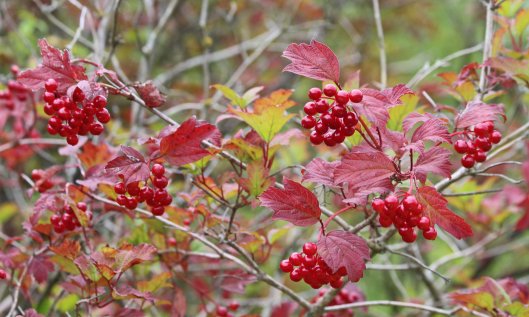
You thought I was joking with yesterday’s post about autumn arriving early this year, didn’t you? Well, the gorgeous colours of this Guelder rose look very autumnal to me. Bring on the glorious shades of autumn!

14 Friday Aug 2020
You thought I was joking with yesterday’s post about autumn arriving early this year, didn’t you? Well, the gorgeous colours of this Guelder rose look very autumnal to me. Bring on the glorious shades of autumn!

13 Thursday Aug 2020
Posted in nature
Tags
Autumn Lady’s-tresses, autumn orchids, British orchids, British wildflowers, native orchids, Spiranthes spiralis
It’s two and a half weeks yet till the calendar tells us it’s autumn, and we’re all melting in the heatwave that currently has much of Britain in its fiery grip, yet the Autumn lady’s-tresses are in full flower. These gorgeous orchids are tiny and not easily spotted amongst long grass and wildflowers but, luckily, I saw a report of a find of over 40 plants in a new-to-me location and went for a look early yesterday morning. Success!
12 Wednesday Aug 2020
Tags
battered butterflies, bird-pecked butterflies, British butterflies, Brown argus, Comma, Essex skipper, Gatekeeper, Painted Lady, Peacock, Ringlet, Small copper
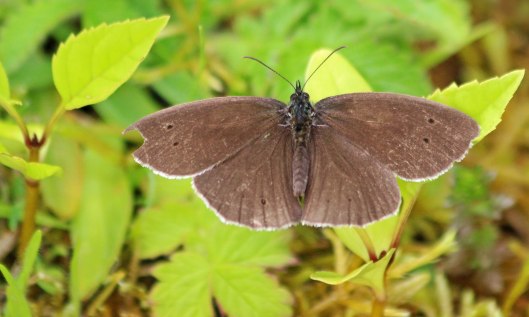
Though second-brood butterflies are still looking pristine, many of the others are now well past their best, as life is tough for such fragile creatures. Some butterflies are so battered that I’m amazed they’re able to fly at all, yet this Gatekeeper and Ringlet were still moving from plant to plant.
Birds looking for an easy snack often attack butterflies and it’s easy to see the tell-tale signs of bird pecks on butterflies’ wings, like those on these: a Ringlet, Comma, Small copper and Peacock, and another Gatekeeper.


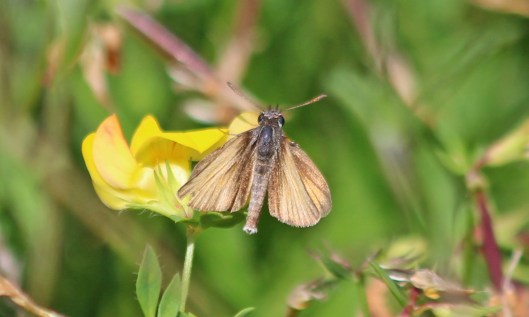
Is it the blazing sun that has caused this Essex skipper’s orange to fade so dramatically or has it lost most of its wing scales?

I’m 99% sure this is the same Brown argus, seen first on 1 August and again on 10 August. It already had some bird pecks when I first saw it but, nine days later, it was looking rather faded and more than a little ragged around the edges.
This Painted lady is looking battered, bird-pecked, faded and jaded, perhaps the affects of a long migration journey, or simply a tough life well survived.

11 Tuesday Aug 2020
Posted in insects, nature, plants, wildflowers
Tags
Arctium minus, Banded burdock fly, British insects, Common Green Shieldbug, Lesser burdock, Palomena prasina, Terellia tussilaginis
Lesser burdock (Arctium minus) seems to be having a good year as I’ve been finding lots of vigorous, flowering plants during my local walks, and they’re home to some interesting mini-beasties. One I always look for is the Banded burdock fly (Terellia tussilaginis), and it also seems to be thriving locally.


And, on one particular clump of burdock, I found a bounty of Common green shieldbugs (Palomena prasina), as I’ve done before (see my previous post Keeping it in the family, from September 2017). Once again, these were a mix of juvenile stages, 3rd and 4th instars, I think.
Of course, there are lots of other mini-beasties that also find Burdock flower nectar delicious – these two bees are just a couple of examples. What beasties have you seen on Burdock?
10 Monday Aug 2020
Tags
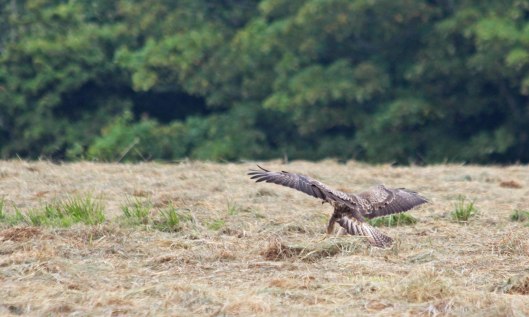
I was walking along a field edge today, enjoying the peace and the pleasant breeze, when this beautiful creature flew into a tree right next to me.

It wasn’t exactly an elegant landing – I think this was a young Buzzard, judging by its inexact flying skills and its call, and the bird hadn’t realised there was a human standing close by.

I managed to fire off a few quick photos before the bird flew out from the tree, across the field, and landed in the newly mown grass.

It seemed to realise fairly quickly that sitting on the ground when people and their dog were approaching up the hill wasn’t exactly a smart idea, so it quickly took to the air again and found another, taller tree to perch in. Safety for the Buzzard, and a precious experience for me!

09 Sunday Aug 2020
Posted in flowers, nature, plants, wildflowers
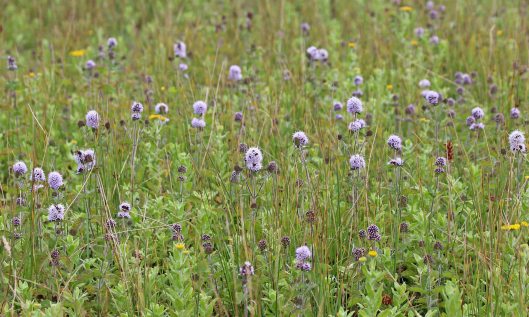
It’s Sunday – I think we need some wildflowers, and this week we have three plants that are all partial to living with damp feet, all with flowers in the pink-purple colour range.

Marsh woundwort (Stachys palustris)
As its common name implies, this wildflower thrives in locations where its roots can keep damp: near lakes and rivers, ponds and bogs. Its scientific name also refers to this: palustris means ‘of swamps’, while Stachys means ‘spike of flowers’, which is exactly what this lovely wildflower exhibits. And, of course, all the ‘woundworts’ were used extensively by herbalists, in this case, as an ointment to aid aching joints and as a dressing to help heal cuts and other wounds.

Purple loosestrife (Lythrum salicaria)
Here’s another widespread plant of marshes and riversides, and that’s exactly where I found this example, alongside the River Ely in Cardiff. Unfortunately, I couldn’t get any closer for better photos of the individual flowers. In Flora Britannica, Richard Mabey gives this explanation for this plant’s intriguing name: ‘“Loose-strife” is a literal translation of the Greek name for the plants, which in classical times was believed to be so powerful “that if placed on the yoke of inharmonious oxen, [it] will restrain their quarrelling”.’

Water mint (Mentha aquatica)
And here’s another plant that prefers living with damp, not necessarily wet feet. Once again, this wildflower’s name tells the story: ‘Water’ and ‘aquatica’; and you only have to rub the leaves to release the delicious minty aroma, which is so refreshing. Insects love it too, as you can see from the hoverfly, butterfly and bee in the photos above.
08 Saturday Aug 2020
We saw the swallows gathering in the sky
And in the osier-aisle we heard them noise …


The pilgrims of the year waxed very loud
In multitudinous chattering.
~ George Meredith, Modern Love, sonnet xlvii


07 Friday Aug 2020
Tags
British butterflies, butterfly, Dingy Skipper, second brood butterflies, second brood Dingy skipper
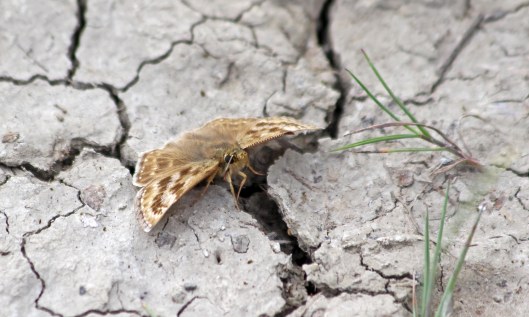
In 2019, when I began keeping records of all my sightings and focused seriously on searching for and recording butterflies, I saw my first local Dingy skipper on 30 April and my last on 10 June. This year, I spotted my first on 6 May and what I thought was the last on 26 May, a relatively short season.

Then, remarkably, on 24 July, I saw a pristine, obviously newly emerged Dingy skipper, and I’ve seen two more this week, one on 4 August and another the following day. These are second brood butterflies, the product of the breeding of the butterflies seen in May.

In his brilliant book Life Cycles of British & Irish Butterflies, Peter Eeles write that ‘Good summers may … result in a partial second brood in southern England that emerges in late July and August (a second brood is the norm in Southern Europe), and this may become a more frequent and widespread phenomenon in Britain and Ireland with a changing climate’. It seems, here in south Wales, that phenomenon is already happening.

06 Thursday Aug 2020
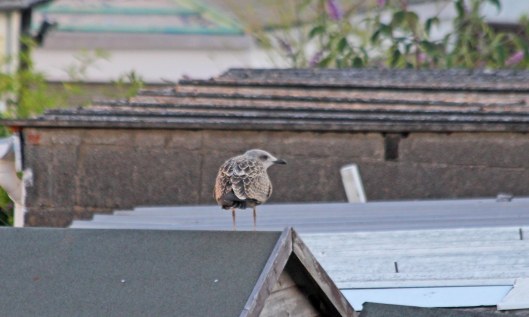
It’s two weeks today since junior Lesser black-backed gull flew the coop – or, in this case, the nest amongst the chimney pots, and I’m pleased to report that it seems to be thriving.

I’ve spotted it on neighbouring shed and house rooftops several times, and I’m sure it’s the same bird, as one or both of the adults sit on the nest site while junior screeches at them for food from somewhere nearby. It’s so nice to be able to report a success story.

05 Wednesday Aug 2020
Posted in nature, plants, wildflowers
Tags
British wildflowers, Grangemoor Park, The Chief Herb, The Herb, Verbena officinalis, Vervain, wildflower
I’ve been trying, very slowly, to learn the names of more wildflowers so, when I couldn’t put a name to this plant at Grangemoor Park a couple of days ago, I made sure to take lots of photos of it. And today I found out this straggly, nondescript wildflower is not just any old plant, this is ‘The Herb’!

Vervain (Verbena officinalis) was so valued by herbalists in Anglo Saxon times that it was considered ‘The Chief Herb’, and was ‘a venerated plant, valued not just as a panacea (it was trumpeted as a cure for the plague in the Middle Ages) but as a magical charm, which could both protect against witches and demons and conjure up devilry of its own’ (Flora Britannica).
You must be logged in to post a comment.