• ABOUT
  • BIRDING 2018
  • Birding 2019
  • BLOG POSTS
  • Butterflies 2018
  • Resources

earthstar

~ a celebration of nature

earthstar

Category Archives: plants

Seedheads and pods

29 Sunday Sep 2024

Posted by sconzani in plants, wildflowers

≈ Leave a comment

Tags

British wildflowers, seed pods, seedheads, seeds

During my meandering walks over the past couple of weeks I’ve been collecting images of various seedheads and seed pods. I’m always amazed at the wide variety of forms these take – in fact, I think I’ll go through this exercise again, looking more closely at the seeds themselves as their diversity is also quite astounding. Meantime, here’s a video slideshow of what I’ve gathered so far.

Like Loading...

Dogwood berries

22 Sunday Sep 2024

Posted by sconzani in autumn, plants

≈ 2 Comments

Tags

autumn berries, autumn colour, Common dogwood, Cornus sanguinea, Cornus sericea, Dogwood, Red-osier dogwood

To celebrate the Autumn equinox I thought I’d share some berries, and for this post I’ve confined my enthusiasm for all berries to a shrub that really comes in to its own at this time of year, Dogwood. The species I see most often is Common dogwood (Cornus sanguinea), which grows in hedgerows and along woodland edges, the twigs of which have previously had an interesting use, according to the Woodland Trust website:

The origin of the name comes from the smooth, straight twigs which were used to make butchers’ skewers. Skewers used to be called ‘dags’ or ‘dogs’, so the name means ‘skewer wood’.

240922 dogwood

I only noticed this second species of Dogwood quite recently, and then only because of its stunning berries that start out as tiny globes of purple before turning a bright snowy white. This is Red-osier Dogwood (Cornus sericea), which is usually a cultivated species grown in parks and gardens but which escapes that controlled setting to become naturalised in wilder places.

240922 red osier dogwood

Like Loading...

Leafmines: Mompha raschkiella

16 Monday Sep 2024

Posted by sconzani in insects, plants

≈ Leave a comment

Tags

British leafminers, British moths, leaf-mining moth larvae, leaf-mining moths, leafmines on Rosebay willowherb, Mompha raschkiella

Between June and July, and then again in September, the leafmines of the gorgeous little moth Mompha raschkiella (check out the adult on the UK Moths website here) can be found on their food plant Rosebay willowherb (Chamaenerion angustifolium).

240916 mompha raschkiella (1)

Beginning with a narrow linear mine that frequently follows the leaf’s midrib, the larvae chew their way along the leaf, eventually creating a blotch with a slight yellow caste that’s scattered with its poop (frass). When fully grown, the larvae cut a slit in the leaf, dropping to the ground to pupate. You can read further and see more images on the British Leafminers website.

240916 mompha raschkiella (2)

Like Loading...

Climbing plants

08 Sunday Sep 2024

Posted by sconzani in plants, wildflowers

≈ Leave a comment

Tags

bramble, British wildflowers, climbing plants, Field bindweed, Hedge bindweed, Honeysuckle, ivy, Meadow vetchling, Old Man's Beard

Last week’s challenge for Wildflower Hour on social media was to find climbing plants that were in bloom, and there were lots of wonderful examples of flora with a penchant for climbing. These are some I’ve found locally that are still in flower …

240908 bindweed hedge and field

The bindweeds – these are Hedge bindweed (top) and Field bindweed (below).

240908 ivy bramble

Ivy (it’s only just coming into flower in my area so this was difficult to find) and Bramble (most plants are now covered in delicious berries but I found a couple in bloom).
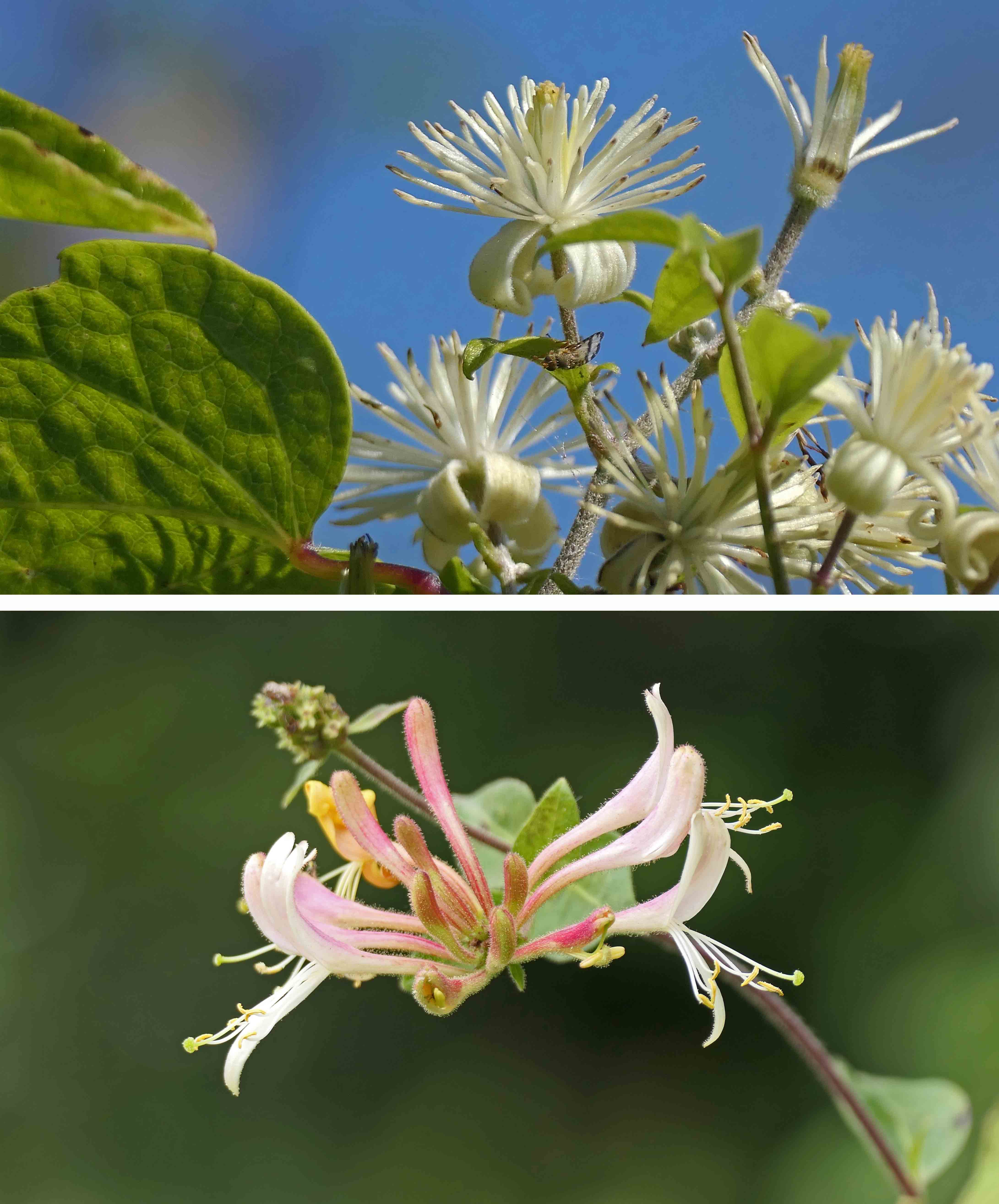
240908 old mans beard honeysuckle

Old man’s beard (also known as Traveller’s joy) and Honeysuckle.

240908 vetches

The vetches: Tufted vetch and Meadow vetchling (most of the vetches have now finished flowering).
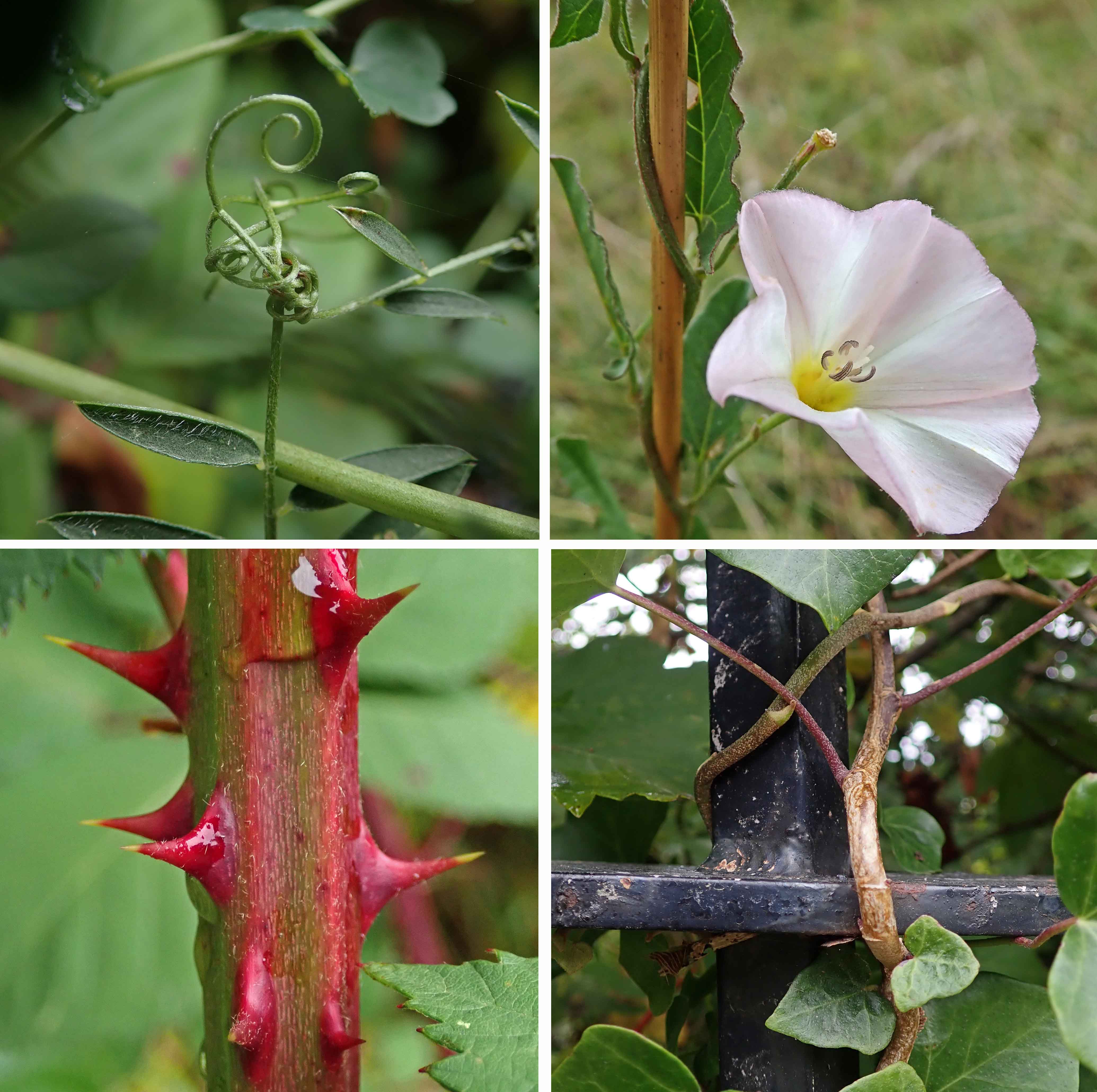
240908 x how they climb

How plants climb:
The twisters: plants like Old man’s beard and Honeysuckle, and the various species of vetch, all twist themselves around other plants to gain support and climb upwards.
The grappler: think of those thorns on Bramble and the many rose species, used like grappling hooks to grab on to anything that will support them.
The clinger: Ivy is a good example of this, producing roots along its stem that help it cling to other plants, as well as to wooden posts, and brick and stone buildings.

Like Loading...

Galls: Dasineura crataegi

04 Wednesday Sep 2024

Posted by sconzani in insects, plants, trees

≈ Leave a comment

Tags

British galls, Dasineura crataegi, gall-causing mites, galls caused by mites, galls on Hawthorn, Hawthorn button-top gall, plant galls

Teeny tiny mites have caused this damage to the tips of new branches on Hawthorn bushes (Crataegus species). Mites are so tiny that they can feed on individual plant cells, and it is this feeding that distorts and deforms the new leaf growth. These particular mites are called Dasineura crataegi, and the galls they create are known as Hawthorn button-top galls.

240904 Dasineura crataegi

Apparently, these galls are quite common but I’ve only seen them recently. All plant growth in the field where these Hawthorn bushes are growing is usually cut to the ground in late Autumn but that cut wasn’t down last year, possibly because it was too wet. This has allowed Hawthorn seedlings to grow where they usually wouldn’t, and it is on these young Hawthorns that the mites are thriving. It will be interesting to see if the galls appear again next year if the annual cut goes ahead.

Like Loading...

The first of Autumn

01 Sunday Sep 2024

Posted by sconzani in autumn, plants

≈ Leave a comment

Tags

autumn berries, autumn colours, autumn fruit, rose hips, Sloes, Spindle fruits, whitebeam berries

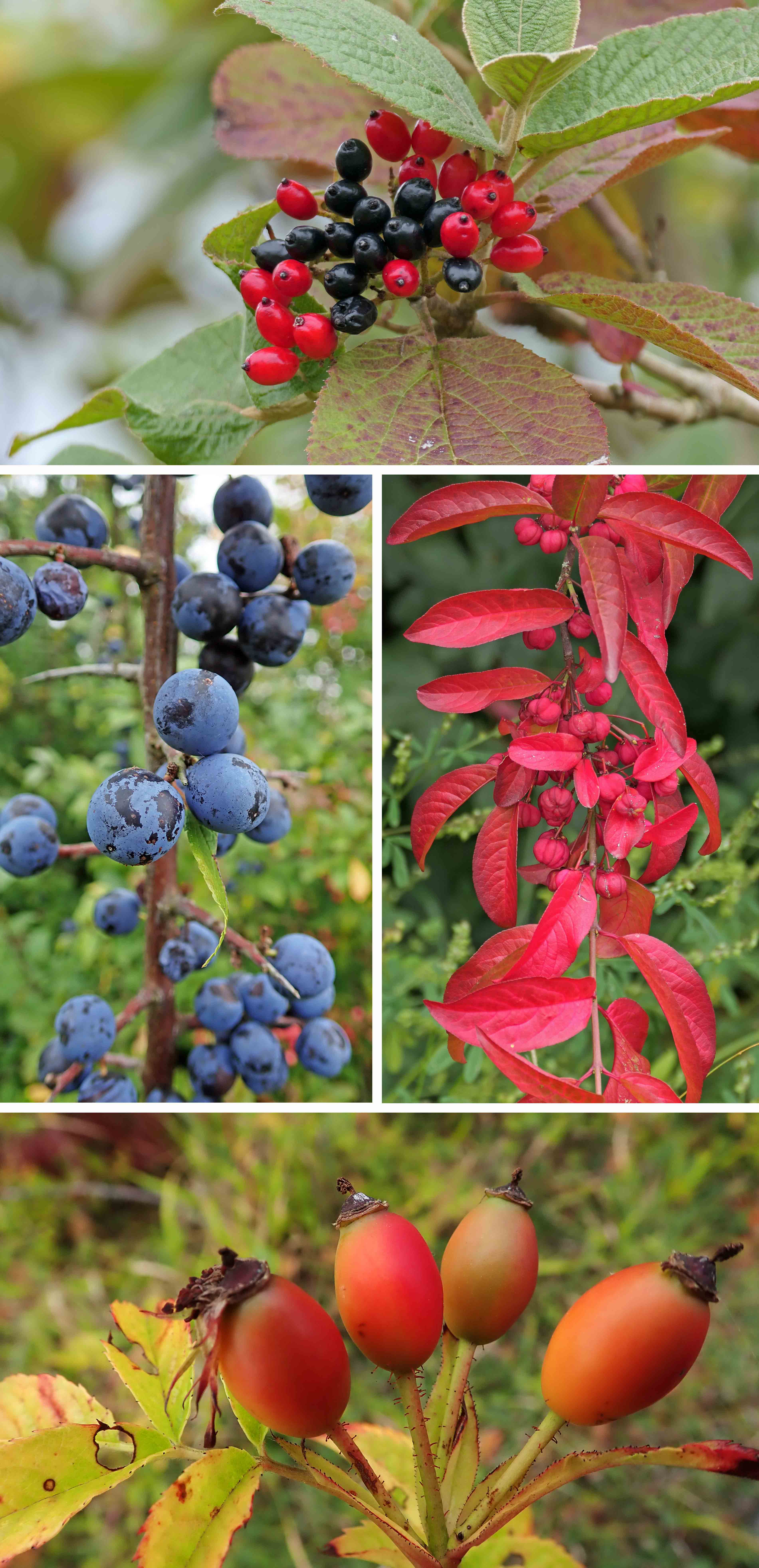
Though today was actually quite warm and humid, there’s no denying that autumnal feel in the air. The evenings are getting dark earlier; there’s an occasional hint of a heavy dew, if not quite a frost; the birds have already begun their migration south for the winter; and, on the trees and shrubs, the fruits are bright and bursting, the leaves beginning to turn. Happy Autumn to all in the northern hemisphere (and happy Spring to those down under)!

240901 autumn fruits

Like Loading...

Selfheal

07 Sunday Jul 2024

Posted by sconzani in plants, wildflowers

≈ Leave a comment

Tags

British wildflowers, herbal medicine, Large skipper, medicinal plants, Prunella vulgaris, Selfheal

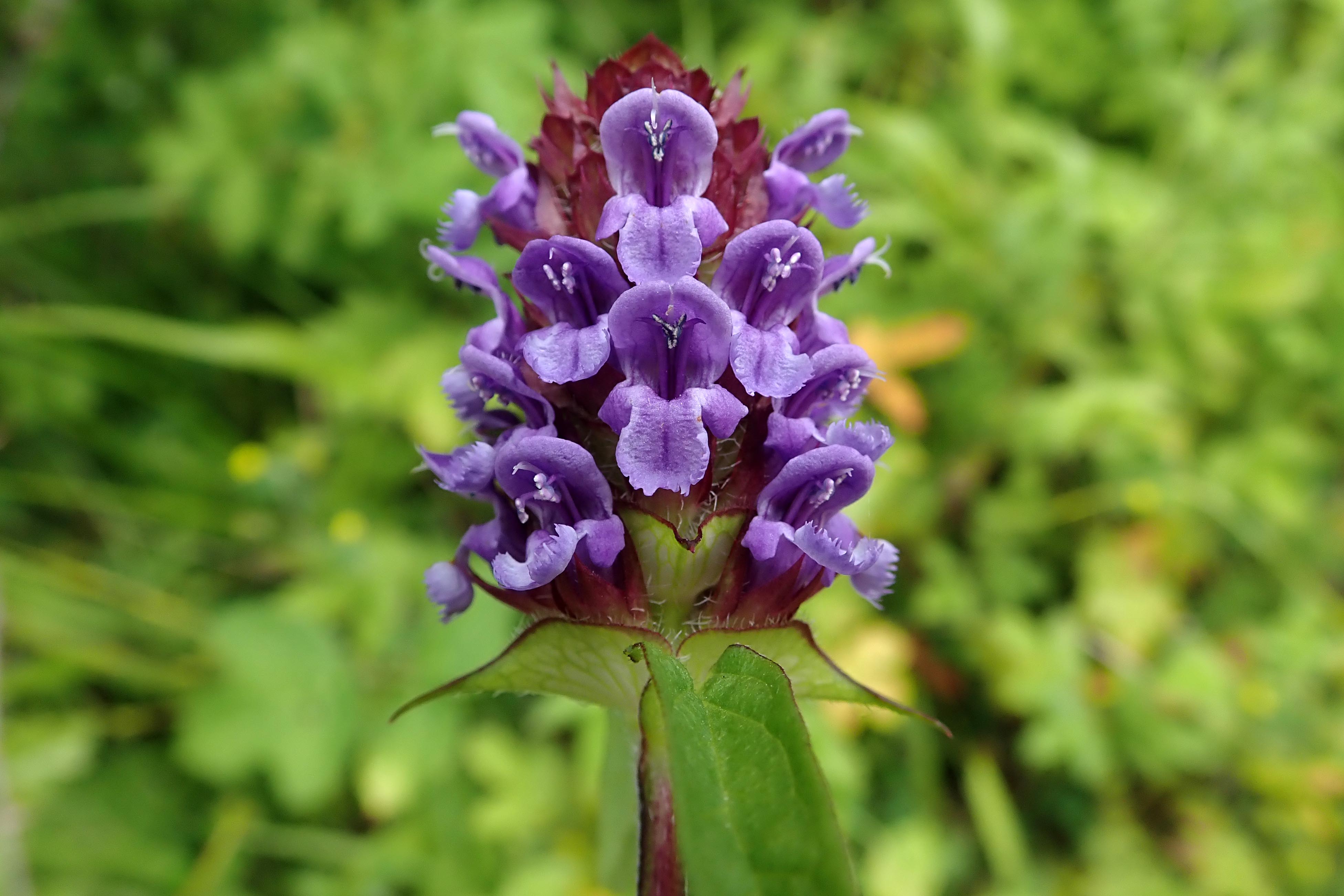
The bluish-violet flowers of Selfheal (Prunella vulgaris) are very common in the summer months, sometimes as short plants popping up in grass and gardens, yet also growing up to a foot tall in the less managed areas provided by woodland rides and wildflower meadows. Bees love to feed on its nectar, and I also spotted a cute Large skipper butterfly slurping away with its amazingly long tongue.

240707 selfheal (2)

As its name implies, Selfheal has long had a reputation as a herbal medicine, used for a variety of purposes from treating wounds and sore throats to stopping a cut from bleeding. I can’t personally attest to its efficacy but I do really enjoy the pop of colour this lovely little plant provides in the warmer months.

240707 selfheal (1)

Like Loading...

Grasses

04 Thursday Jul 2024

Posted by sconzani in plants

≈ Leave a comment

Tags

#GrassChallenge, #WildflowerHour, British grass species, grass, grasses

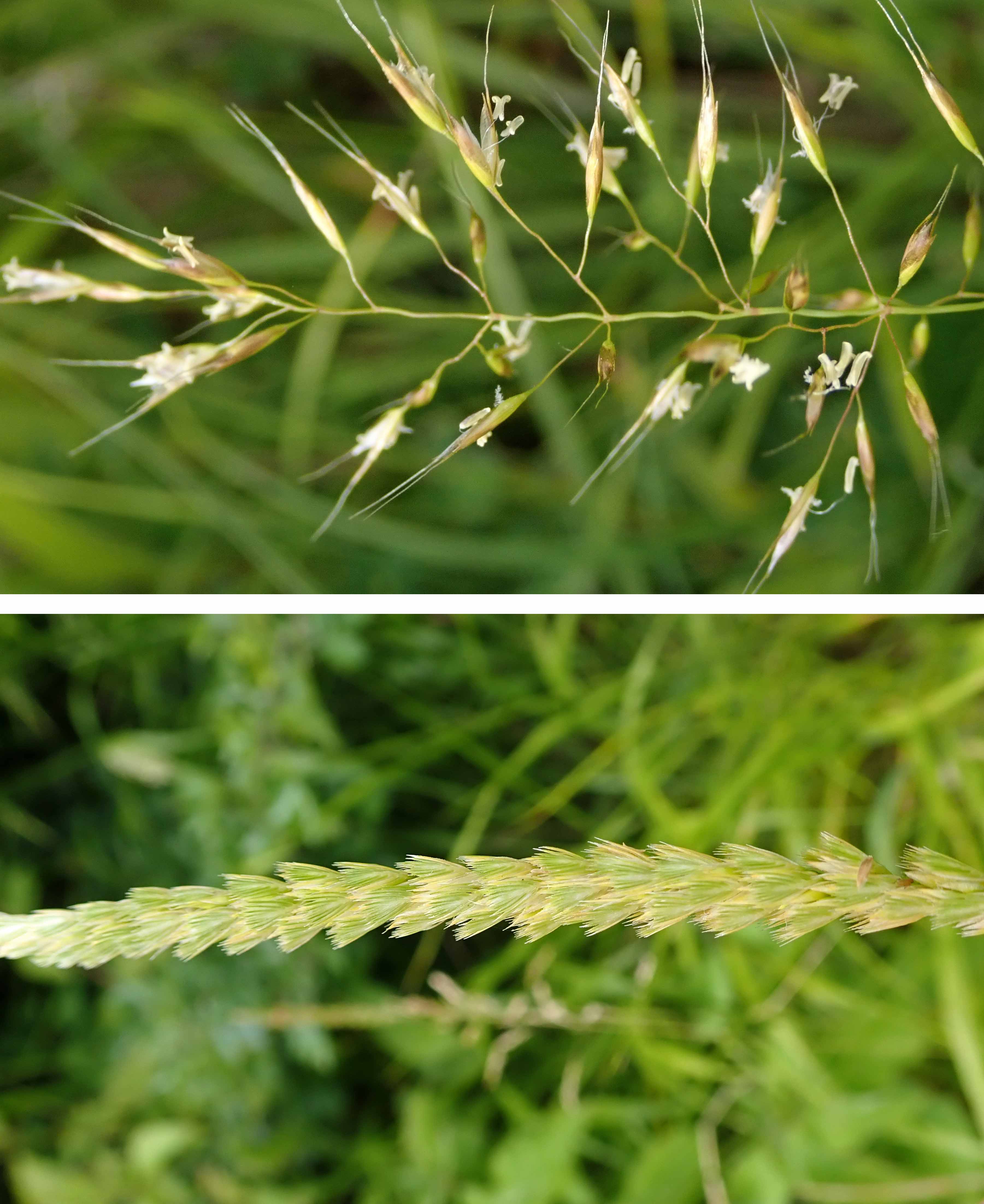
Last week’s Wildflower hour challenge was to find and identify as many as possible of the myriad grass species we have growing here in Britain.

240704 grasses (1)

I got involved, half-heartedly: I spent an enjoyable few hours wandering some of the local meadows, keeping an eye out for grass species that looked new and/or different.

240704 grasses (2)

And I took a lot of photos, many of them out of focus as the breeze caught the grasses just as I was clicking the shutter, though that created its own kind of magic.

240704 grasses (3)

Being busy with other things (that’s my excuse anyway!), I didn’t make the effort to identify my grasses, though I certainly enjoyed their diversity of shape and form.

240704 grasses (4)

Like Loading...

A colony of Woundwort shieldbugs

11 Tuesday Jun 2024

Posted by sconzani in insects, plants

≈ Leave a comment

Tags

British shieldbugs, Eysarcoris venustissimus, Hedge woundwort, Stachys sylvatica, Woundwort shieldbug

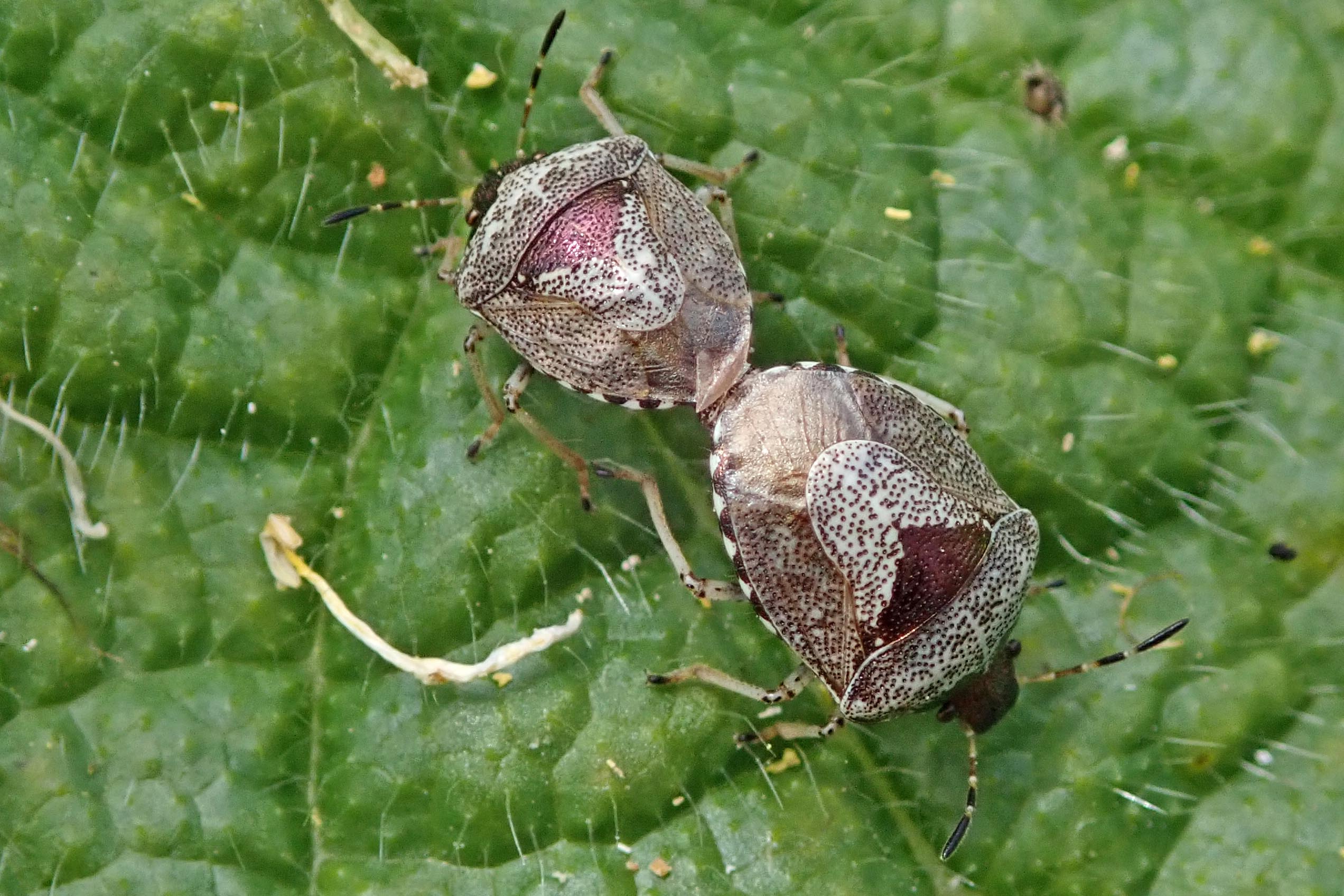
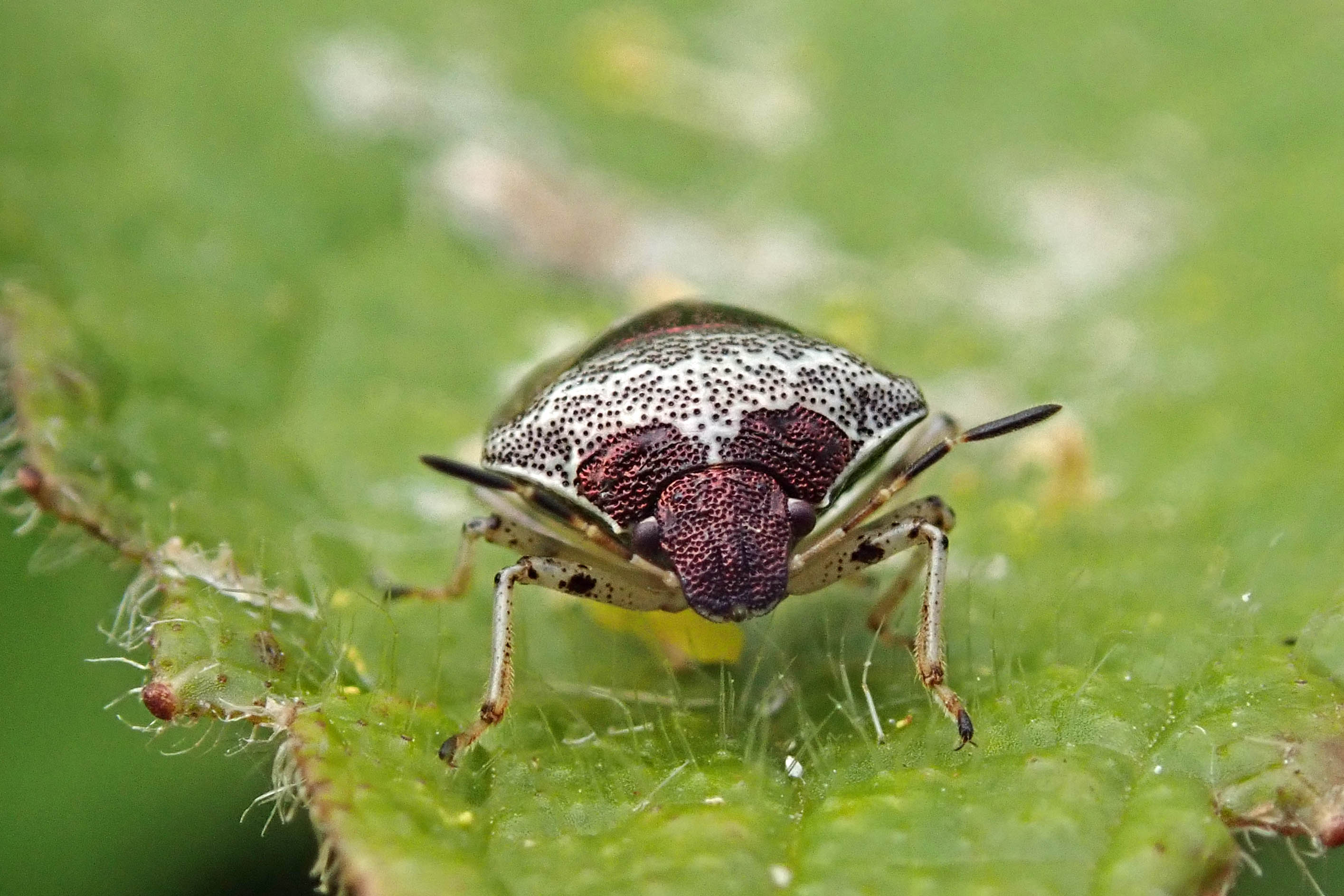
I was actually checking the Hedge woundwort plants growing alongside our local coastal path for leaf-mining moths (of which there were none) when I spotted first one Woundwort shieldbug, then another, and another, and then two mating.

240611 woundwort shieldbugs (3)

In fact, I eventually counted eight, which is more than I’ve ever seen in one spot before. Hopefully, this means their numbers are increasing generally as they are very handsome little bugs.

240611 woundwort shieldbugs (2)

As well as feeding on Hedge woundwort (Stachys sylvatica), the Woundwort shieldbug (Eysarcoris venustissimus) is also partial to the Lamiaceae species of plants, especially White dead-nettle (Lamium album).

240611 woundwort shieldbugs (1)

Like Loading...

Fleabane tortoise beetle larvae

08 Saturday Jun 2024

Posted by sconzani in insects, plants

≈ Leave a comment

Tags

beetles on Common fleabane, British beetles, Cassida murraea, Cassidinae, Common fleabane, Fleabane tortoise beetle, Fleabane tortoise beetle larvae, tortoise beetles

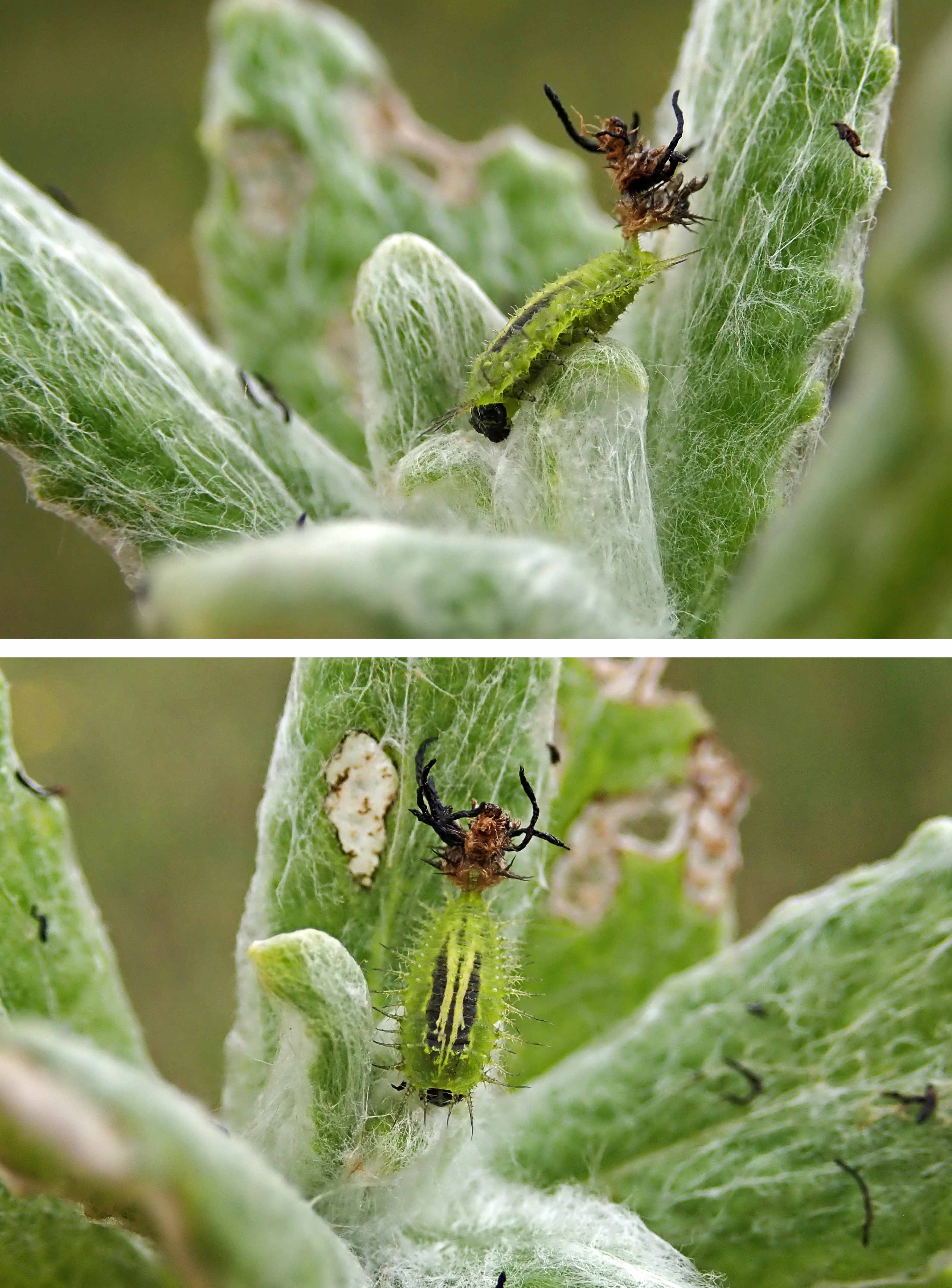
If you’ve been here a while (for which, sincere thanks!), you might remember the bizarre larvae of the Thistle tortoise beetle that employ a faecal shield as a protective device, carrying their own excretions above their backs as a disguise (Thistle tortoise beetle larvae, 7 July 2022). Well, earlier this week, while checking the leaves of Common fleabane (Pulicaria dysenterica) for leafminers, I found another example of this behaviour.

240608 fleabane tortoise beetle larva (2)

These are Fleabane tortoise beetle larvae (Cassida murraea), which, like all other members of the tortoise beetle family, the Cassidinae, use a combination of their own frass and moulted skin, secretions and plant material to create the cryptic disguises they carry around behind and above their vulnerable bodies.

240608 fleabane tortoise beetle larva (1)

This particular species has not been recorded locally before and I’ve never seen the adult beetles so I’ll be poking about in the fleabane in the coming weeks to see if I can find any.

Like Loading...
← Older posts
Newer posts →

About me

sconzani

sconzani

I'm a writer and photographer; researcher and blogger; birder and nature lover; countryside rambler and city strider; volunteer and biodiversity recorder.

View Full Profile →

Follow earthstar on WordPress.com

Enter your email address to follow this blog and receive notifications of new posts by email.

Recent blog posts

  • Scallop shells February 22, 2026
  • Avocet February 21, 2026
  • First large spider February 20, 2026
  • Our celebrity Redshank February 19, 2026
  • My first moth of the year February 18, 2026

From the archives

COPYRIGHT

Unless otherwise acknowledged, the text and photographs on this blog are my own and are subject to international copyright. Nothing may be downloaded or copied without my permission.

Fellow Earth Stars!

  • Unknown's avatar
  • Unknown's avatar
  • Unknown's avatar
  • Unknown's avatar
  • Unknown's avatar
  • Unknown's avatar
  • Unknown's avatar
  • Unknown's avatar
  • Unknown's avatar
  • Unknown's avatar
  • Unknown's avatar
  • Unknown's avatar
  • Unknown's avatar
  • Unknown's avatar
  • Unknown's avatar
  • Unknown's avatar
  • Unknown's avatar
  • Unknown's avatar
  • Unknown's avatar
  • Unknown's avatar
  • Unknown's avatar
  • Unknown's avatar
  • Unknown's avatar
  • Unknown's avatar
  • Unknown's avatar
  • Unknown's avatar
  • Unknown's avatar
  • Unknown's avatar
  • Unknown's avatar
  • Unknown's avatar
  • Unknown's avatar
  • Unknown's avatar
  • Unknown's avatar
  • Unknown's avatar
  • Unknown's avatar
  • Unknown's avatar
  • Unknown's avatar
  • Unknown's avatar
  • Unknown's avatar
  • Unknown's avatar
  • Unknown's avatar
  • Unknown's avatar
  • Unknown's avatar
  • Unknown's avatar
  • Unknown's avatar
  • Unknown's avatar
  • Unknown's avatar
  • Unknown's avatar
  • Unknown's avatar
  • Unknown's avatar

Blog at WordPress.com.

Privacy & Cookies: This site uses cookies. By continuing to use this website, you agree to their use.
To find out more, including how to control cookies, see here: Cookie Policy
  • Subscribe Subscribed
    • earthstar
    • Join 670 other subscribers
    • Already have a WordPress.com account? Log in now.
    • earthstar
    • Subscribe Subscribed
    • Sign up
    • Log in
    • Report this content
    • View site in Reader
    • Manage subscriptions
    • Collapse this bar
 

Loading Comments...
 

You must be logged in to post a comment.

    %d