• ABOUT
  • BIRDING 2018
  • Birding 2019
  • BLOG POSTS
  • Butterflies 2018
  • Resources

earthstar

~ a celebration of nature

earthstar

Category Archives: spring

Fungi foray: Merthyr Mawr

08 Monday May 2017

Posted by sconzani in fungi, nature, parks, spring, walks

≈ Leave a comment

Tags

Daedaleopsis confragosa, fungi enthusiasts, fungi foray, Glamorgan Fungus Group, Kuehneola uredinis, Melampsora epita var epitea, Melampsora populnea, Merthyr Mawr National Nature Reserve, Microbotryum silenes-dioicae, Mollisia, Phellinus hippophaeicola, Phylloporia ribis, rust fungi, Synchytrium taraxaci

Saturday dawned fine and mostly sunny, good news for most but not such good news for fungi enthusiasts, who are already bemoaning the recent lack of rain. Still, keen-eyed fungi fans can always find something and our Glamorgan Fungus Group has some of the keenest in ‘Eagle-eyes’ Emma. Though we were just a small group of six and a half, we enjoyed a splendid day searching the woodland areas of Merthyr Mawr National Nature Reserve, and our limited numbers were, in fact, a bonus, as we had amongst us the county recorder for Orthoptera (grasshoppers and related insects) and an experienced botanist, so we were able to enjoy, discuss and identify a broad range of flora and fauna. As expected, our fungi finds were limited but we finished the day with a very respectable total of 21 species and had a great time along the way.

Here are some of our finds: the rust Melampsora populnea on Dog’s mercury; another rust Kuehneola uredinis, on Bramble; Microbotryum silenes-dioicae, a smut that occurs on the anthers of Red campion flowers; another rust Melampsora epita var. epitea on Spindle; fungi enthusiasts inspecting the one group of cap fungi (‘real mushrooms’) found this day; the ‘real mushrooms’ that must remain unidentified as they were much eaten and turning gloopy; likely one of the Mollisia species of Disco fungi; Phellinus hippophaeicola on Sea buckthorn; Phylloporia ribis on Spindle; a rather old and faded Blushing bracket Daedaleopsis confragosa; a Puccinia species of rust on Common ragwort – this needs microscope work to positively ID; and the pimple-like growths of Dandelion wart Synchytrium taraxaci on one of the gazillions of Dandelion species, so Taraxacum officinale agg.

170508 (1) Melampsora populnea on Dog's mercury
170508 (2) Kuehneola uredinis on Bramble
170508 (3) Microbotryum silenes-dioicae Smut on Red campion
170508 (4) Melampsora epita var epitea on Spindle
170508 (5) Fungi enthusiasts
170508 (6) Unidentified fungus
170508 (7) Mollisia sp
170508 (8) Phellinus hippophaeicola on Sea buckthorn
170508 (9) Phylloporia ribis on Spindle
170508 (10) Daedaleopsis confragosa Blushing bracket
170508 (11) Puccinia sp on Common ragwort
170508 (12) Synchytrium taraxaci on Taraxacum officinale agg
Like Loading...

Early purple orchid

05 Friday May 2017

Posted by sconzani in flowers, nature, spring, wildflowers

≈ Leave a comment

Tags

Early purple orchid, Native British orchid, native orchids, Orchis mascula

170505 Early purple orchid (1)

This does what it says on the tin: The Early purple orchid (Orchis mascula) is one of the 56 species of native orchid to be found in Britain, it flowers early in spring and is usually the first orchid to flower each year, and it’s a magnificently imperial shade of purple.

170505 Early purple orchid (2)
170505 Early purple orchid (3)
Like Loading...

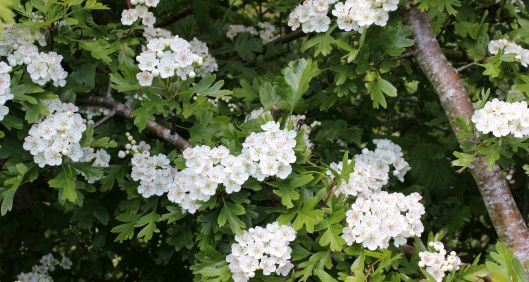
Hawthorn: did you know … ?

04 Thursday May 2017

Posted by sconzani in flowers, nature, spring, trees

≈ 6 Comments

Tags

Crataegus monogyna, Hawthorn, Hawthorn wood, May-tree, uses for hawthorn berries

170504 Hawthorn (3)

>   Hawthorn’s scientific name is Crataegus monogyna. Crataegus comes from the Greek kratos, meaning strength, and akis, meaning sharp, and monogyna is derived from mono, meaning one or single, and gyna, meaning seed or ovary.
>   Hawthorn is also known as the May-tree, Mayblossom and Maythorn, not surprisingly because it usually flowers during May. It is the only British plant named after the month in which it blooms.

170504 Hawthorn (4)
170504 Hawthorn (1)

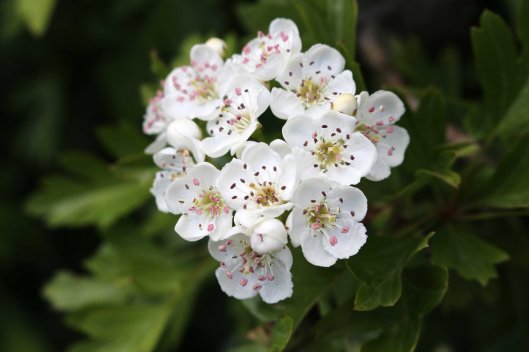
>   The Hawthorn’s white flowers can be either male or female. You can tell the male flowers by their pink-tipped stamens.
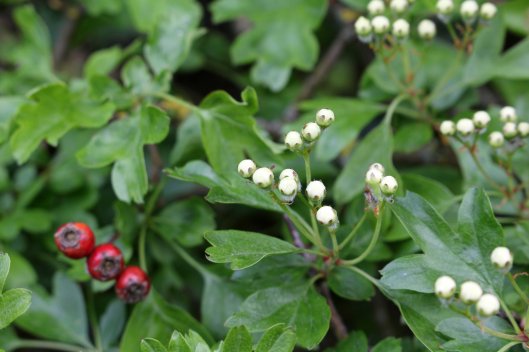
>   Hawthorn’s red berries, the haws, not only serve as food for birds, particularly the thrushes, they can also be used to make jams and jellies and wine.
>   The Hawthorn provides food for more than 150 different species of insect, like the hawthorn shield bug, the common earwig and common flower bug, bumblebees and cockchafers, to name just a few.

170504 Hawthorn (5)

>   Due to its dense growth and long thorns, Hawthorn has served as the perfect impenetrable hedge for thousands of years. Individual trees can live for 400 years or more.
>   In years gone by, the wood of the Hawthorn, because it has a very fine grain and is very hard, was used for making things like tool handles and engravers’ blocks. The root wood was also used to make combs and small boxes.

170504 Hawthorn (2)

Like Loading...

The Sanderlings and the Dunlins

01 Monday May 2017

Posted by sconzani in birds, nature, spring

≈ 2 Comments

Tags

birding, birdwatching, British birds, Calidris alba, Calidris alpina, Dunlin, passage migrant, Sanderling

Yesterday I told you about my chilly but super exciting birdwatching morning on Saturday and showcased two of the highlights, the Whimbrel and the Bar-tailed Godwit. Today, we have the Sanderlings and the Dunlins, both so well camouflaged against the stones on the seashore that, if they hadn’t been almost constantly moving about in their search for insects, they would’ve been very hard to spot.

170501 sanderling (2)
170501 sanderling (3)
170501 sanderling (1)

Sanderlings to the left, Turnstones to the right

Like yesterday’s birds, the Sanderling (Calidris alba) is a passage migrant, seen in parts of coastal Britain during the spring as it heads to its breeding grounds in the Arctic and in the autumn as it heads south to tropical beaches around the world, a journey that can be as long as 6000 miles. During the breeding season, the birds’ grey plumage takes on a much redder hue on the head, neck and back, which you can clearly see on one of these birds (particularly in the photo top left).

170501 dunlin (1)

The Dunlin (Calidris alpina) – like the Sanderling, a member of the Sandpiper family – is a very common sight on Britain’s coast throughout the year, though breeding birds head to the upland areas of Wales, Scotland and England to nest between April and July. The Dunlin also becomes a more rufous colour during the breeding season and acquires the dark tummy feathers you can see on these birds. I’m guessing they’ll be heading for the hills shortly to find a mate.

170501 dunlin (2)
170501 dunlin (3)
Like Loading...

The Whimbrel and the Barwit

30 Sunday Apr 2017

Posted by sconzani in birds, nature, spring

≈ 2 Comments

Tags

Bar-tailed Godwit, birding, birdwatching, British birds, British seabirds, Limosa lapponica, Numenius phaeopus, passage migrants, Whimbrel

170430 whimbrel (1)

I was in my element yesterday morning, stealthily stalking along the stony coastal path at Sully in a shiver-inducing chilly wind, trying to observe and photograph a wonderful variety of seabirds. And I got lucky, really really lucky, as by the time I decided I needed to get walking to ward off hypothermia, I had seen noisy fly-pasts of Oystercatchers; Dunlins and Turnstones and, an unexpected bonus, two Sanderlings foraging along the tide-deposited seaweed; several rather skittish Whimbrels; and a fleeting glimpse of one also unexpected but rather beautiful Bar-tailed Godwit.

170430 Whimbrel and bar-tailed godwit (1)
170430 Whimbrel and bar-tailed godwit (2)

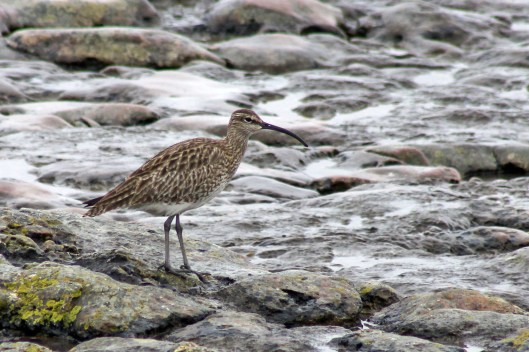
Both the Whimbrels and the Bar-tailed godwit are passage migrants. The Whimbrel (Numenius phaeopus) (the bird with the curved beak) can be seen around Britain’s coastline during spring as it flies north to Shetland and Orkney to breed and again in autumn when it heads back to South Africa to enjoy a warmer winter. The Bar-tailed Godwit (affectionately abbreviated amongst birders to Barwit) (Limosa lapponica) passes through Britain on its way to its breeding grounds in the Scandinavian and Siberian Arctic, though does sometimes over-winter in Britain.

p.s. See tomorrow’s post for the Sanderlings and the Dunlins.

170430 whimbrel (2)

Like Loading...

Wales Walks: Cwm George, and more

22 Saturday Apr 2017

Posted by sconzani in nature, spring, trees, walks, wildflowers

≈ 3 Comments

Tags

beech woodland, Bluebell, Cadoxton River, Coed Twyncyn, Cwm George, Cwm Penllwynog, Dinas Powys, Vale of Glamorgan walks, Wild garlic

I can’t believe it’s almost a year since I visited Cwm George. Luckily, I now live much nearer to this magnificent woodland so I’ll definitely be going back more often. I had a long walk here on Thursday with my friend Hilary, chatting and botanising and soaking in the beauty of the wild garlic and the bluebells and so much more.

This walk, called Salmon Leaps, is one of eight in the Vale of Glamorgan for which there are downloadable pamphlets available (see here for this one). Locals say there haven’t been salmon in these streams for years but don’t let that put you off. Ours was a variation of the routes in the brochure but with much of the same picturesque scenery. Let me show you me some of the highlights …

170421 Cwm George walk (1)

Crossing the Cadoxton River (well, stream, really)

170421 Cwm George walk (2)

The beeches of Cwm George, carpeted with swathes of wild garlic

170421 Cwm George walk (3)170421 Cwm George walk (4)

Looking across farmland to the village of Michaelston-le-Pit

170421 Cwm George walk (5)

A weir, with a small lake behind, on the upper Cadoxton River near Cwrt-Yr-Ala (where the salmon are supposed to leap)

170421 Cwm George walk (6)

Heading in to another woodland, Cwm Penllwynog, and, below, some of its beautiful bluebells

170421 Cwm George walk (7)170421 Cwm George walk (8)

Wildflowers lined the hedgerows as we headed back towards Dinas Powys along Beauville Lane

170421 Cwm George walk (9)

More woodland – this is Coed Twyncyn

Like Loading...

‘A silent eloquence’

21 Friday Apr 2017

Posted by sconzani in flowers, nature, spring, wildflowers

≈ 4 Comments

Tags

Bluebell, Bluebells in springtime, British bluebells, Hyacinthoides non-scripta, quintessential spring flower, wildflowers

170421 bluebells (1)

‘A fine and subtle spirit dwells
In every little flower,
Each one its own sweet feeling breathes
With more or less of power.
There is a silent eloquence
In every wild bluebell
That fills my softened heart with bliss
That words could never tell.’
~ from ‘The Bluebell’ by Anne Brontë

170421 bluebells (4)
170421 bluebells (2)
170421 bluebells (3)
170421 bluebells (5)

170421 bluebells (6)

Like Loading...

Butterflies!

09 Sunday Apr 2017

Posted by sconzani in insects, nature, spring

≈ 4 Comments

Tags

British butterflies, butterflies, Comma, Painted Lady, Peacock, Small tortoiseshell, Speckled wood

Yesterday I was celebrating the return of the Sand Martins, today it’s the turn of the butterflies. We’ve had 4 days of wall-to-wall sunshine and daily high temperatures in the mid teens which has encouraged all the small critters we share our world with to emerge and get active. And it’s a wondrous sight to behold!

170409 Peacock & Small tortoisehell

These two, a Peacock (Aglais io) (top) and a Small tortoiseshell (Aglais urticae) (below) were in one of my local parks. They flew in together and sat very close like this for at least ten minutes, after which time I walked on. It’s unusual to see them like this and one of my knowledgeable friends speculated that the Small tortoiseshell might me a confused male, showing an ‘interest’ in the Peacock.

170409 Comma
170409 Speckled Wood
170409 Painted Lady

I saw these three, plus another Peacock and some Small whites that were too fast to photograph, on a walk along the local coastal path on Friday. They’re a Comma (Polygonia c-album) on the left, a Speckled wood (Pararge aegeria) in the centre – one of eight I saw on this walk, and a Painted lady (Vanessa cardui) on the right. The Painted Lady is a long-distance migrant, flying back to Britain at this time of year from the desert fringes of North Africa, the Middle East, and central Asia so it’s no wonder it’s looking rather battered.

Like Loading...

Mad with joy

07 Friday Apr 2017

Posted by sconzani in flowers, nature, spring, wildflowers

≈ 12 Comments

Tags

spring, Spring colour, spring flowers, wildflowers

‘People from a planet without flowers would think we must be mad with joy the whole time to have such things about us.’ ~ Iris Murdoch

170407 spring flowers (1)
170407 spring flowers (2)
170407 spring flowers (3)
170407 spring flowers (4)
170407 spring flowers (5)
170407 spring flowers (6)
170407 spring flowers (7)
170407 spring flowers (8)
170407 spring flowers (9)
Like Loading...

Station blooms

05 Wednesday Apr 2017

Posted by sconzani in flowers, nature, spring, wildflowers

≈ 2 Comments

Tags

daffodil, Penarth railway station, Penarth station, Snake’s head fritillary, Spring blooms, Spring colour, spring flowers, tulips

Though Penarth is a wonderfully historic Victorian seaside town, with lovely parks, an iconic pier and grand buildings, its station is nothing to write home about. The original stone-built station buildings were demolished in the 1980s and replaced with a functional but ugly brick structure. So, it’s not one of those picturesque stations with hanging baskets full of summer flowers but it does have one redeeming feature. The scruffy and uncared-for dirt bank alongside the platform is currently home to a delightful display of Spring blooms. So, while the other morning commuters spend their waiting time scrolling through the latest social media happenings on their smartphones, completely oblivious to their surroundings, I enjoy the flowers. I hope you do too!

170407 Penarth station blooms (1)
170407 Penarth station blooms (2)
170407 Penarth station blooms (3)
170407 Penarth station blooms (4)
170407 Penarth station blooms (5)
170407 Penarth station blooms (6)
170407 Penarth station blooms (7)
170407 Penarth station blooms (8)
170407 Penarth station blooms (9)
Like Loading...
← Older posts
Newer posts →

About me

sconzani

sconzani

I'm a writer and photographer; researcher and blogger; birder and nature lover; countryside rambler and city strider; volunteer and biodiversity recorder.

View Full Profile →

Follow earthstar on WordPress.com

Enter your email address to follow this blog and receive notifications of new posts by email.

Recent blog posts

  • Lily beetle April 8, 2026
  • First bee-flies April 7, 2026
  • Bloody-nosed beetle April 6, 2026
  • Gorse and its weevil April 5, 2026
  • Chiffchaffs chiffchaffing April 4, 2026

From the archives

COPYRIGHT

Unless otherwise acknowledged, the text and photographs on this blog are my own and are subject to international copyright. Nothing may be downloaded or copied without my permission.

Fellow Earth Stars!

  • Unknown's avatar
  • Unknown's avatar
  • Unknown's avatar
  • Unknown's avatar
  • Unknown's avatar
  • Unknown's avatar
  • Unknown's avatar
  • Unknown's avatar
  • Unknown's avatar
  • Unknown's avatar
  • Unknown's avatar
  • Unknown's avatar
  • Unknown's avatar
  • Unknown's avatar
  • Unknown's avatar
  • Unknown's avatar
  • Unknown's avatar
  • Unknown's avatar
  • Unknown's avatar
  • Unknown's avatar
  • Unknown's avatar
  • Unknown's avatar
  • Unknown's avatar
  • Unknown's avatar
  • Unknown's avatar
  • Unknown's avatar
  • Unknown's avatar
  • Unknown's avatar
  • Unknown's avatar
  • Unknown's avatar
  • Unknown's avatar
  • Unknown's avatar
  • Unknown's avatar
  • Unknown's avatar
  • Unknown's avatar
  • Unknown's avatar
  • Unknown's avatar
  • Unknown's avatar
  • Unknown's avatar
  • Unknown's avatar
  • Unknown's avatar
  • Unknown's avatar
  • Unknown's avatar
  • Unknown's avatar
  • Unknown's avatar
  • Unknown's avatar
  • Unknown's avatar
  • Unknown's avatar
  • Unknown's avatar
  • Unknown's avatar

Blog at WordPress.com.

Privacy & Cookies: This site uses cookies. By continuing to use this website, you agree to their use.
To find out more, including how to control cookies, see here: Cookie Policy
  • Subscribe Subscribed
    • earthstar
    • Join 642 other subscribers
    • Already have a WordPress.com account? Log in now.
    • earthstar
    • Subscribe Subscribed
    • Sign up
    • Log in
    • Report this content
    • View site in Reader
    • Manage subscriptions
    • Collapse this bar
 

Loading Comments...
 

You must be logged in to post a comment.

    %d