• ABOUT
  • BIRDING 2018
  • Birding 2019
  • BLOG POSTS
  • Butterflies 2018
  • Resources

earthstar

~ a celebration of nature

earthstar

Category Archives: wildflowers

209/365 Broad-leaved helleborines

28 Sunday Jul 2019

Posted by sconzani in 365DaysWildin2019, flowers, nature, wildflowers

≈ 6 Comments

Tags

British orchids, Broad-leaved helleborine, Grangemoor Park, native orchids

I almost left it too late!

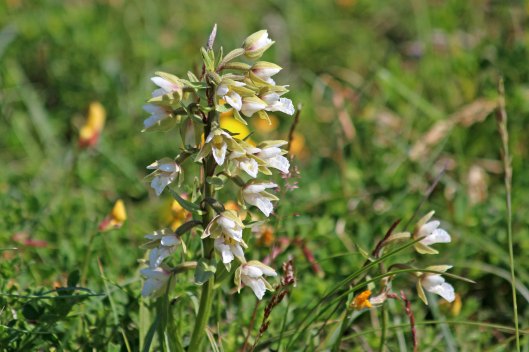
190728 broad-leaved helleborines (1)

I’ve been keeping an eye on these Broad-leaved helleborines for over a month now: at my first visit, the flowers scarcely showed a tinge of red; at my second visit, on 14 July, a couple were in bloom but most still to open; and this morning, many of them had already started to go over.

190728 broad-leaved helleborines (5)
190728 broad-leaved helleborines (6)
190728 broad-leaved helleborines (7)

And, as today was quite windy, my photos are not very sharp so I’ve added in a couple from two weeks ago.

190728 broad-leaved helleborines (2)

Hey ho, at least I managed to see them in all their beauty before they disappear for another year.

190728 broad-leaved helleborines (3)
190728 broad-leaved helleborines (4)
Like Loading...

199/365 Short and prickly

18 Thursday Jul 2019

Posted by sconzani in 365DaysWildin2019, nature, plants, wildflowers

≈ 3 Comments

Tags

#365DaysWild, British flora, Cirsium acaule, Cosmeston, Cosmeston Lakes Country Park, Dwarf thistle, thistle, wildflowers

During today’s walk around Cosmeston I spotted a plant I’ve not seen before – or, at least, I’ve not consciously noticed before. It’s so easy to just walk over the things growing under your feet – although, in this case, if you were walking barefoot you couldn’t help but notice it!

190718 dwarf thistle (1)

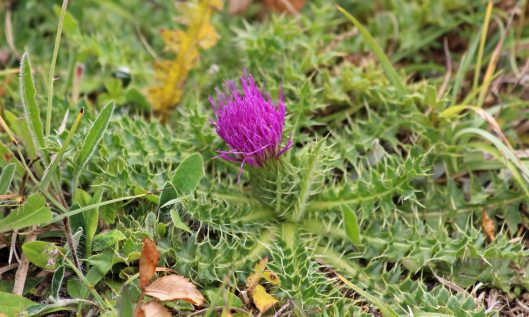
It’s the Dwarf thistle (Cirsium acaule), and it’s easily identifiable as its single flower almost completely lacks a stem – the gorgeous purple flower sits right on top of a rosette of wavy and spiny edged leaves.

190718 dwarf thistle (4)
190718 dwarf thistle (2)

This thistle prefers to grow in low grasslands, particularly on calcareous soils, so it does tend to be quite localised but can be found in England as far north as Yorkshire and in south Wales.

190718 dwarf thistle (3)

Like Loading...

195/365 Imperial colours

14 Sunday Jul 2019

Posted by sconzani in 365DaysWildin2019, flowers, nature, wildflowers

≈ 2 Comments

Tags

British wildflowers, Dyer’s greenweed, imperial colours, Marsh woundwort, purple wildflowers, Rosebay willowherb, Yellow loosestrife, yellow wildflowers

It occurs to me when looking at recent flower photos I’ve taken that the wildflowers currently in bloom have a very imperial look to them: masses of purple, the colour favoured by the emperors of Rome, and swathes of yellow, the colour that dominated the imperial wardrobe in China.

190714 1 marsh woundwort

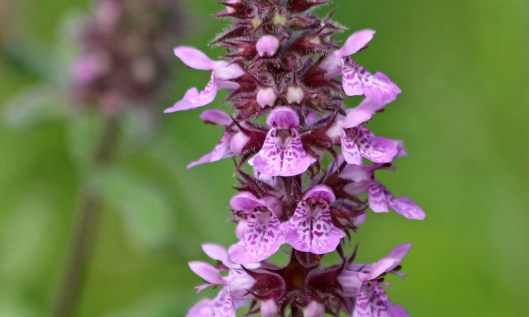
Marsh woundwort (Stachys palustris), found growing in the wildflower meadows in Cardiff’s Hailey Park this week; once regarded as the most effective of the wound-healing woundwort family.

190714 dyers greenweed

Dyer’s greenweed (Genista tinctoria), plentiful at Lavernock Nature Reserve; also found in archaeological remains left by Vikings in York, proving its use as a yellow dye since at least the 9th century.

190714 rosebay willowherb

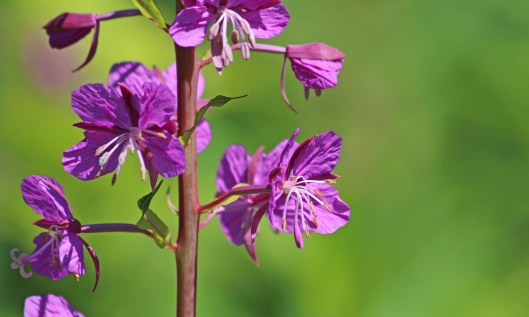
Rosebay willowherb (Chamerion angustifolium), firing up the conservation areas at Cathays Cemetery; nicknamed ‘bombweed’ during World War II when it grew in the London ruins created by German bombing raids.

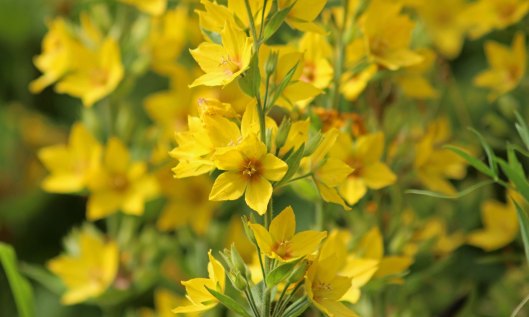
190714 yellow loosestrife

Yellow loosestrife (Lysimachia vulgaris), ablaze beside the River Taff in Cardiff; named in honour of Macedonian King Lysimachus who supposedly fed it to his cattle to calm them, hence lose + strife!

The interesting snippets about these plants were mostly extracted from my Flora Britannica.

Like Loading...

185/365 Beauty and the Beast

04 Thursday Jul 2019

Posted by sconzani in 365DaysWildin2019, flowers, nature, wildflowers

≈ 2 Comments

Tags

#365DaysWild, British orchids, Epipactis palustris, Marsh helleborine, native orchids, orchids, orchids at brownfield site, Rhoose Point Nature Reserve

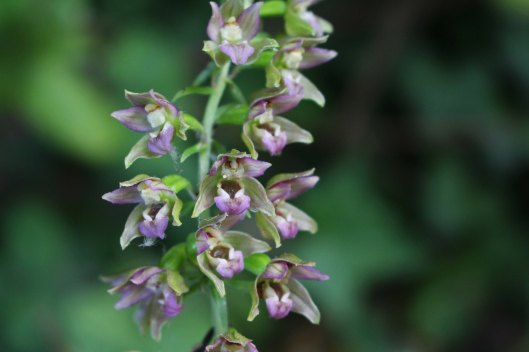
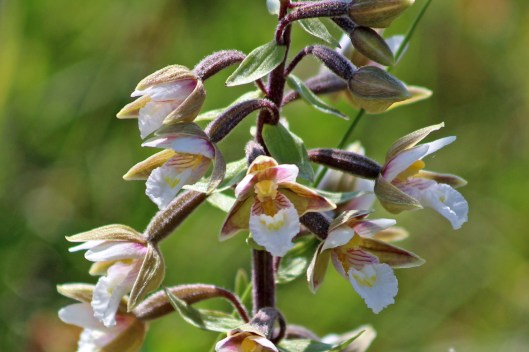
Like many brownfield sites, the former limestone quarries at Rhoose Point, the southernmost point in Wales, are now a nature-filled paradise, and yesterday one area was positively teeming with these beautiful Marsh helleborines (Epipactis palustris).

190704 marsh helleborines (1)

As their name implies, these orchids need water to flourish: the First Nature website says ‘This plant thrives in habitats which are usually submerged with water during the winter and maintain high levels of moisture during the summer. Dune slacks are often home to vast colonies, as are fens which are fed by alkaline springs running through limestone rocks – chalk being the other essential element to enable the Marsh Helleborine to flourish.’

190704 marsh helleborines (3)

I love what Richard Mabey has to say about orchids in Flora Botannica:

These days [their lightweight seed] often fetches up on artificially open habitats, low in nutrients and free of competition (quarries, for example), which replicate orchid-rich natural habitats such as sand dunes and cliff tops. It is this paradoxical, opportunistic quality of many orchids – the exquisite bloom transforming the spoil tip – that has become the basis for the true modern myth of the family, a botanical version of Beauty and the Beast.

190704 marsh helleborines (2)

The Marsh helleborines (and the many other species of orchid) that grow so well in the old Rhoose quarries are a stunning example of this transformation.

190704 marsh helleborines (4)

Like Loading...

183/365 Smiling bees

01 Monday Jul 2019

Posted by sconzani in 365DaysWildin2019, flowers, nature, wildflowers

≈ 4 Comments

Tags

#365DaysWild, Bee orchid, British orchids, faces in flowers

190702 bee orchid (1)

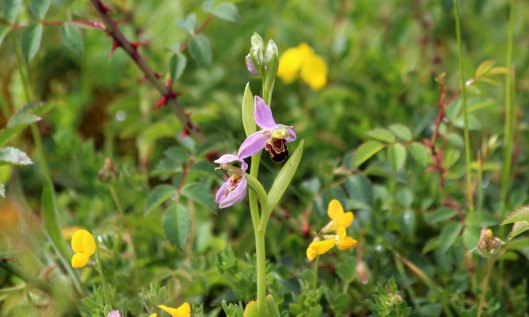
Some of the beautiful Bee orchids in my local wild places are starting to go over now, punished perhaps by the extreme June heat we’ve been experiencing. So, before they disappear completely for another year, I thought I’d share some of their wonderfully cheery, smiling faces. No two are the same.

190702 bee orchid (2)
190702 bee orchid (3)
190702 bee orchid (4)
190702 bee orchid (5)
190702 bee orchid (6)
190702 bee orchid (7)
Like Loading...

180/365 Butterflying in Somerset, part II

29 Saturday Jun 2019

Posted by sconzani in 365DaysWildin2019, insects, nature, wildflowers

≈ 2 Comments

Tags

British butterflies, butterflies, butterfly, butterflying, Collard Hill, Large blue, Large blue butterfly, Marbled white, Wild thyme

Scenario: Three friends go seeking rare butterflies across the border in England.

190629 Collard Hill view

Second location: Collard Hill, in Somerset. A hot walk up the steep hill for more incredible views across picturesque Somerset. And we weren’t far from the legendary Glastonbury Tor.

190629 Glastonbury Tor

Support act: Marbled white. My first sightings of these little beauties for the year, and we saw several flitting back and forth above the long grass.

190629 marbled white

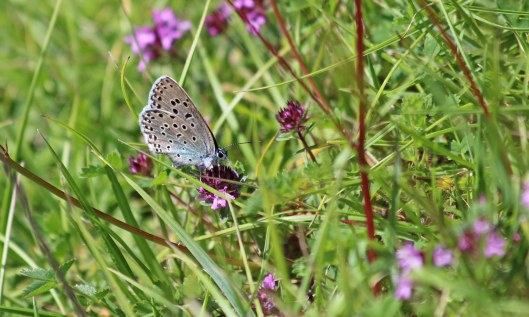
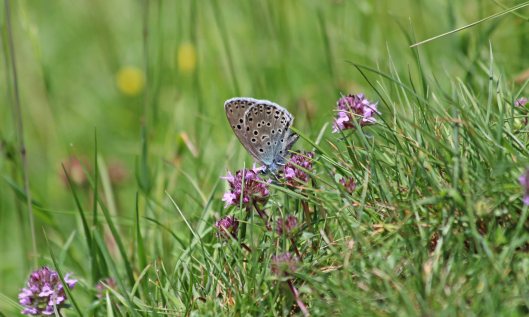
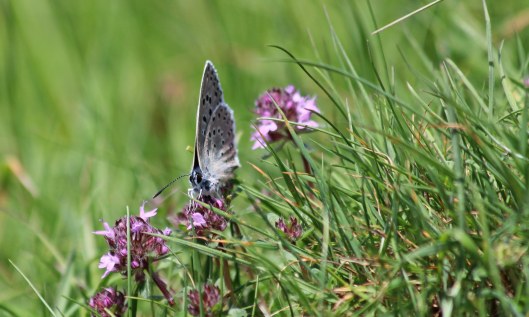
Star attraction: Large blue. Incredibly, this butterfly was declared extinct in Britain in the 1970s but was reintroduced from Sweden to Green Down, a Somerset Wildlife Trust site, in 1992. Since then the butterflies have mostly thrived (though they are affected by weather, habitat and ant conditions – for more on that, check out the National Trust Large blue blog) and they’ve been reintroduced to several other areas, including this site at Collard Hill.
190629 large blue (2)

During our visit, it was very windy at the top and very hot in the lee of the hill, not ideal conditions for seeing the butterflies but, after following the animal tracks back and forth across the hillside, we finally had good sightings of three Large blues on their favourite food plant, Wild thyme. One female was even ovipositing, which bodes well for the coming years.
190629 large blue (3)

It was amazing to see both these Large blues and, earlier in the day, the Heath fritillaries, both lifers for me, and I want to say a huge thank you to Gareth and Alan for letting me join their butterflying expedition. It was a truly magical day!

190629 large blue (4)

Like Loading...

178/365 Oxeyes

27 Thursday Jun 2019

Posted by sconzani in 365DaysWildin2019, flowers, nature, wildflowers

≈ 2 Comments

Tags

British wildflowers, daisies, Dog daisy, Horse daisy, Moon daisy, Moonpenny, Oxeye daisy, white wildflowers, wildflowers

I’ve gone butterflying today – fingers crossed I’ll have some beauties to show you tomorrow. In the meantime, I hope these Oxeye daisies will brighten your day as much as they always do mine.

190627 ox-eye daisy (j)

These are Leucanthemum vulgare, also known as Dog daisies, Horse daisies, Moon daisies, Moonpennies and Marguerites. Once abundant in agricultural grasslands, they’ve been driven out of those areas, mostly because of the industrialisation and chemicalisation of modern farming, so now they’re the early colonisers of brown-field sites and roadside verges, and flourish in unimproved grasslands.

190627 ox-eye daisy (a)
190627 ox-eye daisy (b)
190627 ox-eye daisy (c)
190627 ox-eye daisy (d)
190627 ox-eye daisy (e)
190627 ox-eye daisy (f)
190627 ox-eye daisy (g)
OLYMPUS DIGITAL CAMERA
190627 ox-eye daisy (i)

If you want to know more about these cheery flowers, check out Plantlife’s website, which always has a wealth of fascinating information about Britain’s wildflowers.

Like Loading...

173/365 Orange hawkweed

22 Saturday Jun 2019

Posted by sconzani in 365DaysWildin2019, flowers, nature, wildflowers

≈ 6 Comments

Tags

#365DaysWild, British wildflowers, Cathays Cemetery, Fox and cubs, Grim the collier, orange hawkweed, wildflowers

190622 orange hawkweed (3)

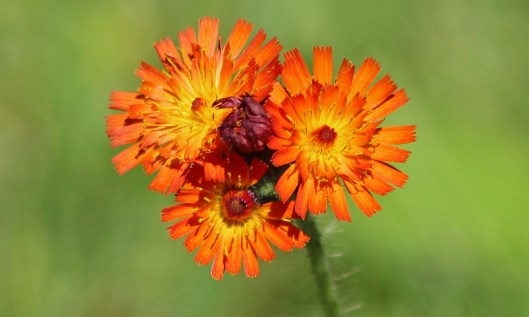
The Orange hawkweed (also known as Fox-and-cubs and Grim the collier) was putting on a magnificent display in Cathays Cemetery today.

190622 orange hawkweed (1)

So, I thought I’d better grab some photos because this is a cemetery that is (mis)managed by the ‘neat and tidy’ brigade, those who place value in strimming everything to within an inch of its life rather than in the beauty of the wildflowers and the food they provide to insects.

190622 orange hawkweed (2)

Like Loading...

169/365 Emergence

18 Tuesday Jun 2019

Posted by sconzani in 365DaysWildin2019, insects, nature, wildflowers

≈ 4 Comments

Tags

#365DaysWild, Bird’s-foot trefoil, British moths, Common spotted orchid, moths, Pyramidal orchid, red clover, Six-spot burnet, wildflowers

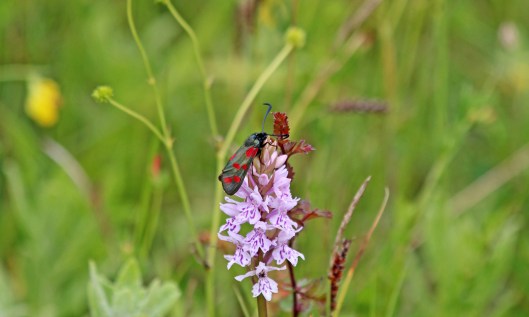
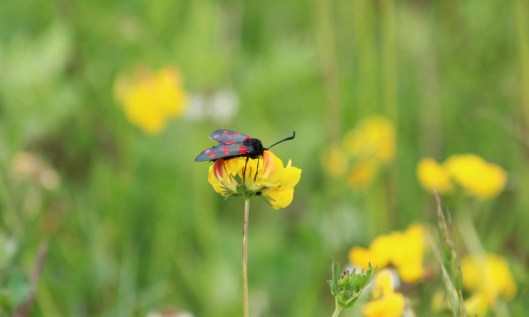
Remember I said on Friday that they’d be ‘coming soon‘, well here they are. The Six-spot burnet moths have begun to emerge, buzzing around the wildflowers like little red-and-black bumblebees. Delightful!

190618 six-spot burnet (1)190618 six-spot burnet (2)190618 six-spot burnet (3)190618 six-spot burnet (4)190618 six-spot burnet (5)190618 six-spot burnet (6)

Like Loading...

167/365 Shelter

16 Sunday Jun 2019

Posted by sconzani in 365DaysWildin2019, flowers, insects, nature, wildflowers

≈ 4 Comments

Tags

#365DaysWild, bumblebee, bumblebee in rose, bumblebee sheltering from rain, wild rose

When the rain continues to fall and the wind to blow, what’s a bumblebee to do but find itself a nice, cosy shelter with food underfoot.

190616 sheltering bumblebee

Like Loading...
← Older posts
Newer posts →

About me

sconzani

sconzani

I'm a writer and photographer; researcher and blogger; birder and nature lover; countryside rambler and city strider; volunteer and biodiversity recorder.

View Full Profile →

Follow earthstar on WordPress.com

Enter your email address to follow this blog and receive notifications of new posts by email.

Recent blog posts

  • Turtle bug March 23, 2026
  • Springtime invasives March 22, 2026
  • Singing Dunnocks March 21, 2026
  • New cat: Large yellow underwing March 20, 2026
  • Curious Coal tit March 19, 2026

From the archives

COPYRIGHT

Unless otherwise acknowledged, the text and photographs on this blog are my own and are subject to international copyright. Nothing may be downloaded or copied without my permission.

Fellow Earth Stars!

  • Unknown's avatar
  • Unknown's avatar
  • Unknown's avatar
  • Unknown's avatar
  • Unknown's avatar
  • Unknown's avatar
  • Unknown's avatar
  • Unknown's avatar
  • Unknown's avatar
  • Unknown's avatar
  • Unknown's avatar
  • Unknown's avatar
  • Unknown's avatar
  • Unknown's avatar
  • Unknown's avatar
  • Unknown's avatar
  • Unknown's avatar
  • Unknown's avatar
  • Unknown's avatar
  • Unknown's avatar
  • Unknown's avatar
  • Unknown's avatar
  • Unknown's avatar
  • Unknown's avatar
  • Unknown's avatar
  • Unknown's avatar
  • Unknown's avatar
  • Unknown's avatar
  • Unknown's avatar
  • Unknown's avatar
  • Unknown's avatar
  • Unknown's avatar
  • Unknown's avatar
  • Unknown's avatar
  • Unknown's avatar
  • Unknown's avatar
  • Unknown's avatar
  • Unknown's avatar
  • Unknown's avatar
  • Unknown's avatar
  • Unknown's avatar
  • Unknown's avatar
  • Unknown's avatar
  • Unknown's avatar
  • Unknown's avatar
  • Unknown's avatar
  • Unknown's avatar
  • Unknown's avatar
  • Unknown's avatar
  • Unknown's avatar

Blog at WordPress.com.

Privacy & Cookies: This site uses cookies. By continuing to use this website, you agree to their use.
To find out more, including how to control cookies, see here: Cookie Policy
  • Subscribe Subscribed
    • earthstar
    • Join 668 other subscribers
    • Already have a WordPress.com account? Log in now.
    • earthstar
    • Subscribe Subscribed
    • Sign up
    • Log in
    • Report this content
    • View site in Reader
    • Manage subscriptions
    • Collapse this bar
 

Loading Comments...
 

You must be logged in to post a comment.

    %d