Leafmines: Eriocrania unimaculella

Tags

, , , , , ,

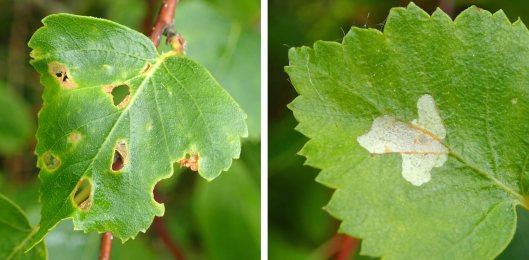
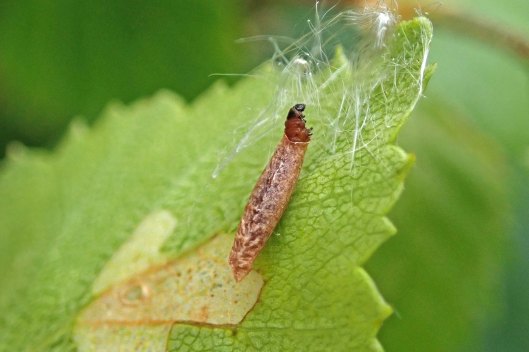
The moth formerly known as Heringocrania unimaculella, now known as Eriocrania unimaculella – either way a tongue twister! – spends its larval stage developing within the leaves of Birch trees. And it poohs … a lot … pooh that Rob Edmunds, expert from the British Leafminers website, describes as ‘long strands of spaghetti’. There are several Eriocrania species that can be difficult to identify but Rob produced an excellent well-illustrated guide explaining how to separate them in his March 2018 newsletter (click to access). The adult moth is a tiny golden critter, which you can see on the UK Moths website.
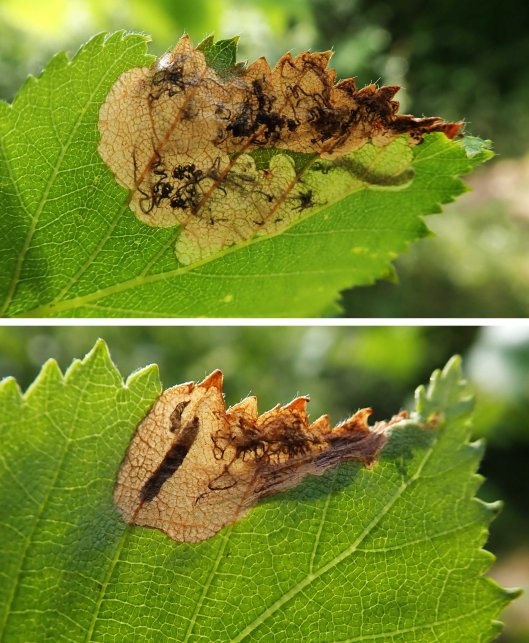
230522 eriocrania unimaculella on birch

Common gromwell

Tags

, , , ,

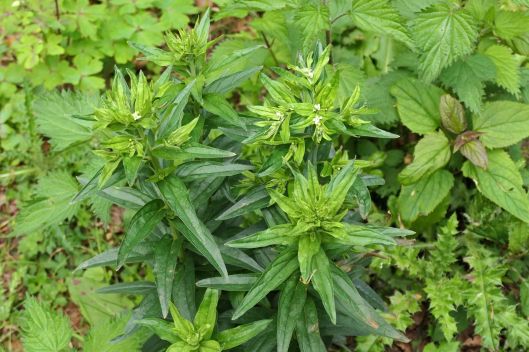
This was the third highlight of my visit to Slade Wood on Wednesday, a plant I’d never seen before. It wasn’t too difficult to identify once I got home, as the flowers looked a lot like those of Forget-me-not so I turned straight to that section of my wildflower guide. Say hello to Common gromwell (Lithospermum officinale) (also known as European stoneseed).

230521 common gromwell (1)

It’s a perennial, flowers from May to August, and is quite prominent in the landscape, a rough hairy plant growing up to one metre tall, so must’ve been in situ during my previous visits to this woodland. Perhaps I was so focused on butterflies, I didn’t notice it. Woodland rides – and rough, stony scrubby areas – are where this native plant thrives, but only in the southern parts of Britain, so any northerners out there will have to come south to see it.

230521 common gromwell (2)

Go, green tiger!

Tags

, , , ,

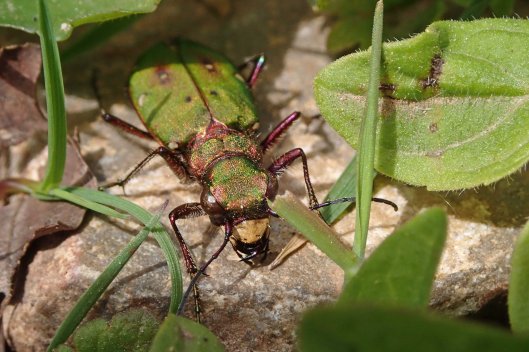
This was the third Green tiger beetle (Cicindela campestris) I saw during Wednesday’s wander around Gwent’s Slade Wood but the other two, true to their tiger name, sped off on their long legs before I could get close enough for photos. I think this one probably thought it was well enough camouflaged amongst the vegetation but a beam of sunlight reflecting off its iridescent green colouring gave it away. In fact, the genus name Cicindela is the Latin word for glowworm, which, presumably, is named for that metallic sheen. It’s a beautiful creature, though I do think it would be rather scary and quite intimidating if it were any more than 10-15mm long.

230520 green tiger beetle

Lycogala slime mould

Tags

, , , ,

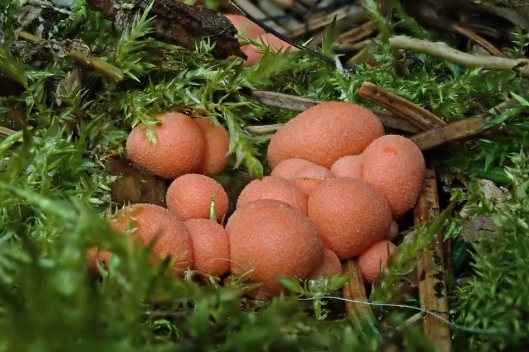
A train journey to a woodland in the next county earlier this week didn’t turn up the butterflies I was hoping for but I took consolation in the fact that I did see several things I don’t usually see locally. The first of these (the next couple of blogs will feature others) is usually found on rotting trees, so there’s no real reason I don’t see it in local woodlands – maybe it’s just a matter of timing. This is the enigmatic slime mould, Wolf’s milk. It could either be Lycogala epidendrum or L. terrestre but I won’t know which unless I revisit the site in a week or so. I explained the reason for this in two previous blogs (the initial find featured in Wolf’s milk, 16 June 2021, followed by the species reveal Wolf’s milk update, 2 July 2021).

230519 wolfs milk slime mould

Andrena haemorrhoa

Tags

, , , , ,

Bee-cause I hardly ever manage to identify bees to species, I just had to share this one that was a first for me and has been identified. My local go-to guy for bee identification, Liam from Buglife Cymru, says this is a ‘nice distinctive one with the orange thorax and black abdomen with bright orange tail. Also orange hind legs beneath the pollen brush’. Meet Andrena haemorrhoa, in this case a female specimen. When I recorded it, the common name came up as Orange-tailed mining bee, though the Naturespot website calls it the Early mining bee. Same same, but different.

230517 Andrena haemorrhoa

Hairy dragonfly

Tags

, , , , ,

The British Dragonfly Society website describes this lovely creature as the ‘UK’s smallest, hairiest Hawker that emerging [sic] before other Hawkers in May’, so the name Hairy dragonfly (Brachytron pratense) seems appropriate. The website also says it is ‘mainly found near unpolluted, well-vegetated water bodies’, though this particular beastie was in a secluded woody clearing, with a probably polluted (as once a quarry), definitely not well-vegetated lake a couple of hundred metres away. So, don’t write off the possibility if you see a potential Hairy dragonfly in an odd habitat! All that being said, this is a species I don’t see very often so I was very pleased to have found one.

Leafmines: Coleophora serratella

Tags

, , , , , ,

I’ve been checking Birch trees since their green leaves first started to unfold, prompted by a post I’d seen by Rob Edmunds (@leafminerman on Twitter) of the British Leafminers website to check for the small holes created by the feeding of the tiny Common case-bearer moth, Coleophora serratella. Finally, last Tuesday, I found some on a tree in Cardiff’s Grangemoor Park.

And, luckily, the little case-bearing larva was still in situ, initially checking out some silky seedhead fibres that had lodged on the end of its leaf, then retreating to the patch that marked where it had been feeding and resumed munching. You can read more about this beauty on the British Leafminers website and see the adult moth on the UK Moths website.

Six Speedwells

Tags

, , , , , , ,

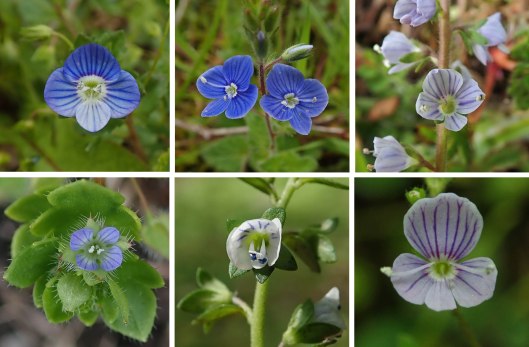
This week’s #WildflowerHour challenge was to find and identify as many of the Speedwell species as possible. I managed to find six, had hoped for more but will just have to keep searching on future walks. Close-ups of the flowers of my six are shown below – they are Field, Germander, Heath, Ivy-leaved, Thyme-leaved and Wood speedwell.

230514 six speedwells (1)

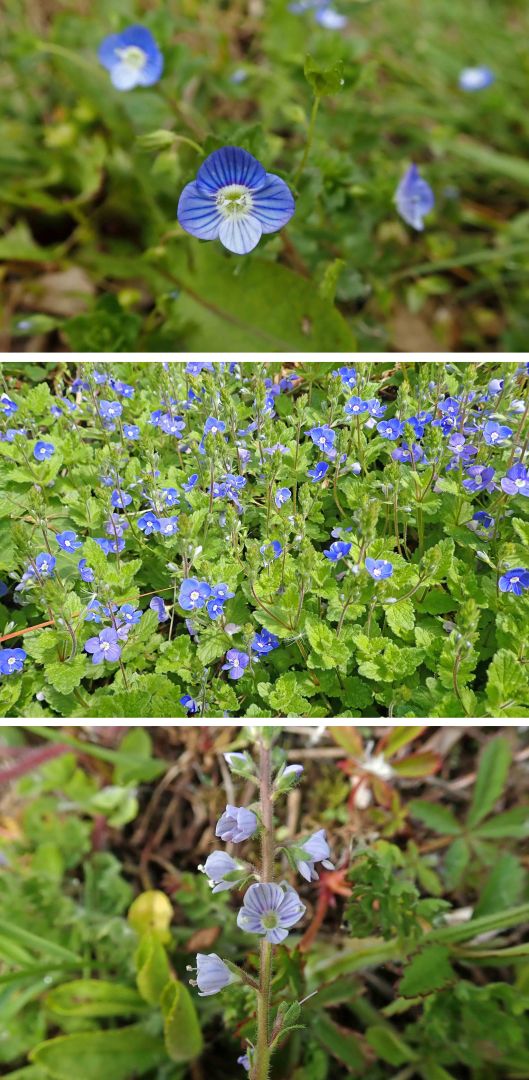
And here are photos showing their more general features. These are in the same order as above – their scientific names are Veronica agrestis, Veronica chamaedrys, and Veronica officinalis.

230514 six speedwells (2)

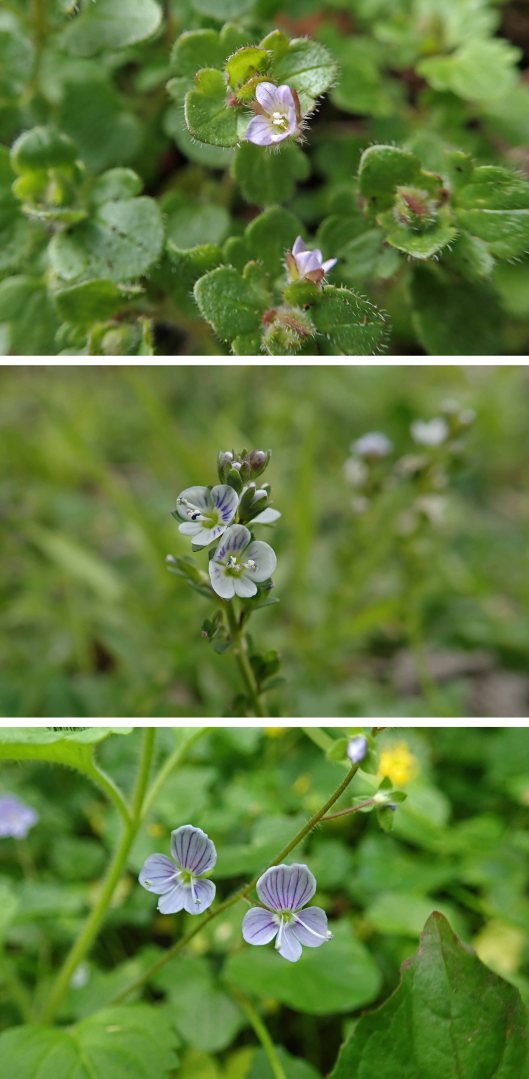
And the final three: Veronica hederifolia, Veronica serpyllifolia, and Veronica montana. If, like me, you’re confused about the Speedwells and what some hints on how to identify them, Moira (@NatureLark on Twitter) has produced an excellent crib sheet which you can find here.

230514 six speedwells (3)