Woodlouse: Porcellio spinicornis

Tags

, , , , ,

I’ve been leaf diving again, just ten minutes spent picking up and thoroughly examining soggy Sycamore leaves during one of my local walks.

230202 Porcellio spinicornis

So well camouflaged was it that I almost missed this little mini-beastie, which I initially thought was a Common striped woodlouse (Philoscia muscorum) but, on closer inspection of its antennae, I now think must be Porcellio spinicornis. According to the Naturespot website, the distinguishing characteristic is the number of flagellal segments at the tip of the antennae: Porcellio spinicornis has two, while Philoscia muscorum has three. If I’d known this at the time, I would’ve taken better close-ups but I’ve tried to illustrate the differences below.
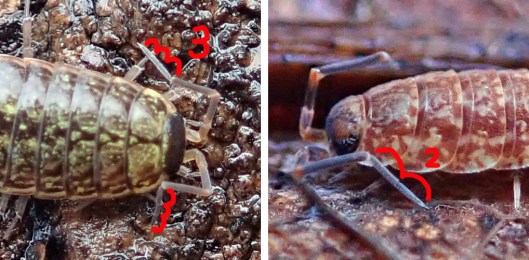
230202 woodlouse antennae

Song vs Mistle

Tags

, , , , ,

While we’re on the subject of Song thrushes
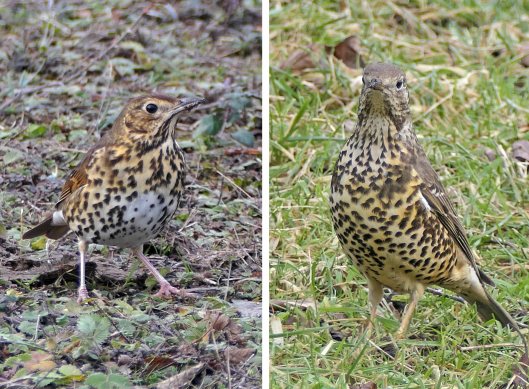
I know many people have trouble working out whether the bird they’re seeing is a Song thrush or a Mistle thrush. As I’ve managed to get reasonably close photos of both recently, I thought I’d post a blog comparing the two.

230201 song and mistle thrush (1)

The Song thrush (left) is smaller than a Blackbird, has arrowhead-shaped markings on its upper breast, its tail is the same colour as the rest of its back, and the edges of its wing feathers are a pale orange-buff colour. The Mistle thrush (right) is larger than a Blackbird, has breast markings that start off looking like sharp thorns then become more rounded and often smudge together, its tail tends to be a different colour to its back, and its wing feathers are usually edged in white. Also, the Mistle thrush has a very upright stance and often looks like it has a bit of a pot belly. The British Trust for Ornithology has an excellent short video on YouTube if you want to learn more.

230201 song and mistle thrush (2)  –  Song thrush, top, and Mistle thrush, below
Song thrushes are a’singing

Tags

, , ,

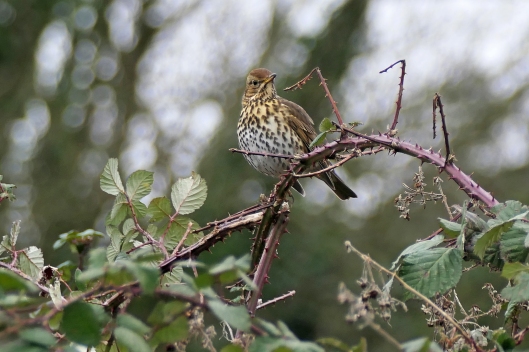
When a bitterly cold wind is making the tips of your nose and fingers feel like ice, it may not feel like Spring is just around the corner but the birds seem to think it is. I’ve seen Magpies fiddling sticks into years-old nest structures, and heard Dunnocks and tits singing for potential mates. And, yesterday, this beautiful Song thrush was sitting atop a big mound of scrub and bramble, singing his heart out. I wasn’t the only person to stop, look and listen.

230131 song thrush

First Primroses

Tags

, , , ,

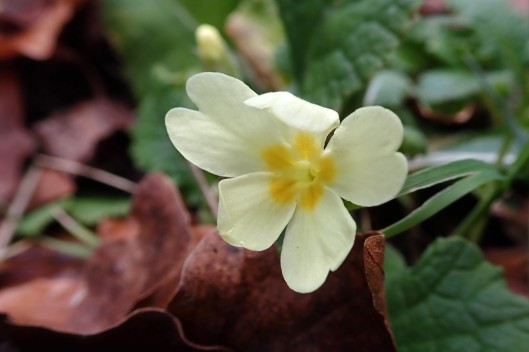
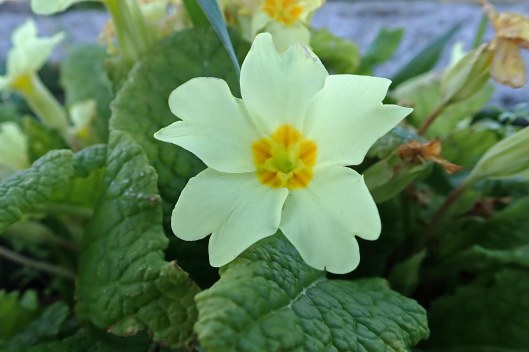
I went hunting spring wildflowers on Friday but was, for the most part, disappointed. There was an abundance of Lesser celandine leaves but no sign of any flowers, and the merest sprinkling of Snowdrops, though no open flowers. I was, however, much more lucky with Primroses, with a single plant flowering amongst a sea of plants on a grassy hillside in a local park.

230129 primrose (1)

And then a circuit of the yard around a local church brought another plant flowering amongst the graves. Spring is coming …

230129 primrose (2)

Encounters with grebes

Tags

, , , ,

I’ve had two interesting encounters with Little grebes in the past week. The first was being relatively close to this little cutie having a bath, a delightfully splashy affair.

230128 little grebes (2)

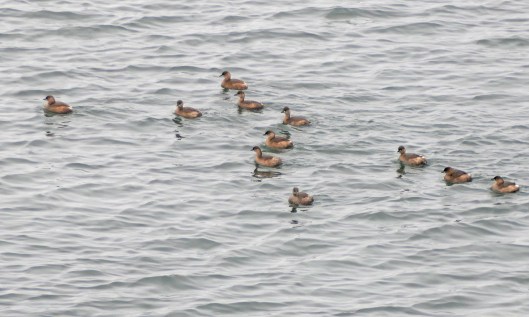
Then, a couple of days later, I noticed this gang of Little grebes floating along the River Taff. At this time of year they often seem to congregate around the area where the Taff flows in to Cardiff Bay (I counted 28 thereabouts recently). I don’t know the reason for this but I wonder if it is some kind of pre-breeding behaviour, where the single grebes come together to appraise each other, looking for potential mates.

230128 little grebes (1)

Fern Friday: Hart’s-tongue

Tags

, , , ,

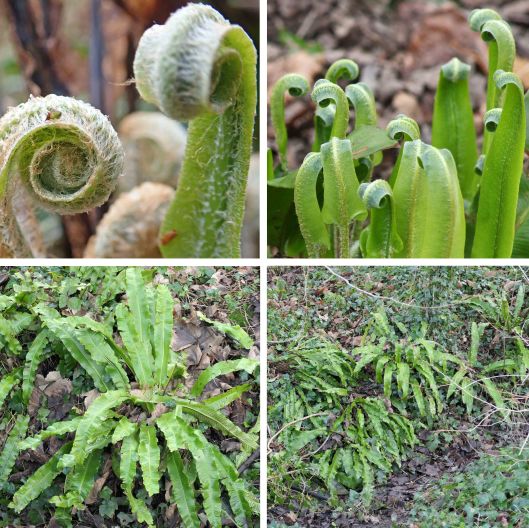
Perhaps, when I began these Fern Friday blogs, I should have started with the fern with the most basic shape, the one with the long simple leaf shaped, apparently, like the tongue of a deer (commonly called a hart in former days), the Hart’s-tongue fern (Asplenium scolopendrium). As it grows everywhere in Britain except in the colder far northern regions, and can be found draping stone walls, in woodland, under hedgerows, in roadside ditches, I’m sure this fern will be familiar to most of you.

230127 hart's-tongue fern

Hart’s-tongue has featured on this blog before, in particular because its glossy leaves provide a home to several species of leafminers, including these two Leafmines: Psychoides filicivora 3 January 2022 and Leafmines: Chromatomyia scolopendri 1 March 2021.

Feasting Chiffchaff

Tags

, , , , ,

So many flies, so little time …
Although the majority of Chiffchaffs still migrate to warmer southern climes for the winter, increasing numbers can now be seen over-wintering locally. This little beauty was feasting well on the hundreds of tiny gnat-like flies that had emerged in Monday’s sunshine.

230126 chiffchaff

A Water vole does lunch

Tags

,

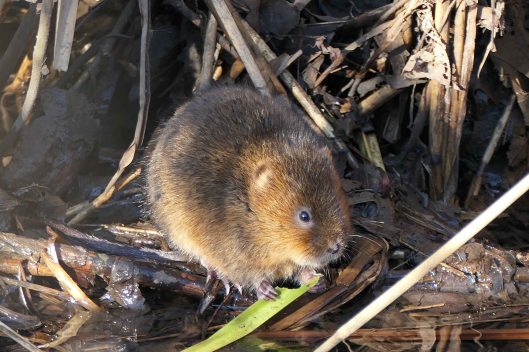
I was listening to a Water rail squealing from the reeds growing alongside a local brook, getting tantalising but very fleeting glimpses of it moving stealthily along the water’s edge, when I realised I could hear another sound, a slight but regular rustling. I scanned the edge of the brook again and there, sitting in plain sight, was the well-camouflaged brown blob of a Water vole, munching contentedly on a green reed. It made for a much more obliging photographic subject, and a very cute one at that.

230125 water vole

A cool cloud

Tags

, , , ,

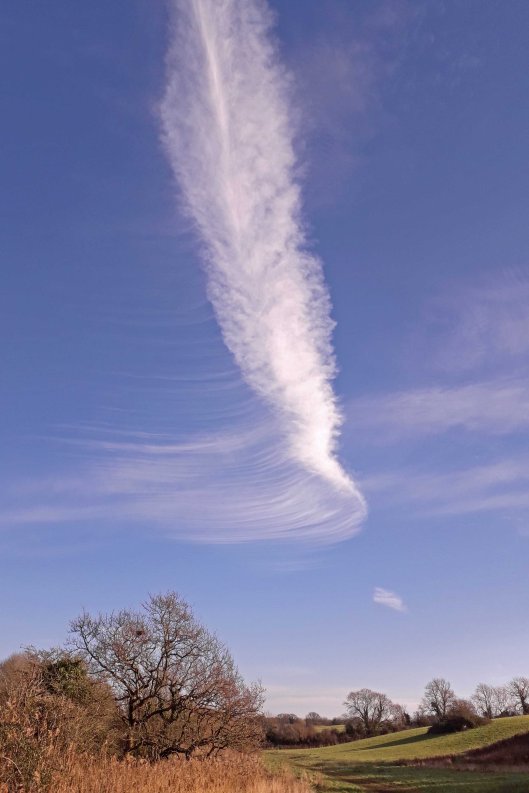
I had no idea what type of cloud this was but, luckily, one of my fellow local birders is much more knowledgeable about such things. Peter wrote: ‘I think they’re fall streaks from a contrail where ice crystals drop out of the cloud and get drifted by the winds aloft. Normally seen dropping from cirrus or other high-level clouds.’

230124 cloud (1)

As the cloud drifted overhead, it came to look more and more like a magnificent gigantic feather. (The photo below was taken with my phone, which is why the colours look a bit different from the photo above.)

230124 cloud (2)