Sea holly

Tags

, , ,

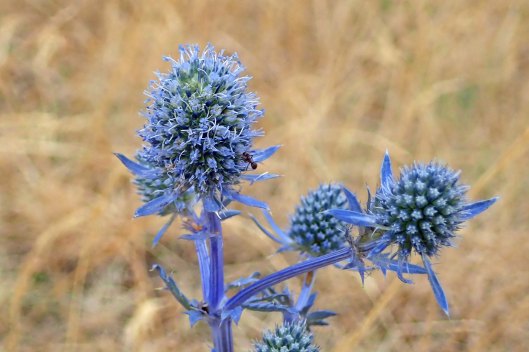
There’s no mistaking Sea holly (Eryngium maritimum) – no other plant is so blue and spiky. I only see it locally in one place, growing in the sandy soil of the Cardiff Bay Barrage, where it may originally have been introduced in a sown wildflower mix but has since made itself at home and prospered. In Flora Britannica, Richard Mabey explains that the leaves ‘are covered with a waxy cuticle, a device to help the plant retain water in salt winds and seaside sunshine’. And, despite its name and how spiky it is, it’s not related to Holly the shrub/tree but is, rather, a member of the carrot family.
220817 sea holly

Garden warbler

Tags

, , ,

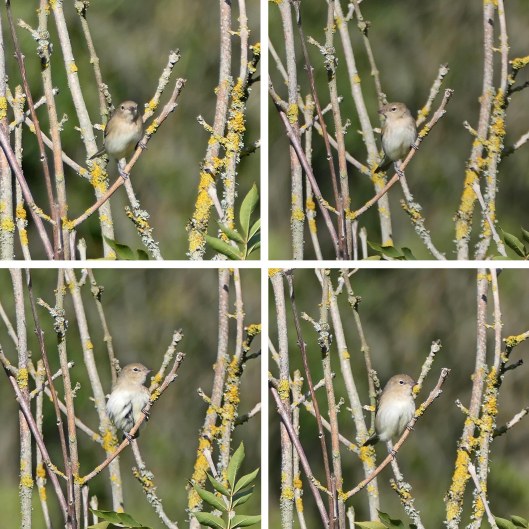
Most of my sightings of Garden warblers have been fleeting and partial, heads poking through leaves to snatch Elderberries, passing glimpses through gaps in foliage, or, sometimes, not even sightings at all, just the joy of hearing their melodious warbling, which has been favourably compared to that of the Nightingale. So, imagine my delight when this beautiful creature stayed put in its tree, stared me in the eye, moved its head from side to side like a model going through their poses. Maybe the heat had made it sluggish – I know how it felt! Or, perhaps, it was a young bird and didn’t realise it should be wary of creatures it didn’t recognise. Whatever the reason, I was very pleased to take advantage and grab some photos.

220816 garden warbler

Three days in a row

Tags

, , ,

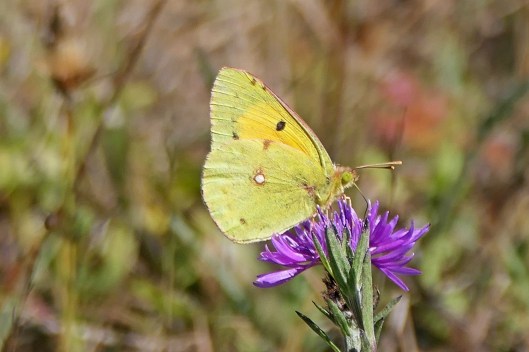
I couldn’t believe my luck (and wondered whether I should’ve bought a lottery ticket) but, after the first lucky day (Brown argus) and a second lucky day (the Silver-washed fritillary), the very next day my luck was in again. I’d seen Clouded yellow butterflies already in 2022 (one on 16 June; two – probably the first one and a friend – on 17 June; one – probably one of the previous two – on 20 June; all in the same general area) but hadn’t been able to get any reasonable photos. With the new camera, and a slightly more co-operative subject – it stopped a few times to feed, this time I managed to fire off several quick shots. This is the best of them.

220815 clouded yellow

p.s. I wrote this blog a few days ago and, since then, we’ve had an amazing influx of Clouded yellows, with five noted yesterday at Cosmeston Lakes Country Park, so here’s another of these beauties.

220815 clouded yellow (2)

Tufted ducklings

Tags

, , , , , , ,

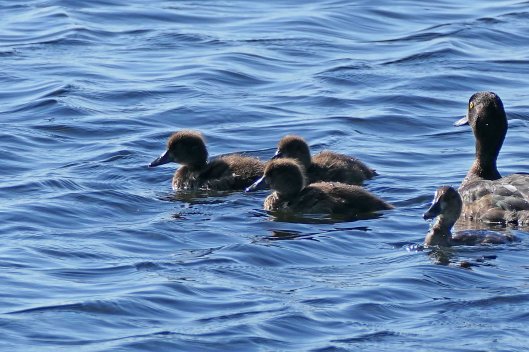
Once upon a time (22 July, to be precise) there were ten Tufted ducklings, tiny little fluff bundles following their mother as she ventured tentatively out from the reed beds at Cardiff Bay wetlands. Seventeen days and, presumably, many hungry gulls later, there were four Tufted ducklings. It’s a sad story but almost inevitable in this bird-rich wetland setting. The good news is that the remaining four should now be large enough to be safe from more hungry gulls. When young and at a distance, the ducklings looked black but now, seen more closely, they look a rich, chocolatey brown, and drop-dead gorgeous!

220813 tufted ducklings

Second lucky day

Tags

, ,

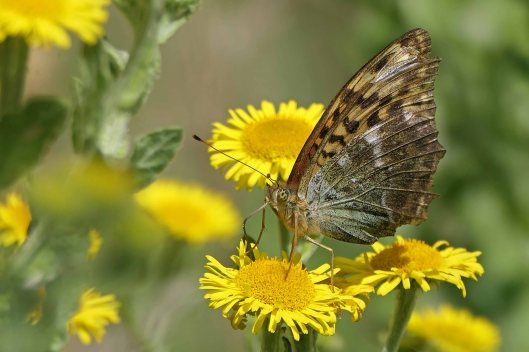
My first lucky day happened when I took the new camera for its first outing, and not only produced the Robin photo I posted yesterday but also the Brown argus I blogged about on Wednesday. The very next day I was, if anything, even more lucky, as I found this superb, if rather faded Silver-washed fritillary in a local woodland. Long time followers might remember I found a male Silver-washed frit (A golden surprise) last July, which was in the same woodland. This latest butterfly was quite a distance from last year’s find spot but that may just be because the scarcity of food sources had forced it to fly a little further than usual. This year’s butterfly is a female so I’m hoping she had found/can find a male and laid/will lay some eggs.

220812 silver-washed fritillary

Old bird, new camera

Tags

, , ,

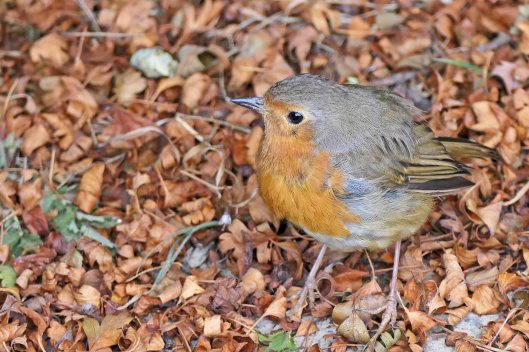
At last, I’ve been able to address the photographic gap that resulted when my 75-300mm lens stopped working a few months ago, though rather than simply replace the lens, I’ve opted for a new camera, a bridge camera with a 25-400mm lens, so I no longer have to lug about a camera body and multiple lenses (the details, if you’re interested, are on my ‘Resources’ page). I’m still adjusting, learning, experimenting, running on auto much of the time but, so far, I’m pleased with the images I’m getting and hugely delighted to be able to photograph my beloved birds, like this little Robin, once again.

220811 robin

Finally, Brown argus

Tags

, , ,

The Brown argus butterfly (Aricia agestis) usually has two broods each year, the first adults flying during May and June, the second brood appearing in late July and fading away in late September. Somehow, I missed the first brood this year so, for the last couple of weeks, I’ve been systematically checking the spots of every female Common blue (at a glance, they look quite similar to Brown argus – see my July 2018 blog Flying on the wings of confusion for tips on how to differentiate the two species). Finally, last Friday, this beautiful Brown argus flitted into my field of vision. I didn’t quite do a happy dance but there was a not-too-loud ‘Whoop’!

220810 brown argus

Feather: Green woodpecker

Tags

, , , , ,

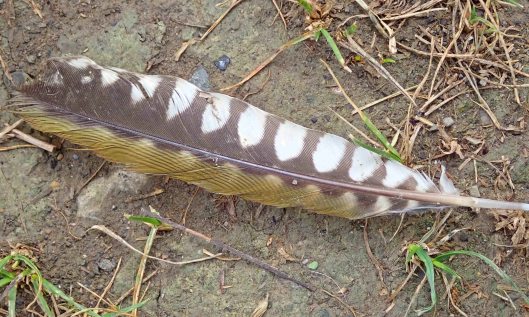
What a treasure this is! Almost as good as finding a Jay feather, and just as distinctive, with the green colour all down one side of the central spine (called the rachis). Of course, I brought it home … I was going to write ‘to add to my collection’ but my collection is gone. All the gorgeous feathers I had collected and placed in a container in my living room were attacked by house moths earlier this year, munched to smithereens by their larvae. Now I only keep the smaller feathers I find and glue them into my nature journals, where I’m hoping they’ll be safe.

220809 feather green woodpecker

The killing stone

Tags

, , , , , ,

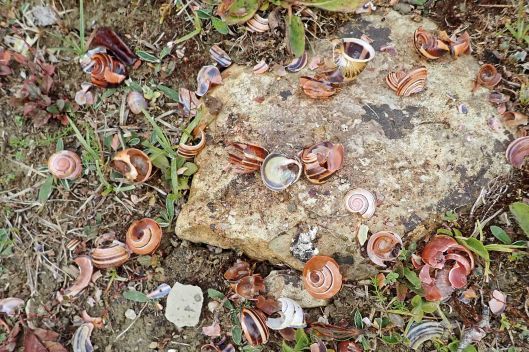
I heard it before I saw it, that persistent tap tap tap of a bird, a Song thrush, dashing a snail against a stone, its anvil, to free the shell of its juicy contents. I’ve read that thrushes often use the same stone over and over and, when I found this particular stone, I could certainly believe it. Just look at all those broken snail shells. It’s sad for the snails but good for the Song thrush and its offspring.

220808 thrush anvil