Wild word: sessile

Tags

, , , , ,

Sessile: adjective; Botany zoology (of a plant or animal structure) attached directly by its base without a stalk or peduncle (Oxford Dictionary).
Dwarf thistles (Cirsium acaule) are also known as Stemless thistles and are a good example of a sessile plant. The only local patch of Dwarf thistles I know is flourishing this year, as their preference is for ‘dry grassy habitats’ on ‘calcareous soils’ (Naturespot website).
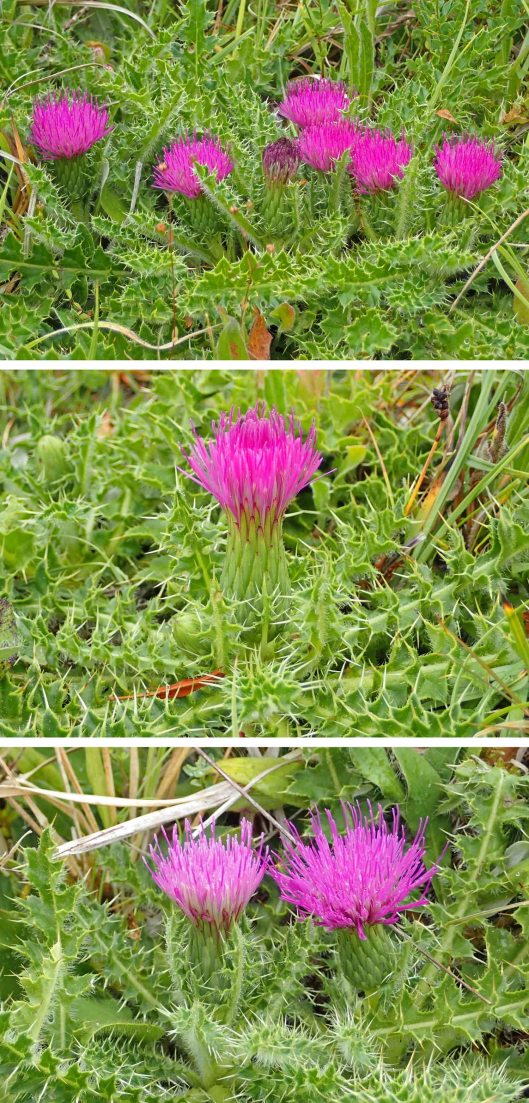
220807 dwarf thistles

Cygnets

Tags

, , , , , ,

Cygnet. It’s an unusual word, a strange combination of letters, so I checked the Oxford Dictionary for its origin: ‘Late Middle English from Anglo-Norman French cignet, diminutive of Old French cigne ‘swan’, based on Latin cycnus, from Greek kuknos‘.
The Mute swan cygnets below are some of this year’s fledglings in Cardiff Bay. They’re now mostly living independently from their parents, though still like to keep close company with their siblings.

220806 cygnets

Humongous fungus

Tags

, , , , ,

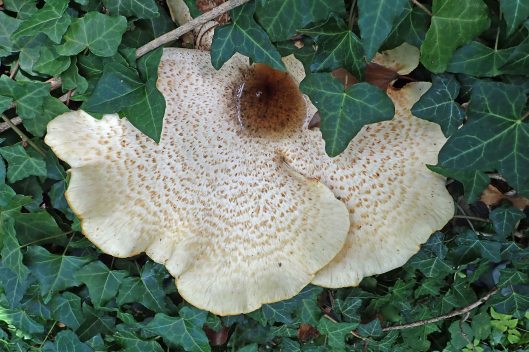
During Monday’s local meander I was hugely surprised to spot this humongous fungus, though I shouldn’t have been. Dryad’s saddle (Polyporus squamosus) is actually one of the first bracket fungi to appear each year, often sprouting its saddle-shaped ledges during the summer months when you’d least expect fungi to appear. This one was in a shady woodland, in an area less affected by the scorching sun that’s parched much of the land around here, so it was certainly a much more fungi-friendly location.

220805 dryads saddle

Parasitic wasps on Teasel

Tags

, , ,

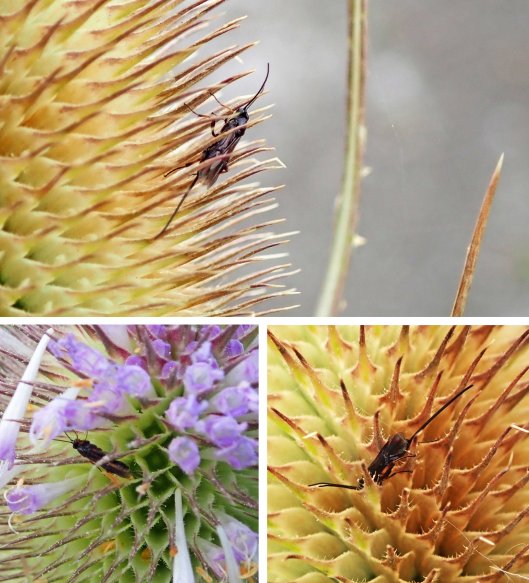
A year ago I wrote about the moth larvae I’d found living inside Teasel seed heads (Inside a Teasel seed head, July 2021). This year, during my recent walks, I’ve noticed small parasitic wasps on many of the flowering Teasels I’ve seen. I haven’t been able to identify these wasps but it occurs to me that they may have been seeking that same species of larvae I saw last year, prodding and poking with those fierce-looking ovipositors until they found a soft body in which to lay their eggs.

220804 parasitic wasp on teasel

A hawking migrant

Tags

, , , ,

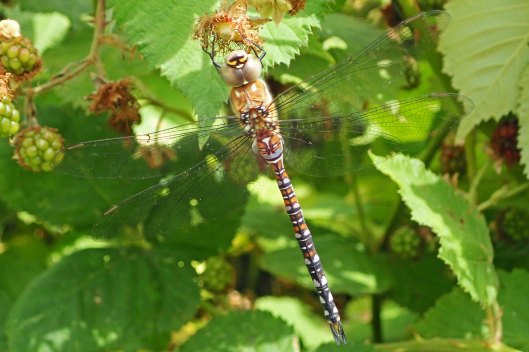
The latest dragonfly species for 2022 to blip on my inexpert odonata radar is this Migrant hawker (Aeshna mixta) that was lurking amongst the brambles along a local footpath. I disturbed it with my blundering and it flew off, hawking a few insects as it wove this way and that. Fortunately, after a couple of minutes, the hawker returned to its perch, and I was able to get a closer look and a few photos.

220803 migrant hawker

Twinkle toes

Tags

, , , , , , ,

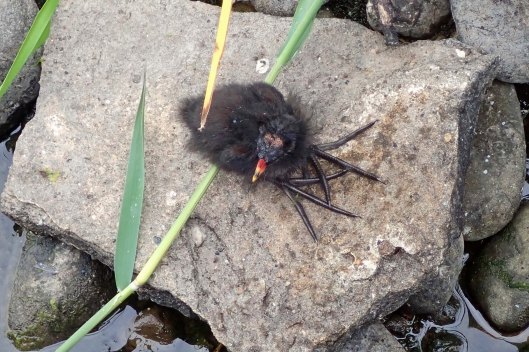
Can you even begin to imagine what it would be like to have toes as long as this Moorhen chick? It would be like having toes as long as our bodies. We’d be falling over ourselves trying to move about. But not the Moorhen. Although this little one was still young enough not to have full control over its lengthy extremities, one of its parents put on a display that showed exactly what they’re good for, spreading its weight as it sprinted across the leaves of water lilies, almost as if it was walking on water.

220802 moorhen chick

Stenodema laevigata

Tags

, , , ,

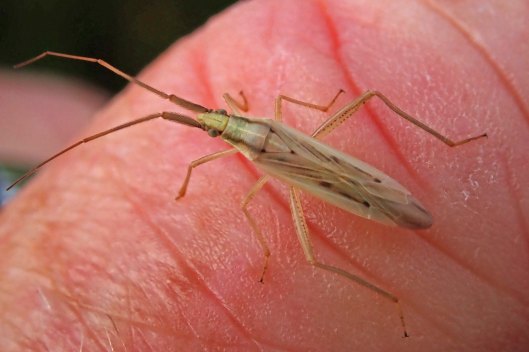
I cannot tell a lie – I didn’t find this bug, it found me. As I was wandering around a local field, I glimpsed something flit up from the flowers and looked down to find it sitting on my t-shirt. Very obligingly, it waited until I got my camera out of my pocket and was then persuaded to climb on to my hand for some photos. Meet Stenodema laevigata, another of the Miridae family of plant bugs. This species is much more common and widespread, with over 3000 records currently showing on the NBN Atlas webpage, or perhaps it’s more often recorded because its slim shape and singular markings make it easier to identify.

220801 Stenodema laevigata

Adelphocoris lineolatus

Tags

, , ,

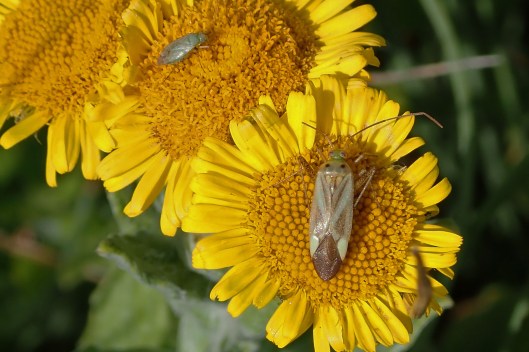
At last a bug with a common name – Adelphocoris lineolatus is also known as the Lucerne bug, though it actually favours quite a wide variety of food plants and, as you can see, I found it sitting on Common fleabane (Pulicaria dysenterica). This species is a little trickier to identify but its combination of paired lines and double spots helped me nail it down. As with yesterday’s mirid bug, records for this species are scattered and mostly to be found in southern Britain, though some adventurous individuals have been recorded in Scotland. (I have not identified the smaller bug in this picture – my photo didn’t show enough details and I suspect it might have fallen into the ‘too hard’ basket anyway.)

220730 Adelphocoris lineolatus

Oncotylus viridiflavus

Tags

, , , , ,

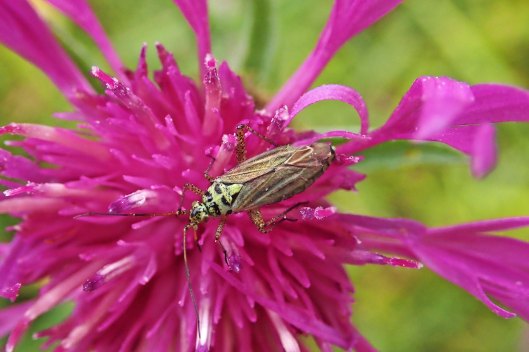
High summer is prime time for spotting plant bugs. By keeping an eye out for insects on wildflowers, I’ve managed to spot three new (to me) species in the past week alone. This is one of them: a mirid bug with a mouthful of a name, Oncotylus viridiflavus. A lot of these bugs have very similar markings and can be tricky to tell apart but, luckily, this little guy has quite distinct colouration and patterning and, very helpfully, was sitting right where it should be, on top of its food plant, Knapweed. The records for this species are scattered throughout the southern half of Britain but there are a lot of gaps in the map – perhaps you can be the first to find one in your area.

220729 oncotylus viridiflavus