Cool cats

Tags

, , , , , , ,

Butterflies, moths, sawflies – all have larvae that look like caterpillars, cats. It’s that time of year when I feel compelled to check any leaves with holes to try to find the hole-maker, and so I’m finding lots of cool cats. These are just a few of the recent leaf-munchers I’ve discovered, some I can identify, some I can’t but that’s not always important: Lackey, unknown, Mirificarma lentiginosella, unknown, unknown, Drinker, Orange-tip, and Copper underwing.

220519 caterpillars

A migrant returns

Tags

, , , , ,

Today’s guest has travelled thousands of miles to be here with us today (and is, understandably, looking a little jaded after such a long flight). Distinguished guests, please give a warm welcome to the Painted Lady!

220518 painted lady

I’d seen a report from the Suffolk butterfly recorder on Twitter on 16 May that, a few days previously, Painted Ladies had been seen ‘in their thousands streaming through Spain from north Africa’, so I’ve been keeping an eye out for the first to reach us here in south Wales. It’s a migration miracle!

A crow companion

Tags

, , ,

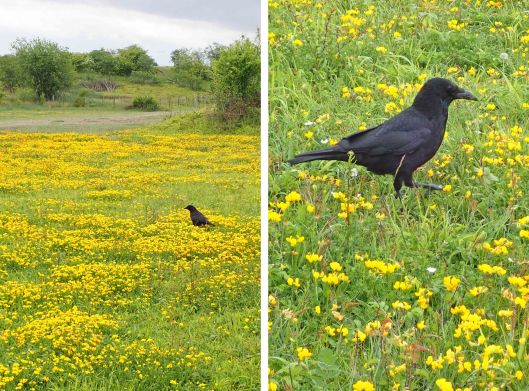
I had company as I walked very slowly along the west paddock paths at Cosmeston Lakes Country Park yesterday. This Carrion crow is one of a pair that frequents the area and, as they are fed almost daily by a local visitor, they’ve become quite used to quiet humans. I confess I have given them seed from time to time and I’m sure crows are smart enough to recognise individual people, so it may also have been hoping for a treat from me. No such luck, but it seemed to be finding plenty of tasty morsels amongst the glorious Bird’s-foot trefoil as we walked along together.

220517 crow

Twayblades

Tags

, , , ,

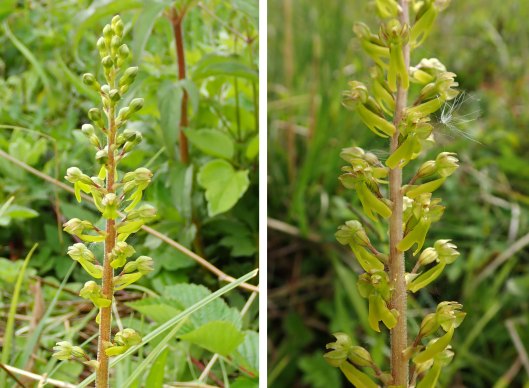
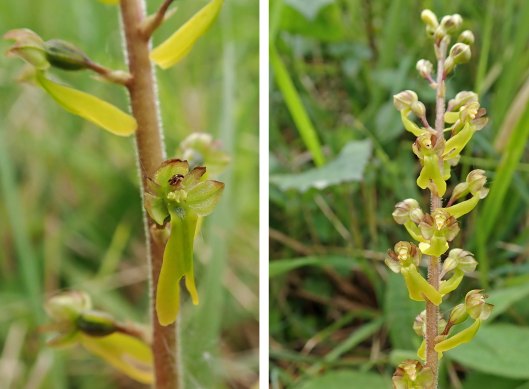
You could’ve knocked me down with a feather when I spotted these Twayblades (Neottia ovata) during this morning’s walk. I’ve visited this place at least once a month for the last five years, probably more frequently at this time of year to look for butterflies and other insects, yet I’d never noticed these orchids before.

220515 twayblades (1)

And there were plenty of them – 20, 30, possibly more. Their green colour does mean they blend into the background of other plants but still. It was a lesson, to always pay attention … because just look at the beauty I’ve been missing!

220515 twayblades (2)

The return of Zorro

Tags

, , , ,

If you’ve been following along here for a while, you might remember last year’s ‘first for Wales’ find, the distinctive marks on leaves of Wych elm trees of the Elm zigzag sawfly (Aproceros leucopoda) (Zorro comes to Wales, October 2021). For the past couple of weeks I’ve been monitoring the trees where I first saw those marks and, yesterday, found them again, with the larvae that create them in situ, happily munching away on the elm leaves. In fact, following a good look around the area, I found larvae on six Wych elm trees (and there were other trees I couldn’t access), and then found a single larva on a Wych elm at Cosmeston, perhaps half a mile away. It will be interesting to see how quickly these creatures spread through the local landscape.

220514 elm zigzag sawfly larvae

May bugs

Tags

, , ,

“‘ello, ‘ello, ‘ello. What’s goin’ on ‘ere then?” I said to myself.

220513 may bug (1)

“We were out all evening flying about. Give us a break! We need some shut-eye,” squeaked the May bug, the Cockchafer (Melolontha melolontha), trying to hide its eyes from the glare. I took a few pics, then carefully replaced the leaves so they could continue their snooze.

220513 may bug (2)

Three blues

Tags

, , , , , , ,

After spotting my first damselflies of the year (Large reds) on 21 April, there was quite a lull (probably dull-weather-induced) until any further species appeared. But, on a warmer, sunnier day last week (3 May), all three of the more common blue species appeared together. They are:

220511 azure damselfly

Azure damselfly (Coenagrion puella)

220511 common blue damselfly

Common blue damselfly (Enallagma cyathigerum)

220511 blue-tailed damselfly

Blue-tailed damselfly (Ischnura elegans)

New bug: Tachycixius pilosus

Tags

, ,

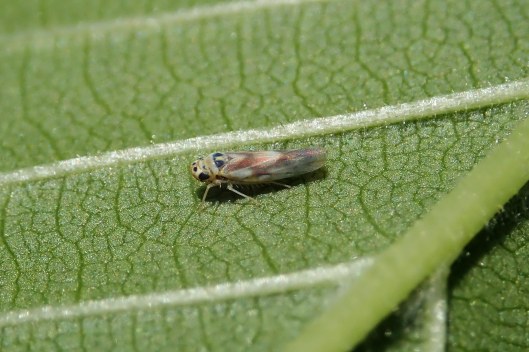
During a recent meander around Cosmeston’s fields, I found a new bug – or, more precisely, a new bug found me. I had been poking around the leaves of a mixed bag of bushes, during which time it must have flitted from a leaf to my sleeve. Meet Tachycixius pilosus, a very handsome member of the Cixiidae family, which can be found on deciduous trees and shrubs between May and July.

220510 Tachycixius pilosus