Emerald damselfly

Tags

, , ,

Last week I met a friend for a walk at Parc Penallta, one of the many colliery spoil sites that have become public parks and that are hot spots for biodiversity. And, as we explored, I was surprised and delighted to find this Emerald damselfly (Lestes sponsa), one I don’t see in my local area. As well as its distinctive colour, this damselfly can be identified by the way it holds its wings at a 45-degree angle to its body when perched.

210923 emerald damsefly

Tipsy Commas

Tags

, , , ,

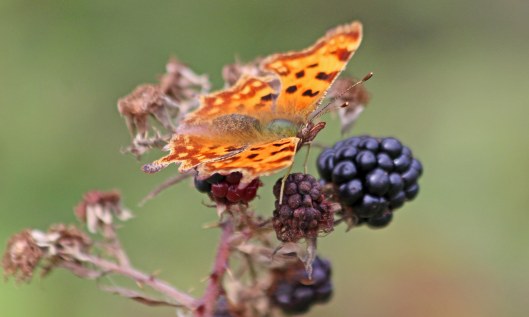
Soon, these gorgeous Commas will be looking for places to hibernate.

210922 comma (1)

But first they need to stock up on nectar, to increase their energy reserves to help them survive the cold winter months.

210922 comma (2)

Brambles are perfect, their berries plentiful, widespread, easily accessible, juicy, delicious.

210922 comma (3)

And, when the berries are very ripe and begin to ferment, butterflies like these Commas can become more than a little tipsy as they drink.

210922 comma (4)

A huddle of Parent bugs

Tags

, , ,

Seeing this huddle of final instar nymphs of the Parent bug (Elasmucha grisea) made my day!

210921 parent bug nymphs

I wasn’t sure what they were at first but, in case you’re not aware of it, the British Bugs website hosts a brilliant selection of photographs of all stages of British bugs, so a scroll through the shieldbug gallery quickly provided me with their identification. The website is particularly helpful for the less recognisable early instars of insects like shieldbugs.

Leafmines: Acrocercops brongniardella

Tags

, , , , ,

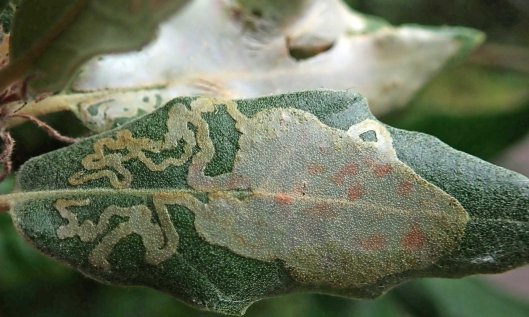
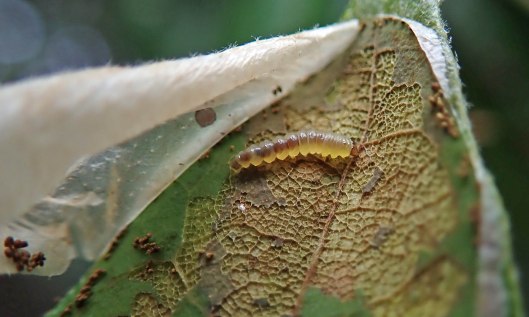
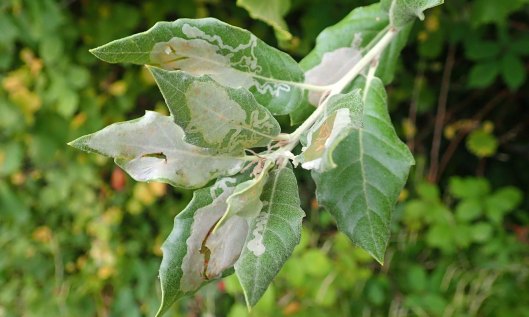
Another Monday, another leaf-mining moth. This one goes by the tongue-twisting name of Acrocercops brongniardella and can be found on the leaves of Oak trees, mostly in southern parts of England, Wales and Ireland. The adult moth is a very smart-looking creature (see the photos on the UK Moths website).

210920 acrocercops brongniardella (1)

Fortunately, the larval leafmines are fairly easy to identify as they begin with a distinctive twist before broadening to a large blotch or blister.

210920 acrocercops brongniardella (2)

I found my very first Acrocercops brongniardella mines in a small area of woodland on 6 September and have since found more on a tree in a local park, both times on the evergreen Holm oak (Quercus ilex) and the latter rather abundant on leaves at the tips of lower branches. The mines can supposedly be found on all oak species, though I’ve failed to find them in the other local woodlands where I’ve recently been walking and there are not a lot of records for this species of Wales. I’ll be keeping an eye out for more.

210920 acrocercops brongniardella (3)

Bizarre larvae

Tags

, , , ,

I don’t know about you but when I see a leaf with holes in it, I feel a compulsion to turn over that leaf to try to determine what caused those holes. And that’s how I discovered today’s rather bizarre-looking creature.

210918 Sawfly Platycampus luridiventris (2)

And once I realised that the holes it made were smaller than many of the other holes in the surrounding leaves, I looked for other leaves with similar sized holes. And so I found several more.

210918 Sawfly Platycampus luridiventris (1)

And then I looked at other Alder trees in the same park, and I found even more.

210918 Sawfly Platycampus luridiventris (3)

It took a bit of googling when I got home but I eventually found a name for my mystery creatures, and that identification has now been confirmed by a national expert. These are the larvae of a sawfly called Platycampus luridiventris, a rather non-descript fly when you consider the larva it develops from. You can see that adult fly and read the scientific information about this species on The Sawflies (Symphyta) of Britain and Ireland website.

210918 Sawfly Platycampus luridiventris (4)

Earthballs

Tags

, , ,

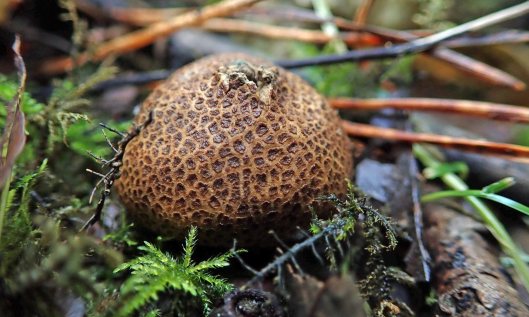
It’s #FungiFriday, and even the earthballs are smiling!

Though there are several species of earthball fungi in Britain, I’m fairly sure these are Common earthballs (Scleroderma citrinum), as they were found in the typical habitat of ‘acid soils with deciduous trees, usually Oak, Beech or birches’ (Collins Complete Guide to British Mushrooms & Toadstools, p.278).

Little egret

Tags

, , , , ,

I don’t walk around Cardiff Bay often during the summer months as I dislike the crowds and the clutter of event equipment, choke on the smell of the herbicides the Council uses to kill off the real wildflowers to create artificial ‘wildflower meadows’, and fear for the safety of the birds when blasted by jetboating thrill seekers. Fortunately, the coming of the cooler weather brings some relief from much of that human activity and so I begin again to explore the Bay.

210916 little egret (1)

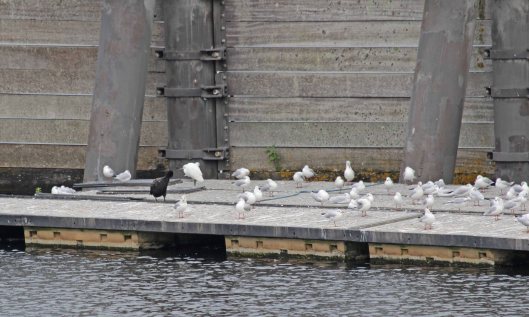
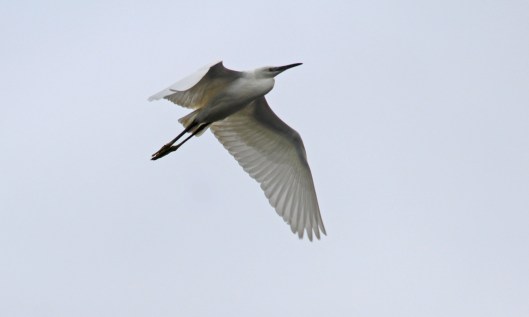
And, on my very first walk along the Barrage in some time, I got lucky: a Little egret was standing in amongst the crowd of gulls on one of the floating platforms by the locks. At one point the gulls chased off the intruder but, after a short circuit of the Barrage, it and they returned to the platforms. Little egrets are relatively common birds in Britain now but are not seen often in Cardiff Bay, so this was a very welcome 2021 patch tick for me.

210916 little egret (2)

The last Small copper

Tags

, ,

As I walk slowly along a narrow footpath between tall stands of meadowsweet and willowherbs, thistles and fleabane, I catch, out of the corner of my eye, a fleeting flash of orange, and quickly turn my head towards it, follow it, try desperately not to lose sight of it. I’m in luck. It settles, turns, opens its wings. And I don’t know whether to be overjoyed to see this most unexpected, glistening Small copper or saddened at the thought that this will, in all probability, be my last Small copper sighting of the year.

210914 small copper