Common fumitory

Tags

, , , ,

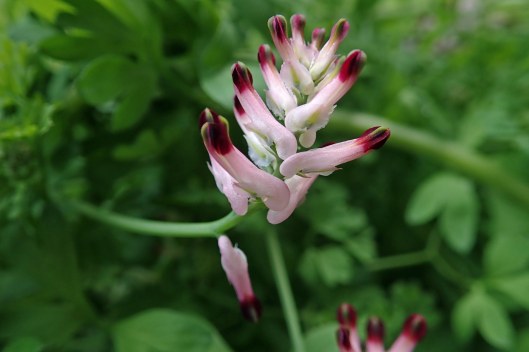
This native British wildflower may well be the ‘common weed of gardens, arable fields and waste places’ that my Flora Britannica describes, but I’ve only found it once, earlier this week, in my local area, despite there being plenty of those suitable habitats. This is Common fumitory (Fumaria officinalis), which also goes by the vernacular names of Earth smoke and Red-tipped-web. Flora Britannica goes on to explain:

Both scientific and English names stem from the Latin Fumus terrae – ‘smoke of the earth’. The delicate, grey-green leaves do have a slightly smoky appearance, enough to persuade one seventeenth-century herbalist that ‘it appeareth to those that behold it at a distance, as if the ground were all of a smoak’.
210516 common fumitory

Caterpillar in a tent

Tags

, , , , , ,

While wandering through my favourite woodland earlier this week, I noticed small areas of damage on some Hazel leaves. It looked like a little critter had been munching on them and, checking further, I soon discovered a lot of leaves had suffered similar damage.

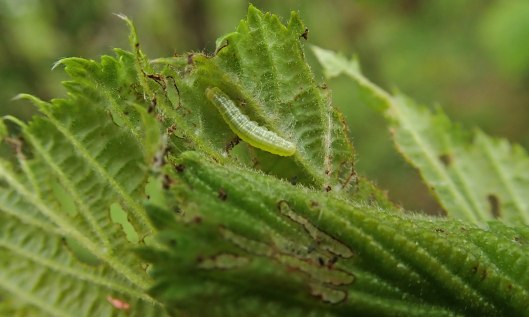
Closer inspection of one particular leaf soon revealed the culprit, a caterpillar, tucked away in a snug little tent it had created by binding two leaves together with silken thread. From there it could easily venture out to eat, yet retreat when threatened by predators or bad weather. Smart thinking!

210515 winter moth (2)

I think the caterpillar may be the larva of a Winter moth (Operophtera brumata) but I haven’t yet been able to confirm my identification (Update 16/5: ID now confirmed as Winter moth). Once I was alert to their presence, I noticed more leaf damage and several more ‘tents’, as well as a smaller caterpillar feeding out in the open.

Oak burst

Tags

, , , ,

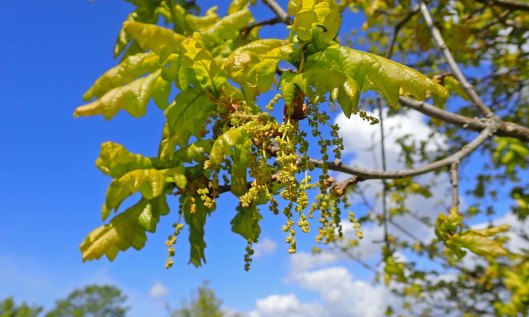
Here’s the latest in my occasional series of watching the trees come to life. This time, it’s the Oak tree – I’m not sure which of the Quercus species this is but I think they’re all fairly similar. First, the leaves burst from their buds, and the vibrancy of the new growth is dazzling.

210514 oak burst (4)

And, of course, everyone knows acorns come from Oaks but perhaps, like me, you hadn’t noticed where the acorns come from. Below left are the male flowers, the catkins, dangling to catch the breeze that carries their pollen, and below right are the female flowers, tucked away, sheltered, waiting to be fertilised by the pollen and develop into acorns.

210514 oak burst (7)

Dunlin in the Bay

Tags

, , , , , , ,

Though I live near the sea, I don’t get to see Dunlin very often as the coastline near me is mostly cliffs and rocks, not the stretches of mud or sand these little waders can easily feed on.

210512 dunlin (1)

So, it was a real treat during Monday’s walk around Cardiff Bay to see this single Dunlin foraging on the edge of the Barrage.

210512 dunlin (2)

Flocks of Dunlin, and other waders, pass along our shoreline at this time of year on their way to their breeding grounds and, very occasionally, drop in briefly to feed, as this one was. And to have a good scratch …

210512 dunlin (3)

After taking several photos, I left the bird in peace to forage further, grateful for the birding treat!

210512 dunlin (4)

White bells

Tags

, , , , , ,

Although I’ve seen Spanish Bluebells that are white and even shades of pink and lilac, this was the first time I’ve seen white native Bluebells. There was only one, amongst the thousands in this fabulous piece of ancient woodland, but it certainly stood out from the crowd.

210512 white bluebell

As the Bluebells are beginning to fade, especially after all the rain we’ve had in the past week, I thought I’d make a little video of some of my favourite Bluebell images. Enjoy!

Ratty and Reedy

Tags

, , , , , ,

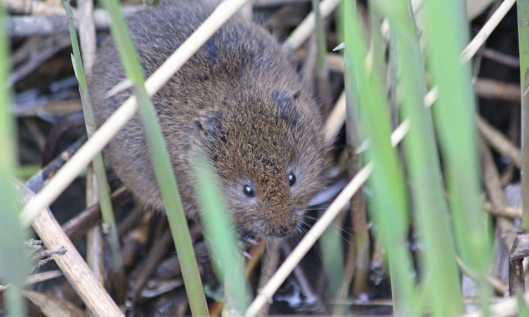
It was all happening in the reeds along Sully Brook at Cosmeston on Sunday afternoon. I spent 20 minutes watching this very cute and confiding Water vole munching on reeds, and all the while the Reed warbler was singing his funky tune.

210511 water vole (2)210511 reed warbler

Times like these are what keep me sane and bring me happiness and joy. I hope you have a Ratty and Reedy (or their equivalents) in your life.

210511 water vole (3)

Nine ‘ugly ducklings’

Tags

, , , , , , ,

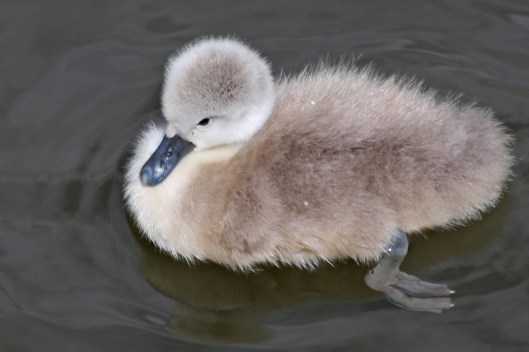
Seeing these gorgeous little balls of fluff made my day! I’d been watching these Mute swans for several weeks, building their nest, then sitting on eggs, so it was a real delight to see the proud parents gently shepherding their newly hatched brood around a local river inlet on Thursday.

210510 cygnets (3)

210510 cygnets (6)

More yellow

Tags

, , , ,

A month ago, I shared some of the yellow-flowered wildflowers I’d found for the weekly #WildflowerHour challenge. In the weeks since, more yellow flowers have begun to bloom and, as today’s weather (I’m writing this on Saturday, as we sit under a heavy rain warning) is grey and windy and very wet, I fancy some bright sunshiny yellow. So, here we go …

The flowers are the butterflies’ favourite Bird’s-foot trefoil and the vibrant bushes of Broom. Although I shared some of these last time, I couldn’t resist a Shrew’s-eye view of more Cowslips. The buttercups are beginning to take over from the Lesser celandine as Nature’s yellow carpet in the meadows – these are Creeping and Meadow buttercups. Prickly sow-thistles line the edges of the lane behind my house, and Spotted medick is now brightening up the pavement verges. I’d glimpsed Yellow archangel last time but now these lovely spikes are popping up everywhere in my local woodland, a beautiful compliment to the Bluebells.

Early-purple orchids

Tags

, , , , ,

The 2021 orchid season has begun!

210507 early purple orchids (1)

In my local area, the first orchids to bloom are the Early-purples (Orchis mascula) and this week I was delighted to find them in two local areas, one a nature reserve, the other a woodland I regularly visit.

The Plantlife website notes that there is a legend the ‘Early Purple Orchid grew under Christ’s cross, and the leaves were splattered with the blood of Christ, have resulted in the names Gethesmane and cross flower.’

210507 early purple orchids (5)

The website also lists some of this orchid’s other vernacular names: ‘adder’s meat, bloody butchers, red butchers, goosey ganders, kecklegs, kettle cases and kite’s legs’. Personally, I just call them beautiful!