313/366 Flowers in a field

Tags

, , , ,

Running alongside the local coastal path are a series of farm fields, belonging, I understand, to the Welsh government.
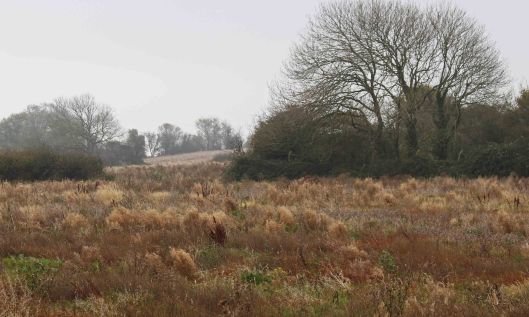
201108 a field

These fields are usually leased for farming but, because there are currently plans to build 500 houses here (and don’t even get me started on how ludicrous that is!), it seems no local farmer was willing to lease the fields this year so they have not been cultivated. This has been an incredible bonus for wildlife (this is a well-used flyway so migrating birds have taken advantage of the re-wilded environment) and for the wildflowers that would usually be sprayed to death prior to crop planting.

This slideshow requires JavaScript.

This week I’ve checked which flowers are still in bloom in these fields and their surrounding hedgerows, and found the following: Hedge bindweed, Bramble species, Bristly oxtongue, Creeping thistle, Dandelion species, Field speedwell, Rape, Scarlet pimpernel (the day was too dull for the flower to open), Smooth sow-thistle, Spear thistle, Sun spurge, and Ragwort.
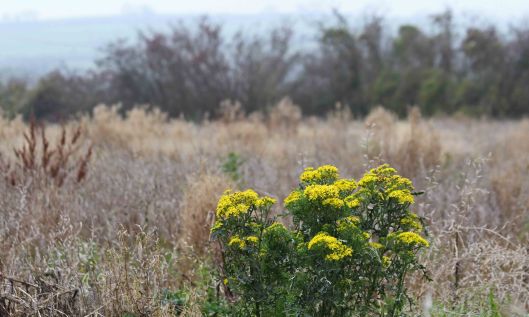
201108 x ragwort

312/366 Deformed

Tags

, , , , , , ,

This juvenile Herring gull that I spotted amongst the gull flock at Cosmeston Lakes Country Park a couple of days ago had an interesting beak deformity. Presumably it can eat okay and it was preening but still looked scruffy, so I guess the twisted beak doesn’t work well for grooming.

201107 herring gull (1)

311/366 The bonnets are back

Tags

, , , ,

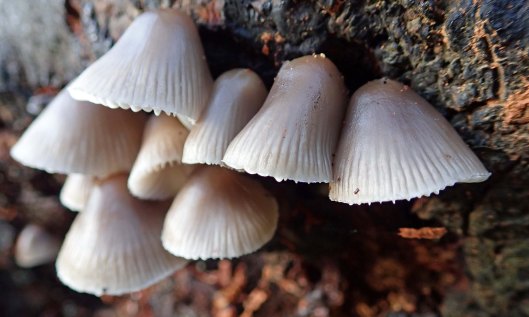
It’s almost a year since I published the post Groovy bonnets (on 27 November 2019), about a troop of Grooved bonnet fungi (Mycena polygramma) that was growing on a tree in the green space around a local church.

201106 grooved bonnets (1)

Since then, sadly, the tree they were growing on has mostly gone, blown down in one of our winter storms early this year – now, only the stump remains.

201106 grooved bonnets (2)

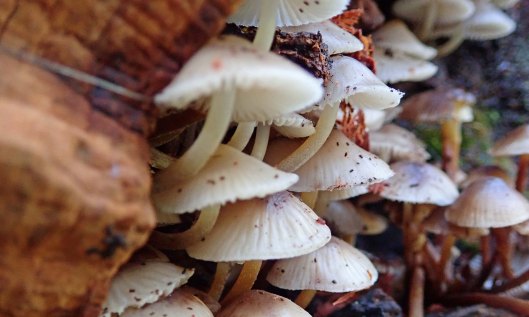
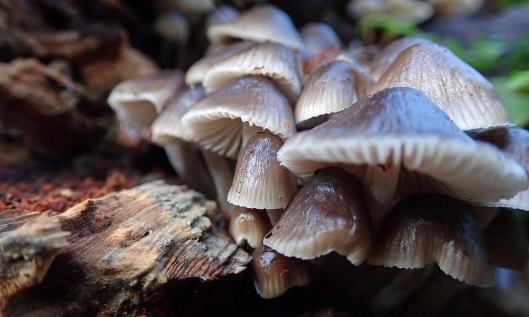
But the fungi were still there, living silently unseen beneath the surface, until now, when they are fruiting again.

201106 grooved bonnets (3)

And these gorgeous fungi are supporting other life – spot the millipede amongst the gills in my second photo.

201106 grooved bonnets (4)

309/366 Seedheads, 4

Tags

, , , ,

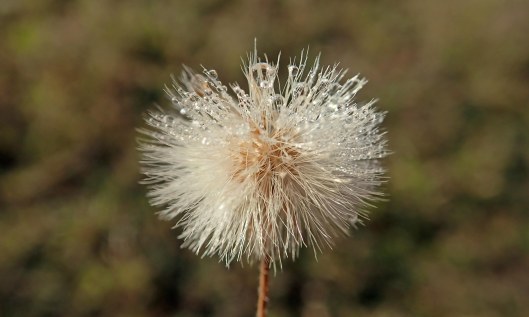
If you thought I’d exaggerated about how wet last month was, it’s official – Derek, the Welsh BBC weatherman, yesterday tweeted that ‘October was wetter than average in Wales with 208mm of rain’. Temperatures and sunshine were also below normal, and, having just returned from a long local walk, I can tell you it’s very squelchy out there. Still, the wet has its compensations as today’s seedheads testify.

201104 seedhead (1)201104 seedhead (2)201104 seedhead (3)201104 seedhead (4)

308/366 Standing tall

Tags

, , ,

For a Redshank, standing tall like the one in my photo is often a sign of fear, of being wary of something that might harm it, of keeping a cautious eye on an intruder. Unfortunately, in this case, it was simply my presence on the pavement about 20 feet above the water’s edge that had spooked this lovely bird, so I took this one photo and quickly moved on, to let it feed in peace.

201103 redshank

Please try and be aware of the birds around you when you’re out walking, particularly when walking, perhaps with your dog, along a beach. Many wading birds only feed on the beach at certain times, at particular stages of the tide, so, if they’re disturbed by walkers, or dogs, or other ‘traffic’, the time they spend feeding can be shortened and that can have a very detrimental effect on the birds, particularly in the winter months.

307/366 Leaf mines: Tischeria ekebladella

Tags

, , , , , ,

I mentioned in a recent post (Gone galling, again, 28 October) that October was a good month to find galls and mines on leaves and, in fact, that also extends into November, or until the deciduous trees have shed their leaves and those fallen leaves have turned to mush, and the leaves of wild plants have also become unrecognisable in the mud under our feet.

201102 Tischeria ekebladella (1)

So, let’s start this mini series on leaf mines with a look at the blotch mines made on Oak (and sometimes Sweet chestnut) by the larvae of the micro moth Tischeria ekebladella. The blotch starts off looking quite white but often browns, from the centre, with age, giving it a look that one astute observer described as a fried egg. The larva creates a cocoon within the blotch and remains there until its ready to pupate in the springtime. The adult moth emerges from pupation and is on the wing in May and June.

By holding leaves up to the light, I managed to photograph larvae within a couple of mines, though, one of our local moth experts, George, who’s a senior moth ecologist with Butterfly Conservation, told me that the larva in the photo on the right below looks to have been parasitised and a different creature’s larva seems to have emerged from the Tischeria larva. Such is the way of Nature.

306/366 Anti-gloom

Tags

,

I’ve been feeling the need for bright cheery sunshine yellow this week, to combat the dull weather, the short days, and the almost constant doom and gloom in the news, and the wildflowers have provided it. These are Black medick, a Dandelion species, Meadow buttercup, Nipplewort (actually photographed in sunshine!), Ragwort, and Yellow-wort.

305/366 Insecting

Tags

, , , , , , ,

Despite the appalling weather – frequent heavy rain and occasional strong winds – we’ve been experiencing over the last couple of weeks, I have managed still to find a few hardy insects, persisting by cunningly finding sheltered places to avoid the worst of the inclement conditions.

These bees seem to have the right idea. On the left is a Buff-tailed bumblebee, which I watched emerging from inside the cosy, fluffy duvet of an Old man’s beard seedhead and, on the right, a Common carder that seems to have the same idea and be looking for a place to snuggle down.

Also looking cosy, these Common earwigs were huddling in the cups of umbellifer seedheads.

201031 common darters

Common darters have still been active in the more sheltered spots during the occasional sunny periods, these at Cosmeston Lakes Country Park.

The last of this year’s brood of Ivy bees were still feeding their grubs. They had made use of a rabbit scrape to excavate the underground burrows where their eggs are laid, grubs hatch and pupate and will remain until emerging as adult bees next autumn.

304/366 Wild word: deliquesce

Tags

, , , , , , , ,

Deliquesce: verb; (of organic matter) become liquid, typically during decomposition. Mid 18th century from Latin deliquescere ‘dissolve’, from de- ‘down’ + liquescere ‘become liquid’ (Oxford Dictionary).

201030 shaggy inkcap (1)

These Shaggy inkcaps (Coprinus comatus) may look sturdy and robust but, like all inkcaps and many other species of fungi, they only last a few days, sometimes as little as 24 hours, before turning into a rather disgusting-looking liquid mush, as shown by the specimen below. If you want to read more about the how and why of that process, about the inkcaps’ ‘habit of destroying themselves with their own enzymes’, check out The Dish on Deliquescence in Coprinus Species by Jonathan Landsman on the Cornell Mushroom blog.

Many humans may not know that inkcaps quickly deliquesce but slugs do. This slimy beastie was digging in to a Shaggy inkcap delicacy before the fungus had a chance to digest itself.

201030 shaggy inkcap (6)