303/366 Ring-necked ducks

Tags

, , , , , , ,

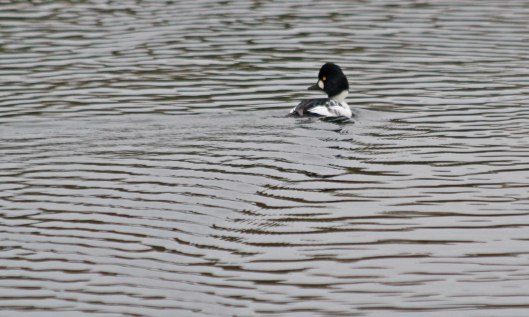
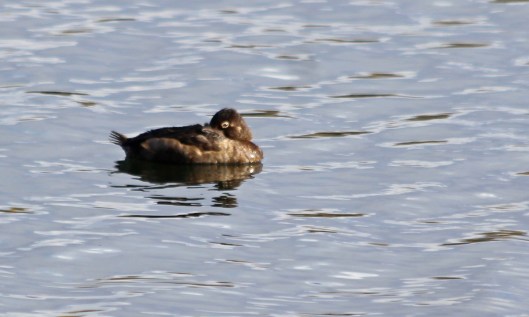
I can count on one hand the number of times I’ve seen a Ring-necked duck (Aythya collaris) so I was delighted when, ten days ago, a juvenile female was spotted at Cosmeston Lakes Country Park, and I managed to get a very distant view of it on 18 October.
201029 ring-necked ducks (1)

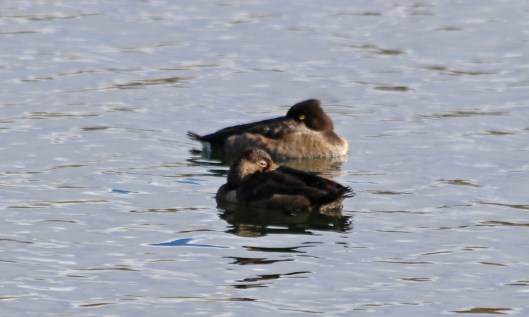
I’m the first to admit I would not have been able to identify this bird without the local, much more experienced birders sharing their photos on social media. When its head is tucked in, which seems to be most of the time, only its pale eye ring distinguishes this bird from the female Tufted ducks that surround it, at least to my inexperienced eye.
201029 ring-necked ducks (2)

Late last Sunday, 25 October, the exciting news came that a second Ring-necked duck had been sighted at Cosmeston, this one a 1st winter drake, so I headed along on Monday for a look. I got much closer views of the first bird, the juvenile, but couldn’t find the other – turns out, it had flown over to Cardiff Bay. This is a common phenomenon during the winter months – the various duck species fly regularly back and forth between the lakes and the Bay.
201029 ring-necked ducks (3)

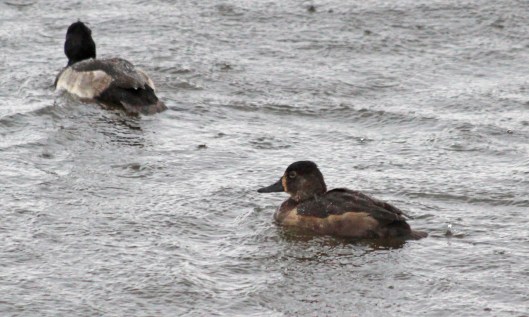
So, for yesterday’s exercise walk I headed down to Cardiff Bay where, in spite of occasional heavy rain showers, I managed to locate both Ring-necked ducks, though this time the drake kept its head tucked in throughout my visit. That’s the juvenile braving the weather in the photo above, and the 1st winter drake below. If I manage to see the drake again and get a photo of it with its head up, I’ll be sure to share.

201029 ring-necked ducks (4)

302/366 Gone galling, again

Tags

, , , , , , ,

October is a good month to check out life on leaves (and I’ll be writing some posts about the various leaf mines I’ve been finding) but today I want to show you a couple of gall species that are new to me. The first is quite common and easy to find, the second perhaps less so.
The first species is Aceria macrochela, a microscopic mite that spends its larval life in these tiny bumps on the leaves of Field maple (Acer campestre). You can read more about them and see more images on the mighty Nature Spot website.

And the second is also a mite, this one called Stenacis euonymi, whose larvae make their homes in the rolled-up edges of leaves on Spindle (Euonymus europaeus). If you have trouble with tree identification, as I often do, this is a good time to look for these as the gloriously obvious fruit of the Spindle are easy to spot.

201028 Stenacis euonymi (1)

Looking on the NBN (Nature Biodiversity Network) Atlas I see there are currently only 112 UK records for this species (113 including mine, which doesn’t show yet) but that’s probably due to it being under-recorded, so if you spot these, please do record your sighting.

301/366 Chatting

Tags

, , , ,

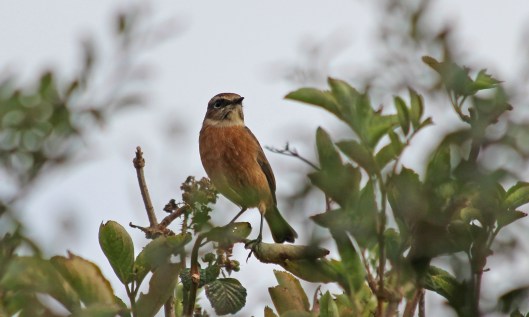
When I can’t arrange to meet up with and chat to friends, due to our Covid-19 lockdown rules, I talk to the birds, usually Robins (as my previous Conversations with Robins blog posts testify) but lately the many Stonechats that have been living in the local fields.

201027 stonechat (1)

If I approach slowly and quietly, then stand still and wait, they’ll often pop up on branches and plant tops quite close to me.

201027 stonechat (2)

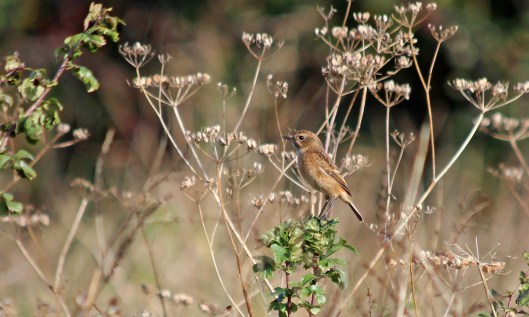
I can talk very softly, and they don’t fly off. They watch me – are they just being cautious, keeping an eye on this intruder in their space?

201027 stonechat (3)

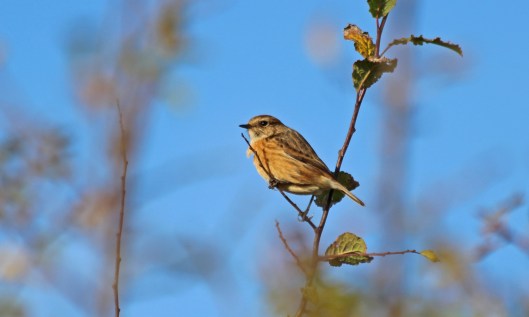
Or are they curious? Or maybe they’re just plain cheeky, knowing they can check me out but fly off in the beat of a wing?

201027 stonechat (4)

Spending time with these gorgeous wee chats brings me much joy. And, yes, I am a crazy bird lady!

201027 stonechat (5)

300/366 Four-spotted orb weaver

Tags

, , ,

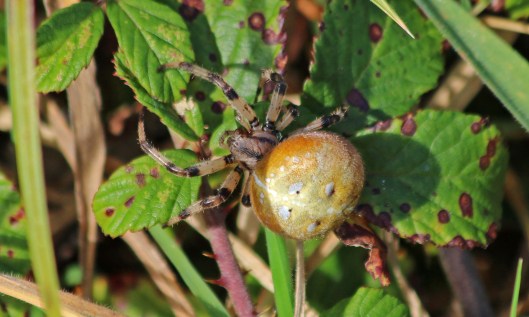
If you suffer from arachnophobia, look away now! This spider, found recently in one of the outer fields at Cosmeston Lakes Country Park, was the biggest spider I’ve seen in Britain. That’s still not big when compared to Tarantulas or Huntsmen or other large species but it was big enough to make me feel both a teeny bit freaked out and totally fascinated at the same time.

201026 four-spotted orb weaver (1)

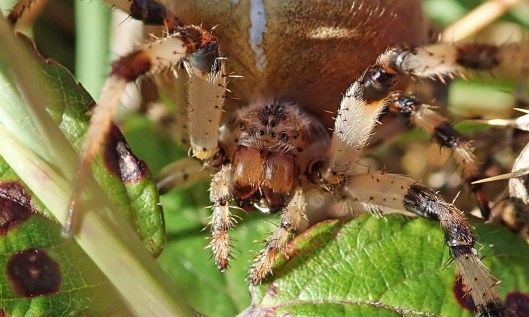
This is a female Four-spotted orb weaver (Araneus quadratus), a species that’s apparently quite common in Britain and can be found in a variety of habitats, from grassland and bogs to gardens and woodlands. As with many spiders, females are larger than males. In this species, females can grow to 17mm long, while the males are only half that size.

201026 four-spotted orb weaver (2)

This beauty was slowly making her way through the long grass at the edge of a bramble patch. Because of the size of her body, she was struggling to stay upright, and several times overbalanced. But those long striped legs are obviously quite strong and she easily managed to pull herself upright again.

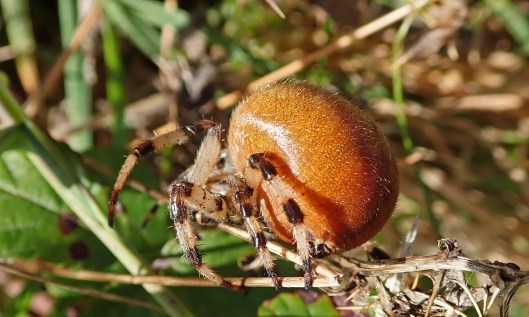
201026 four-spotted orb weaver (3)

I spotted this orb weaver because her apricot colour stood out from her surroundings but, according to the Naturespot website, adult females are like chameleons, able to change their colour to coordinate with their surroundings, though that process can take about three days to complete. Fascinating!

201026 four-spotted orb weaver (4)

299/366 Blooming now

Tags

, , ,

Today’s blast of colour is brought to you by the colour purple, with splashes of pink and blue and lilac. All these gorgeous wild plants are still flowering in my local area and, on grey days, when we here in Wales are once again in full Covid-19 lockdown, seeing these on my daily exercise walks is a spirit-lifting delight!

For those who want to know, these are: Buddleja, Bush vetch, Common knapweed, Creeping thistle, Devil’s-bit scabious, Field scabious, Hedge woundwort, Herb Robert, Ivy-leaved toadflax, Meadow crane’s-bill, Musk-mallow, Purple toadflax, Rosebay willowherb, Teasel, and Tufted vetch.

298/366 The last Meadow brown

Tags

, , ,

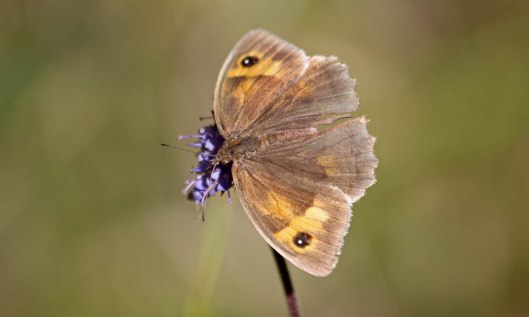
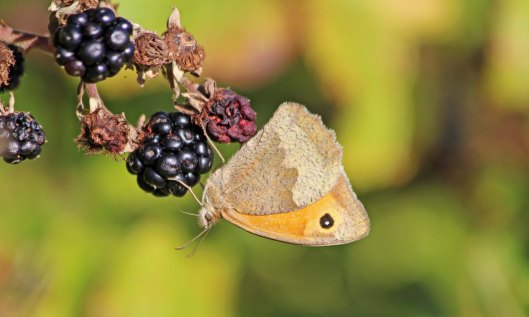
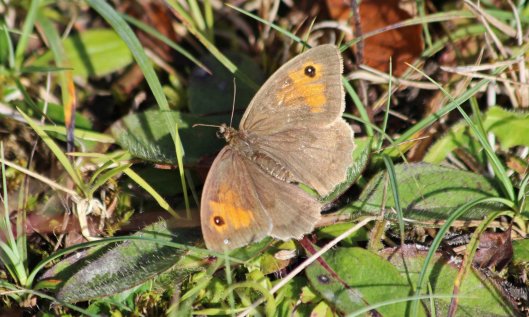
Meadow brown butterflies have a long season, on the wing from early June to the end of October, and those dates are exactly what I’ve observed in my area this year and last.

201024 meadow brown 200918

In 2019, I spotted my first Meadow brown on 5 June and the last was a single butterfly seen on 7 October.

201024 meadow brown 200925

This year, I saw my first Meadow Brown at Cosmeston Lakes Country Park on 1 June.

201024 meadow brown 200927

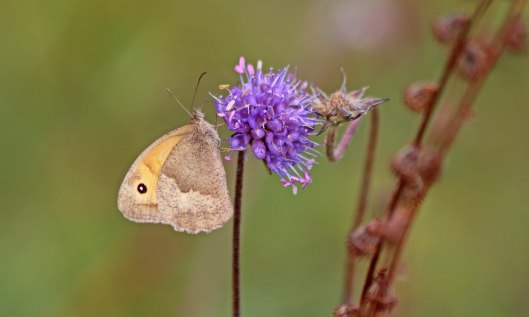
And, as September was drawing to a close, I kept a special eye out for these lovely butterflies, each time taking a photograph and asking myself, ‘Will this be the last Meadow brown of the year?’

201024 meadow brown 201001

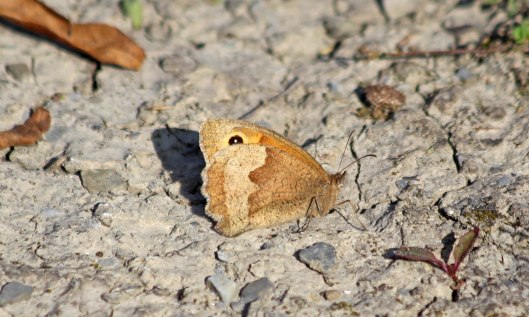
I knew time was fast slipping away for them and, on 5 October, again at Cosmeston, it really was the last time I would see a Meadow brown in 2020. That butterfly is the one shown below … and I’m already looking forward to seeing them again next June.

201024 meadow brown 201005

297/366 Candlesnuff

Tags

, , ,

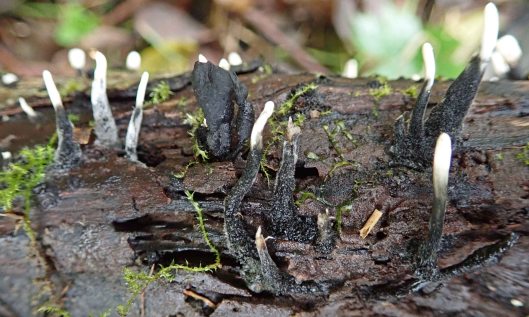
With our weather much wetter and temperatures not too cold, October should be a good month for spotting fungi but I haven’t been finding much during my daily meanders. So, it was good to spot a piece of wood with the early stages of Candlesnuff (Xylaira hypoxylon) fungi growing out of it.

201023 candlesnuff (1)

I’ve blogged about this lovely fungus before so to find out more about it, click on The right snuff, December 2016.

201023 candlesnuff (2)

296/366 A gull’s history

Tags

, , , , , , ,

Yesterday’s inbox contained an email with the life history of this ringed Lesser black-backed gull I found at Cosmeston Lakes Country Park and reported to the BTO’s ringers on 5 October. This bird was first ringed on Flat Holm Island, in the Bristol Channel off the south Wales coast, on 1 July 2017. A couple of months later, on 6 September, it was spotted at Cosmeston, and then it headed 1200 kms south to Matosinhos, a port and fishing town in Portugal, where it was seen twice in October 2017, on the 27th and again on the 31st. The bird wasn’t seen again until my recent report so it’s anybody’s guess where it’s been for the past three years.

201022 ringed lesser black-backed gull

295/366 Salmon in the Bay

Tags

, , , ,

During yesterday’s walk along the southern edge of Cardiff Bay, I spotted this huge metre-long fish cruising along sluggishly very close to the embankment. Turns out it was a Salmon, possibly returning to the Bay after having spawned somewhere high up in the River Taff.

201021 salmon

Sadly, this fish has probably now reached the end of its life … but what a life! As Will Millard kindly explained on Twitter, this Salmon may have

been born in the Taff, migrated to sea, possibly even as far as Greenland, to pile on weight, mass and muscle over a few years, before returning, hundreds of miles home to spawn and then die. It’s sad when any animal comes to the end of its life, but what a story & other life is sustained from the salmon carcass. In parts of Canada and Alaska whole forests gain massive parts of their nutrients purely from salmon dying at the end of the salmon run.

Will also explained that Salmon often develop skin infections during times of stress, which may explain the pale, ‘cotton wool’-like appearance of parts of its skin.

294/366 Goldeneye

Tags

, , , , , , , ,

No, I’m not blogging about a James Bond film, though our recent visitor to Cosmeston Lakes Country Park is almost as exotic, and certainly as handsome as any of the many James Bonds. This is a drake Goldeneye (Bucephala clangula), a diving duck that’s a little smaller than a Mallard.

201020 goldeneye (1)

This drake was first picked up by our best local birder last Friday evening so I strode along to the lakes early Saturday morning and had distant views of it on the west lake. The Goldeneye appeared to have left Saturday afternoon, as another local birder couldn’t find it, but I was back at Cosmeston early Sunday, sitting quietly on a bench next to the east lake, when Mr Goldeneye popped out from the vegetation right in front of me and I was able to get these closer photos of him.

201020 goldeneye (2)

Though Goldeneye are known to spend their winters in small groups on reservoirs and inland lakes, and in sheltered coastal bays, they are not a common sight in my part of south Wales, so it has been a treat to have the chance to see this stunning bird.