If all seeds that fall were to grow, then no one could follow
the path under the trees. ~ Nigerian proverb



18 Wednesday Nov 2020
Posted in autumn, plants, wildflowers
If all seeds that fall were to grow, then no one could follow
the path under the trees. ~ Nigerian proverb
17 Tuesday Nov 2020
Tags
Cornus sanguinea, Dogwood, fly leaf mines, leaf mines, leaf mines on Dogwood, leaf-mining fly larvae, leaf-mining larvae, leafminers, Phytomyza agromyzidae
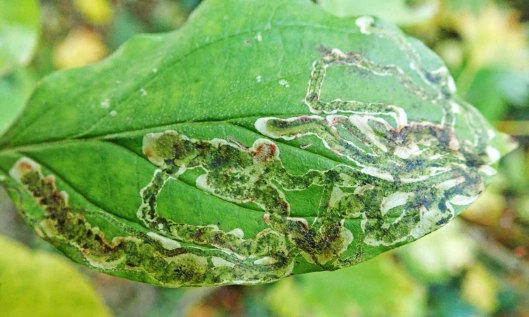
So far, in my recent posts on leaf mines, I’ve only covered a few of the many micro moths whose larvae make mines in leaves. But many fly species also inhabit leaves in their larval stage, and today’s post is about one of those, Phytomyza agromyzina.

You will probably never see the tiny adult fly (and, in fact, I haven’t even been able to find an illustration of one online, though this Wiki page shows an example of one member of the Agromyzidae fly family, which will give you a general idea.) but, anytime between July and November, you should be able to find its larvae’s leaf mines, as it’s probably widespread in Britain (though under-recorded, so if you do find some, please record your sighting).


The mines I’ve found have all been on the leaves of Dogwood (Cornus sanguinea), though it is known to mine other species of Cornus. They’re gallery mines (i.e. forming corridors), long and meandering through the upper side of the leaf surface, and almost completely filled with frass (i.e. poo).
The UK Fly Mines website provides more detailed information on this, and the many other types of leaf mines you can find in Britain.
16 Monday Nov 2020
Tags
Comatricha nigra, Comatricha slime mould, Dicyrtomina saundersi, fungi on rotting wood, Neanura muscorum, slime, slime mould, springtail, Trichia persimilis, Trichia slime mould
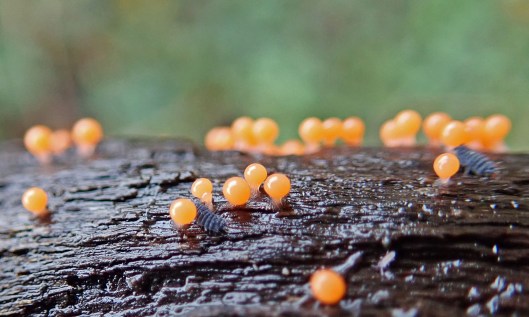
Springtails and slime, a colourful combination, currently to be found on and under many old branches and rotting logs, in a saturated woodland near you, right now!
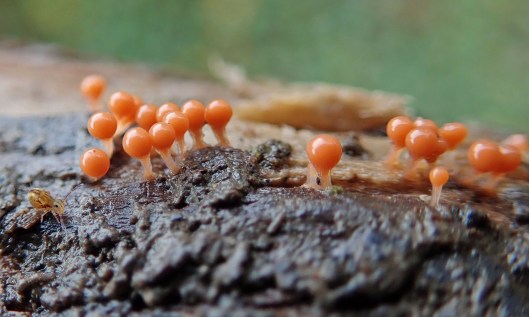
The orange slime is probably one of the Trichia species, possibly Trichia persimilis, and the white blobs on black sticks are one of the Comatricha species, perhaps Comatricha nigra.

And the springtails? The brownish one with the hairy bottom is likely to be Dicyrtomina saundersi, and the blue-grey-coloured ones may be Neanura muscorum, but my photos are not good enough to make positive identifications.
15 Sunday Nov 2020
Posted in autumn, wildflowers
Tags
autumn colour, British wildflowers, Penarth zigzag path, wildflowers in bloom, Zigzag path, Zigzag path wildflowers
I haven’t checked what’s flowering along the local zigzag path for a while so I thought I’d take a look for this week’s Sunday wildflower post and #wildflowerhour on social media. Imagine my delight when I found these 14 species: Ragwort, Cinquefoil (a nice surprise), Creeping thistle, Hedge bindweed, Meadow crane’s-bill (which is doing really well since the Council stopped cutting the vegetation on this site), Common vetch, Red clover, Bramble species, Herb Robert, Field scabious, Tufted vetch (nice to see the two vetches in bloom), Winter helleborine (another nice, unexpectedly early surprise) [ed. heliotrope, not helleborine – thanks, Vicky!], Black medick, and Meadow buttercup.


14 Saturday Nov 2020
Tags
Araneus diadematus, British insects, Chrysoperla carnea, Common wasp, earwig, Garden spider, Lacewing, Vespula vulgaris
Just a few of the little critters I’ve come across this week …
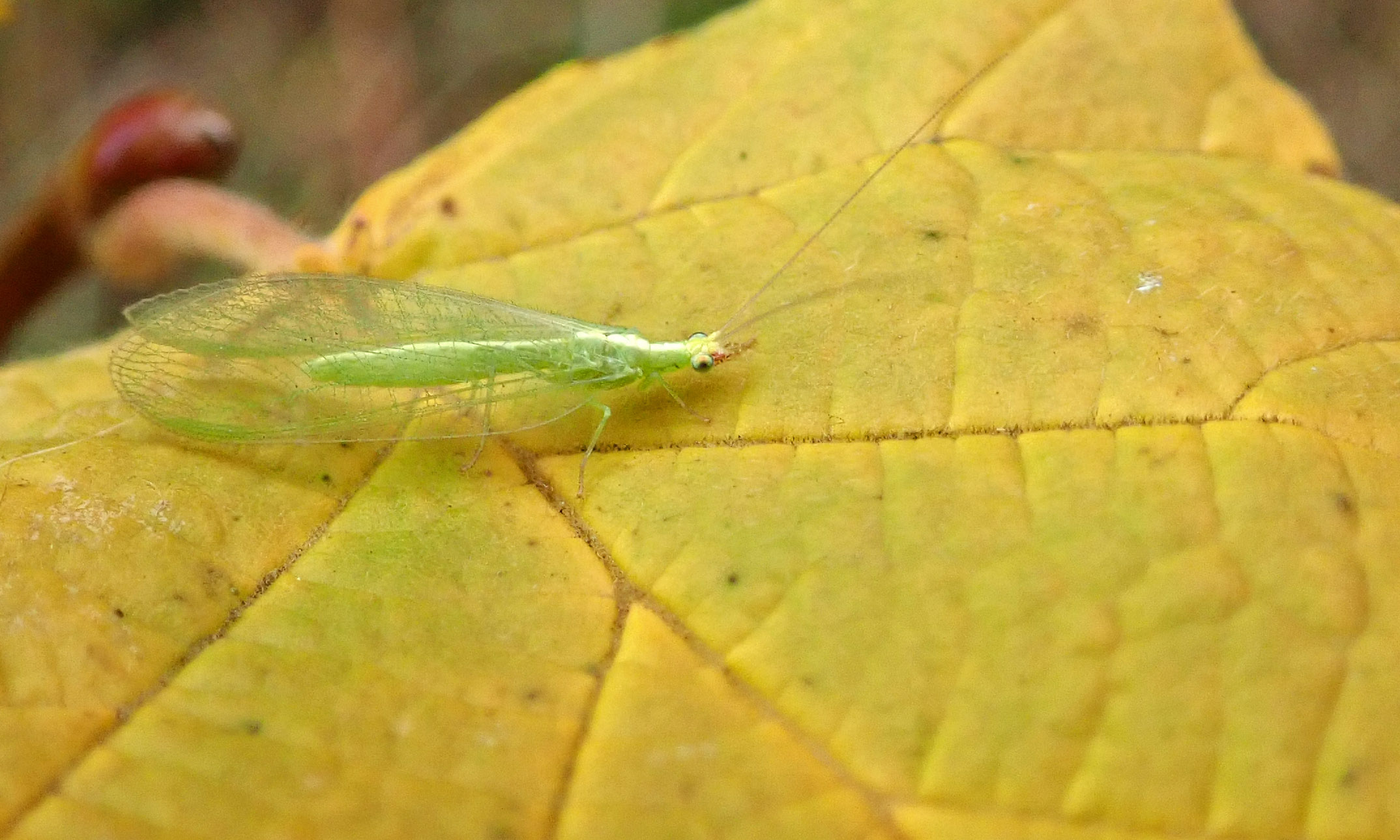
I can’t be entirely sure but this is probably Chrysoperla carnea, Britain’s most common Lacewing. Their transparent wings lend these creatures a fragile air so I was surprised to see one still out and about as these Lacewings usually find a cosy spot indoors to hibernate come the autumn weather.


I think these are Common wasps (Vespula vulgaris) that I’m seeing frequently on and around Ivy, and basking in our rare glimpses of sunshine, but I don’t have any face-on shots to properly separate them from German wasps (Vespula germanica). At this time of year, these are likely to be male wasps, which apparently are not able to sting – only female queens and workers have the anatomy for that.

We saw Earwigs hiding in umbellifer seedheads in a recent post (Insecting, 31 October). It seems they like to hide, though I’m not sure how effective this earwig’s hiding place is, its head tucked into a gorse seed but the length of its body exposed. Still, I doubt anyone – insect, bird or human – was going to argue with those pincers.


Spiders have been much in evidence lately. Garden spiders (Araneus diadematus) sit ready to pounce in their strategically strung webs, and, in the right photo, I only spotted the tiny, unidentified spider lurking under the Creeping thistle flower when I got home and started looking through my photos.
13 Friday Nov 2020
Oyster and oysterling fungi can be difficult to identify but I’m fairly sure these are Peeling oysterlings (Crepidotus mollis).
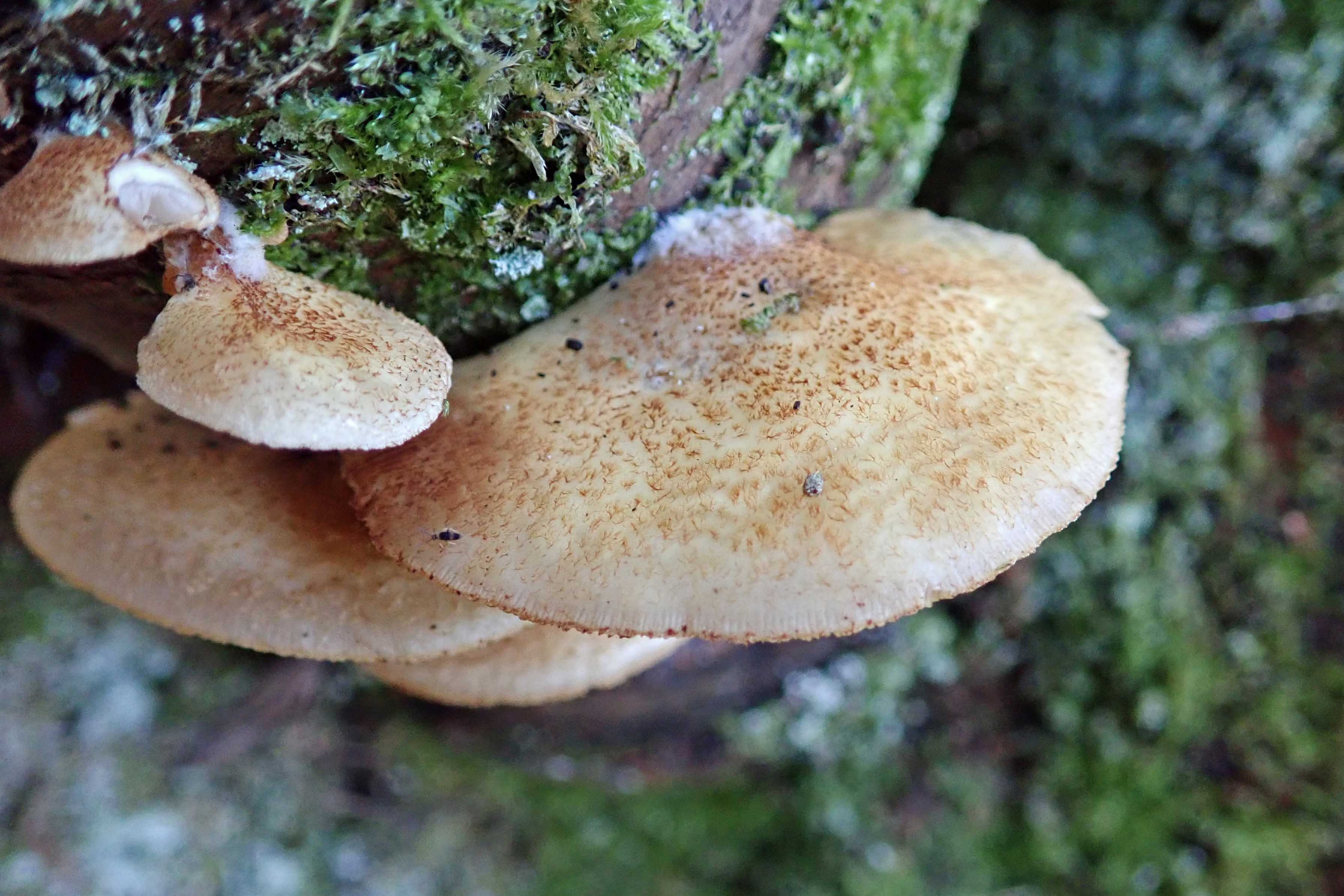
Habitat: ‘usually grouped on decayed wood of deciduous trees, especially Ash and Beech.’ Check.
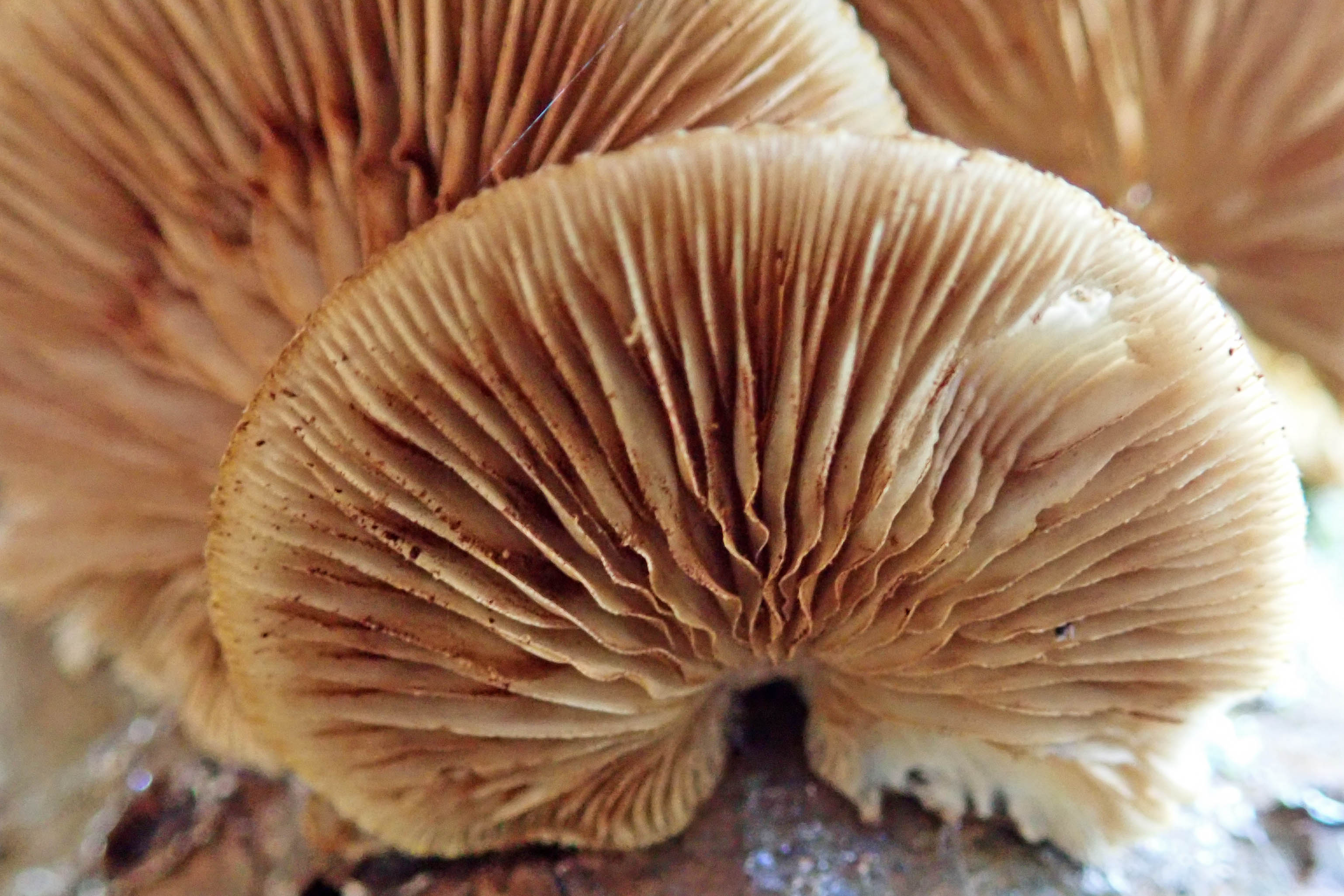
Gills: ‘radiating outwards; greyish brown with a reddish tint and mid-brown spore print’. Check.
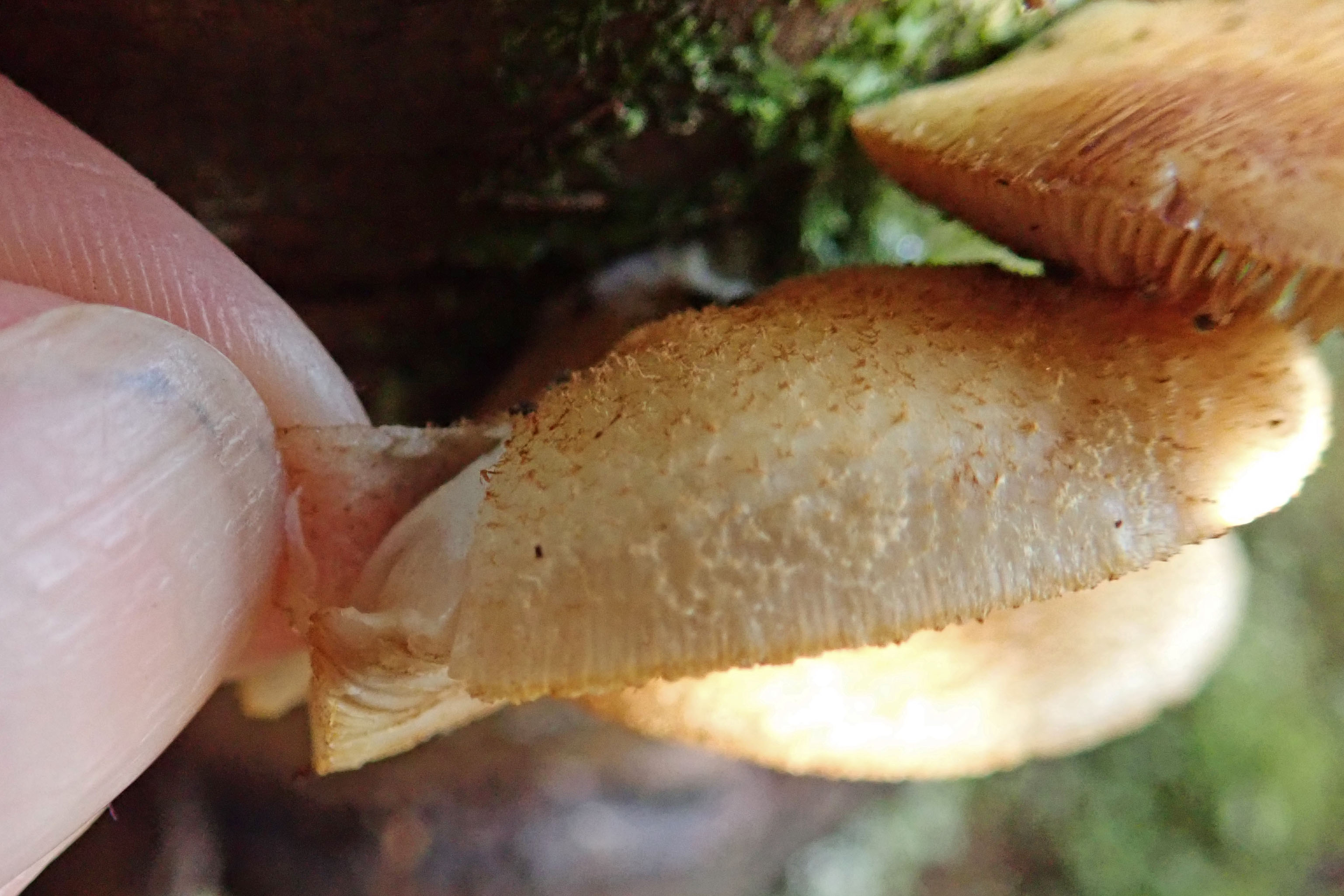
Cap: ‘flat, oyster-shaped or elongated and laterally attached to substrate’. And the clincher: ‘a peelable cap cuticle’. Check.
Information from my trusty Collins Complete Guide to British Mushrooms & Toadstools, Paul Sterry & Barry Hughes, Collins, London, 2009.
12 Thursday Nov 2020
Bramble: rambling over fences and through hedgerows, its flowers and fruit provide nourishment to insects, mammals and birds for much of the year; its leaves are home to leaf-mining moths and a multitude of other invertebrates; and, in the autumn, bramble colours our world with a burst of golden yellows, brilliant crimsons, burnt oranges and scarlet reds. What a plant!


11 Wednesday Nov 2020
Tags
beech, gall causing midge, galls on Beech, green islands, green islands on Beech leaves, Hartigiola annulipes, leaf mines, leaf mines on Beech, Stigmella tityrella
It’s late autumn, nearly winter, and, as you would expect, the leaves on this Beech tree have all now changed from vivid summer green to autumn brown … or have they? If you look more closely at this image, you’ll notice that some of the leaves have what entomologists, moth-ers and others in the know call ‘green islands’.

Butterfly Conservation’s Associate Director of Recording and Monitoring Richard Fox explained the reason for this most succinctly in a recent post on Twitter: ‘Thanks to Wolbachia bacteria in its body, the caterpillar uses cytokinin to maintain a green island of plant tissue in which it can feed in autumn.’


Fox was referring to leaf-mining moth caterpillars, like the Stigmella tityrella moth larvae that produced the mines in the leaves shown above, but other insects also manipulate the physiology of leaves so they can continue feeding. Another example from the same Beech tree can be seen below – here the larvae of the gall-inducing midge Hartigiola annulipes have also caused green islands to form in the leaves.

If you want to read more on the science behind this process, I found a paper entitled ‘Plant green-island phenotype induced by leaf-miners is mediated by bacterial symbionts‘, on the Royal Society website.
10 Tuesday Nov 2020
On Sunday, I blogged about the wildflowers I’ve recently found still blooming in local farm fields. When I’ve been wandering those field edges, I have, of course, also been keeping one eye on the skies, to see what birds might be enjoying this currently unmanaged farmland. Here’s a selection …

There were several species of winter thrushes feeding in berry trees – Song thrushes, Redwings and a small flock of Fieldfares, and a large number of Blackbirds, the only ones I managed to photograph.

Two Chiffchaffs were chasing each other through tree branches. They’re late migrating but some Chiffchaffs do remain in Britain so maybe these two will stay local this winter.

A juvenile Dunnock was calling constantly, presumably for its parents, but they may well have decided it was time to cut the parental ties.
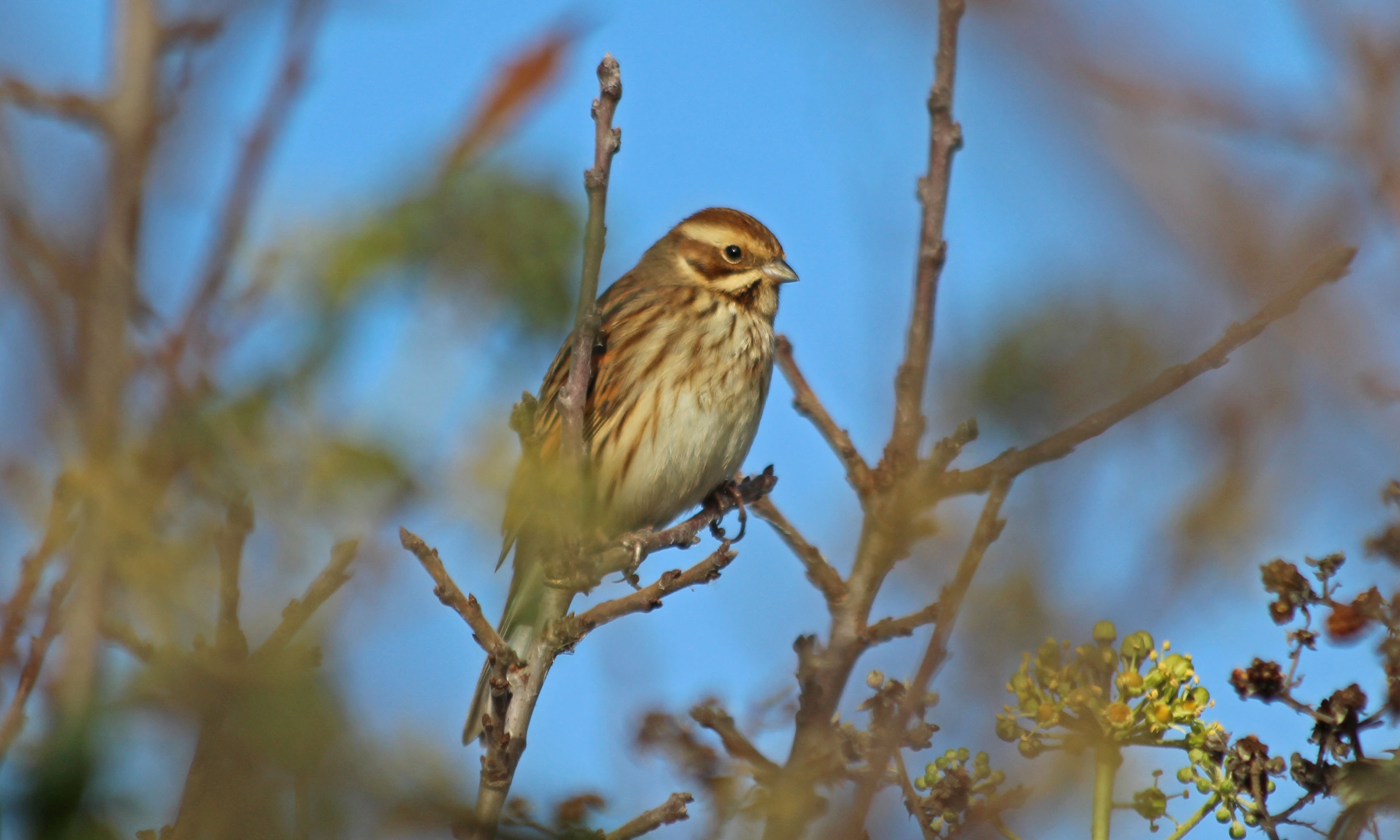
Reed buntings aren’t always found in reeds. A family of three were flitting from hedge to field, foraging for seeds and insects.
09 Monday Nov 2020
Tags
British moths, Hawthorn, leaf mines, leaf mines on Hawthorn, moth larvae in leaf mines, moth leafmines, Parornix anglicella
Here’s another leaf mine to look for in your local hedgerows, a very distinctive mine on Hawthorn (Crataegus sp.) made by the larvae of the micro moth Parornix anglicella, also known as the Hawthorn slender.

Although the newly hatched moth larva initially creates a corridor mine and then a blotch, it later makes itself a cone-shaped tent, using silk to adhere the bent-over edge to the main part of the leaf, and these cones are very easy to spot. Turn over the leaf to view the underside and you’ll find incredibly beautiful, almost sculptural structures, some resembling miniature latticework pyramids.


You can read more scientific detail about the leaf mine on the UK Fly Mines website here, and see what the adult moth looks like on the UK Moths website here.

 earthstar
You must be logged in to post a comment.