283/366 Kestrel

Tags

, , , , ,

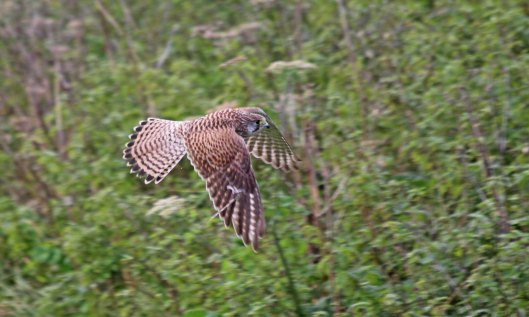
I don’t know if this Kestrel (Falco tinnunculus) is an inexperienced youngster or simply confident in its ability to escape my attentions, but it is certainly one of the most confiding birds of prey I’ve encountered.

201009 kestrel (3)

While it was taking a break from hunting over the local farm fields, I managed to get very close to its perch and, even when circling the fields, it flew quite near to me, resulting in probably my best flight photos to date.

201009 kestrel (2)

There are two resident Kestrels in these coastal fields but this one can immediately be identified by its wonky wing feather, which, fortunately, doesn’t seem to make the slightest difference to its aerial agility.

201009 kestrel (1)

282/366 Saffron surprise

Tags

, , , ,

After the strong winds and heavy rain of recent days the last thing I expected to see at Cosmeston yesterday was this Clouded yellow butterfly (Colias croceus). I was initially surprised at what good condition it was in but, in his Life Cycles of British & Irish Butterflies, Peter Eeles writes that ‘In good years, this species can produce up to three broods in the south of England, with the third brood emerging in late September and October.’ Presumably, this is also true for south Wales and, as several other butterflies have had additional broods this year, I wonder if this saffron beauty is one of a newly emerged third brood.

201008 clouded yellow

281/366 Hairy and handsome

Tags

, ,

I imagine this little guy was trying to shelter on this building wall, attempting, as I was, to avoid the worst of the wind and rain. At least it could easily fly off into the nearby bushes, whereas I had a 20-minute uphill walk to get home. Oh, and in case you don’t know, this is a Hairy shieldbug – you can read more about these handsome creatures in my post Hairy shieldbugs, April 2020.

201007 hairy shieldbug

280/366 Yellow-browed warbler

Tags

, , , , , , ,

Yesterday was brilliant! Not only did I manage a walk without getting wet, but I also saw my first-ever Yellow-browed warbler.

201006 yellow-browed warbler (1)

I didn’t discover the bird – local birder extraordinaire Graham did that and put the word out on Twitter. The bird had been seen about half way along the coastal path between Penarth and Lavernock, so I kept a keen eye out as I walked in case the warbler had wandered further along the path. The hedgerows were alive with birds but it wasn’t until I got close to the original location that two other local birders alerted me to the bird’s presence.

201006 yellow-browed warbler (2)

The Yellow-browed warbler (Phylloscopus inornatus) is a ‘scarce autumn passage migrant’ (Eastern Glamorgan Bird Report no.57) in south Wales. Most years there are just a handful of sightings, though that can vary dramatically – in 2016, there were 26 sightings reported, which earned the adjective ‘extraordinary’ from the bird report writer (Eastern Glamorgan Bird Report no.55).

201006 yellow-browed warbler (3)

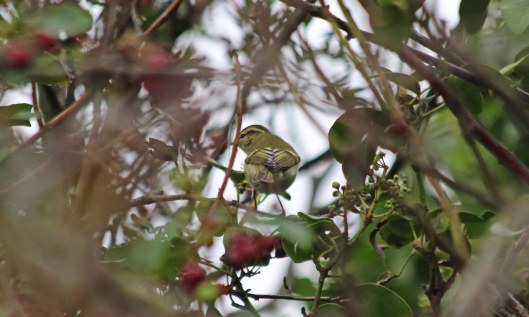
This is a small warbler, smaller than a Chiffchaff, and a very active feeder, so it can be tricky to spot in dense foliage, but I knew to look for its ‘yellow brow’, the thick stripe above its eye, and the two stripes on its wings, the top one quite short, the lower longer. It also has a distinctive call that is crisper than that of a Chiffchaff or Willow warbler, and similar to a Coal tit.
201006 yellow-browed warbler (4)

I watched the bird – or perhaps I should say I stared at the bushes where the bird was – for about 45 minutes. Its intermittent calling helped find this little leaf flitter when it vanished for short periods, though I found it easiest to just watch for movement. It mostly seemed content to stay within a small area, a temporary feeding territory my bird guide calls it, and it was certainly defending that territory, aggressively chasing away a Chiffchaff that flew in. Eventually, I could see rain clouds on the horizon and judged it prudent to head homewards, but what a fabulous encounter I had enjoyed with my first Yellow-browed warbler!

279/366 Being ticked off

Tags

, , , , , ,

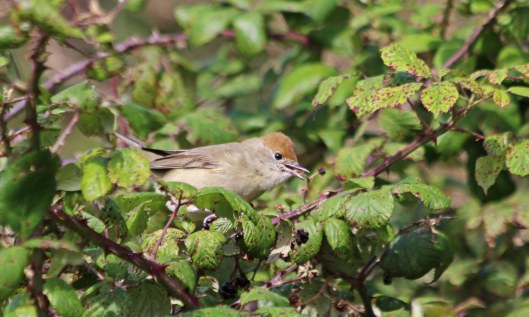
Having spotted movement in the Bramble bushes, I was moving in for a closer look, when out popped this beauty, a female Blackcap.

201005 blackcap (1)

She wasn’t at all happy with my proximity and started giving me a real scolding, a ‘ticking off’. I’m sure you’ve heard Robins and Wrens making their ‘ticking’ sound. Well, Blackcaps also have a ‘tick, tick’ contact call, which seems to get louder, harsher and much more insistent when they’re agitated.

Why was she annoyed? It seems I was keeping her from her food. She had spotted some particularly succulent-looking blackberries but didn’t feel comfortable about moving in to the open to eat them while I was nearby.

201005 blackcap (4)

A few minutes after I realised what was happening and moved away, she popped out and resumed her feast. So, she was content, and I got some nice photos – and, though the dictionaries don’t mention it, I do wonder if this is where the phrase ‘to tick (someone) off’ comes from.

201005 blackcap (5)

277/366 A heartening splash

Tags

, , ,

I’ve been saving this photo, taken quite recently, on 22 September, for just such a day as this. We are currently under the thumb of Storm Alex, the Met Office having issued a yellow warning for heavy rain and wind gusts over 20mph until midday tomorrow. So, to me, this is the perfect day to post this gorgeous Peacock butterfly, a heartening splash of bold cheery colour.

201003 peacock

276/366 A splendid Skylark

Tags

, , , , , ,

With rain forecast for the following few days, I was determined to enjoy my meander along the coast, and it was certainly not difficult to do. So many Swallows, perhaps thousands, were swooping low over the fields, feeding up before heading out across the water, that I spent rather a lot of time just standing, watching, smiling at the sight of them.

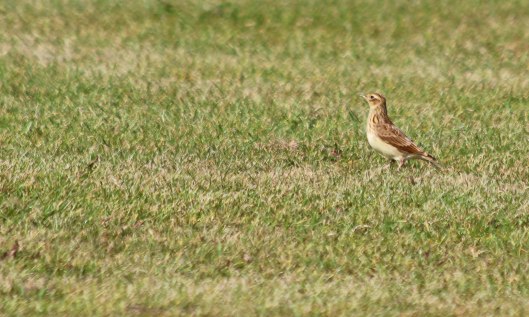
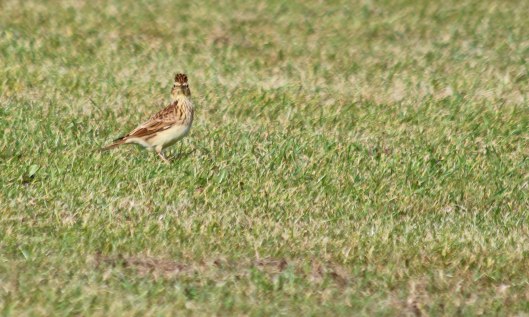
There were Linnets too – one flock held more than 200 birds, and a smattering of Meadow pipits and Skylarks, though it wasn’t until I got back to town that I had wonderfully close views of one particular Skylark.

201002 linnets

It was rather incongruously poking about a large grassed area on top of the seaside cliffs, optimistically labelled a ‘park’ by the local council, which is usually devoid of anything but human and canine life. What a splendid bird!

201002 skylark (1)201002 skylark (2)201002 skylark (3)201002 skylark (4)

275/366 Another hitchhiker

Tags

, , , ,

Another day, another hitchhiker, another shieldbug. Last time, it was a Hawthorn shieldbug, this time it was a Common green shieldbug (Palomena prasina). I have no idea where I picked this one up but sometime during today’s meander, it chose to fly or drop on to my backpack and hitched a ride home with me.

I popped it inside a glass – I knew those shot glasses would come in handy for something – and took a few photos of its underside, which I don’t usually get to see, before opening the window and letting it fly off into the sunset.

274/366 Another extra brood

Tags

, , , , , , ,

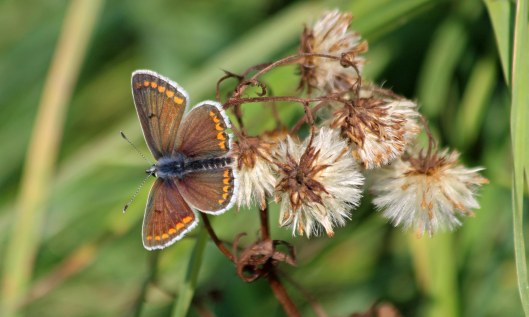
This year I saw my first Brown argus butterfly (Aricia agestis) on 11 July and thought I’d seen my last on 26 August, a short but very sweet season of sightings. Then, to my astonishment and absolute delight, I discovered two more on the same day, 16 September, one at Lavernock Nature Reserve and the other at Cosmeston Lakes Country Park.

200930 brown argus (1)

These had to be the product of the first brood of butterflies breeding and so were a second brood, not something I’d seen before with this butterfly. As the local populations of Dingy skippers have also produced a second brood and the Small coppers a third brood this year and nothing has changed in their environments, I can only assume this has been caused by the warmer climate.

200930 brown argus (2)

I haven’t managed to find the Lavernock Brown argus again but the Cosmeston butterfly was still in the same spot last week. A late summer-early Autumn treat!