213/365 A privilege of Painted Ladies

Tags

, , , , , , ,

190801 painted lady (1)

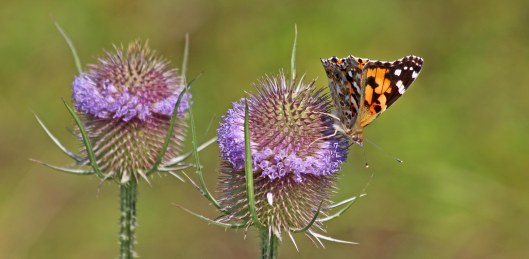
I’ve been pondering what the most descriptive collective noun might be for a group of Painted Ladies? Apparently, for butterflies, there are several possibilities including swarm, flutter, flight and kaleidoscope. The latter appeals because it conjures well the vision of a mass of beautiful, ever revolving colours. I thought of a ‘pleasure’ of Painted Ladies but the double entendre is a little tacky.

190801 painted lady (2)

Then, one of my Twitter acquaintances came up with ‘privilege’, which is just perfect, thank you, Martin. Because it certainly was a privilege to see 27 of these gorgeous creatures as I walked the fields at Cosmeston yesterday (and I’m sure there were a lot more than that). We’re not getting the thousands (perhaps hundreds of thousands) that have been arriving along England’s east coast in recent days, but it’s still a lot for this area and it was an absolute delight to see so many.

190801 painted lady (3)

212/365 The pollinators

Tags

, , , , ,

190731 pollinators

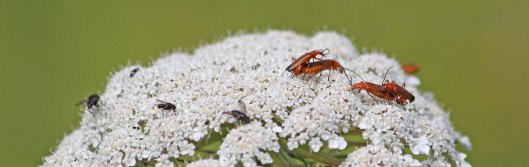
It seems unbelievable to me that some people still think that bees – in particular, honey bees, which are essentially a farmed species – are the only insects that pollinate flowers. You have only to look at a particular type of flower – in this case, umbellifers – to see the wide range of insects that visit and feed on them. And each of these little creatures gets covered in pollen while feeding so, when they fly on to the next flower, they are automatically contributing to flower pollination.

211/365 Hoppers

Tags

, , ,

190730 Rhodo leafhopper (1)

I made my annual visit to the Rhododendron bushes in one particular area of Cardiff’s Bute Park yesterday to check on these little critters, the Rhododendron leafhoppers, Graphocephala fennahi, and I’m delighted to report that the colony appears to be thriving. (You can read more about them in a previous blog here.)

210/365 Butterfly for brunch

Tags

, , , ,

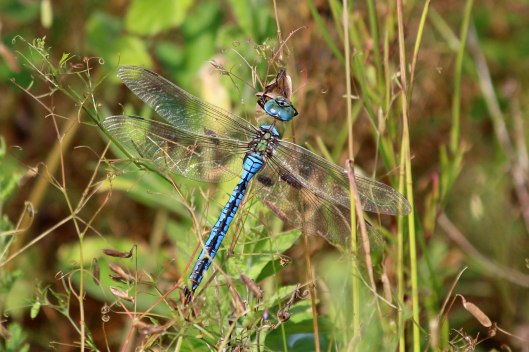
It’s often quite difficult to catch up with Emperor dragonflies as they seem to be in constant motion, patrolling their patch or hawking for food across flower-filled fields and meadows. But I spotted this one carrying a large load, relatively speaking, and, though dragonflies will often feed as they fly, this beautiful beast decided to pause and enjoy its brunch quite near to me.

190729 emperor dragonfly

You can’t really tell from my photo but it was munching on a Meadow brown. As I watched, first one wing, then another was plucked off and discarded, before the main course was consumed. Not exactly what I’d fancy for my brunch, and I did feel a little sorry for the butterfly, but this is the reality of wild life.

209/365 Broad-leaved helleborines

Tags

, , ,

I almost left it too late!

190728 broad-leaved helleborines (1)

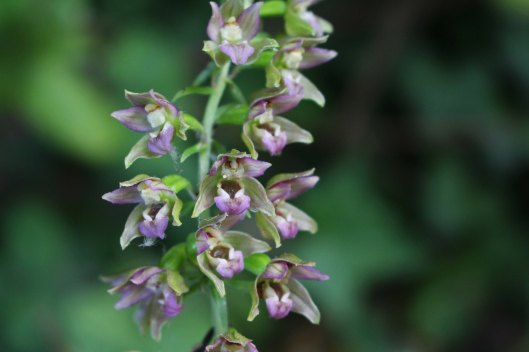
I’ve been keeping an eye on these Broad-leaved helleborines for over a month now: at my first visit, the flowers scarcely showed a tinge of red; at my second visit, on 14 July, a couple were in bloom but most still to open; and this morning, many of them had already started to go over.

And, as today was quite windy, my photos are not very sharp so I’ve added in a couple from two weeks ago.

190728 broad-leaved helleborines (2)

Hey ho, at least I managed to see them in all their beauty before they disappear for another year.

207/365 Butterflying at Lower Woods

Tags

, , , , , , , , ,

On the hottest July day on record, yesterday, three mad gents and a Kiwi woman went butterflying in the noon day sun!

190726 Lower Woods (1)

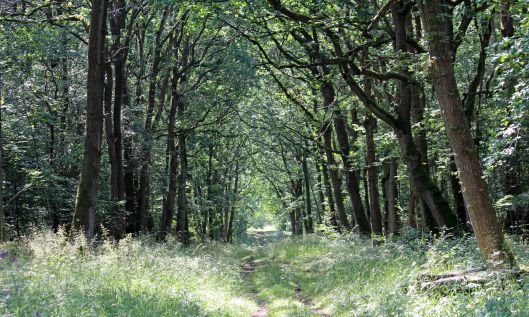
Our destination was the Gloucestershire Wildlife Trust’s Lower Woods Nature Reserve, which, according to their website, is ‘one of the largest ancient woodlands in the south-west of England’. I can believe it!

190726 Lower Woods (2)

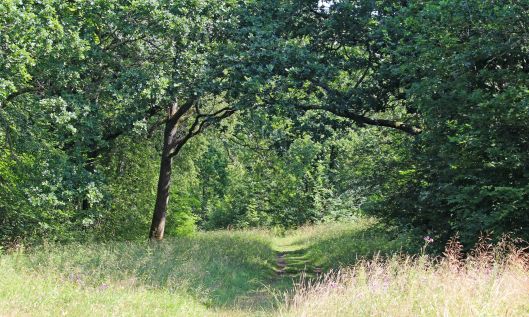
We walked most of the Horton Great Trench, one of the long grassy roads that have been in existence since Medieval times, as well as detouring in through the woods on one of the many tracks, and it was beautiful – extremely hot, but beautiful! Towering old trees edged the ancient trackway, with clearings widening out to wildflower meadows in many places along the way.
190726 silver-washed frit

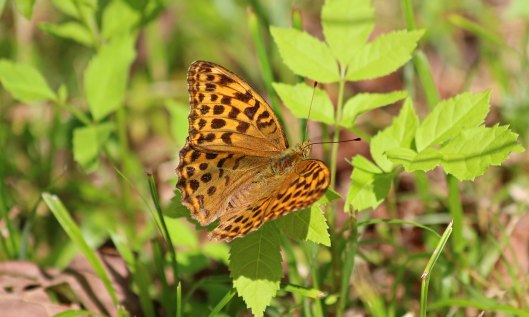
The trench was perfect for butterflies. I have never seen so many Silver-washed fritillaries before, and there was also an abundance of Peacocks, flashing their brilliant colours on the bramble flowers. We spotted several Purple hairstreaks up high in the ancient oaks and then had the delight of watching one come down to the grass to drink from the overnight dew – fabulous!

190726 purple hairstreak190726 small copper

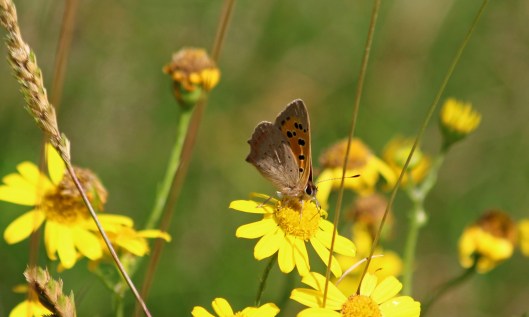
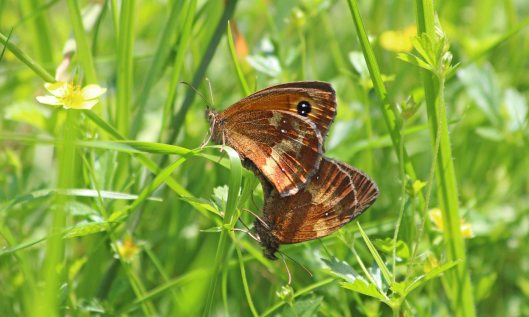
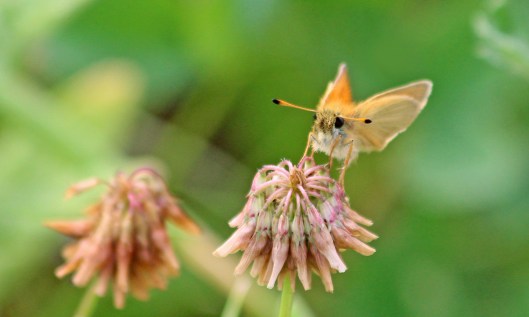
Our list for the site came to 17 species: Silver-washed fritillary, Purple hairstreak, Peacock, Red admiral, Comma, Large and Small and Marbled whites, Brimstone, Small skipper, Common blue and Brown argus, Speckled wood, Meadow brown, Ringlet and Gatekeeper, and two gorgeous Small coppers.

190726 gatekeeper190726 brimstone

We didn’t actually find our target species, the White admiral, at Lower Woods but a detour to Slade Wood on the way home produced one individual, bringing our top-spotter car-driver his 50th butterfly species of the year. Congratulations, Gareth!

206/365 An Essex update

Tags

, , , , ,

Before this year, I had only seen an Essex skipper once, and that was only a possibility, not a certainty, based on a photo I took in July 2017 of what I thought at the time was a Small skipper. This year I’ve found them at three different sites, reinforcing my thinking that, for me personally, there’s really no substitute for taking the time to observe something closely.

190725 Essex skipper Grangemoor (2)

There are physical differences that differentiate the Essex from the Small skipper – the black tips of its antennae and, in the male, the size and angle of the sex brand on its upper wings (see images below). But I’ve found that they seem to act differently too. Their flight pattern seems more relaxed, less frantic than the Small skippers, and they also seem more inclined to perch and be looked at – or maybe I’ve just been lucky!

190725 small and essex skippers antennae

190725 small and essex skippers male sex brands

Small skippers on the left, Essex skippers on the right

Close observation and taking lots of photos of their antennae for verification has meant I’ve now found Essex skippers at Cardiff’s Hailey and Grangemoor Parks, and also at Cosmeston. But will I remember what to look for when they begin to appear next year? Only time will tell.

190725 Essex skipper Grangemoor (1)

205/365 Spotted longhorns

Tags

, , , , ,

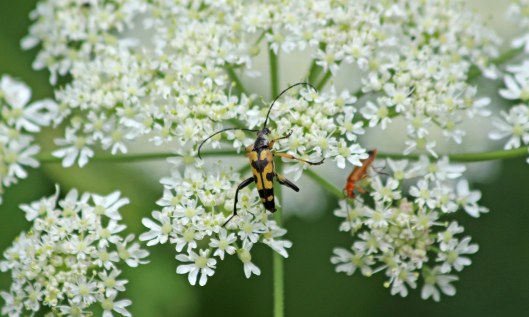
I thought I’d found a new variety of longhorn beetle when I spotted these creatures at Slade Wood on Monday but no. It turns out the yellow-and-black markings of Spotted longhorn beetles (Rutpela maculata) are quite changeable and these were just variations on a theme.

190724 spotted longhorn (1)

As their larvae inhabit rotten wood, the adult beetles can usually be found near woody areas, on hedgerows and along woodland rides, where they enjoy nectaring on umbellifer flowers.

I’ve just been reading that the adults only live for a few weeks between May and August so eyes peeled – you haven’t got long to spot these little stunners.

190724 spotted longhorn (4)

204/365 The summer Holly blues

Tags

, , , , , ,

The Holly blue is one of several British butterflies that goes through more than one life cycle per year (you can read more about them here), and the second generation of these stunning little butterflies is now on the wing in my local reserves and wild places.

190723 summer holly blue (1)190723 summer holly blue (4)

I saw my first of the summer brood on 14 July at Grangemoor Park, and this perfect little female was feeding on bramble flowers when I visited Lavernock Nature Reserve on Saturday, 20 July. Look out for them on ivy bushes, as that’s where the second generation females lay their eggs.

190723 summer holly blue (2)190723 summer holly blue (3)