Unbranched bur-reed

Tags

, , , , , ,

When I popped down to the edge of the River Ely during last Monday’s walk, I was hoping for dragons and damsels. Instead, I saw flowers I’d not seen before; these plants with the rather lovely towers of globular spiky white blooms are members of the Bur-reed or Sparganium family of aquatic plants that grow both in moving and still fresh water.

There are four species of Bur-reed in Britain: Branched, Unbranched, Least and Floating. From the fact that there is a single unbranched flower spike (raceme), with just one group of the smaller, more compact male flowers at the top means that the species I found was Unbranched bur-reed (Sparganium emersum).

Bug: Deraeocoris flavilinea

Tags

, , , , , ,

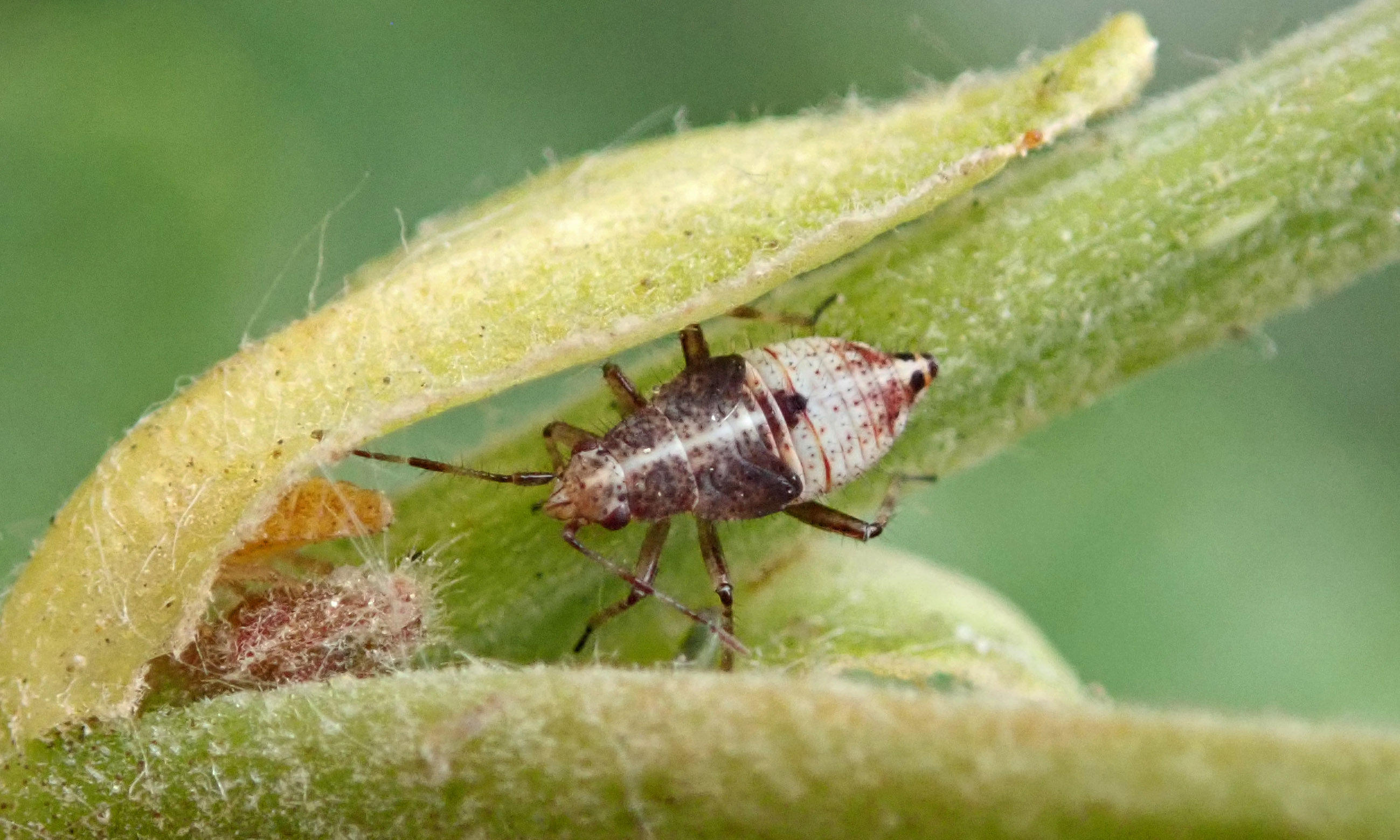
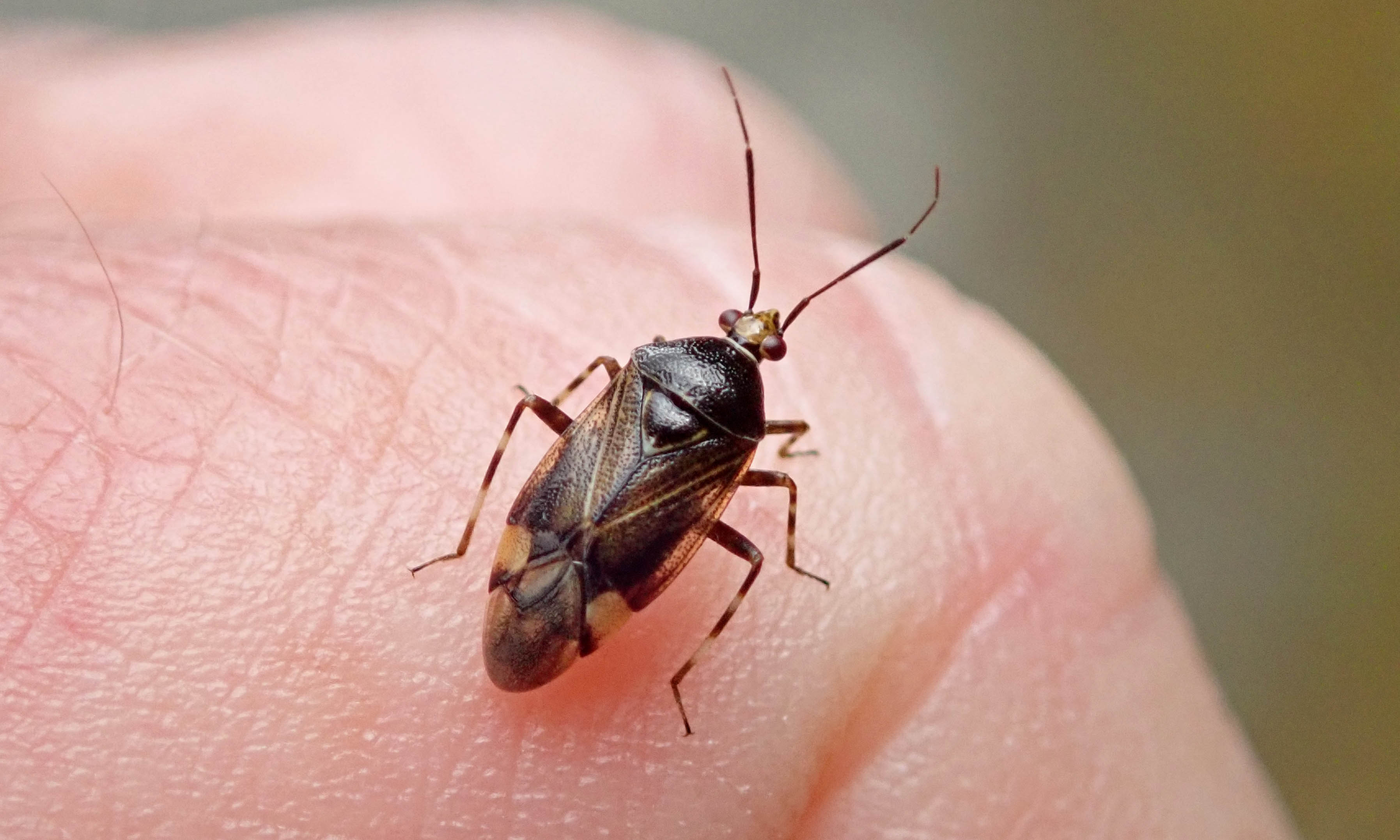
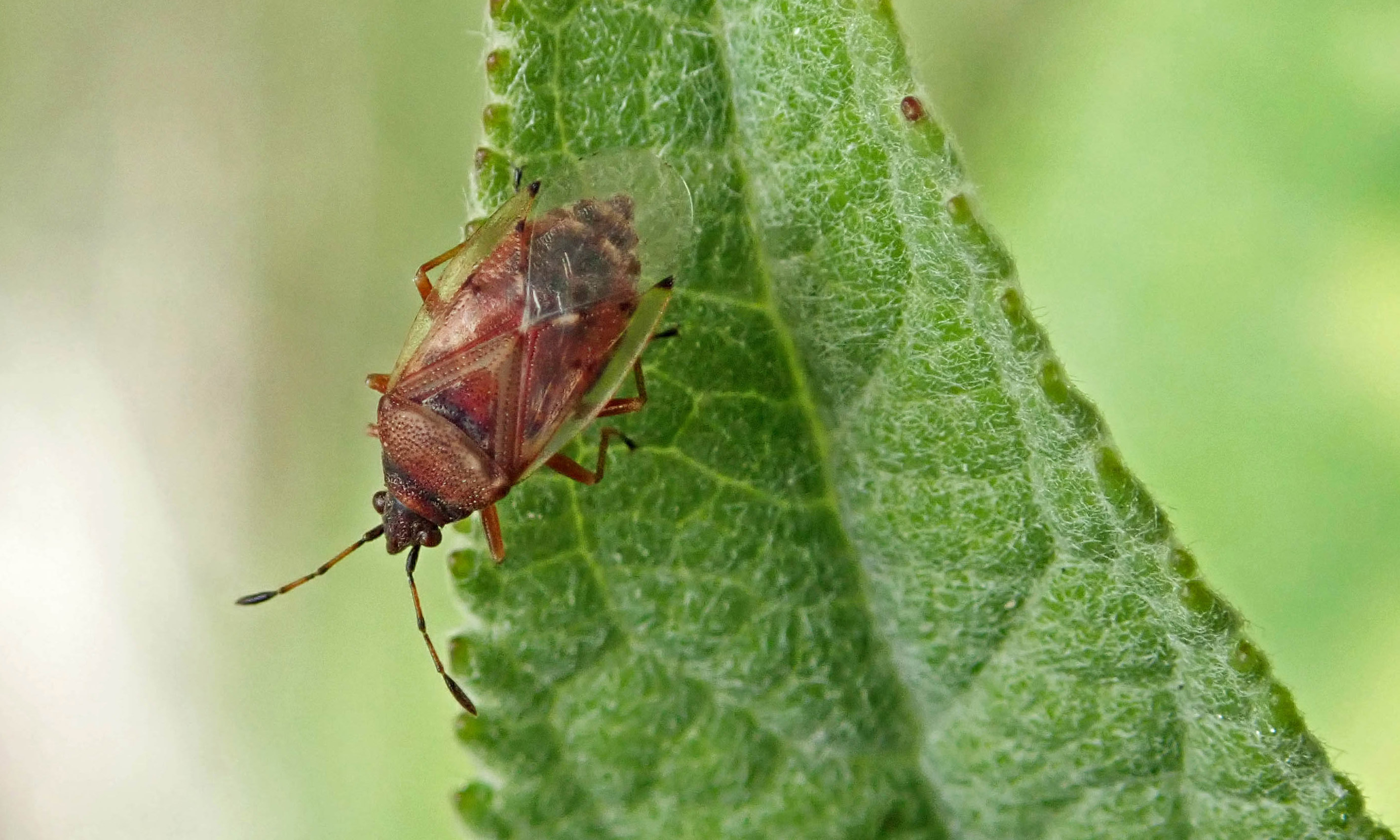
How bugs are able to colonise places as rapidly as many seem to do always surprises me, and this new-to-me Mirid bug is one of those. Deraeocoris flavilinea was first reported in the UK in 1996.

In the interim 29 years between then and now it has made itself at home across most of the southern and central parts of Britain. Perhaps the fact that this bug’s larvae feed on Field maple and Sycamore, both very common tree species, has helped with its rapid colonisation efforts.

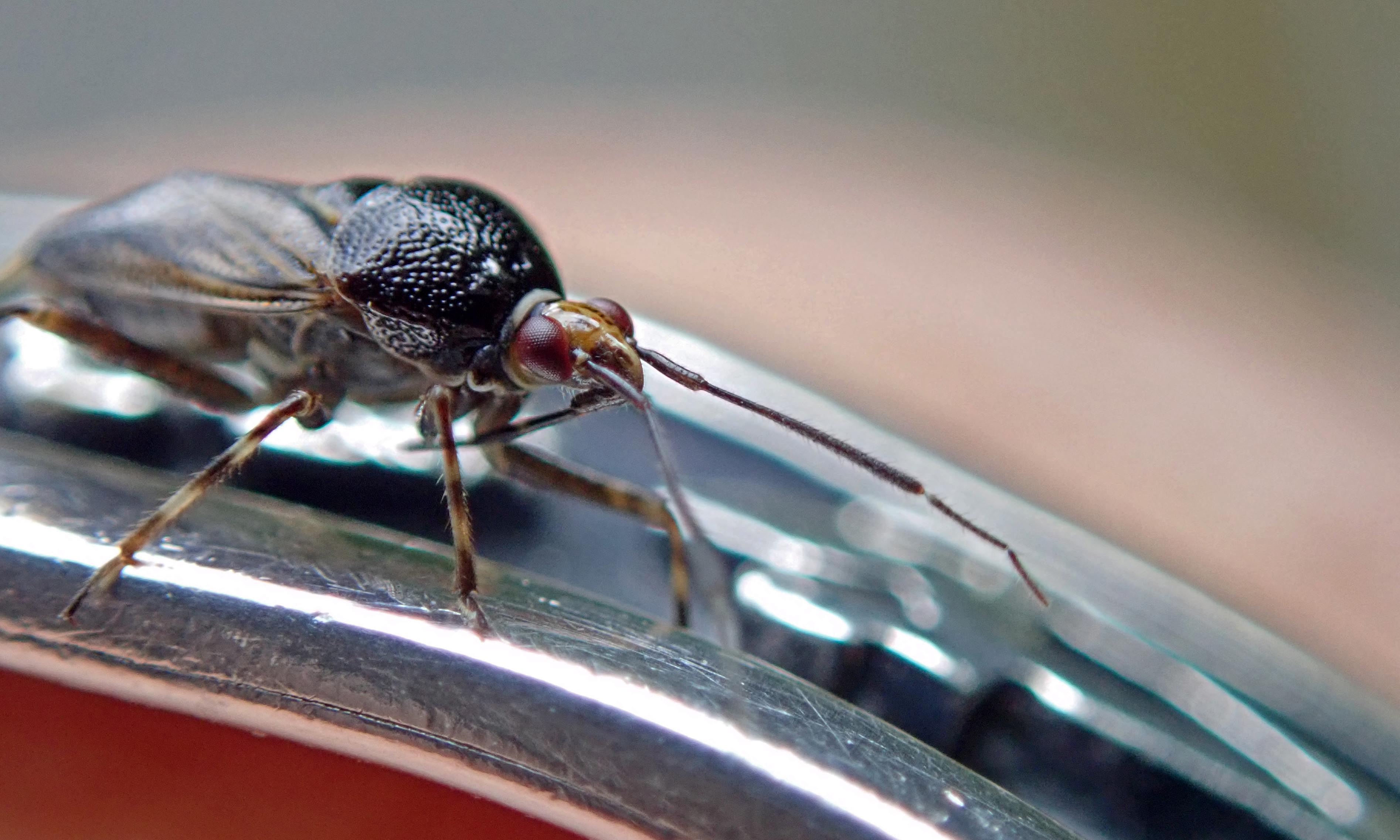
I saw my first, the nymph shown above, on 12 May and, at the end of May, saw my first adult. Since then, I’ve seen several more, even had one walking sedately up my arm, down again and on to my hand, which allowed for a nice close up as my final photo shows.

Bug: Kleidocerys resedae 

Tags

, , , , ,

As I think I’ve mentioned previously, I’ve been fortunate to find several new bugs and beetles this year. This is one of those, now seen twice one month apart. Let me introduce you to the Birch catkin bug (Kleidocerys resedae), a member of the Lygaediae, the seed bugs that live in, on and around the seeds of various plants. In this case, as you can tell from the name, Kleidocerys resedae can be found on Birch trees (Betula species), the nymphs in particular munching on the catkins.

These are attractive little bugs, generally red-brown in colour, with some paler markings and transparent wings. There is a darker form Kleidocerys resedae f. privignus, which can be found around Alder trees, and I wonder if the bug shown below might be one of those. I actually spotted it on scrub underneath some trees, one of which was an Alder.

Birch catkin bugs can be found throughout Britain, as well as in North America and Europe, and you might be lucky enough to see them at any time of year, as they overwinter as adults (though they are thought to hibernate in colder climates).

House martins, home and away

Tags

, , , , ,

Maybe I haven’t been walking in the right locations this summer, but it seems to me that I haven’t seen as many House martins this year. When I was in Weymouth, I was surprised to spot the birds shown below only just starting to build their nests on one of the old mansions along the seafront – that was on 10 June, which seemed rather late.

Last week, once I was back home again, I made a point of walking the streets where I’ve seen nests in the past. Here in the town, I saw only one nest in a street where the ledges on the houses had previously been clustered with little mud cups. Fortunately, the situation was a little better on the houses around the local marina, and I was grinning as I watched the little sweetie shown below.

This House martin had, in fact, already fledged but, rather than hunting for its own food, it was taking short flights from the nest, only to return when its parents returned with food. Sneaky!

Foxes in the garden!

Tags

, , , , , ,

I’d been told by a couple of other flat owners that we have Foxes living in the woodland that borders one side of the communal garden where I now live, but I’d also been told that they are rarely seen, and the sightings are mostly late at night by those who live on the street side of the building, presumably as they’re venturing out into the town searching for food – the Foxes not the flat owners!

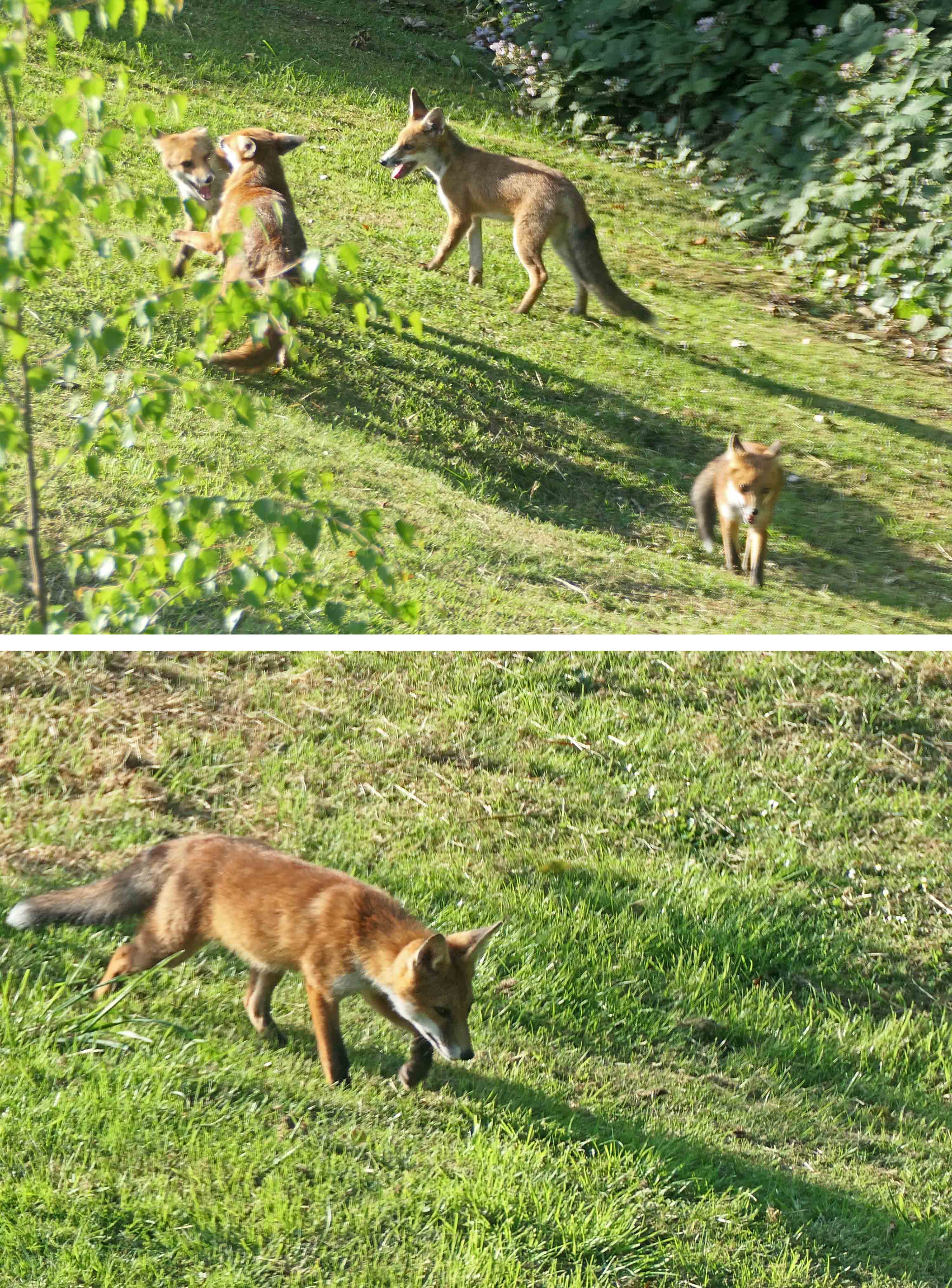
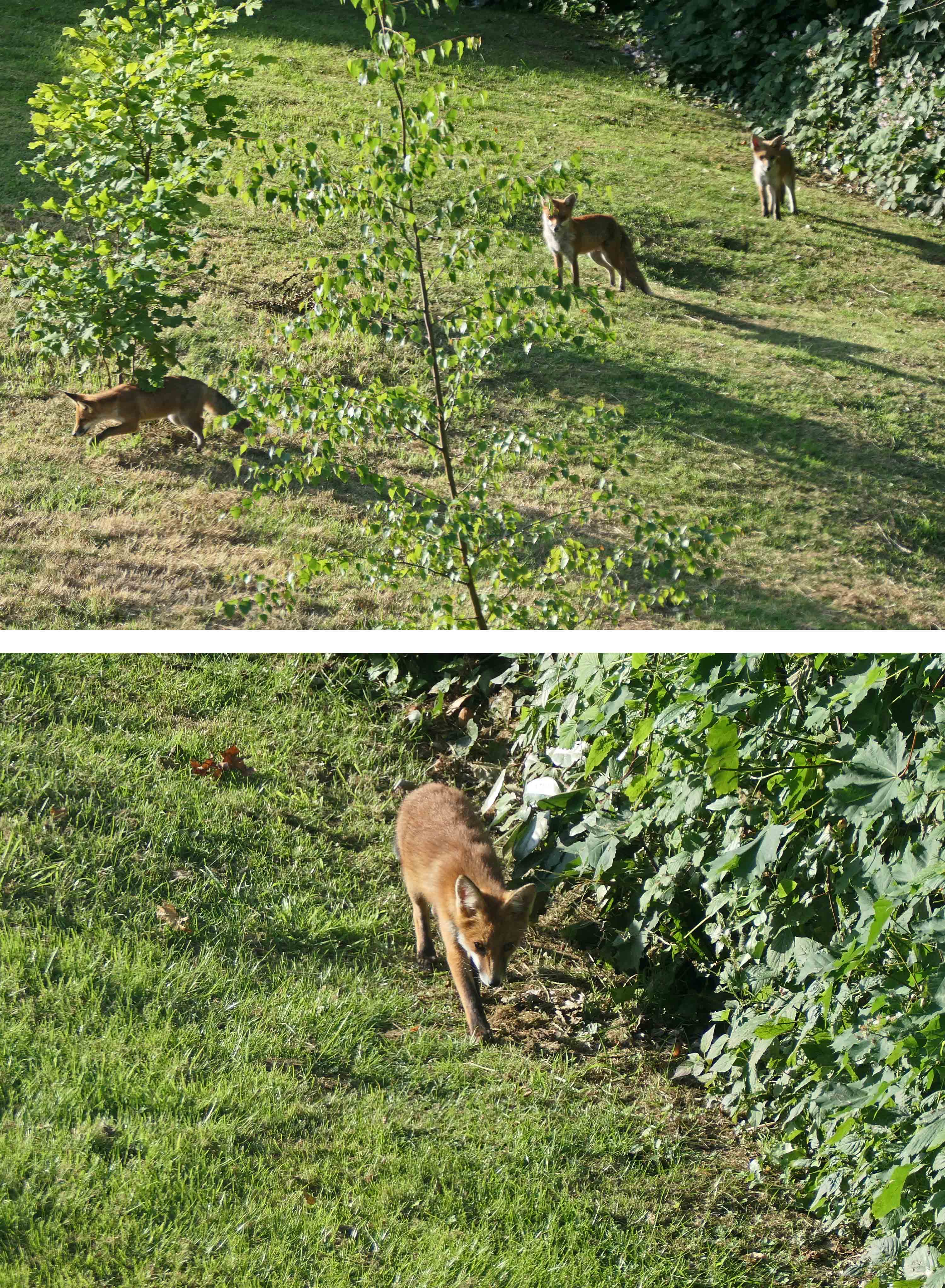
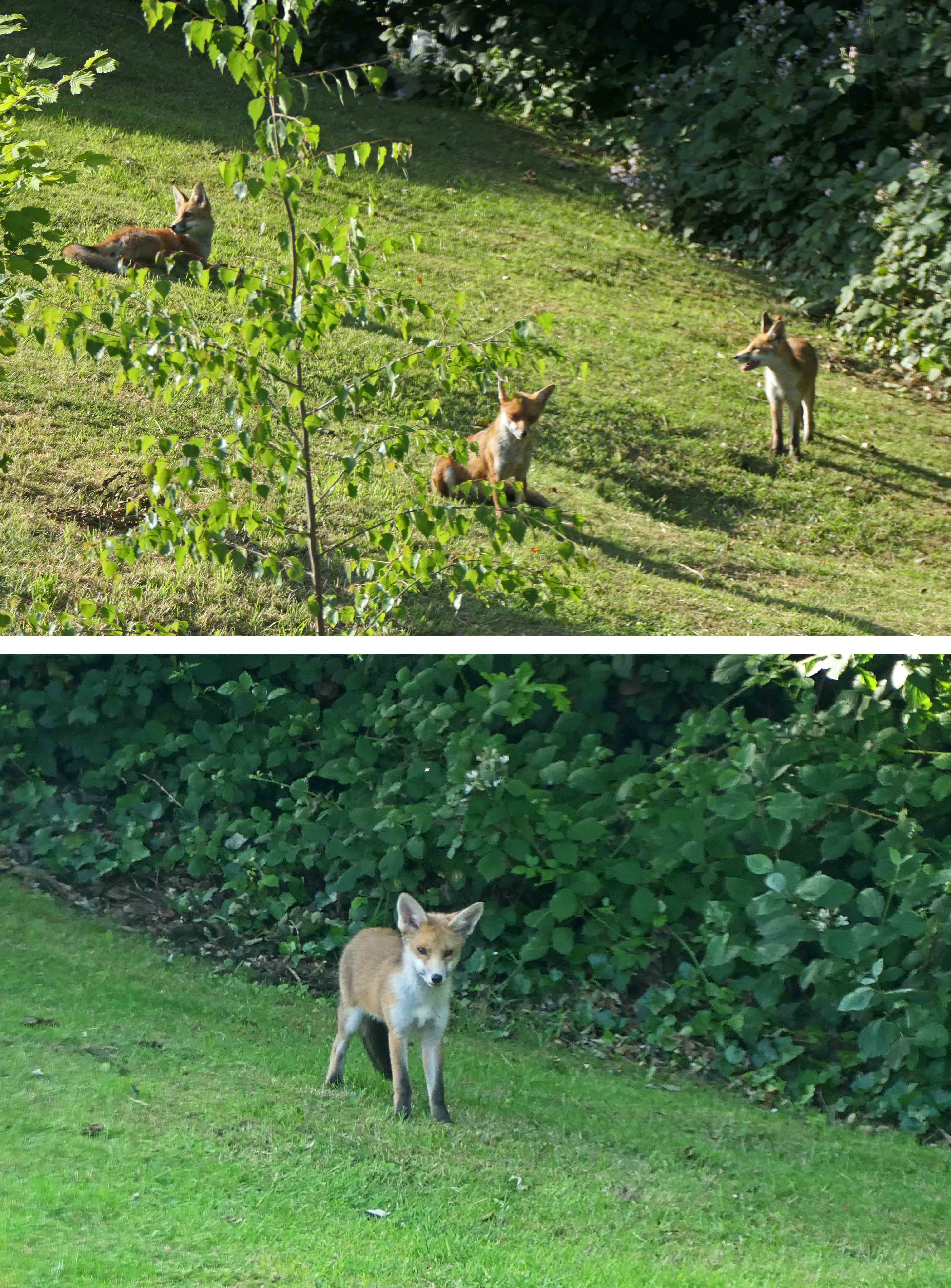
So, you can imagine my excitement and amazement and total delight when I looked out my window early one morning last week to see a whole family of Foxes frolicking together in the garden. From the look of them and the way they were interacting, I assume these are the male and female adults and two young cubs.

I watched them for perhaps 10 minutes before something alarmed them and the group quickly disappeared through a gap between the grass and the trees. But, within five minutes, they were out again, the adults sniffing warily around the garden edges, the youngsters climbing all over each other play-fighting. Once again, they withdrew after 10-15 minutes – I guess more people were up and about by then, pulling back curtains, opening windows, and that type of activity sent the Foxes back to the safety of their den for the day.

Even more surprisingly, I saw one of the adults just as it was getting dark the following evening, heading purposefully along the edge of the trees, heading out into the urban landscape to forage for scraps. It may even be that people locally feed them, as, fortunately, growing numbers of people are now happy to share our towns and cities with these handsome creatures.

Large whites and parasitism, part 2

Tags

, , , , , , , ,

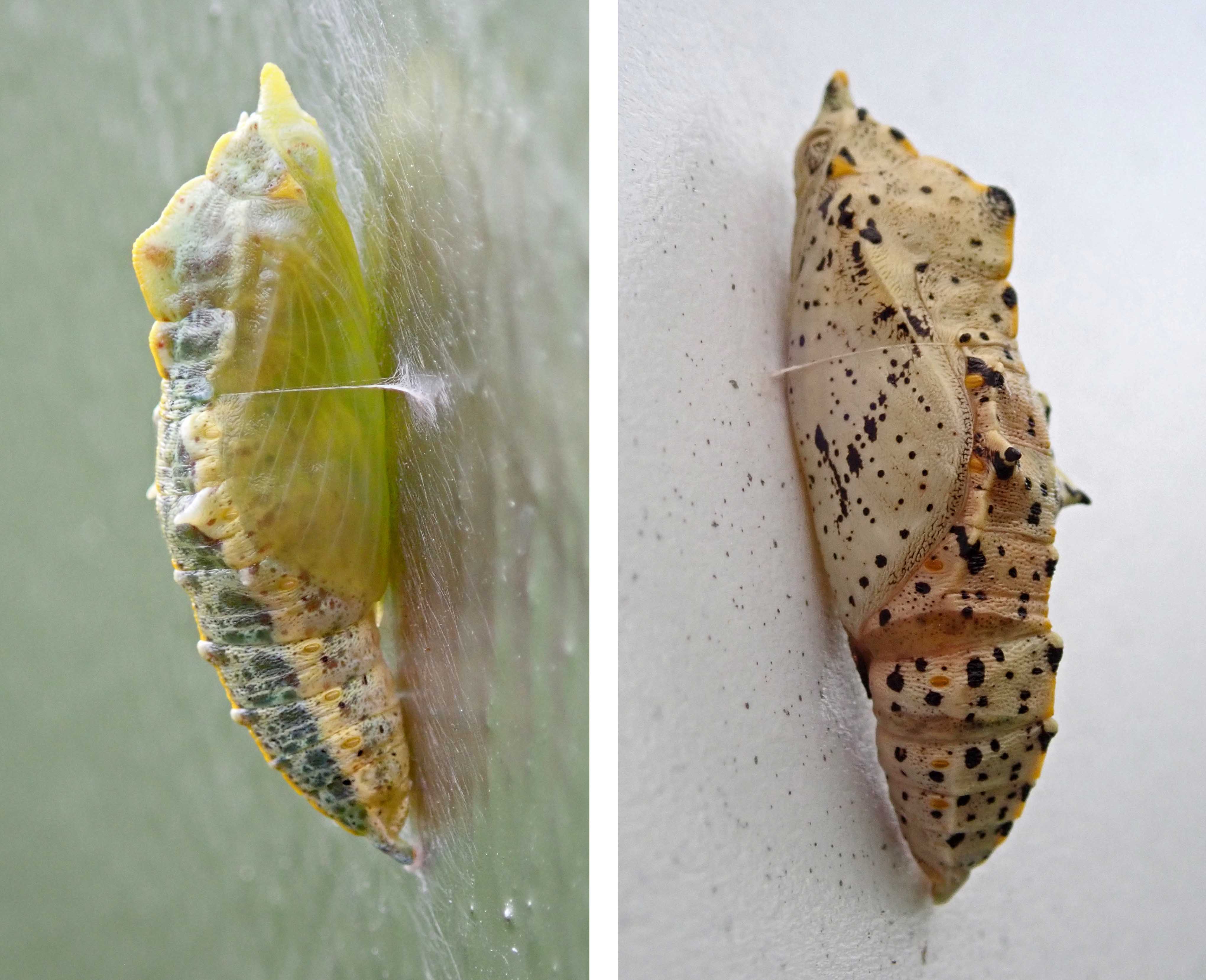
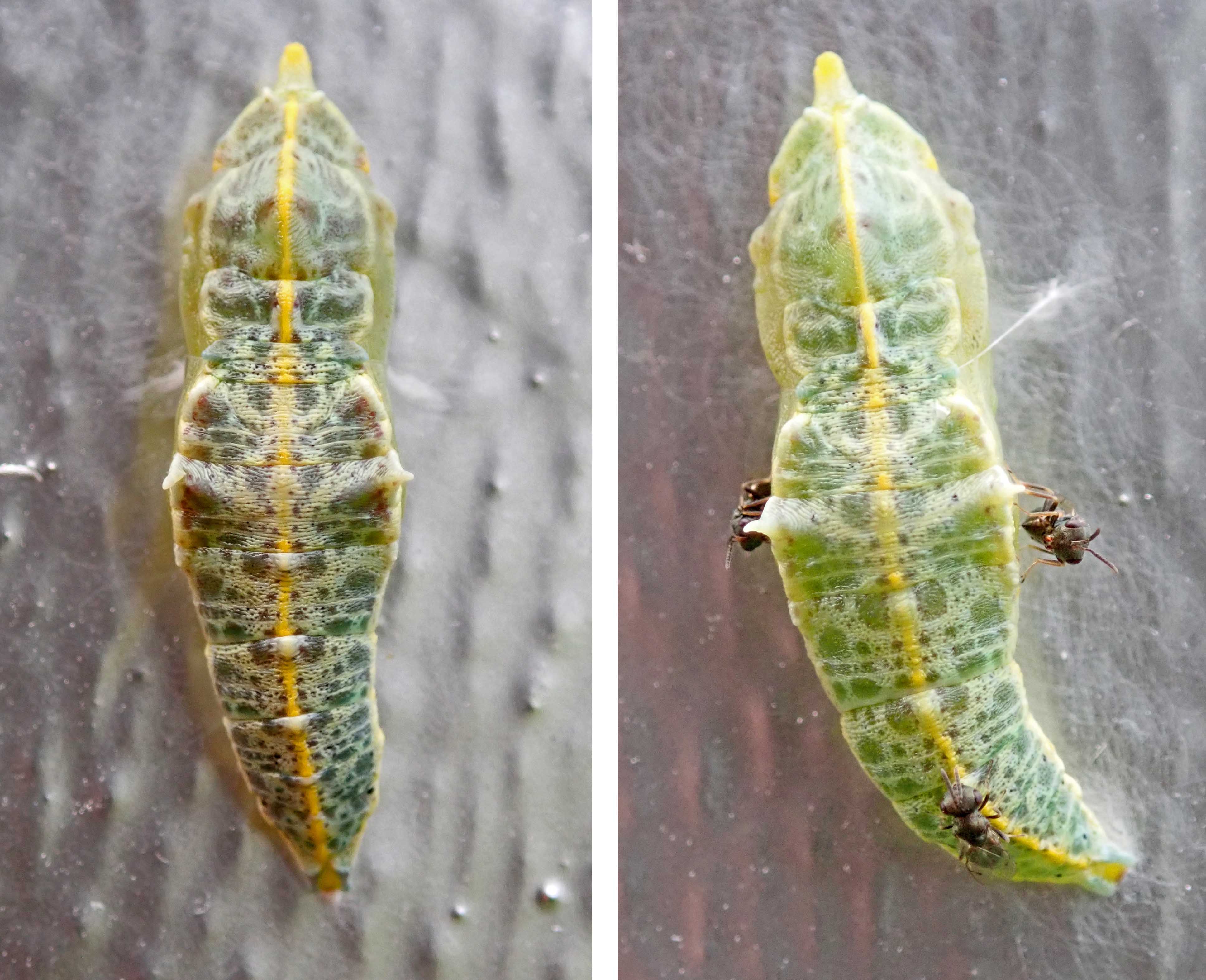
A week after my sighting of Large white butterfly larvae that had been parasitised by wasps (see yesterday’s blog post) I returned to the same location to see what might have changed during that time and was surprised to see six pupae, beautiful sculptural objects whose markings varied depending on how long it was since they had pupated. These can’t have been the parasitised larvae I don’t think, so there must have been a large number of larvae munching unnoticed in the grassy area below the signage they were on.

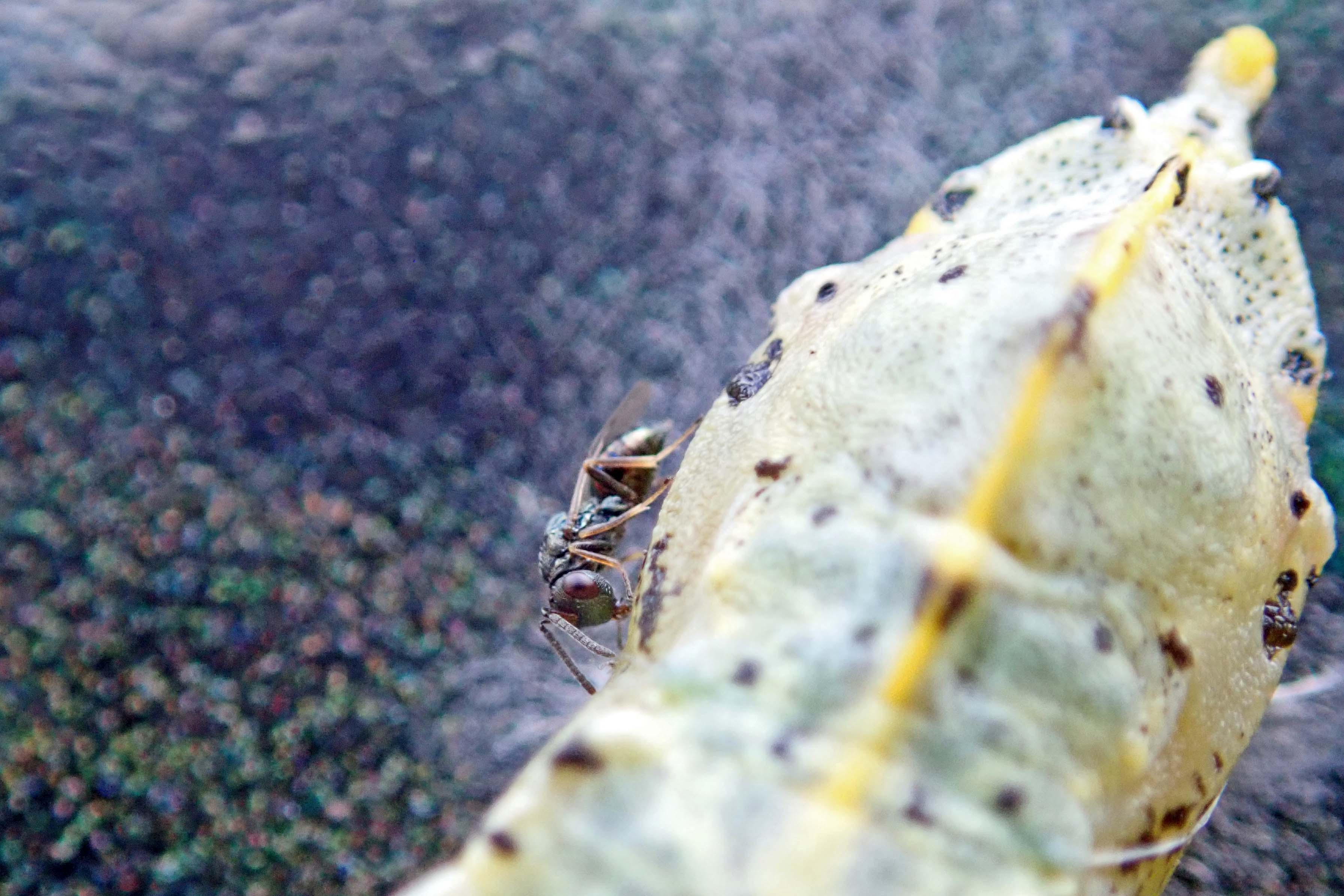
This time, as well as these pupae, a few parasitised larvae and a few caterpillars that looked normal but may still have had wasp larvae in their bodies, there was a new species of parasitic wasp in residence. They looked completely different to the wasp I’d seen the previous week and, rather than the larvae, these tiny wasps were all congregating around the Large white pupae.

As usual, I took a lot of photos and, when I got home, set about researching the possibilities. This time, my guide book offered no assistance but googling produced one probable answer. There exists a wasp that is actually named the White butterfly pupal parasitoid wasp, scientific name Pteromalus puparum, which seems the likely culprit, though this hasn’t yet been confirmed by any experts. I’m intending to revisit the site to see what’s happened while I’ve been away on my little holiday.

Large whites and parasitism, part 1

Tags

, , , , , , ,

Though I’ve been in Wales almost 10 years and was fascinated by British butterflies even before I settled here, I only saw my first Large white caterpillars in June last year. So, when I spotted several more on the large advertising signage fencing off a local building site, I was delighted … until I looked more closely (and just a warning, this is a bit gruesome!).
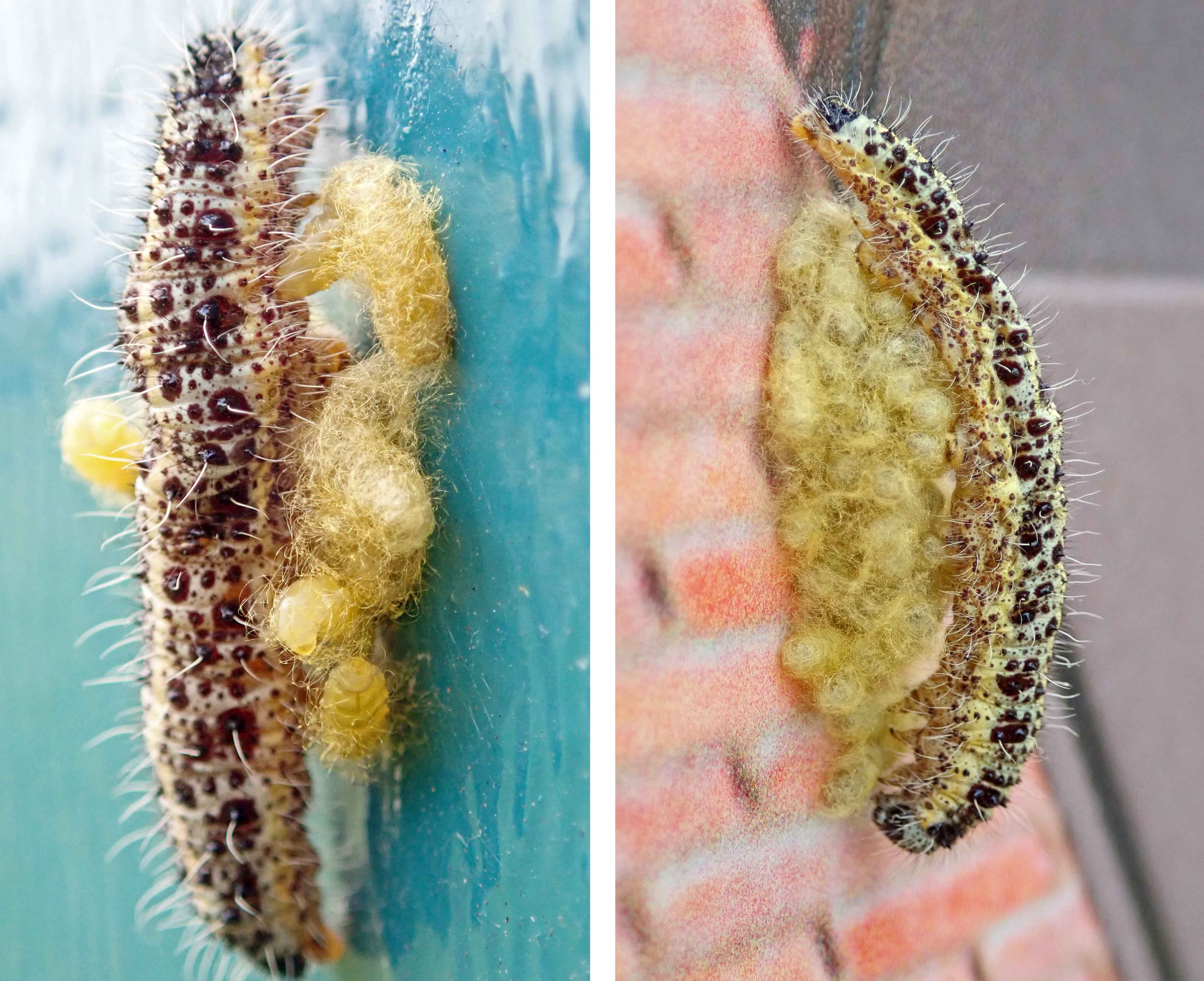
The larvae were surrounded by small yellow cocoons and, when I looked even closer, I could see small yellowish larvae squirming between the bodies of the caterpillars and the cocoons. It is highly likely that the Large whites have been parasitised by the wasp Cotesia glomerata. In Life Cycles of British & Irish Butterflies, Peter Eeles writes that the wasp

deposits between 15 and 80 eggs inside each young larva that it parasitizes. The wasp larvae feed on the layer of fat beneath the skin of their host, thereby avoiding vital organs, and, when their host is fully grown, break through the skin and pupate within yellow cocoons on or near their host.
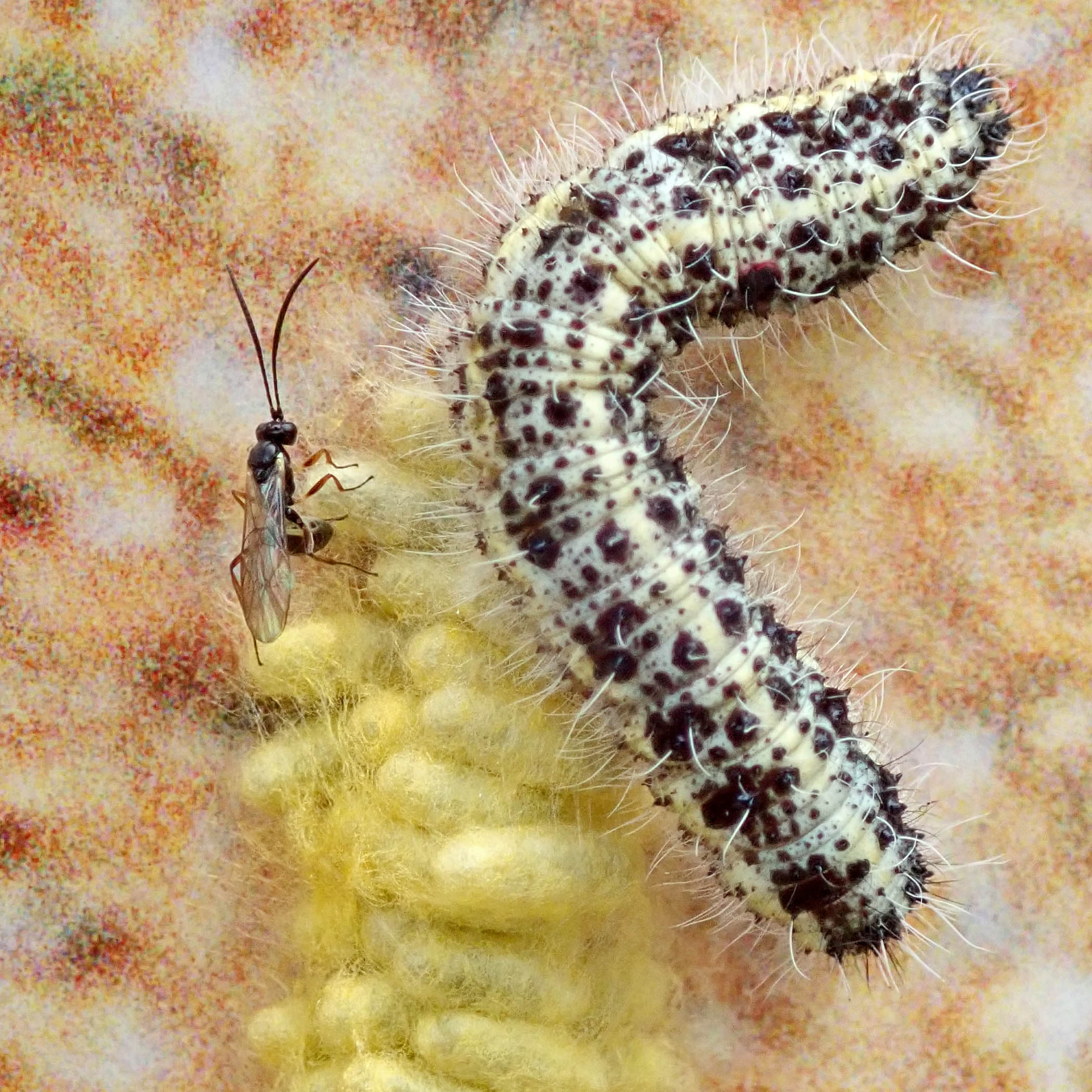
If this wasn’t gruesome enough for one morning’s finds, I then noticed a tiny wasp amongst the cocoons. At first, I thought it must be one of the Cotesia glomerata that had hatched, but no. When I checked at home later, a quick internet image search revealed that this did not resemble C. glomerata and, on Wikipedia, I found the information that C. glomerata is itself parasitised by a couple of other wasp species, Lysibia nana [it is listed as L. nanus in British taxonomic listings] and Gelis agilis. I’ve just been reading that the female G. agilis is wingless so I’m wondering if the wasp I saw is L. nanus. As this species is rarely recorded and there are no Welsh records, I’ve sent a query to the parasitic wasp expert at the Natural History Museum; I’ll update this post if/when I get an answer.
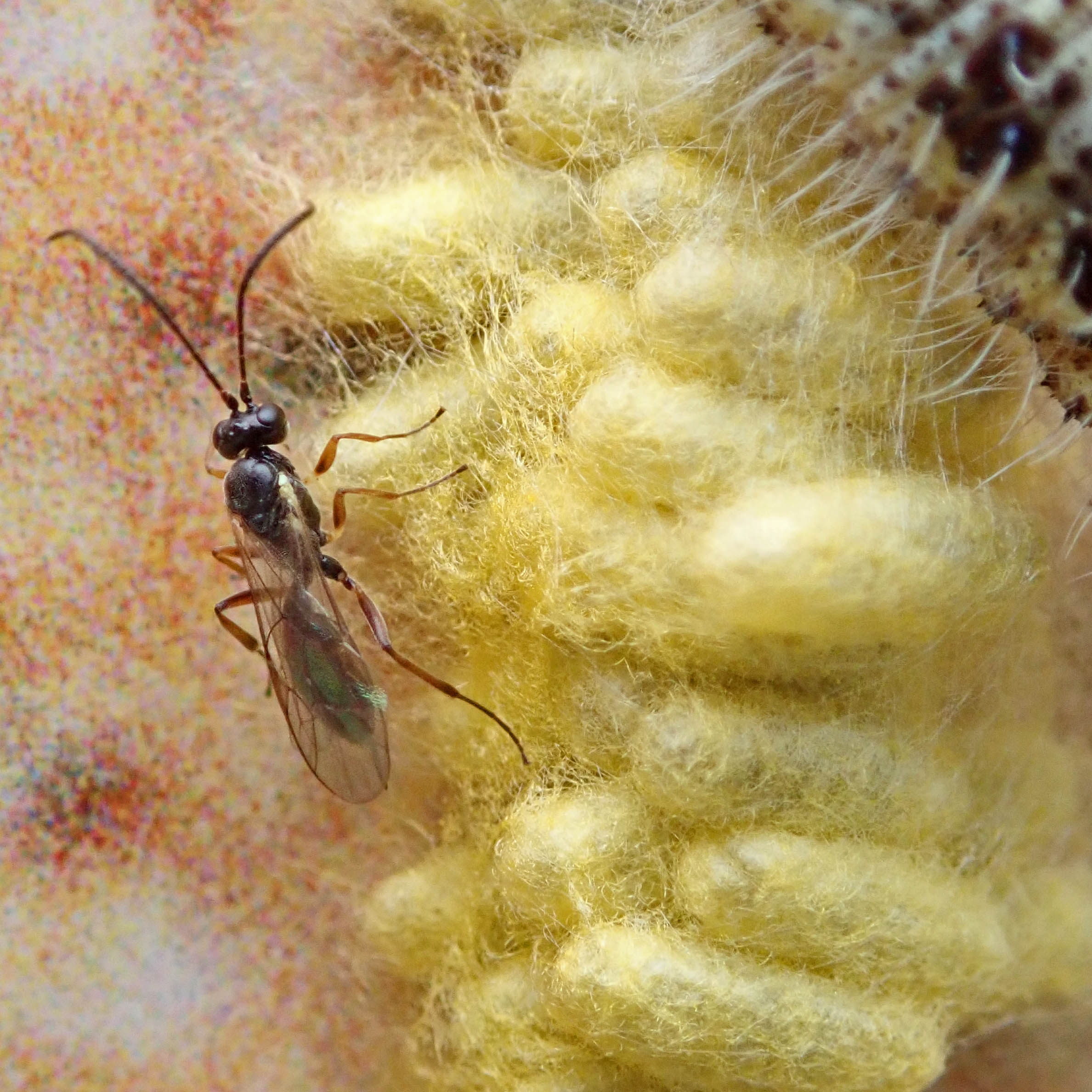
**UPDATE** This is the response I received from Dr Gavin Broad from the Natural History Museum: ‘You are correct, your wasps are most probably Lysibia nanus. There is a very similar species, Lysibia tenax, more rarely recorded but with much the same hosts. I don’t believe it is actually a separate species and L. nanus is certainly the usual suspect reared from Cotesia glomerata cocoons.’

Swine-cress

Tags

, , , ,

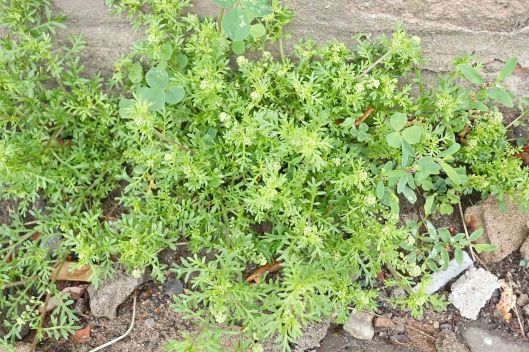
After that wonderful short break away, it was back to earth with a bang; in fact, not just back to earth but in to the gutter with the pigs. Okay, not literally with the pigs but today’s wildflower is called Swine-cress, and I’ve found it growing very happily in the gutters and along the roadside, pavement and lane edges all around my coastal town.

As I’m fairly good at recognising the wildflowers I see these days, I was quite surprised to notice this little plant, whose name I didn’t know, growing so profusely. Swine-cress, which seems to have a variety of names: Coronopus squamatus and Lepidium coronopus, is a very small member of the Brassica family, an annual or biennial, with deeply cut leaves and tiny, almost unnoticeable white flowers. I haven’t yet discovered the reason for the ‘swine’ in its name so, if you know, please do tell me in the comments.

The Marbled white and the Skylark

Tags

, , , , , , , , ,

Today’s blog title puts me in mind of one of Aesop’s fables. I’m sure there was one where the butterfly was tired and asked the bird if it could ride on its back but the bird ended up eating it? Just kidding! Before I sign off from my blogs about my Weymouth trip I just wanted to share two more random moments …

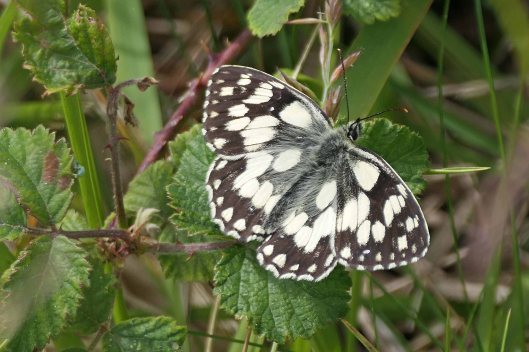
The Marbled white butterfly (Melanargia galathea), though common in many parts of Britain, is rarely seen in my part of coastal south Wales, so it was a special treat to see three on the wing in Weymouth. The first was a distant blur in a field in the Wildlife Trust reserve Lorton Meadows, an area that looked like it would have good potential for butterflies and wildflowers if it wasn’t for the excessive number of off-lead dogs being allowed to roam everywhere, even into the one dragonfly pond. Fortunately, Portland’s Tout Quarry came up trumps again, and I saw two more Marbled whites there, including this obliging beauty.

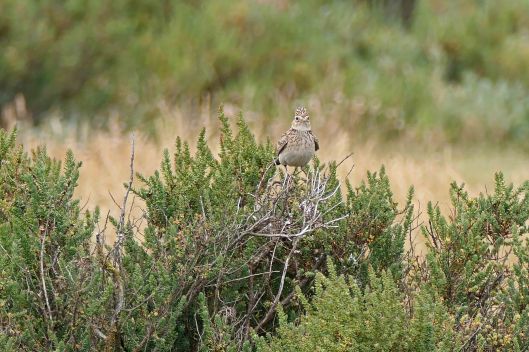
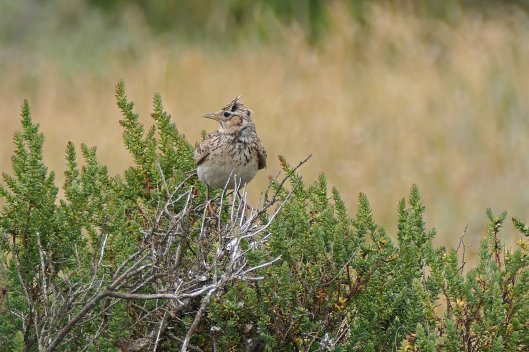
Seeing this stunning Skylark up close was another of this trip’s special moments. I was walking back from Portland to Weymouth and had almost reached the information centre at Chesil Beach when I heard Skylark song in front of me. I searched the sky for a couple of minutes before realising that the bird was, in fact, sitting on a bush adjacent to the track directly ahead of me.

Such a singing spot seemed odd but I wondered if there might be a nest in the scrubby area I was walking through and so this male was trying to distract me from going near that. Though I had never intended to move off the path, its tactic certainly focused my attention, and I grabbed a few photos before walking onward.

Sedge warblers

Tags

, , , , , ,

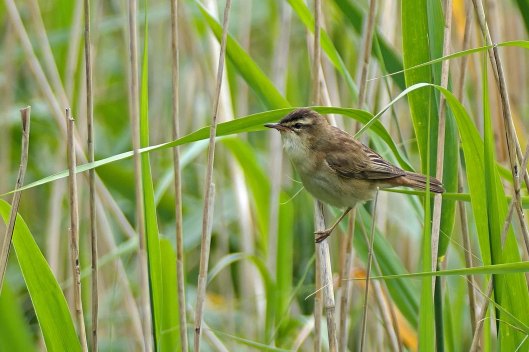
I don’t see Sedge warblers very often; if I’m lucky, I might see or, sometimes only hear, one or two as they pass through the local area during Spring and Autumn migration. That’s my excuse for not recognising these two birds, seen on two separate visits to RSPB Radipole in Weymouth. As I could hear Reed warblers singing all around me while I was exploring the reserve, which is jam-packed full of Reed beds, I just assumed these were also Reed warblers.

Wrong! The streaking of dark and light above the eyes is a sure sign of a Sedge warbler. My more expert birding friends think that the first bird, above, is an adult, though I’m not entirely convinced that it isn’t a well-grown youngster, as it was flapping its wings in the way juvenile birds do to get their parents to feed them.

The bird below is definitely a youngster; one of my friends pointed out that you can still see the gape, the yellow fleshy part at the base of its beak that is a characteristic of chicks. And it behaved like a chick: ‘My mum told me to stay right here until she got back so I’m not moving even though you’re coming along the path towards me, getting closer and closer with that black thing in front of your face, and I’m a little bit scared.’

After quickly grabbing a couple of photos, I moved past, then stopped further along the path and watched as one of its parents brought it food, and moved it to a different bush, a bit further away from the main path.