Wild words: Psithurism

Tags

, , , , ,

Here’s a word that’s not in the Oxford Dictionary because it’s now considered obsolete but, as Oxford University Press has a habit of somewhat arbitrarily removing words from its dictionaries (since 2007 it was deleted words like ‘buttercup’ and acorn’ from its Junior Dictionary) and replacing them with modern lingo (like ‘cut-and-paste’ and ‘analogue’), I’m doing my bit to revive words before they’re forgotten.

171203 Psithurism (1)

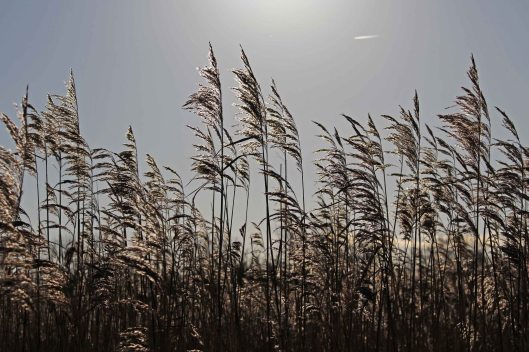
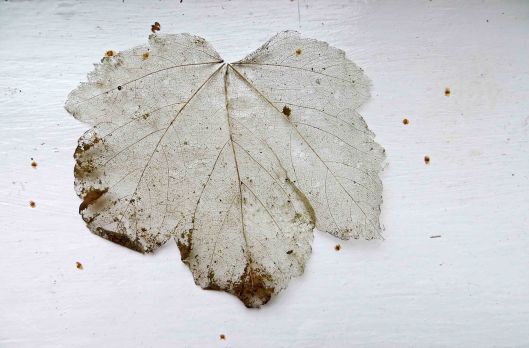
Psithurism, then, is a noun used to describe the sound of rustling leaves. It is, apparently, an adaptation of the Ancient Greek ψιθύρισµα (psithurisma) or ψιθυρισµός (psithurismos), which are derived from ψιθυρίζω (psithurizō, meaning ‘I whisper’) and from ψίθυρος (psithuros, meaning ‘whispering’ or ‘slanderous’). Can you hear them rustling? And, here’s a little test: what’s the word for leaves like these that wither but stay attached to the stem?

171203 Psithurism (2)

Birding at Rhaslas Pond

Tags

, , , , , , , ,

Following on from yesterday’s blog about our Glamorgan Bird Club outing to Parc Cwm Darran, we also ventured a little further north to Rhaslas Pond. I presume the pond is artificial as it has a grassed-over dam running along the north side and concrete to the south. And, as it has a large black drainage tube running into it, I further presume that is, or was, a reservoir or drainage pond for the huge ugly blight on the nearby landscape that is the Dowlais opencast coal mine.

171205 Rhaslas Pond (7)

171205 Rhaslas Pond (4)

Despite its industrial connections, the pond is very well frequented by both local and passage-migrating birds, and it provides a crucial breeding site for endangered birds like Lapwing and Curlew, amongst many others. As soon as we arrived, we saw birds – a friendly little Stonechat was dotting around in the long grass, a Pied wagtail was ‘chissicking’ merrily along the old roadway, and I saw my first-ever Fieldfares grazing on the grass nearby.

On the pond itself, there were lots of Wigeon, Tufted ducks, Mallards, Great crested grebes, my first-ever Goldeneyes, Lesser Black-backed and Herring Gulls, Goosander and a single Mute swan. We also saw Red kites flying overhead.

171205 Rhaslas Pond (5)171205 Rhaslas Pond (6)

Though this was another stunning location and the birds were sublime, there was a bitterly cold wind blowing so we didn’t linger too long. There are plans afoot to destroy this pond and the surrounding landscape to excavate another huge opencast mine. Let’s hope local authorities realise the madness of allowing such a mine and, rather than destroy the pond and surrounding land, recognise its environmental value and turn it into a local nature reserve for all to enjoy.

171205 Rhaslas Pond (3)

Birding at Parc Cwm Darran

Tags

, , , , , , ,

With temperatures hovering around zero and a brisk wind making it feel even colder, our eleven intrepid Glamorgan Bird Club members were well wrapped up for last Wednesday’s birding at Parc Cwm Darran (and Rhaslas Pond, but more on that tomorrow).
171204 Parc Cwm Darran (1)

171204 Parc Cwm Darran (4)

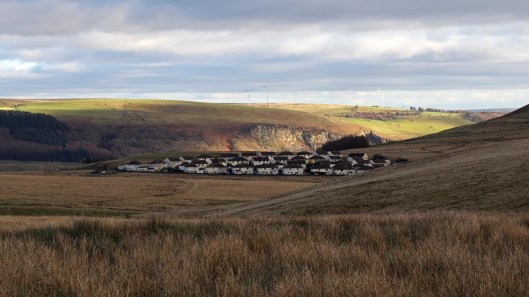
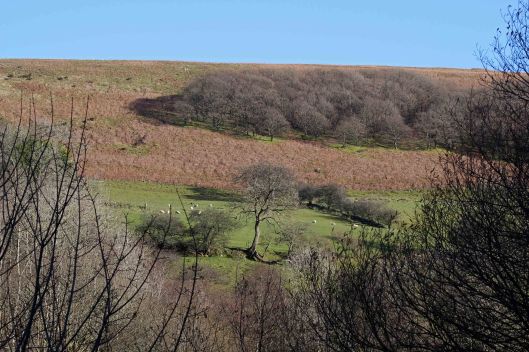
The park sits on the site of the old Ogilvie Colliery, which was active from the early 1900s through to 1975, and various buildings and pieces of mining equipment can still be seen around the park. The scenery was stunning, with glorious old trees dotting the landscape, as well as areas of more modern plantings. One of our party was a local and showed us one particularly beautiful hidden gem, a waterfall cascading over the edge of an old quarry into a pool below.

171204 Parc Cwm Darran (5)171204 Parc Cwm Darran (6)

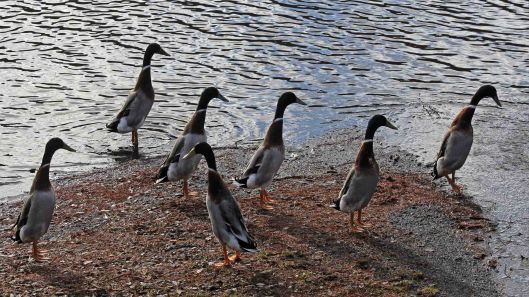
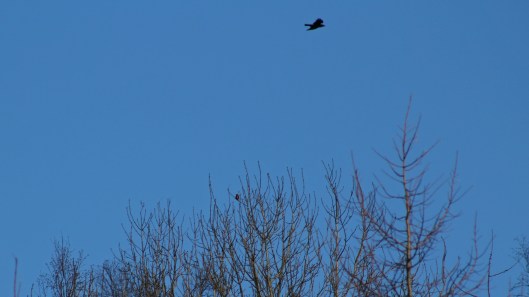
The birds were also stunning. We had good ’scope views of a male Crossbill, who sat very obligingly atop a tree for at least 15 minutes; we enjoyed sightings of several birds of prey, including four Buzzards, one of which came flying low straight towards us out of the quarry; and I saw my first Siskins of the year. The prize for the most entertaining birds, however, must go to the seven Indian runners, who looked to have Mallard in their genes and who were convinced we had food for them, running out of the water towards us and following us as we walked along the lake edge. 
171204 Parc Cwm Darran (7)

You’ll have to take my word about the dot in the tree being a Crossbill!

171204 Parc Cwm Darran (8)171204 Parc Cwm Darran (9)

The full list of the 44 species seen (these include those seen at Rhaslas Pond) is: Mute Swan, Canada Goose, Wigeon, Mallard, Tufted Duck, Goldeneye, Goosander, Great Crested Grebe, Red Kite, Sparrowhawk, Buzzard, Kestrel, Coot, Lesser Black-backed Gull, Herring Gull, Green Woodpecker, Magpie, Jay, Rook, Carrion Crow, Raven, Blue Tit, Great Tit, Coal Tit, Long-tailed Tit, Goldcrest, Wren, Nuthatch, Treecreeper, Starling, Blackbird, Fieldfare, Song Thrush, Mistle Thrush, Robin, Stonechat, Dunnock, House Sparrow, Pied Wagtail, Chaffinch, Goldfinch, Siskin, Common Crossbill and Bullfinch, though somehow I missed the Green woodpecker and Mistle thrushes.

The bending reed

Tags

, , , , , ,

‘The little reed, bending to the force of the wind, soon stood upright again when the storm had passed over.’ ~ Aesop, from ‘The Oak and the Reed’, Fable 127 of Aesop’s Fables

171203 reeds (5)

A quick google and a read of the article on Wikipedia about Aesop’s fable revealed that the comparison between the flexible reed and the strong but inflexible oak is a very old one. Confucius is credited with the saying, ‘The green reed that bends in the wind is stronger than the mighty oak that breaks in a storm’, and Geoffrey Chaucer wrote ‘A reed before the wind lives on, while mighty oaks do fall’ in Troilus and Criseyde. It’s a thought-provoking idea but, personally, what appealed to me most about these reeds was the beauty of their form, whether standing tall and upright or swaying in the breeze.

171203 reeds (1)

171203 reeds (2)

November at Cosmeston

Tags

, , , , , ,

I’ve only had a couple of visits to Cosmeston Lakes Country Park this month because my volunteer work on the Mary Gillham Archive Project has been taking up a bit more time as we try to get as much as possible done before the project effectively finishes at Christmas – though, having said that, I did spend four hours at Cosmeston last Friday trying to replicate, for the project website, photos Mary had taken in the early days of the park. These are a couple of those: Mary’s photo of the west lake in September 1987 on the left, and my photo from the same spot thirty years later on the right.

But I digress … apart from the berry-eating visitors, the Redwings and the Mistle thrushes, and finally managing to grab a couple of half-decent photographs of a Green woodpecker, I haven’t found anything particularly noteworthy bird-wise at Cosmeston during November. I have, however, been impressed by the numbers of insects still around, despite the fact that it has been noticeably colder, with daytime highs in the low teens and several overnight frosts.
On 5 November, the ‘fireworks’ at Cosmeston were these lovely little Common darters. In an area shaded from the cool westerly wind but warmed by the bright sun, each had claimed itself a fencepost to bask on. And, nearby, a lone bumblebee looked like it wanted to snuggle for warmth into this seed-head ‘duvet’ of Old man’s beard (Clematis vitalba).

On 24 November, though my focus was on finding the exact spots where Mary had taken her photos, I did still have one eye on the wildlife and noticed quite a lot of flies about. Like the dragonflies of two weeks earlier, these two flies and one hoverfly were favouring sheltered spots on wood to make the most of the sunshine.

November on the Ely embankment

Tags

, , , , , , , , , , , ,

171130 9th Ely embankment

The 9th of November was a ‘5 Turnstone, 2 Rock pipit, 1 Grey wagtail’ kind of day at Cardiff Bay, with a cool wind blowing through huge banks of clouds and the odd rain shower. That didn’t deter the birds browsing along the embankment edge though.

On the 15th, a beautifully marked Song thrush was feasting on berries in the small front garden of one of the apartments that sits on the edge of the embankment (see Berries and Birds a few days ago), and, as well as 2 Rock pipits and 6 Turnstones, there were 3 Redshank grazing along the water’s edge – a nice treat. Also, a Lesser black-backed gull was looking exceedingly pleased with itself for finding a huge dead fish and vociferously defending its prize with loud screeching.


171130 15th LBB and fish

On the 17th – a ‘3 turnstone’ day – the star of the show was a lovely little Linnet. I’d seen a family party of parents and two fledglings grazing amongst the rocks here back in August so perhaps this bird was one of those.

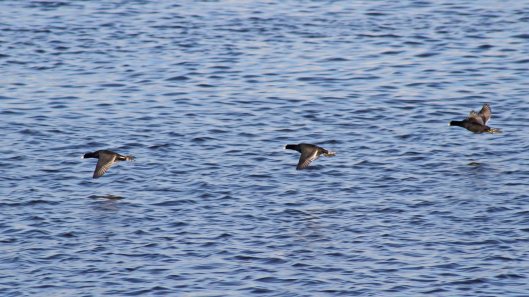
My last November wander by the Ely was on the 25th, when 3 Turnstones, 2 Linnets (nice to see them again), 2 Pied and 2 Grey wagtails, and 1 Redshank were joined by a Dunnock and a small flock of Long-tailed tits passing through the shrubs edging the walkway. Also, something freaked out a group of Coots and, rather than ‘run’ rapidly across the top of the water as they usually do, they actually flew. I’d never seen coots fly before.

171130 25th Long-tailed tit171130 25th Flying coots

Wild Words: Rampike

Tags

, , ,

Rampike: Noun, meaning ‘A dead or dying tree, especially the bleached skeleton or bleached trunk of a tree killed by fire, lightning or wind; an upright stump, especially a burnt one’.

171129 rampike (1)

The Oxford Dictionary lists the word as being common in Irish English, English Regional, North American Regional, and Northern, though what Northern means is unclear. The rampikes in my photos are English (above) and Welsh (below).

171129 rampike (2)

Through a hedge, quietly

Tags

, , , , , ,

171127 Green woodpecker (1)

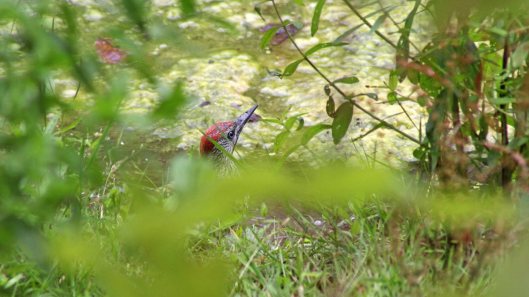
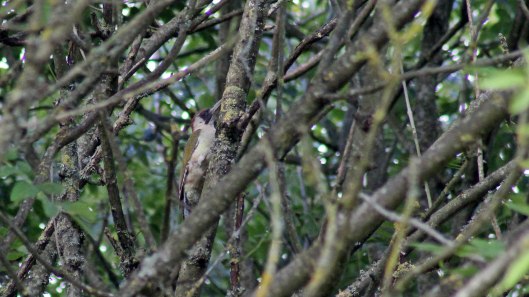
My usual view of the Green woodpecker (Picus viridis) is a flash of its bright red Mohawk, bright green body and bright yellow rump as it rockets rapidly away from me. They are notoriously nervous birds and, as they usually feed on wide open expanses of grass – all the better to spot the dreaded photographer trying to creep up on them, they easily spot my clumsy attempts at stalking, and fly off at the drop of an ant. So, the few photos I’d managed to get were with my long lens on full zoom, with, invariably, the bird partly obscured by branches, twigs or long grass.

171127 Green woodpecker (3)

Until last Friday that is…. I was enjoying a wander at Cosmeston, when, having already unsuccessfully stalked one bird, I spotted another in a different field. This time, this woodpecker was completely occupied with poking in the damp soil for ants, and I was on a footpath behind a hedge. I moved to the grassy verge, took care not to step on anything that might crack or rustle, and kept my head down. If the bird looked up, I froze until it got back to its digging. There weren’t many gaps in the hedge so I still couldn’t get very clear or very close shots but I am still ridiculously pleased to have got these couple.

171127 Green woodpecker (4)171127 Green woodpecker (5)