My first Eyed ladybird

Tags

, , , ,

This lovely little creature was a bit lost. I found it sitting on some nettles beside a busy road. Admittedly, the bank above was covered in tall broadleaf trees and scrub but with none of the Pine trees the Eyed ladybird (Anatis ocellata) is meant to associate with. And the reason for that association is the fact that it eats Pine aphids.
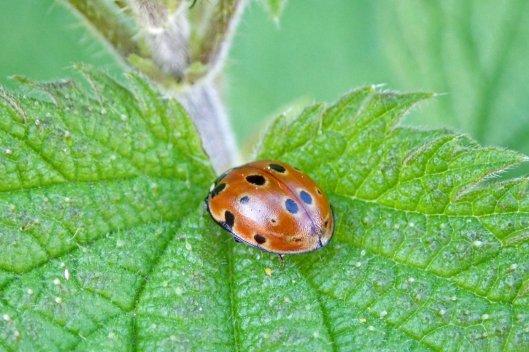
This was my first ever sighting of an Eyed ladybird, Britain’s largest at 8-9 mm. I’ve been looking more closely at Pine trees lately but I’ve not seen one there … yet. The adults are out and about from Spring through to Autumn, so I’ll keep looking.
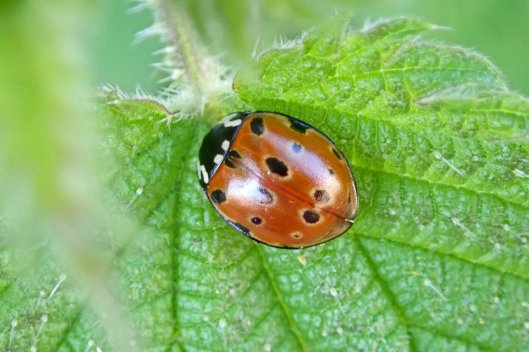
I wish I’d been able to get better photos but, you know, nettles!

Leafmines: Cerodontha species

Tags

, , , , , ,

While checking Glaucous sedge (Carex flacca) for the leaf-mining moth larva I featured in last Monday’s post (Leafmines: Elachista cinereopunctella), this time at a different location, I found an altogether different leafminer. This larva had also munched a linear gallery inside the leaf but I knew when I saw the tiny black speck within the mine that this miner was a fly and the black speck was likely to be a pupa. I also guessed that it would be difficult to identify as fly miners often are so I brought home two of several pupae I found.

When I got home, I opened up one of the leaves to get a look at the pupa, took a few photos then popped the two snippets of sedge in a jar on my kitchen window sill to see what might emerge. Rob, from the British Leafminers website was able to confirm from my photo of the pupa that this was indeed a fly, likely belonging to the genus Cerodontha.

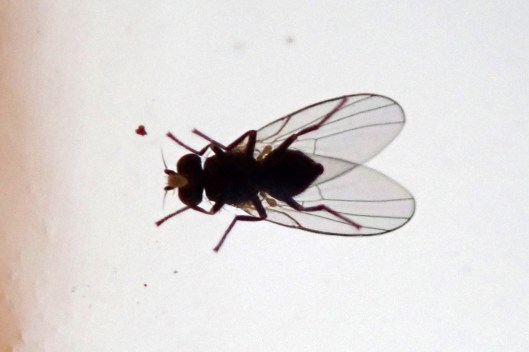
Twelve days later I was making my morning cup of tea when I noticed movement in the jar: a fly had emerged from the pupa I had photographed. Once again I took some photos and checked in with Rob – it was definitely a Cerodontha but a female, which are not as easy to pin to exact species as a male specimen (something to do with the genitalia, I suspect). Still, when I emailed Barry of the National Agromyzidae Recording Scheme, he thought an ID might be possible and volunteered to take a closer look. I’m waiting a few days to see if the second pupa hatches, then will send my specimens to him for further examination. If an exact identification results from that, I’ll update this post.

Greedy for Garlic

Tags

, , , , , , , ,

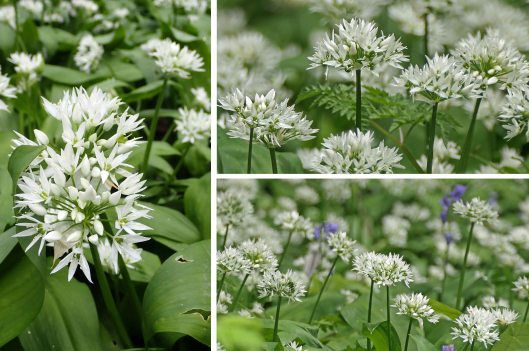
The first two days of the Easter break were very wet so I’m glad I took these images last Sunday. One of our local parks has the perfect environment for Wild garlic – Ramsons, if you prefer, Allium ursinum. A shallow ravine runs through the park, with a small stream meandering along its base, and, at this time of year, the steep sides of the gulley are carpeted with the lush green leaves and bright white umbels of garlic flowers. Elsewhere in the park, under tall old trees, the path is also lined with Wild garlic, so anywhere you walk, whenever you breathe, your nostrils are almost assaulted by garlic’s strong smell.

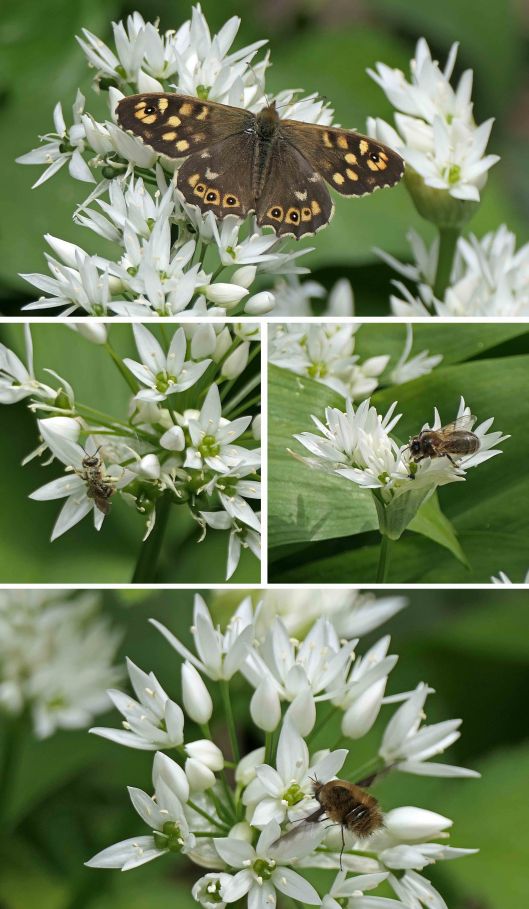
Though I know some people can’t tolerate this odour, it doesn’t seem to affect the insects, neither attracts nor repels them; a flower’s a flower, with the pollen and nectar that nurtures them. Last Sunday’s walk wasn’t particularly sunny but I still found a few creatures feeding greedily: a Speckled wood, a teeny solitary bee and a Honey bee, and a Dark-edged bee-fly.

Dog whelk

Tags

, , , , ,

Following Thursday’s post about Common periwinkles, it occurred to me that I should probably have explained more clearly where I found them … or, even better, show you. So, the photo below, taken a few years ago, shows Penarth Pier. As the Severn Estuary has the second greatest tidal range in the world, at high tide the water usually covers the stony beach (and almost comes up to the pier’s walkway at the very highest tides) and at low tide you can walk out on the sand and rocks under the end of the pier, sometimes further. The periwinkles were found under the pier, living on the support structures, as was today’s subject.

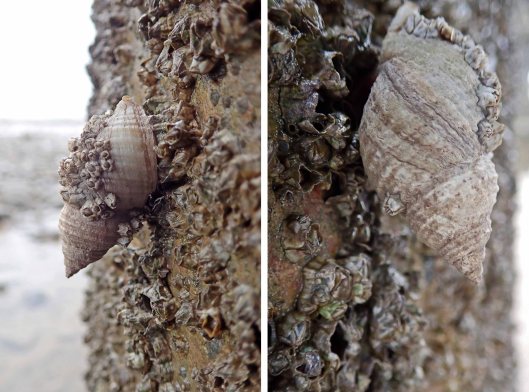
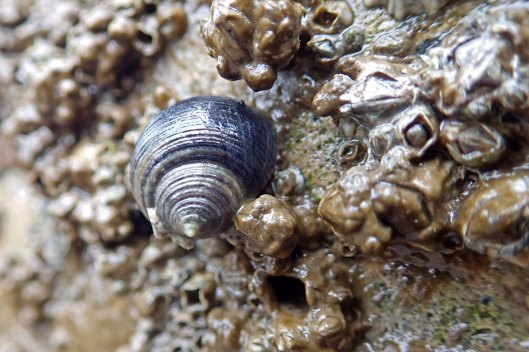
The Dog whelk (Nucella lapillus) is common around Britain’s coastline, found in particular where its food, mussels and barnacles, live. The Marine Life Information Network’s website goes in to gory detail about this gastropod’s feeding methods, how it uses its proboscis to push or bore a hole in its prey’s shell, how it drugs its prey then injects it with digestive enzymes to turn its victim in to a mush that can be sucked out. I never knew the Dog whelk was like the Hannibal Lecter of the marine world.

Feeding the family

Tags

, , , , ,

How many berry-flavoured suet pellets can YOU fit in your beak at one time?

I haven’t been to Cosmeston very often lately but, when I do, this gorgeous bird, my male Crow friend, comes flying almost directly to my feet. Of course, I know it’s not about me but rather the food I carry for him. And yesterday was definitely all about the food. He came alone and flew with several beaks full of food in to the trees, so I’m guessing he’s feeding his missus and possibly even young chicks. As their nesting attempt failed last year, I’m hoping my small contribution will help with this year’s.

Common periwinkles

Tags

, , , ,

One benefit of this moving malarkey, which is limiting my time to get out for long walks, is that my shorter walks have taken me down to the local beach a few times and reminded me how much I enjoy fossicking along the tide line and how little I know about the flora and fauna of the seashore.

This week’s finds included these shellfish which, I think, are Common periwinkles (Littorina littorea). They are found all around the rocky coasts of Britain, though, locally, these periwinkles are growing on the concrete and steel supports of the pier.

The Marine Life Information Network website says these are

the largest British periwinkle, with the shell reaching a maximum height of 52 mm. The shell is sharply conical with a pointed apex and surface sculpturing. The spiral ridges which are marked in young animals tend to become obscured in older individuals, giving the shell a smooth appearance.

Whack a snack!

Tags

, , , , , , , ,

Wouldn’t you know it? This was my first ever Herald moth (Scoliopteryx libatrix) and it ended up being snatched, whacked, and snacked on by a Blackbird. I guess a bird’s gotta eat. (If you want to see what an intact Herald looks like, there are some cracking photos on the UK Moths website.)

Small zooming Orange-tips

Tags

, , ,

As I write this, a weather warning has just come into force, potentially bringing thunder, lightning and heavy rain from midday today until midday tomorrow. These warnings don’t always produce the forecast downpours but I feel for all the newly emerged small creatures, especially the delicate butterflies like this little Orange-tip. Of all the small Orange-tip males I’ve recently seen zooming along the hedgerows and banks of wildflowers, desperately seeking females, this one finally paused long enough to refuel, which allowed me to quickly snap a few photos. I hope he, and all his butterfly cousins, manage to find sufficient shelter to survive any deluges.

On the move

Tags

, , , ,

I feel a little like this migrating Common sandpiper looks, ruffled, not at my best, discombobulated. If all goes to plan, I will be moving flats next week, and I’m up to my neck in cleaning, tidying, organising, packing, recycling, binning, repurposing, donating…. I’m sure you all know what it’s like. I just wanted to let you know that I’m trying to keep to my daily posting schedule (and those posts will appear below) but I may miss the odd day. Thanks to you all for following along with me here, and thanks, too, for your understanding.

Leafmines: Elachista cinereopunctella

Tags

, , , , , ,

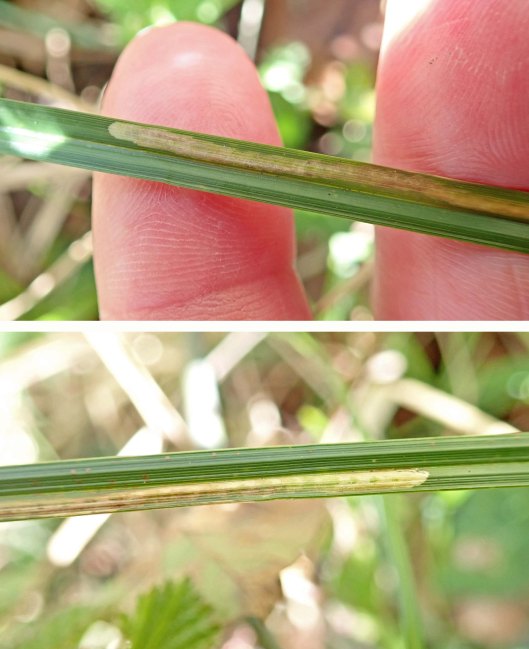
These two leafmines, in the leaves of Glaucous sedge (Carex flacca), may look quite boring and nondescript but scroll down to see what lies within.

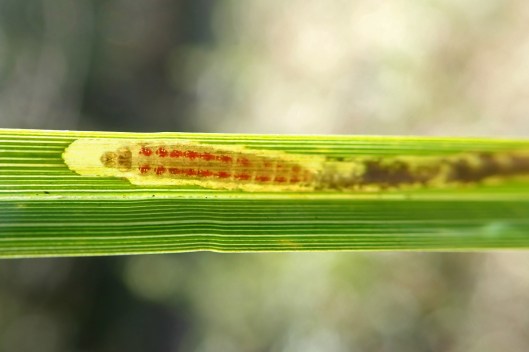
This is the stunning little larva of Elachista cinereopunctella, a moth that can be found throughout Britain but only in areas where its larval plants can be found (mainly Glaucous sedge, but some other sedges are also used). And the moth’s not actually that common in Wales, with just 13 records showing in the national biodiversity database. This may be because the adult moth is also rather nondescript (see a photo on the UK Moths website here) and few people look for and record the leaf-mining larval stage. I was lucky to be directed to the presence of these mines by my friendly local moth expert, George, though it still took some poking about the sedges in a local area of woodland to find them.