Spider: Steatoda nobilis

Tags

, , ,

I was delighted yesterday to get an email verifying my two most recent spider finds. Both were fairly commonplace spiders but it’s nice to have confirmation that I’m making positive progress in being able to identify my finds, and to feel that I am paying back in the form of new records the book grant I received from my local biodiversity records centre to buy my spider guide book.
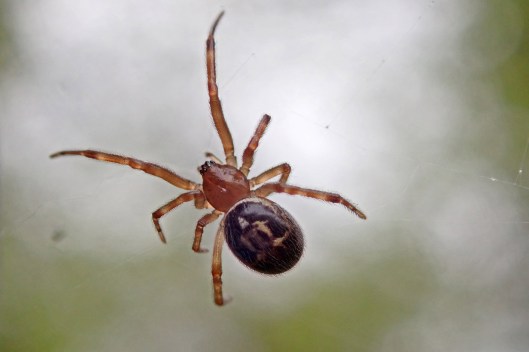
So, meet Steatoda nobilis, otherwise known as the False widow spider (or, sometimes, the Noble false widow). According to the Spider and Harvestman Recording Scheme website, it’s not a British native, and is presumed to have been an accidental introduction – maybe it hitched a ride with someone returning from holiday in Europe or in a lorry full of imported goods. From the first report of its presence near Torquay back in 1879, it has become naturalised across much of southern Britain, and appears to be spreading further north. I found mine on the local park railings but Steatoda nobilis is most common around buildings, including houses and garages and sheds and even public toilets. And, yes, it has been known to bite humans but don’t believe the negative publicity you might have seen in the media – like most creatures, this spider is more likely to avoid contact with humans if at all possible.

Greenfinches snacking on pine seeds

Tags

, , , , , ,

Once again, this morning’s search for the first Wheatear of the season on the boulders and grassy areas of Cardiff Bay’s Barrage proved fruitless, as did a walk around the small fenced-off brownfield paddocks of Porth Teigr where, in previous winters, the Black redstarts would assemble (but not this past winter) and an occasional Wheatear might appear.

Luckily for me, my disappointment at the lack of Wheatears was more than compensated for by the little flock of Greenfinches I found, and heard, feeding in the stand of pine trees in front of the BBC studios.

Each bird, both male and female, moved from one pine cone to the next, using their strong sharp beaks to extract the scales from the female cones, then nibble away at the scale until only the seed remained.

BBC staff may have been busy creating their next award-winning nature series within the neighbouring building but, actually, the reality show happening right outside was much more riveting.

Hairy violets

Tags

, , , , , ,

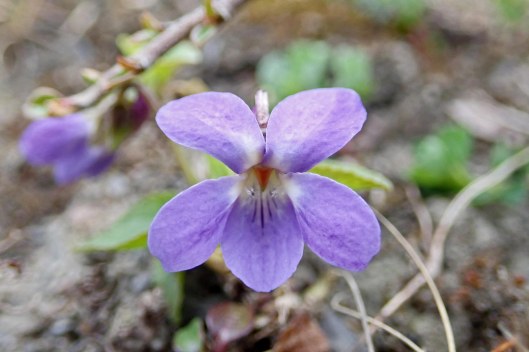
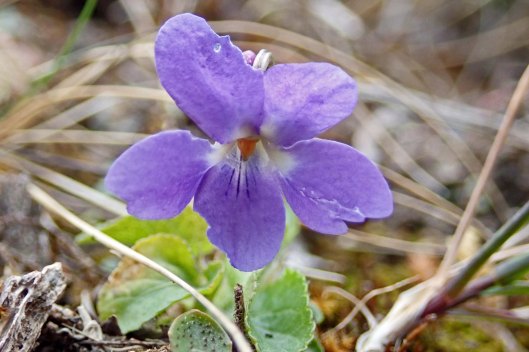
As I wrote in last Sunday’s post, it’s violet time, and I’ve since realised that I’ve not previously blogged about one violet species I see very often, the Hairy violet (Viola hirta).

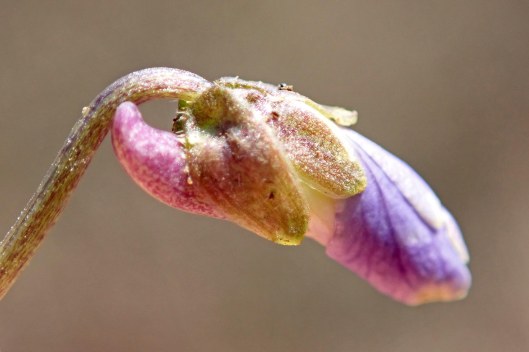
This species and the Sweet violet (Viola odorata) are the only two to have rounded sepals, which narrows down the possibilities for identification purposes. Also, the sepal appendages are different: in Sweet violet, these are angled away from the flower’s stem, while the sepal appendages of the Hairy violet are pressed towards the stem.

Another distinguishing feature is the petal colour: the petals of the Hairy violet are paler, with a lilac hue, whereas those of the Sweet violet are a deep purple (unless they’re the white-coloured sub-species, of course).

The two violet species also grow in different environments. Sweet violets prefer the edges of woodland rides, and churchyards, and roadside verges, while Hairy violets are mostly found on dry calcareous grasslands, like those found in two of the fields at my local country park, Cosmeston Lakes, which is where I took these photos earlier today.

Belting out its song

Tags

, , , ,

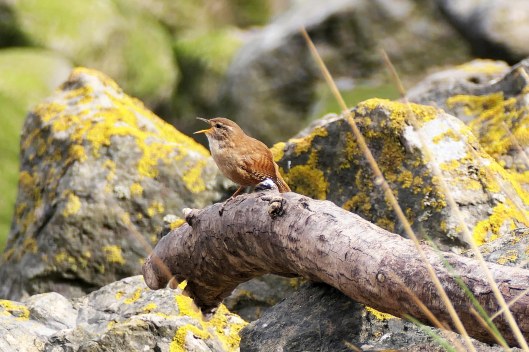
Can you hear it?

I can’t remember where I read it but I’m fairly sure the Wren has one of the loudest voices of any birds in Britain, though even its song is eclipsed by the boom of the Bittern, which can be heard around 2 miles away. At this time of year, male Wrens in particular sing regularly and loudly, to advertise themselves and their territories in order to attract any available females. The Wren in my photo has a very nice seaside territory amongst the large boulders of Cardiff Bay’s outer Barrage breakwater – if I were a female Wren, I’d certainly be interested. If you’re not familiar with the song of the Wren, you can hear it on the RSPB website.

Staring at willows

Tags

, , , , , , , , , ,

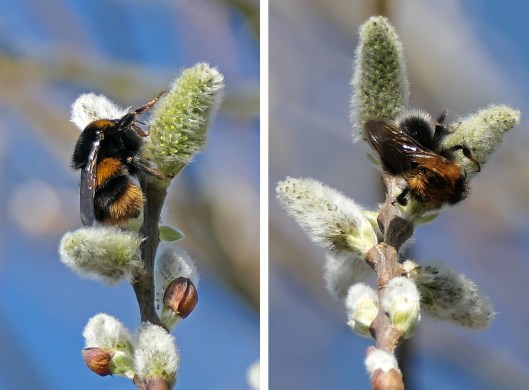
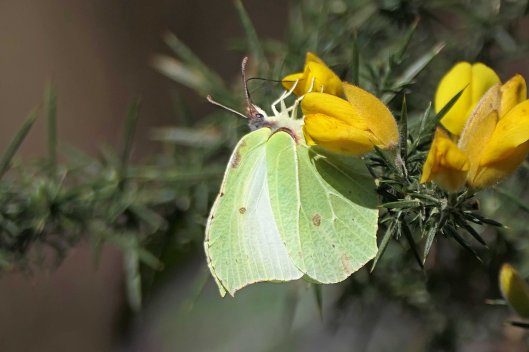
This is your occasional reminder, if you are interested in spotting flying insects, that it is a very good idea at this time of year, when the various willows (Salix species) are coming in to flower, to spend a little staring at these trees. That is partly how I came to find so many butterflies yesterday. Several of the Brimstones I saw, in particular the two females that were feeding up prior to egg-laying, and the beautiful Small tortoiseshell were all found initially on willow flowers.

The fluffy yellow flowers were also providing much needed sustenance for a variety of flies, for honey bees and hoverflies. Due to their larger size, I was also able to see at least two species of bumblebee, Buff-tailed (Bombus terrestris) (left below) and Tree bumblebee (Bombus hypnorum) (below right).

Happy Spring!

Tags

, , , , , ,

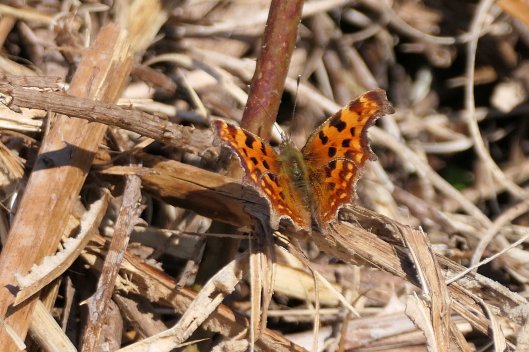
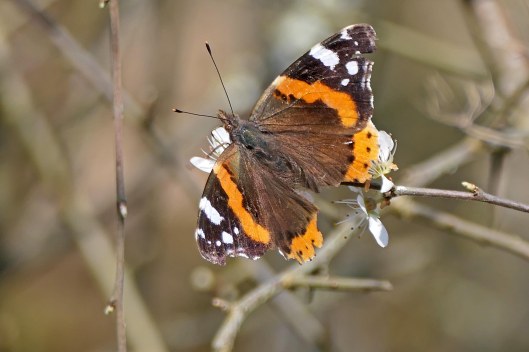
With a high temperature of 18º Celsius, the warmest day of the year so far, and lashings of sunshine, butterflies appeared as if by magic during this morning’s five-mile walk. In total, I spotted 13 butterflies of four species today, and it was simply enchanting. What better way to celebrate the vernal equinox than with a profusion of butterflies!

Brimstones were the most abundant, with nine seen. This gorgeous creature was my first female Brimstone of the year.

There were two Commas. One stayed high in the trees but this beauty was more obliging.

This Red admiral was looking quite tatty after surviving the long cold winter.

I was delighted to see this Small tortoiseshell, as they were very scarce here last year. At first, it was feeding high in a willow but my patience paid off when it came gliding down to perch on a nearby Bramble bush.

Earwig for lunch

Tags

, , , , , ,

I’ve been walking across Cardiff Bay’s Barrage and back quite frequently in the past fortnight, searching the skies and the rocks for the migrating birds that normally appear around this time: Sand martins, Wheatear, Swallows and anything else that decides to drop in for a stopover on its flight north.

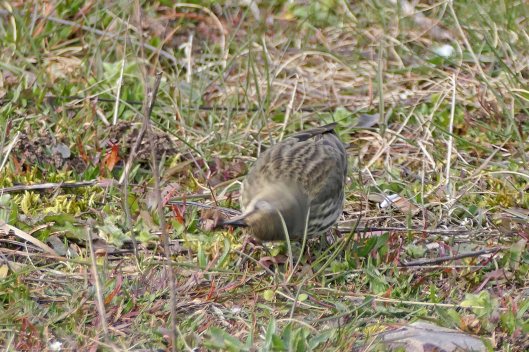
And that was what I was doing around midday today when I spotted two Rock pipits grazing on the Barrage’s grassy slopes. I sat on a conveniently placed bench and watched them for a while as they pecked and poked around the low-growing grasses and wildflowers.

Both were collecting invertebrates too tiny for me to see but then one Rockit, the birders’ abbreviation for Rock pipit, found itself an earwig. Though the little insect was squirming for its life, the Rockit had it grasped firmly and, for the earwig, there was no escaping its fate. A couple of quick whacks and down the Rockit’s hatch it went, a tasty lunchtime morsel.

Hawfinches!

Tags

, , ,

A week or more has passed since I, and every other birder in south Wales, heard the exciting news that a company of Hawfinches had been found in the churchyard of St Cadoc’s in Barry. Since then, judging by the numerous posts on social media, every one of those birders has been to see these beautiful birds – or, at least, that was what I had hoped before I took my turn this morning (I’m not keen on being amongst large groups of birders all jostling for a look). But even today, though I was the first to arrive, six other birders turned up while I was there.

Of course, I can’t blame them. Up to 24 Hawfinches have been seen, flying from the churchyard’s trees to those in a nearby horse paddock, perching in the church’s tree tops, and feeding on the ground. And that’s an impressive number of these stunning birds by anyone’s count. Today, we were treated to the sight of perhaps a dozen birds feeding under trees at the far end of the churchyard.

The reason these birds have chosen St Cadoc’s is because of the many Yew trees growing around it. Though it’s too early in the year for Yew berries, there are probably seeds from last year’s berries still on the ground, and the birds seemed also to be crushing this year’s flowers in their beaks to get the tiny seeds within.

The company – the collective noun used most often for the Hawfinch, apparently – was quite skittish. I accidently sent them flying up in to the trees when I first arrived as I didn’t see them in the shade beneath the tree, and it took them 30 minutes to feel safe enough to return. Fortunately, that did mean I could warn the newly arriving birders so that we all got to enjoy this beautiful sight.

Miniscule nymphs

Tags

, , , ,

During yesterday’s walk, I was looking for a particular species of fern (I’ll explain more about that in a future post) but got sidetracked for ten minutes or so when I spotted this Polypody (not the species I was searching for).

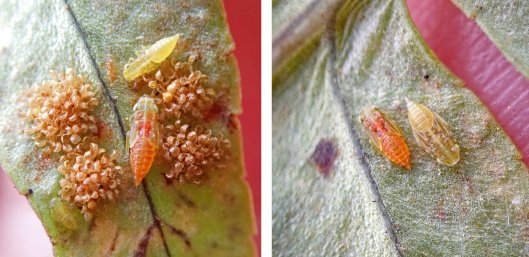
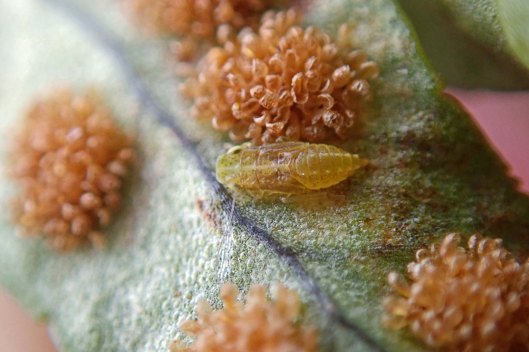
The larvae of a couple of species of moth can often be found amongst the sori, the small clusters on the underside of the fronds where spores are produced, but that is not what I found when I checked these fronds. Instead, I saw several of the tiniest insect nymphs I’ve ever seen. I’m not sure if they were feeding on the spores or just finding shelter amongst them the sori.

They are undoubtedly too small to identify but, to my inexpert eye, they look to be a species of Homoptera, i.e. some kind of leafhopper or planthopper. I’ve already made a note in my diary to go back for another look in a week’s time to see how they are developing, if I can re-find them.

White Sweet violet

Tags

, , , , , , ,

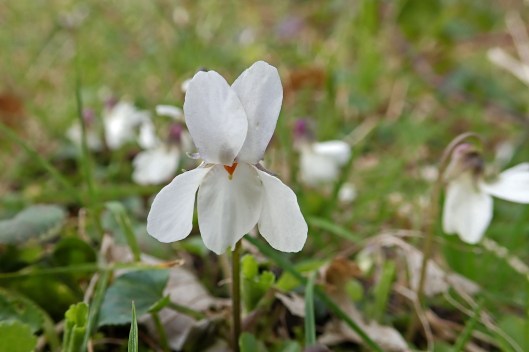
It’s violet time and, though I’ve blogged about violets several times before, I simply can’t resist sharing once again a photo of what for me are the prettiest of the violets, the white variations. The only white-coloured violets are Sweet violets (Viola odorata) and there are two white subspecies, Viola odorata var. dumetorum and Viola odorata var. imberbis. The violets in my photograph are the former, and I only know of two places locally where these grow. The latter variation doesn’t have a ‘beard’ (the tiny hairs within the flower), and I’ve still not found any of those.