First Southern hawker for 2024

Tags

, , , , ,

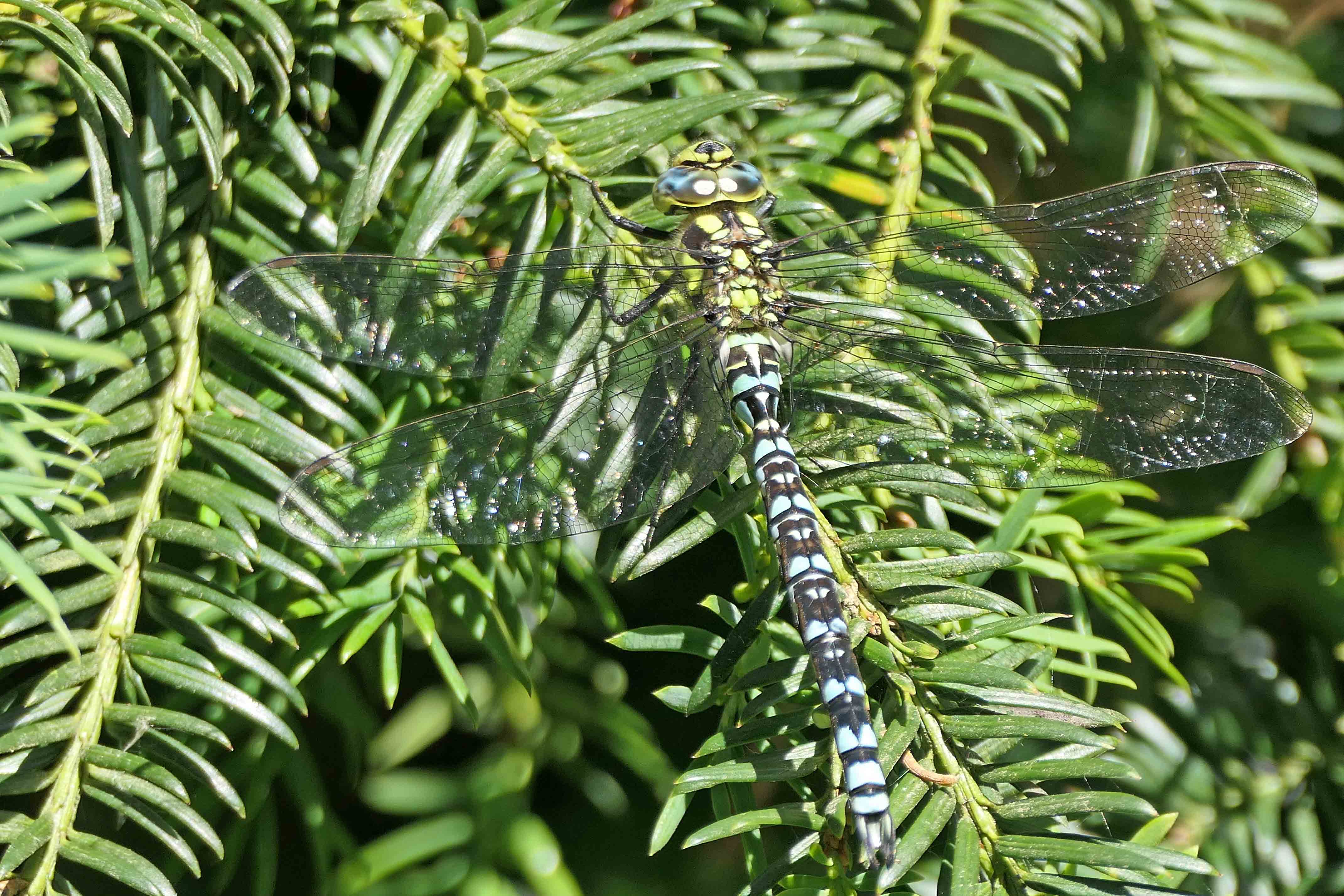
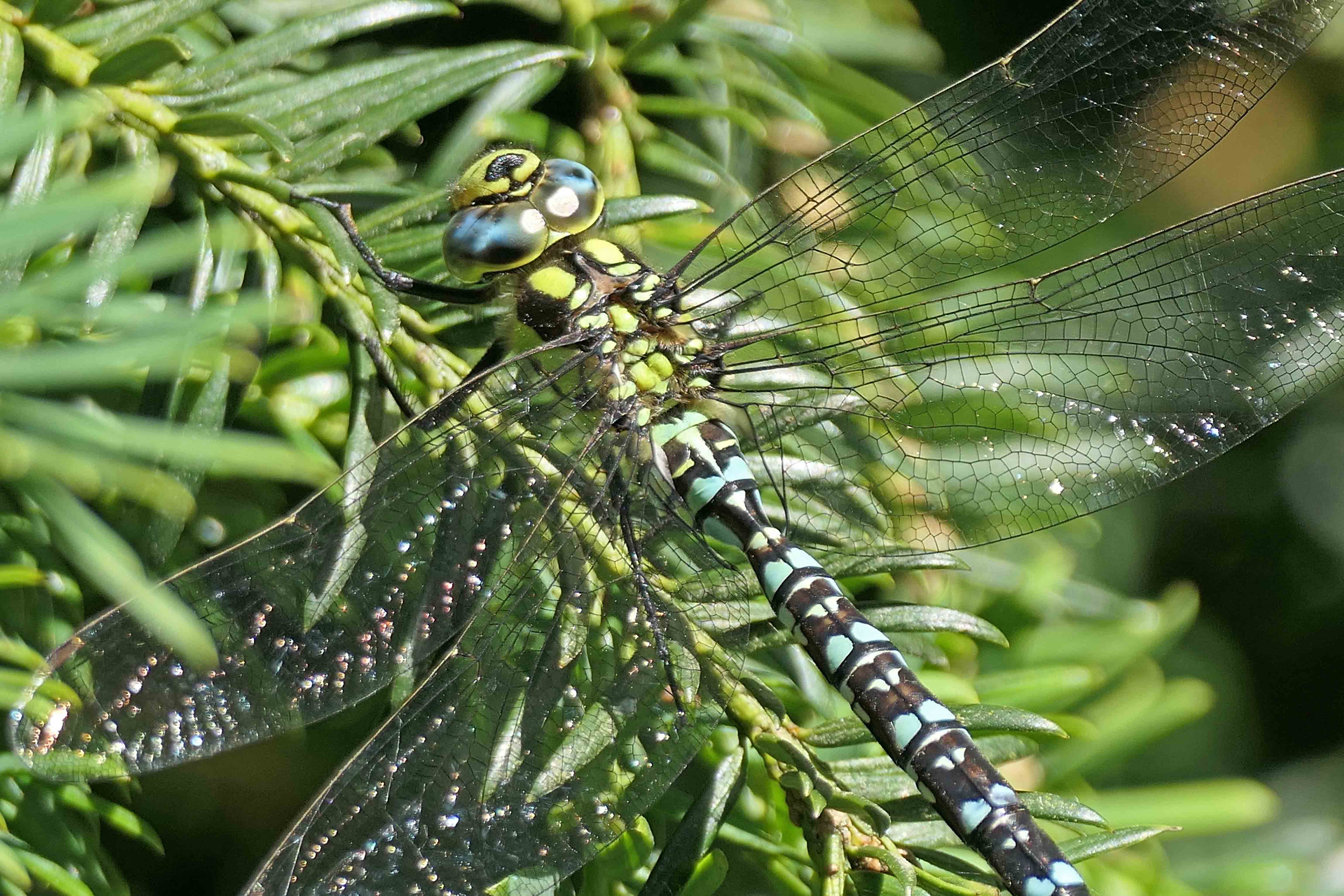
This handsome beastie was another wonderful find from my recent trip to Slade Wood in Gwent. The Southern hawker, also known as the Blue hawker (Aeshna cyanea), though quite similar to the Migrant hawker, can be identified by the broad yellow stripes on the top of its thorax, and, with a flight period running from the beginning of July to the end of September, is seen flying a month or so earlier than the Migrant.

240711 southern hawker (2)

Woodland rides like those at Slade Wood provide the ideal environment for its hawking of insects and, when it finds an ideal location, the Southern hawker will often defend its territory quite aggressively from other dragonfly intruders.

240711 southern hawker (1)

Wild word: moult

Tags

, , , , ,

Moult (or molt, if you’re from the USA): noun; (of birds, mammals, arthropods, etc.) to shed (feathers, hair, or cuticle) in order that new growth can take place (Collins Concise Dictionary).

240710 Eupterycyba jucunda (2)

Last week, when checking the leaves of Italian alder, I found tiny creatures on almost every leaf. They were the various stages of the leafhopper Eupterycyba jucunda, from nymph to adult, and, amazingly, I even caught one in the middle of its moult from one stage to the next. The images below show an early stage nymph on the left and an adult on the right.

240710 Eupterycyba jucunda (1)

The gliders of Slade Wood

Tags

, , , ,

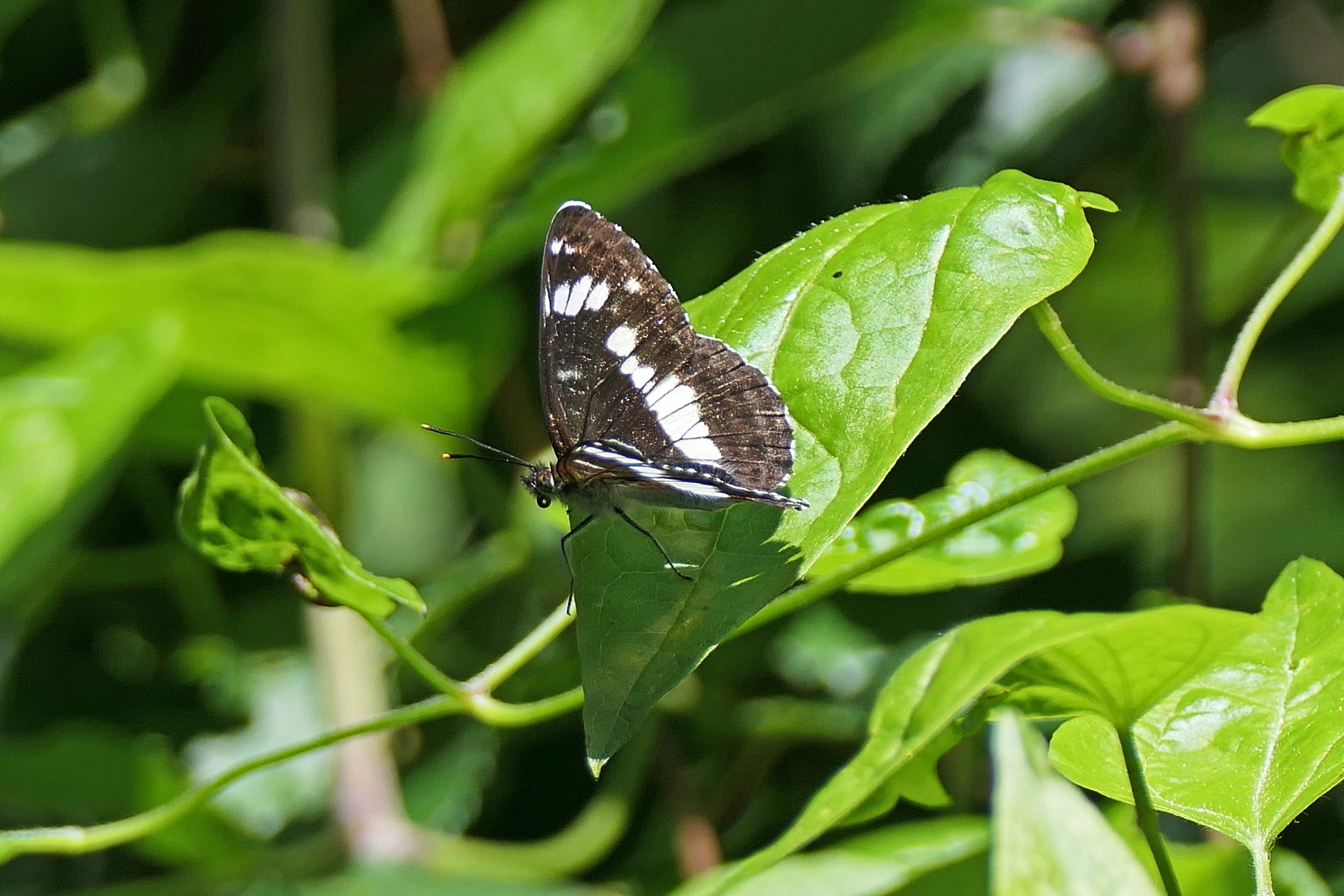
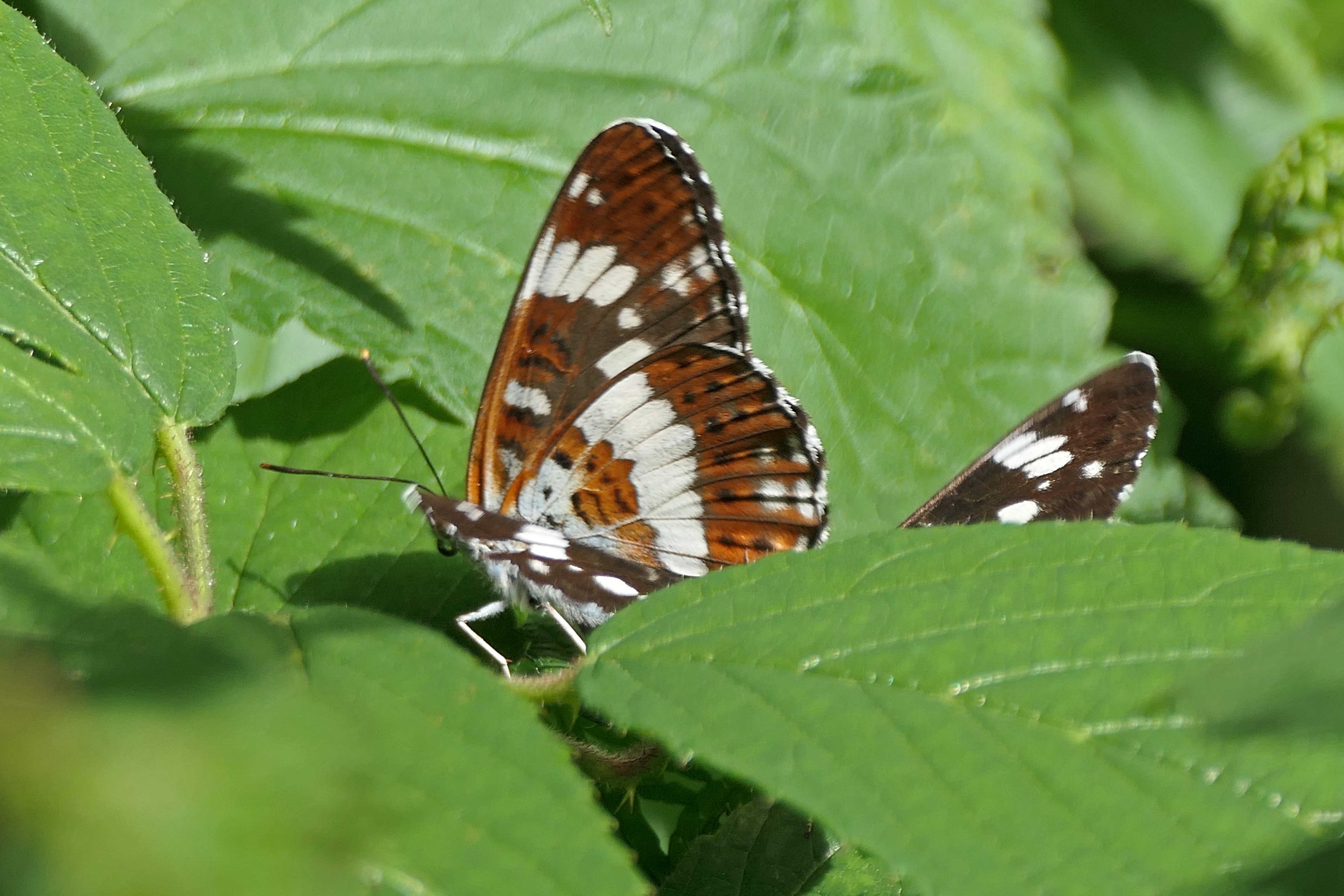
Last Thursday I took my annual train trip to Severn Tunnel Junction to look for White admirals in nearby Slade Wood, one of the few sites for this butterfly in Wales and the closest to me.

240709 white admirals (1)

And, despite it being very windy and not particularly warm, I was not disappointed.

240709 white admirals (2)

Three of these gorgeous gliders were seen along a side track where it was somewhat sheltered, but I saw none at all along the main ride, probably because of the weather conditions (seven White admirals had been seen the previous weekend when it had been sunny and still).

240709 white admirals (3)

The White admiral (Limenitis camilla) adults feed on the blossom of Brambles and on honeydew, whereas their caterpillars feed on Honeysuckle so both plants are essential for a colony of these gliding beauties to thrive.

240709 white admirals (4)

Heterotoma planicornis

Tags

, , , ,

Though I had never seen one of these before, with those flattened parts of its antennae there was no mistaking this little insect. This is Heterotoma planicornis, a tiny member of the Miridae family of plant bugs. It can be found throughout Britain, on various plant species – mine was on the leaf of an Alder tree. The NatureSpot website reports that the eggs hatch in May and the nymphs develop in to adults from June onwards. The tiny bug I found was still a nymph so I guess it will be making its final change fairly soon.

240708 Heterotoma planicornis

Selfheal

Tags

, , , , ,

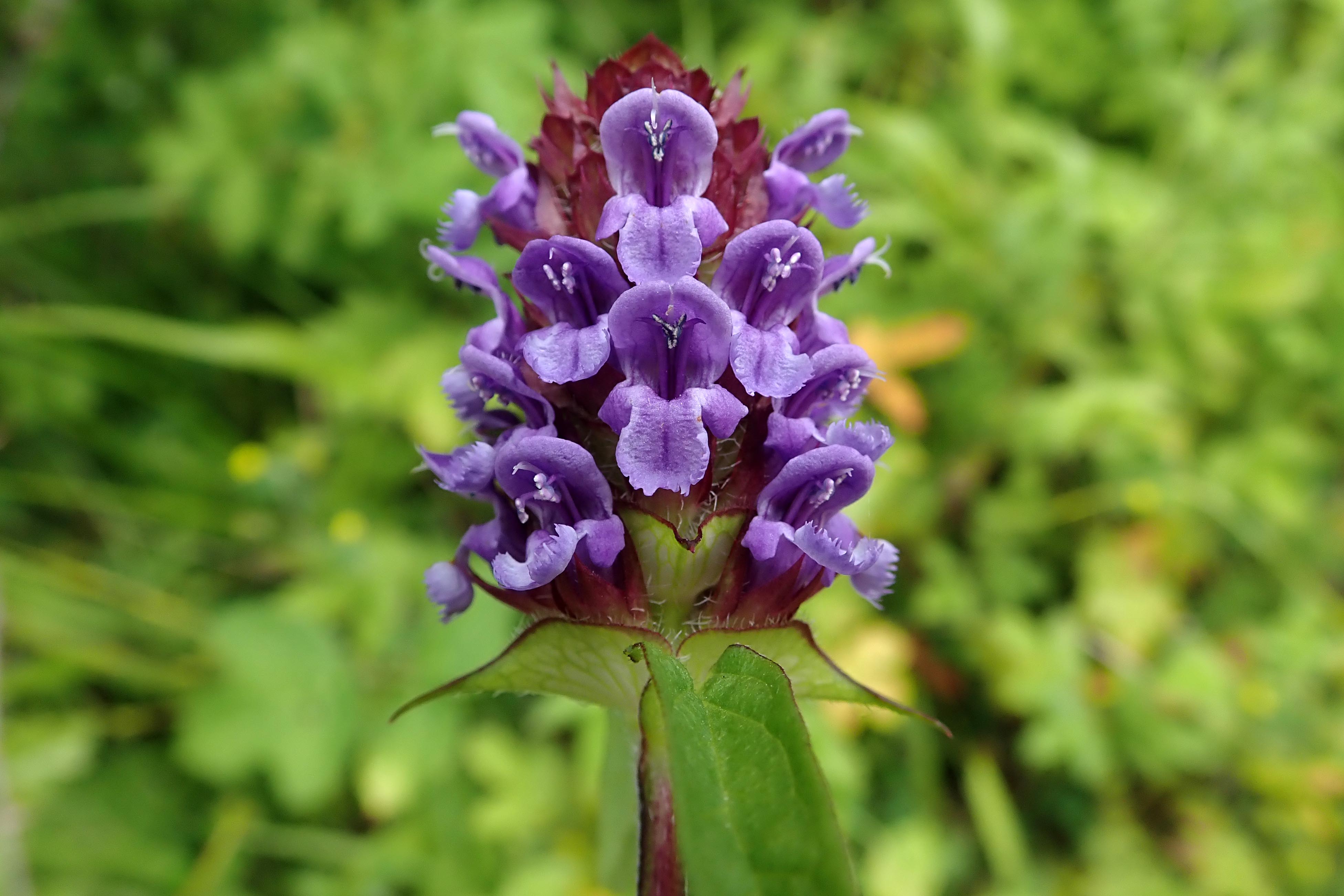
The bluish-violet flowers of Selfheal (Prunella vulgaris) are very common in the summer months, sometimes as short plants popping up in grass and gardens, yet also growing up to a foot tall in the less managed areas provided by woodland rides and wildflower meadows. Bees love to feed on its nectar, and I also spotted a cute Large skipper butterfly slurping away with its amazingly long tongue.

240707 selfheal (2)

As its name implies, Selfheal has long had a reputation as a herbal medicine, used for a variety of purposes from treating wounds and sore throats to stopping a cut from bleeding. I can’t personally attest to its efficacy but I do really enjoy the pop of colour this lovely little plant provides in the warmer months.

240707 selfheal (1)

Small and precious

Tags

, , , ,

Back in the summer of ’22, I blogged about how few Small skippers I had been seeing (Skippers, small but few, 27 June 2022), and how some of the local sites where they’d previously been abundant had been spoiled by human interference. Sadly, the situation has not improved and, this year, the very wet Spring weather seems to have made things worse, so I’m seeing very few Small skippers during my daily nature walks. It saddens me but also makes me appreciate how precious my few sightings are and value them all the more.

240706 small skipper

A juvenile Whitethroat

Tags

, , , , ,

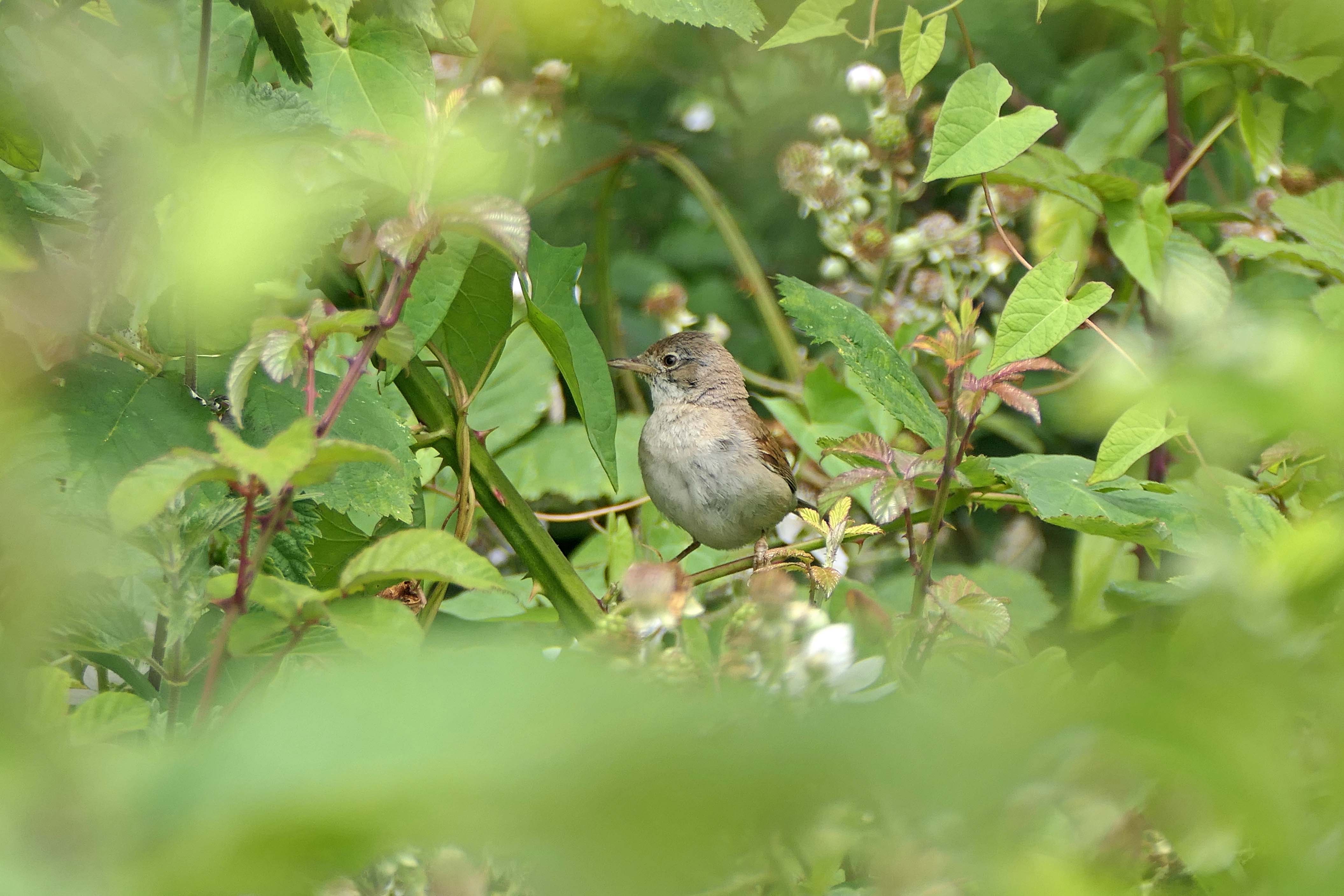
During recent walks I’ve often heard a distinctive buzzing sound coming from the trees and bushes as I’ve walked past. The sound comes from Whitethroats; at this time of year it’s usually a family of adults and their fledglings keeping in contact as they forage for food. With the vegetation now dense, almost impenetrable in places, I don’t often see the birds but, this day, I got lucky when a juvenile Whitethroat paused briefly in a gap in the foliage.

240705 whitethroat

Grasses

Tags

, , , ,

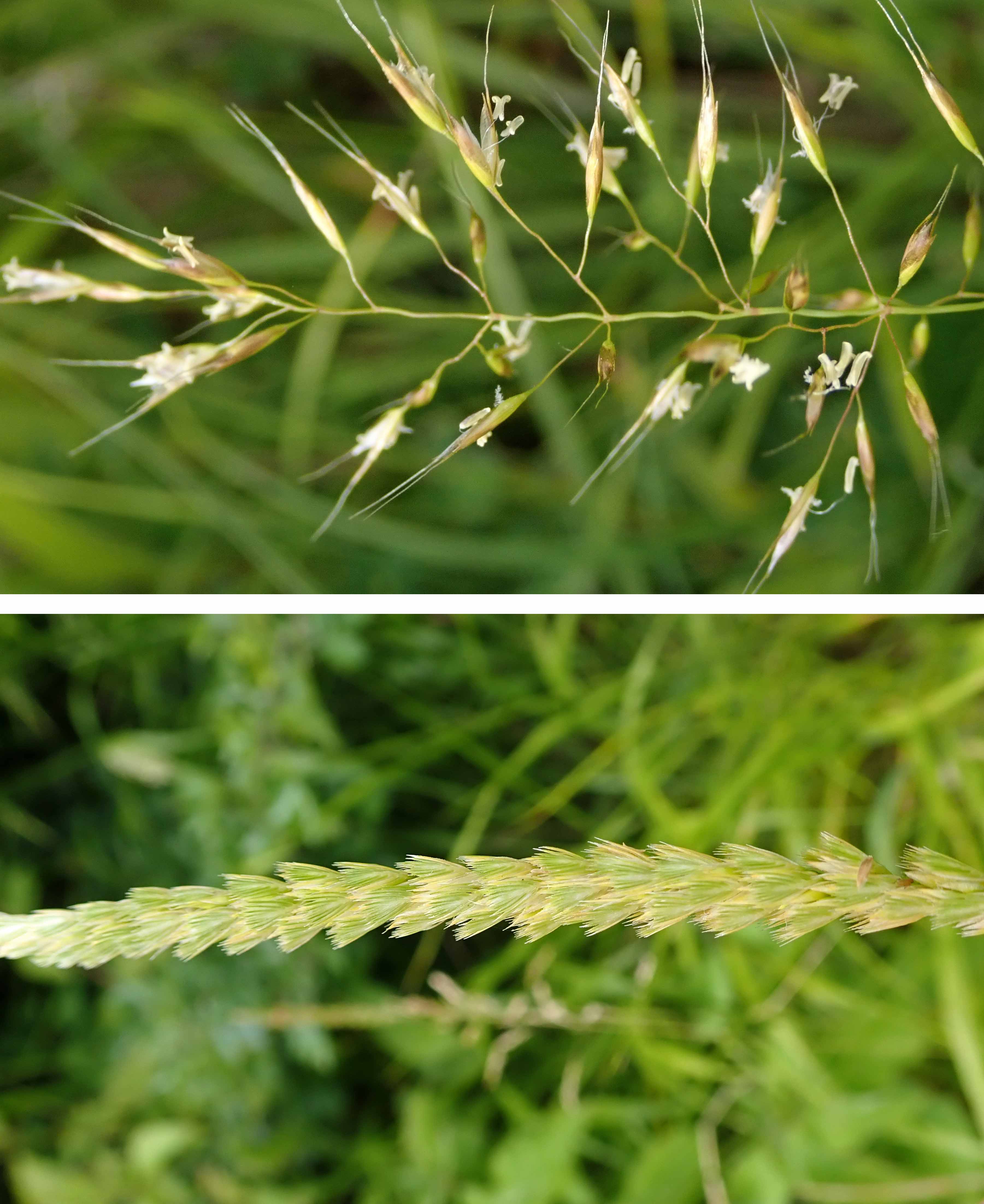
Last week’s Wildflower hour challenge was to find and identify as many as possible of the myriad grass species we have growing here in Britain.

240704 grasses (1)

I got involved, half-heartedly: I spent an enjoyable few hours wandering some of the local meadows, keeping an eye out for grass species that looked new and/or different.

240704 grasses (2)

And I took a lot of photos, many of them out of focus as the breeze caught the grasses just as I was clicking the shutter, though that created its own kind of magic.

240704 grasses (3)

Being busy with other things (that’s my excuse anyway!), I didn’t make the effort to identify my grasses, though I certainly enjoyed their diversity of shape and form.

240704 grasses (4)

Metallic green beetles

Tags

, , , ,

There are other species of similar metallic green beetles in Britain, but the UK Beetles website says only one (Cryptocephalus hypochaeridis) is likely to cause confusion, so I think I’ve got my identification right here. Meet Cryptocephalus aureoles, a beetle that is reasonably common in much of southern Britain, particularly in sunny, open, dry environments, like woodland and countryside footpath edges, roadsides, embankments and, in my case, the south-facing slope of a coal spoil tip.
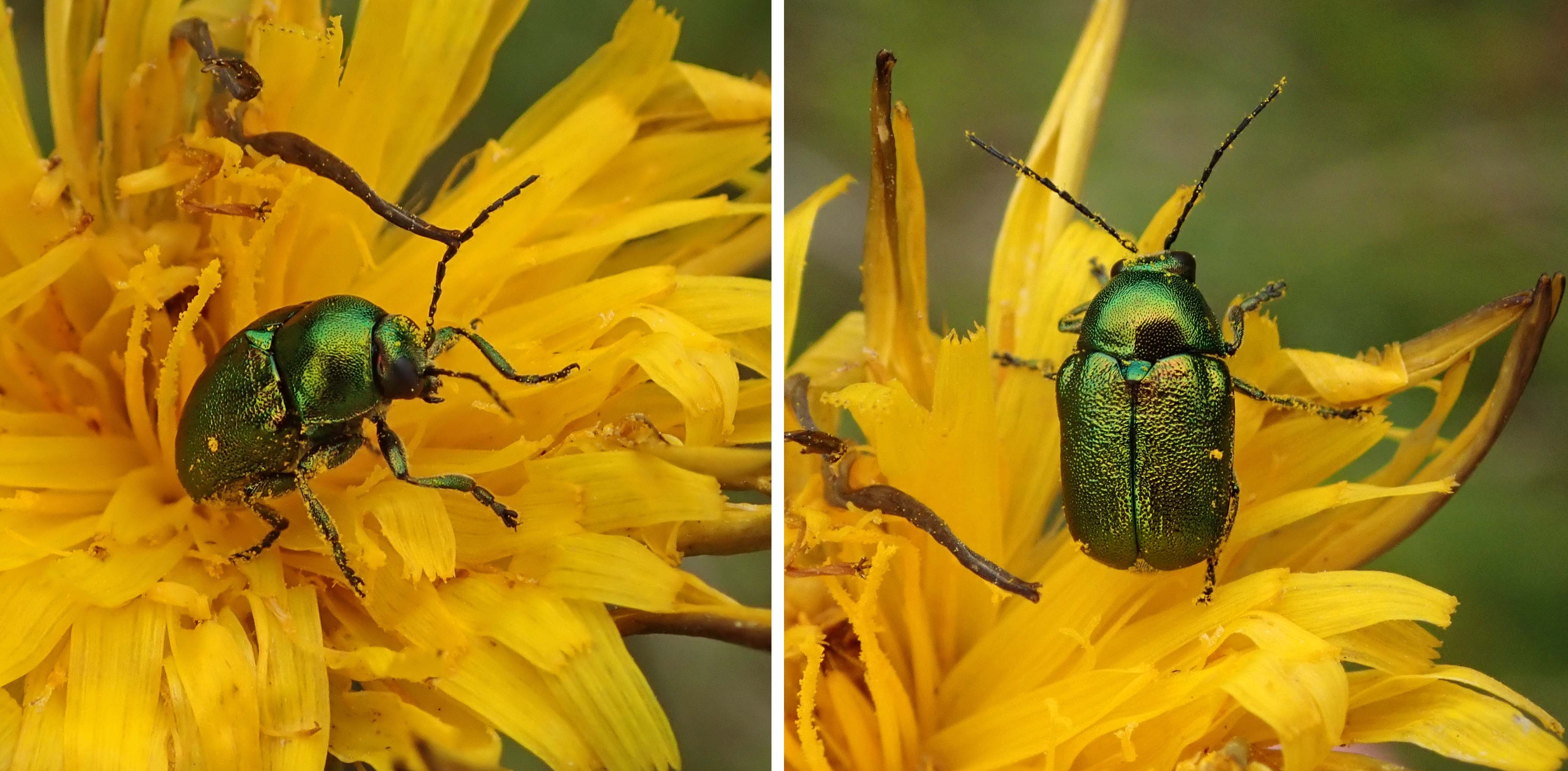
240703 Cryptocephalus aureolus (1)

Though the adults can be seen from April through to September, they are particularly active in June and July, when they are often to be found feeding on various species of plants with yellow flowers – hawkweeds (Hieraceum sp.) and cat’s-ears (Hypochaeris sp.) are particular favourites.
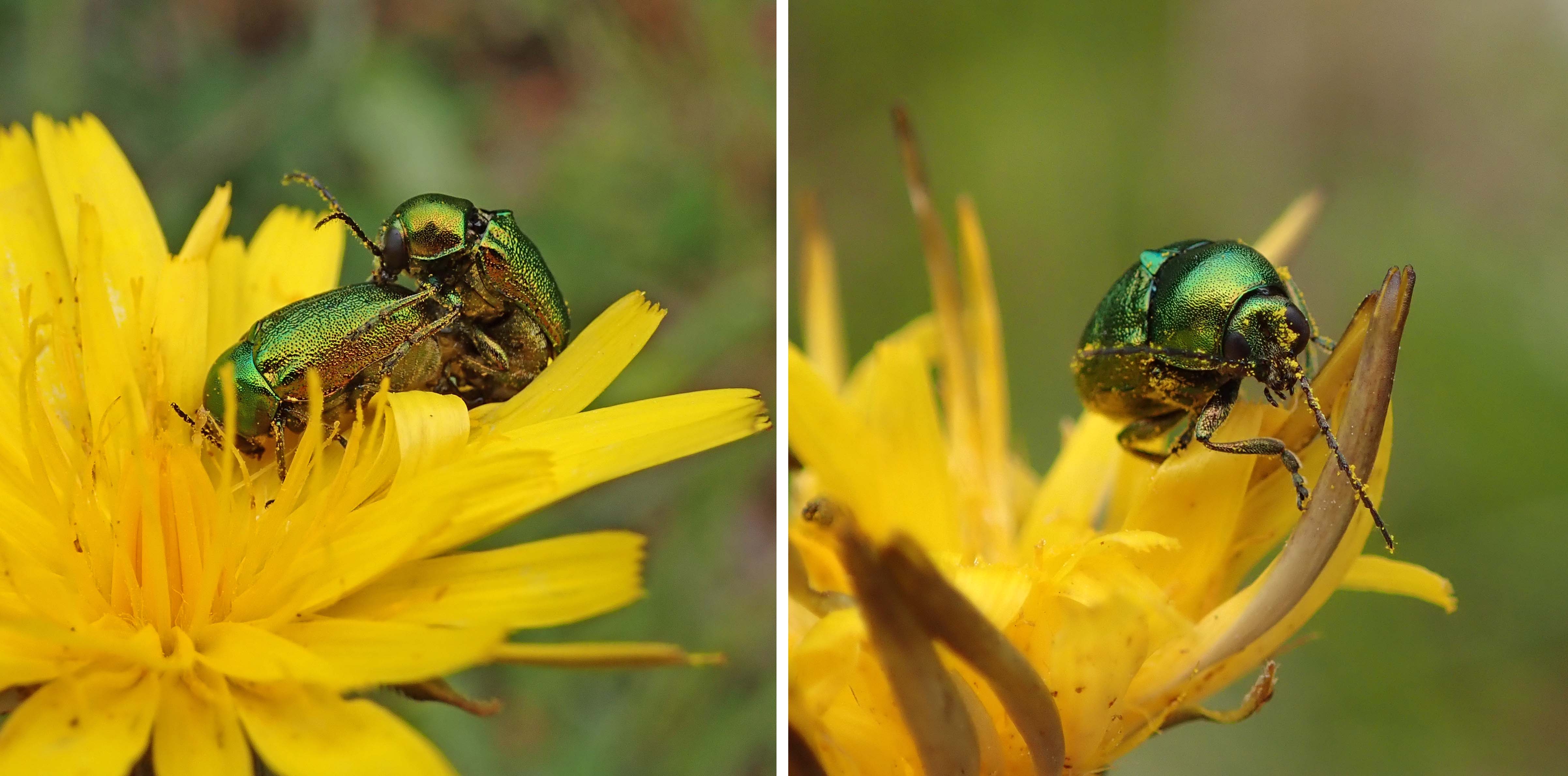
240703 Cryptocephalus aureolus (2)

Somewhat surprisingly, their exact life cycle has not been confirmed. The UK Beetles website explains that, after mating,

oviposition occurs from late spring; each egg being coated with faecal matter and secretions and dropped to the ground by the female. Larvae emerge after three or four weeks, depending on the temperature, and develop through the summer, it is not known which stage overwinters but young larvae have been recorded late in the summer and so it is likely to be as larvae which complete their development and pupate in the spring

Third time’s the charm

Tags

, , , ,

It took three train trips up a Welsh valley and a lot of stomping around cow-pat filled fields to see my first Small pearl-bordered fritillary of the year. On the first two visits, the ‘conservation’ cattle had been in the two fields at Aberbargoed Grasslands National Nature Reserve where I usually find these locally scarce butterflies, which did rather restrict my explorations – the cattle were large, had calves with them, blocked several of the paths across the fields, and there was constant loud bellowing between the herds in the two fields, which wasn’t exactly reassuring as to the safety of the situation. (One of my Twitter followers suggested I just loudly shout ‘Boo’ at them and was certain they’d then move away but every year there are news stories of walkers being trampled by cows so, as an elderly woman walking alone, I was not prepared to risk it.)

240702 small pearl bordered fritillary (1)

Fortunately, during my third visit the cattle were in adjoining fields, which meant I could more easily wander all the pathways. Unfortunately, butterfly numbers were still very low compared to previous years so, although I saw perhaps six Small pearl-bordered fritillaries in total, I was only able to get close enough to photograph one of them. And, as you can see, the photos are not my best. Still, I was pleased to see at least a few of these magical butterflies flitting about the paddocks, and can only hope their numbers will bounce back next year.

240702 small pearl bordered fritillary (2)