Sandwich tern

Tags

, , , , , ,

I had a cracking walk around Cardiff Bay earlier today. I managed to pick out my first couple of House martins from the large numbers of hirundines flying over the water; I had a brief glimpse of an Otter; the Lesser scaup was still present and still snoozing; and, a particular highlight, the Sandwich tern that had been reported an hour or so before I got to the Barrage was still sitting on the buoys in front of the sluice gates. We rarely see Sandwich terns hereabouts, only on migration in spring and autumn, when they move from their overwintering spots on the coast of west Africa to their breeding colonies along Britain’s coastline, and vice versa.
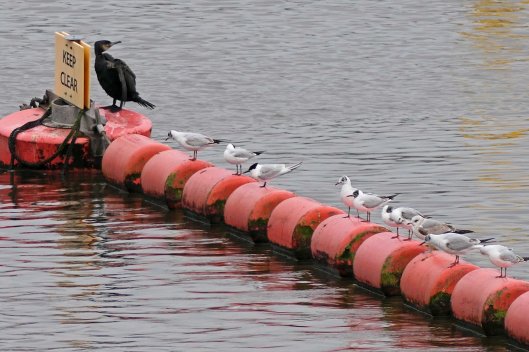
240408 sandwich tern

The little group of birds on the buoys also included a bonus juvenile Common gull. In case you don’t know these birds, the photo above shows, from left, a Cormorant, 2 Black-headed gulls, the Sandwich tern, four more Black-headed gulls, the Common gull, and another two Black-headed gulls.

Dandelions and friends

Tags

, , , , , , ,

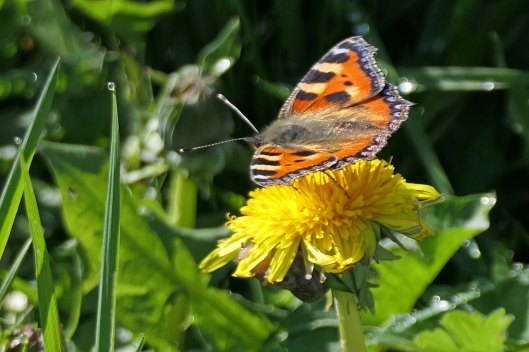
I missed celebrating National Dandelion Day earlier this week so today’s wildflower post focuses on the wonder that is the Dandelion and the many insects that rely on its early source of nutrition. This little group of photos also includes my first Small white butterfly of the year, found on Friday.

240407 dandelions and critters

Stranded

Tags

, , ,

Storm Kathleen was making her presence felt with strong winds blasting across Cardiff Bay this morning but, luckily, it wasn’t cold, and was mostly dry. When scanning for birds near the Barrage sluices, I noticed this dead fish – I’m not sure of the species, though perhaps one of you might know.

240406 barrage fish (2)

As you can see from the photos below, nets have been strung around the edges of the sluices, perhaps to prevent people from jumping and maybe to stop them throwing things in to the water as well. However, as the tidal range in the Bristol Channel is the second highest in the world, during the highest tides fish sometimes get caught in this netting.

240406 barrage fish (1)

Nest-building

Tags

, , , , , , , ,

When I spotted this Great crested grebe hauling a long piece of reed towards a potential nesting place, near where yesterday’s grebes had been mating (though not necessarily the same pair as there are several in that area), it occurred to me to wonder which usually comes first with birds, the nest-building or the mating? Maybe it’s a combination of both?

240405 nestbuilding GCG

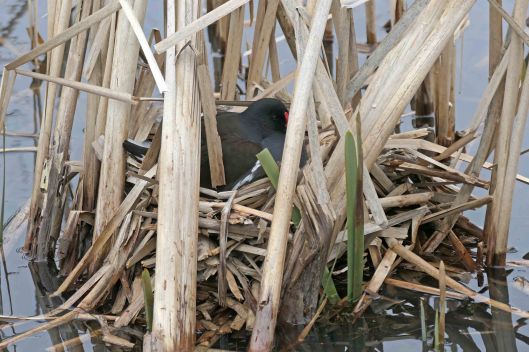
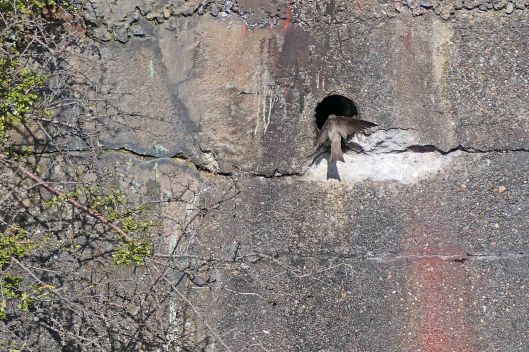
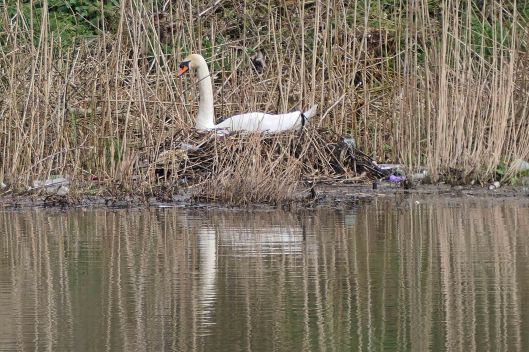
There’s certainly a lot of nest-building going on at the moment – as well as that grebe, recent sightings have included a Moorhen, Sand martins checking out nest holes in one of Cardiff Bay’s old docks, and a Mute swan already sitting but still busily adding to and tidying her nest.

240405 nestbuilding moorhen240405 nestbuilding sand martin240405 nestbuilding swan

A little voyeurism

Tags

, , , ,

On my way to the park …
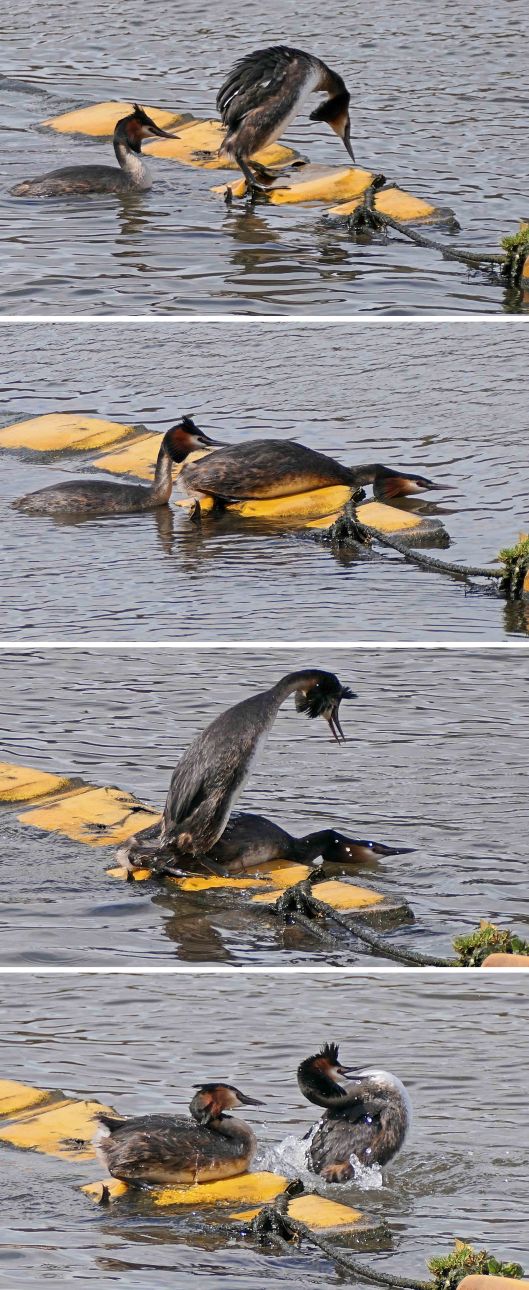
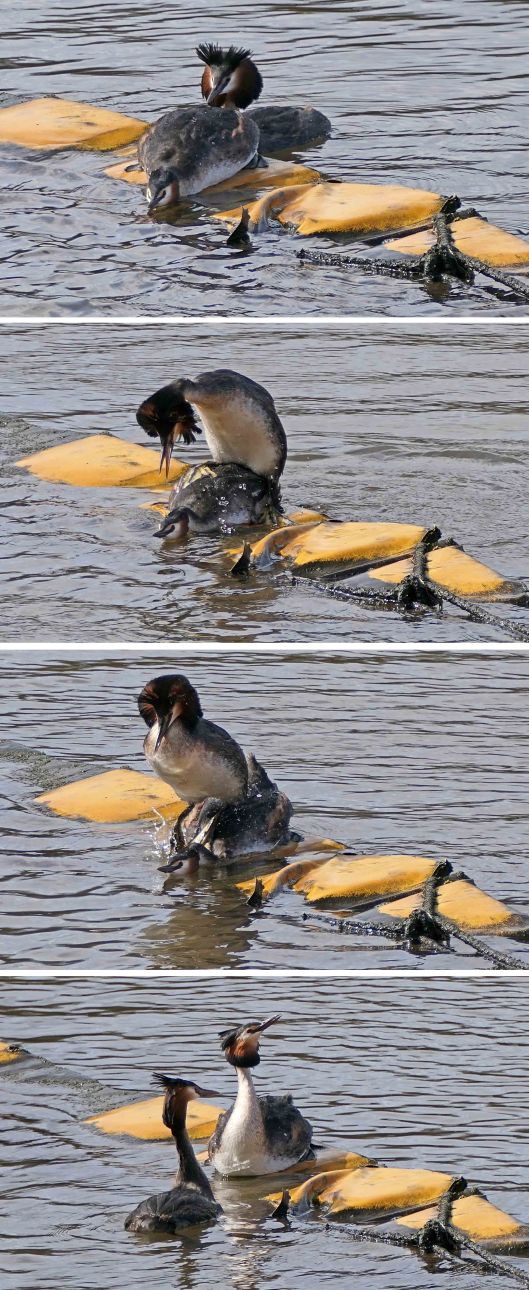
The female Great crested grebe found herself a good platform (I’ve only ever seen them use their nests before – I presume they’re not planning to nest on this floating barrier but will keep watching) and got into position – that’s how I knew what was going to happen next. The male took his time getting started, then, once he’d jumped up out of the water, missed the target completely, but I do feel he deserves a 10 out of 10 for his dismount.

240404 great crested grebes mating (1)

On my way home from the park …
It seems practice really does make perfect. She seemed pleased, and they were both quite lovely-dovey afterwards.

240404 great crested grebes mating (2)

A fortunate sighting

Tags

, , , ,

It’s a sad and depressing coincidence that on the very day I’m writing this blog about seeing my first Small tortoiseshell (Aglais urticae) of the year, on 1 April, the Guardian newspaper has published an article reporting on a sharp decline in sightings of this species in 2023, and a population decline of 82% over the last 47 years. Commenting on the survey data of all the UK’s butterfly species, gleaned from over 3000 sites across the country, ‘Dr Richard Fox, the head of science at the charity Butterfly Conservation, said: “Butterfly numbers fluctuate naturally from year to year, largely due to the weather, but the long-term trends of UK butterflies are mainly driven by human activity, including habitat damage and destruction, pesticide use, pollution and climate change”.’ I feel privileged to have seen this beautiful Small tortoiseshell but also saddened by the possibility that future generations may not be so privileged.

240403 small tortoiseshell

Top of the pops

Tags

, , , ,

This handsome male Blackcap had picked a super spot for belting out his award-winning song. With a road bridge above, a giant support pillar in front of him, and a thicket of trees behind, it was like he was on a stage, and his song was amplified to perfection.
(You may remember my blog Name the singer, posted on 14 March. No one tried guessing who was singing in that video – it was one of these gorgeous birds.)

240402 blackcap

Butterfly species no. 5

Tags

, ,

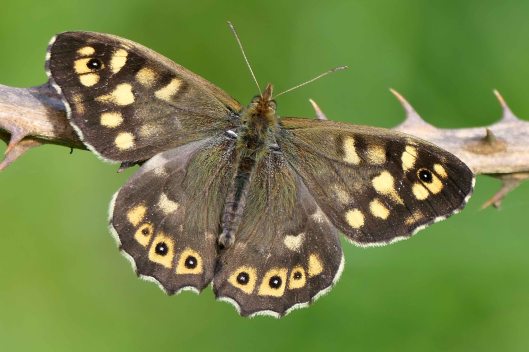
On Saturday, in sheltered spots out of the cool wind, it was tshirt weather for the first time this year, and, as well as my pale arms, the butterflies were also out in the sunshine. My first two Speckled woods, butterfly species number five for 2024, were, typically, having a scrap over territory when I first spotted them. Luckily, they soon settled down on separate bushes so I was able to get a few decent photos of them.

240401 penarth

White wagtails

Tags

, , , , , ,

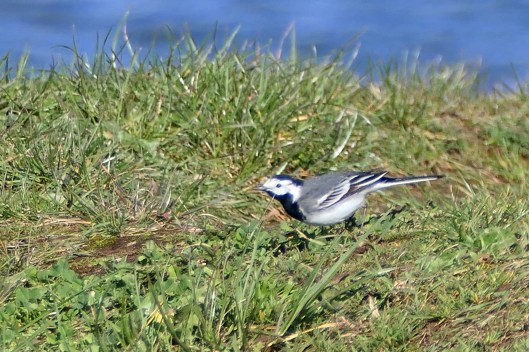
White wagtails are Pied wagtails that look a little different, come from a different location and so are usually seen on migration. That’s the gist of it, but trying to nail down the differences between white and regular Pied wags can be tricky. There’s a Bird Guides article online that contains all the facts but to summarise: our regular Pied wagtails that mostly stay put are subspecies Motacilla alba yarrellii, whereas white wagtails are subspecies Motacilla alba alba, and most of the birds seen in Britain are moving from southern continental Europe and Africa to Greenland and Iceland (and vice versa in the autumn). White wagtails can be identified by the clean line between the black at the back of the head and the grey back (especially in male birds); they have a pale grey rump, if you can see it; and the belly and flanks are a very clean white (as opposed to the more streaky grey of Pied wags). Here’s one of several I spotted on Cardiff Bay Barrage yesterday.

240330 white wagtail