The Brimstone and the Dandelion

Tags

, , , ,

The few Brimstones I’ve seen so far this year – just three before today – have been buttery yellow males and have raced past at the speed of light, spreading their pheromones and patrolling their chosen area in the hope of finding themselves a female. Though determining their colour can sometimes be tricky without the other gender for comparison, I think today’s Brimstone, with its paler, more greenish-lemon colour, was a female. She was certainly hungry, happy to linger and make the most of the lush Dandelions.
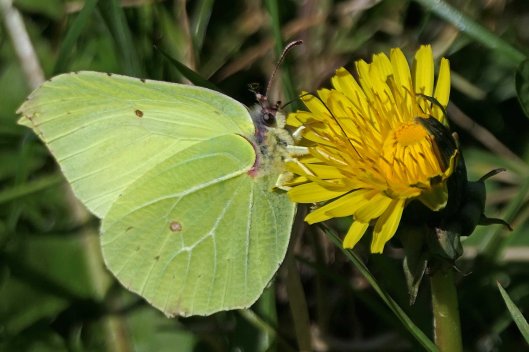
240329 brimstone

Solar halo

Tags

, , ,

Something completely different today, something I haven’t seen for a while due to the frequent lack of sun, something I’m sure many of you have seen in your skies. This is a solar halo, also known simply as halo or circular halo or 22° halo (because it has an apparent radius of approximately 22° around the sun, or the moon, in which case it would be a lunar halo, obviously). These haloes occur when light is refracted and reflected by ice crystals in the atmosphere. (Wikipedia has a more technical mathematical explanation, particularly of the 22° aspect of this phenomenon, if you’re so inclined.)

240328 solar halo

The Willow warblers have arrived

Tags

, , , , ,

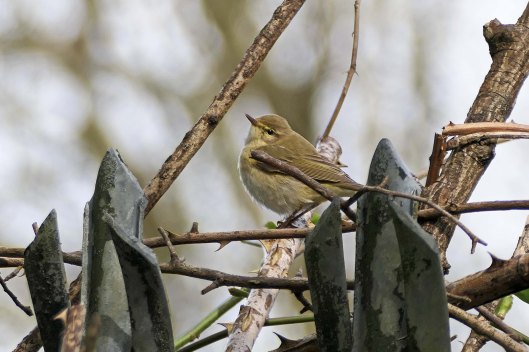
When the alerts in my local WhatsApp groups started to ping yesterday morning with reports of Willow warbler sightings in my area, I had a good idea where I might find one, along the trail beside the River Ely. I’d actually walked that way a couple of times in the previous week, knowing the first arrival must be close. And, when I got there yesterday, bingo! This little beauty, having made the long journey from sub-Saharan Africa, was flitting through the trees, searching for insects, singing all the while. I never cease to be amazed by the wonders of Spring migration.

240327 willow warbler

Early bumblebee

Tags

, , , ,

Living up to its name, I found this Early bumblebee (Bombus pratorum) last Friday alternating between sitting on newly laid woodchip mulch and the adjacent stone wall, basking in the short-lived spring sunshine (we’re now back to grey rainy days). As the Bumblebee Conservation website reports, this bumble is ‘One of the “Big 7” widespread and abundant species, found in a wide range of habitats across the UK’, and is ‘a spring specialist’. If you’re not sure which bumblebee species you’ve seen, the Bumblebee Conservation website also has an excellent online guide that shows clear images of each species’ queens and workers, males and females, as appropriate.

240326 bombus pratorum

A seven-butterfly day

Tags

, , , , ,

Various commitments last Friday meant I didn’t get out for my walk until the afternoon but, in retrospect, that was probably a good thing as the air had warmed and, in the gaps between the huge clouds rolling across the sky, the sun felt very spring-like.

240325 peacock (1)

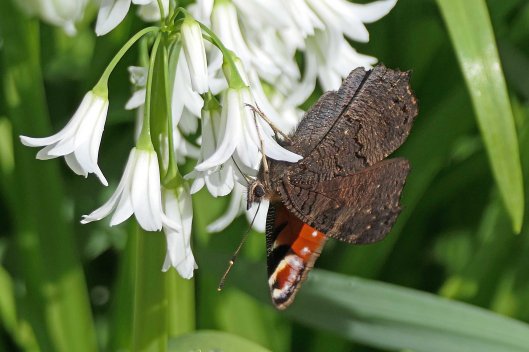
The happy result was a seven-butterfly day, with four Commas, two Peacocks, and a single male Brimstone that was zipping around a local park at the speed of light, as they do when waiting for the first females to emerge. Fortunately, one of the Peacocks was more interested in feeding from the Three-cornered leeks, so I managed to get a few nice photos.

240325 peacock (2)

The white wildflower challenge

Tags

, , , ,

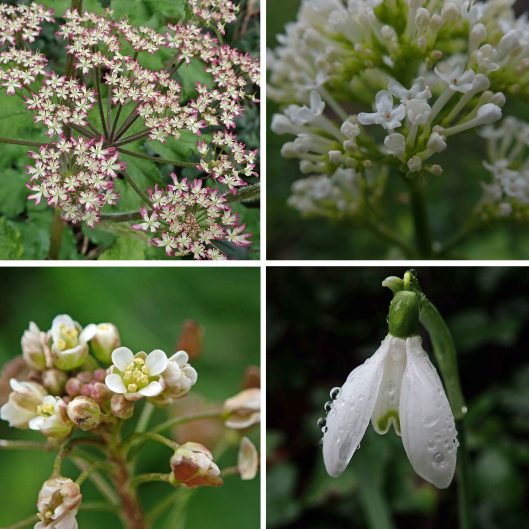
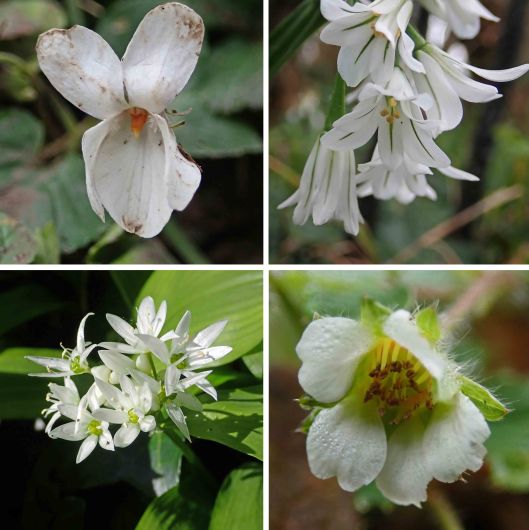
As I mentioned yesterday, this week’s #WildflowerHour challenge on social media was to find native and/or naturalised white-flowered wildflowers and, by walking around with my eyes engaged in a weird version of vertical tennis spectating (eyes to the ground for plants, eyes to the skies for birds – not recommended!), I managed to find seventeen white-flowering plants.

I felt the lushness of Daisies (above) deserved a photo all of its own. The following sixteen are Bramble, Common chickweed, Common mouse-ear, Common whitlowgrass, Cow parsley, Danish scurvygrass, Garlic mustard, Hairy bittercress, Hogweed (purple edged but mostly white), white-flowered Red valerian, Shepherd’s-purse, Snowdrop, Sweet violet, Three-cornered leek, Wild garlic, and Wild strawberry.

A weekend of wildflowers

Tags

, ,

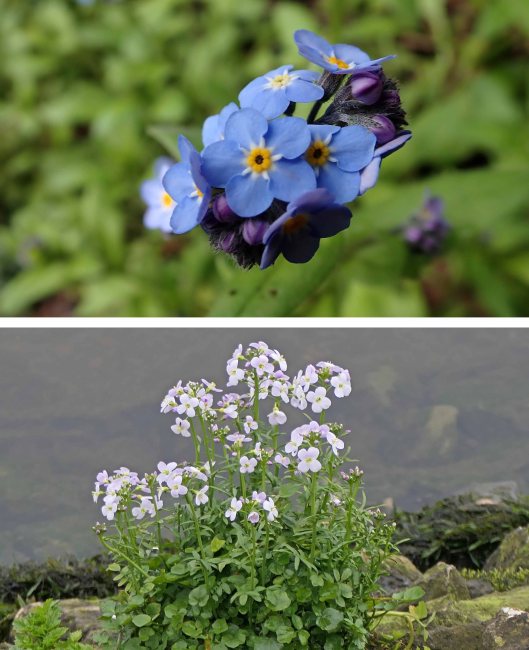
As this week’s #WildflowerHour challenge on social media is to find white flowers (they will feature in tomorrow’s blog), I thought that today I would post about the coloured wildflowers that have begun to bloom in my local area, so here they are:

240323 wildflowers blue and pink

A quite random combination of Forget-me-not and Cuckooflower

240323 wildflowers bluebells

Both the traditional blue and the pinkish-lilac variation of Spanish bluebells

240323 wildflowers yellows

The yellows: Cowslips and Marsh marigolds and, not really new but beginning to flower in greater numbers now, Dandelions

240323 wildflowers ivy-leaved

Flowers with leaves shaped like Ivy: Ivy-leaved speedwell and Ivy-leaved toadflax

240323 wildflowers geraniums

Members of the Geranium family: Common stork’s-bill, Herb Robert and Shining crane’s-bill

Waxwings, still

Tags

, , , , ,

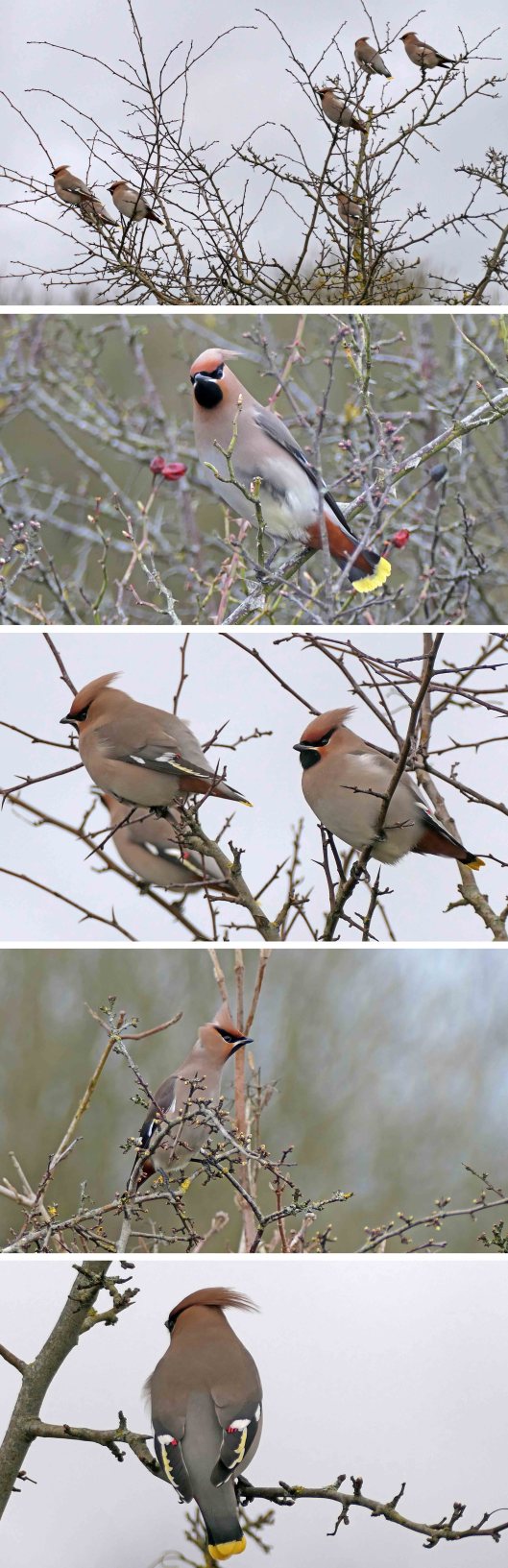
I know, I know, this is my third post about Waxwings this year but what’s not to love and celebrate about these stunning birds, and it could well be several years before we experience another Waxing winter like this one. Since they were first found at Cosmeston Lakes Country Park on 2 March, we locals have had the opportunity to observe and get to know these birds a little better.

240322 cosmeston waxwings (1)

Photos taken 14 March, after the extra 4 birds had arrived and all were feasting on rose hips

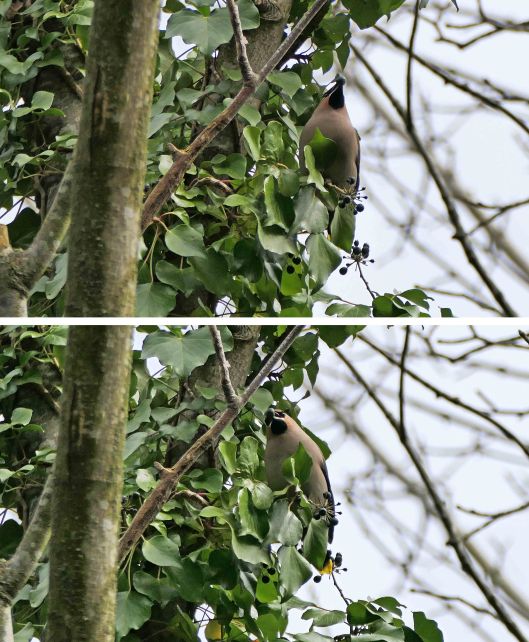
As food supplies have dwindled, the (first four, now eight) Waxwings have changed their diet from Hawthorn berries to rose hips to Ivy berries, with a little fly-catching on sunny days. It’s just such a privilege to have had these beautiful birds with us for such a long time.

Photos taken 21 March, after the birds had moved on to eating Ivy berries

Two Wheatears

Tags

, , , , , ,

When Spring migration draws nigh, I start watching more closely the social media posts from birders living along England’s south coast, as that gives me a fairly good idea about what might turn up on the south Wales coast a day or two later. So, after seeing reports of the first Wheatears arriving 7-10 days ago, I’ve been focusing my walks in the area of Cardiff Bay, as that’s the most likely place for me to spot one. And, finally, yesterday I spotted the first two on the Barrage, initially on the grassy banks but, as so often happens, loose dogs racing madly about scared the birds into seeking refuge amongst the outer barrier of huge boulders. These were two handsome male Wheatears, returning to breed after having spent their winter in sunny central Africa.

240320 wheatear

First Bee-fly

Tags

, , , , ,

As well as the lovely Comma, Monday’s walk also produced my first bee-fly sightings for 2024. We only have Dark-edged bee-flies (Bombylius major) in my area and these were all males, as they usually emerge before the females. It’s so heartening to see these wonderful little signs of Spring.

240320 dark-edged bee-fly