• ABOUT
  • BIRDING 2018
  • Birding 2019
  • BLOG POSTS
  • Butterflies 2018
  • Resources

earthstar

~ a celebration of nature

earthstar

Tag Archives: Lavernock Nature Reserve

128/366 Dingy skippers

07 Thursday May 2020

Posted by sconzani in insects, nature

≈ 2 Comments

Tags

British butterflies, butterfly, Dingy Skipper, Erynnis tages, Lavernock Nature Reserve

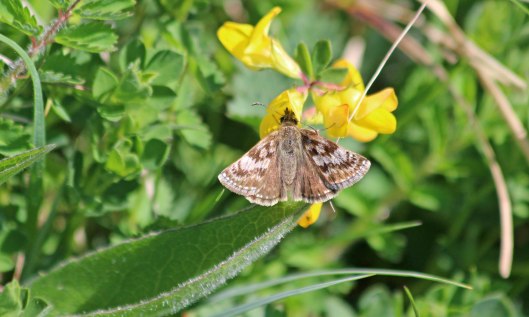
Not only did I see my first dragonflies of the year yesterday at Lavernock Nature Reserve but I also spotted my first Dingy skippers (Erynnis tages).
200507 dingy skipper (1)

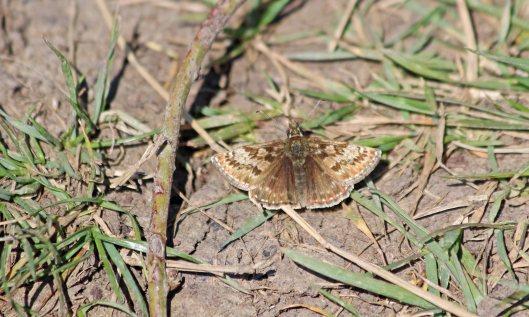
At least four of these inconspicuous little butterflies were feeding on their favourite food plant, Common bird’s-foot trefoil, or basking on the compacted earth of the tracks through the reserve, as is their wont.
200507 dingy skipper (2)

Their preferences for bird’s-foot trefoil and patches of bare ground are why these butterflies are often found on chalk and limestone grasslands, on brownfield sites and in disused quarries, amongst sand dunes and along open pathways adjacent to woodland.

200507 dingy skipper (3)

Sun, shelter and good food – it’s not much to ask for. But, sadly, the Dingy skipper is one of many declining species of butterfly in Britain, probably due to the way land is managed and to the intensification of agriculture. So, I feel very privileged to be able to observe and enjoy these lovely little skippers so close to home.

200507 dingy skipper (4)

Like Loading...

127/366 First dragonflies

06 Wednesday May 2020

Posted by sconzani in insects, nature

≈ 2 Comments

Tags

British dragonflies, Broad-bodied Chaser, dragonflies, dragonfly, Lavernock Nature Reserve

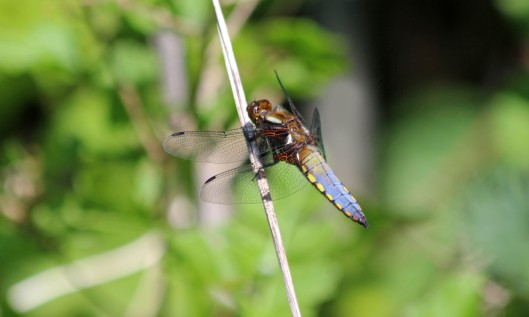
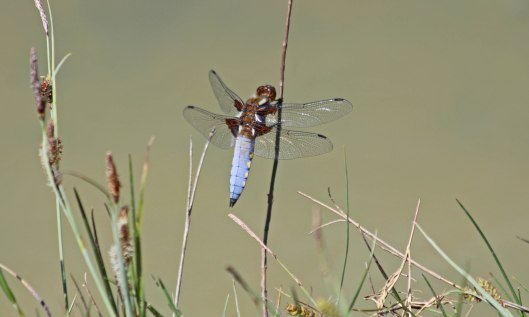
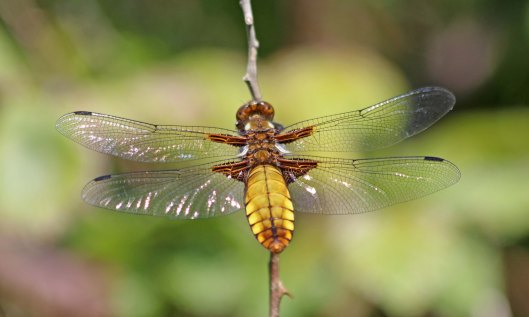
I was delighted to see my first dragonflies of the year at Lavernock Nature Reserve during this morning’s walk: two female (with the golden abdomen) and two male (blue abdomen) Broad-bodied chasers.

200506 Broad-bodied chaser (1)200506 Broad-bodied chaser (2)200506 Broad-bodied chaser (3)

Like Loading...

264/365 Staying power

21 Saturday Sep 2019

Posted by sconzani in 365DaysWildin2019, autumn, insects, nature

≈ Leave a comment

Tags

#365DaysWild, British butterflies, butterfly, Common blue, Common blue butterfly, Lavernock Nature Reserve

It was looking faded, jaded and more than a little tatty but this Common blue butterfly has certainly got staying power. Most of its species have died off now in my local area so it was a delight to see this little one today at Lavernock.

190921 common blue

Like Loading...

251/365 Sericomyia silentis

08 Sunday Sep 2019

Posted by sconzani in 365DaysWildin2019, flowers, insects, nature, wildflowers

≈ 2 Comments

Tags

#365DaysWild, Bog hoverfly, British hoverflies, Devil's-bit scabious, hoverfly, Lavernock Nature Reserve, pink scabious, Sericomyia silentis

It looks a bit like a wasp but this black-and-yellow-striped minibeastie is a hoverfly with the rather tongue-twisting name Sericomyia silentis. Perhaps Bog hoverfly would be easier but, in my opinion, its common name doesn’t do this little beauty justice.

190908 sericomyia silentis (1)

I spent a couple of hours today at Lavernock Nature Reserve, where the Devil’s-bit scabious is looking simply stunning and is attracting myriads of insects. I took lots of butterfly photos but thought to post one of the other little critters today. The Devil’s-bit is usually a lilac colour but some at Lavernock are this subtle shade of pink instead. Its nectar obviously tastes just as good!

190908 sericomyia silentis (2)
190908 sericomyia silentis (4)
190908 sericomyia silentis (5)
190908 sericomyia silentis (6)
Like Loading...

224/365 It’s autumn!

12 Monday Aug 2019

Posted by sconzani in 365DaysWildin2019, autumn, birds, nature

≈ 2 Comments

Tags

autumn migration, birding, birdwatching, British birds, Lavernock Nature Reserve, Spotted flycatcher

Willow warblers are peeping from every bush, Blackcaps are chacking, Swallows and martins are swooping low over the fields at Cosmeston for last minute snacks before they cross their first stretch of water on their way south and, today, at Lavernock, I saw my first Spotted flycatcher of the year. Autumn migration is well and truly underway!

190812 spotted flycatcher

Like Loading...

221/365 Jersey tiger, at last

09 Friday Aug 2019

Posted by sconzani in 365DaysWildin2019, insects, nature

≈ 8 Comments

Tags

British moths, Hemp agrimony, Jersey tiger, Lavernock Nature Reserve, tiger moths

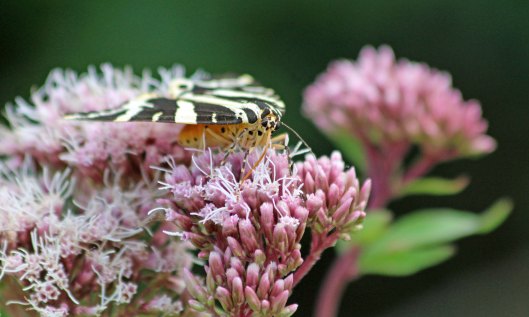
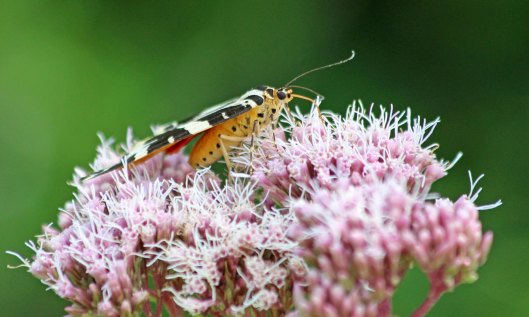
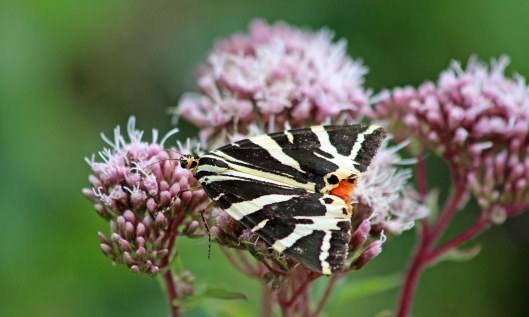
Finally yesterday I found what I’ve walked many miles, worn out a pair of shoes, sweated buckets to find …my first Jersey tiger moth of the year. And it was worth every ache in my poor old feet!

190809 jersey tiger (1)

Though the text books and web sites haven’t yet acknowledged it, we locals are positive we have a colony now established along our piece of the south Wales coast, and the records logged in Aderyn, the Wales biodiversity database, confirm it. These tigers have been recorded every year for over ten years at local sites, including Lavernock Nature Reserve and in gardens in the neighbouring towns of Sully and, latterly, Barry.

190809 jersey tiger (2)

Jersey tigers are beautiful moths: triangular shaped, stunningly patterned with black-and-beige stripes, with vibrant orange underwings only usually seen when they’re flying, and a pale apricot body.

190809 jersey tiger (3)

They’re currently only seen, as their name suggests, on the Channel Islands, in certain spots along England’s south coast and in London, and in our little area in Wales.

p.s. A Butterfly Conservation staffer from south Wales has since told me that this moth’s establishment in our area is not disputed and that it probably became established around 2012-13 but that it just takes time for websites to update their records.

190809 jersey tiger (4)

Like Loading...

216/365 Ovipositing

04 Sunday Aug 2019

Posted by sconzani in 365DaysWildin2019, insects, nature

≈ 2 Comments

Tags

#365DaysWild, British dragonflies, dragonfly, dragonfly ovipositing, Emperor dragonfly, female Emperor ovipositing, Lavernock Nature Reserve, oviposit

Oviposit: verb; a zoological term, relating especially to insects, which means to lay an egg or eggs. According to the Oxford Dictionary, the word first came in to use in the early 19th century and is a combination of ‘ovi’ for egg and ‘posit’, from the Latin verb ponere, meaning to place.

190804 female emperor (2)

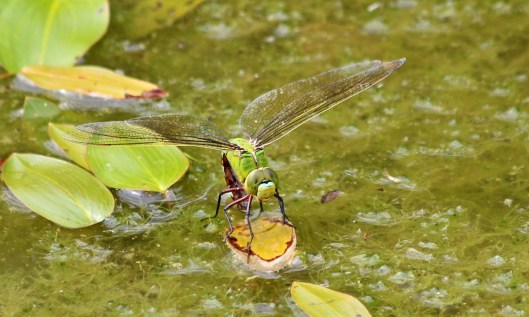
Today, at Lavernock Nature Reserve, I was eating my lunch while sitting on the bench near the dragonfly pond, when this female Emperor dragonfly came along and began ovipositing, carefully manoeuvring her body to place several eggs beneath each lily pad before moving on to the next. All the while, her mate was patrolling overhead to ensure no one interfered with this important process.

190804 female emperor (1)

Like Loading...

204/365 The summer Holly blues

23 Tuesday Jul 2019

Posted by sconzani in 365DaysWildin2019, insects, nature

≈ 6 Comments

Tags

#365DaysWild, British butterflies, butterfly, Holly blue, Holly blue butterfly, Lavernock Nature Reserve, summer butterflies

The Holly blue is one of several British butterflies that goes through more than one life cycle per year (you can read more about them here), and the second generation of these stunning little butterflies is now on the wing in my local reserves and wild places.

190723 summer holly blue (1)190723 summer holly blue (4)

I saw my first of the summer brood on 14 July at Grangemoor Park, and this perfect little female was feeding on bramble flowers when I visited Lavernock Nature Reserve on Saturday, 20 July. Look out for them on ivy bushes, as that’s where the second generation females lay their eggs.

190723 summer holly blue (2)190723 summer holly blue (3)

Like Loading...

161/365 A Goat’s-beard clock

10 Monday Jun 2019

Posted by sconzani in 365DaysWildin2019, flowers, nature, wildflowers

≈ 7 Comments

Tags

#365DaysWild, British wildflowers, Goat's-beard, Jack-go-to-bed-at-noon, Lavernock Nature Reserve, seed clock, Tragopogon pratensis, wildflower clock

190610 Goat's-beard clock

You might well think that this seed clock belongs in an autumn blog post, rather than one from the lengthy days of early summer, but I saw this today at Lavernock Nature Reserve and couldn’t resist it. This is the fruit of Goat’s-beard (Tragopogon pratensis), a wildflower that is also known by the delightful name Jack-go-to-bed-at-noon because its bright yellow flowers always close up by midday.

Like Loading...

158/365 Latticed heath

07 Friday Jun 2019

Posted by sconzani in 365DaysWildin2019, insects, nature

≈ 2 Comments

Tags

British moths, Chiasmia clathrata, Cosmeston Lakes Country Park, day-flying moth, Grangemoor Park, Hamadryad Park, Latticed heath, Lavernock Nature Reserve, moth, moths

This is one of my favourite moths, a Latticed heath (Chiasmia clathrata, from the Greek chiasma, meaning formed like a cross, and clathrum, meaning lattice or grate, a reference to the lovely interlaced and criss-crossing patterns on its wings).

190607 lattice heath (1)

As well as flying in the night time, the Latticed heath also flies by day, which is how I’m able to see them, though they’re very good at hiding in amongst the long grass and wildflowers. I saw my first for 2019 on 23 May at Cosmeston, and I’ve since seen them at most of my regular haunts, Grangemoor and Hamadryad Parks in Cardiff, and Lavernock Nature Reserve.

190607 lattice heath (2)
190607 lattice heath (3)

It’s a smallish moth, with a wingspan between 20 and 25mm, and can be found around clovers and trefoils and lucerne, which are the plants its caterpillars feed on. The first adults can be seen in May and June, and then there’s a second generation that flies in August and September.

190607 lattice heath (4)

Like Loading...
← Older posts
Newer posts →

About me

sconzani

sconzani

I'm a writer and photographer; researcher and blogger; birder and nature lover; countryside rambler and city strider; volunteer and biodiversity recorder.

View Full Profile →

Follow earthstar on WordPress.com

Enter your email address to follow this blog and receive notifications of new posts by email.

Recent blog posts

  • O is for Odonata December 20, 2025
  • N is for nest December 19, 2025
  • M is for mite December 18, 2025
  • L is for lepidopteran lifers December 17, 2025
  • K is for Keeled skimmers December 16, 2025

From the archives

COPYRIGHT

Unless otherwise acknowledged, the text and photographs on this blog are my own and are subject to international copyright. Nothing may be downloaded or copied without my permission.

Fellow Earth Stars!

  • Unknown's avatar
  • Unknown's avatar
  • Unknown's avatar
  • Unknown's avatar
  • Unknown's avatar
  • Unknown's avatar
  • Unknown's avatar
  • Unknown's avatar
  • Unknown's avatar
  • Unknown's avatar
  • Unknown's avatar
  • Unknown's avatar
  • Unknown's avatar
  • Unknown's avatar
  • Unknown's avatar
  • Unknown's avatar
  • Unknown's avatar
  • Unknown's avatar
  • Unknown's avatar
  • Unknown's avatar
  • Unknown's avatar
  • Unknown's avatar
  • Unknown's avatar
  • Unknown's avatar
  • Unknown's avatar
  • Unknown's avatar
  • Unknown's avatar
  • Unknown's avatar
  • Unknown's avatar
  • Unknown's avatar
  • Unknown's avatar
  • Unknown's avatar
  • Unknown's avatar
  • Unknown's avatar
  • Unknown's avatar
  • Unknown's avatar
  • Unknown's avatar
  • Unknown's avatar
  • Unknown's avatar
  • Unknown's avatar
  • Unknown's avatar
  • Unknown's avatar
  • Unknown's avatar
  • Unknown's avatar
  • Unknown's avatar
  • Unknown's avatar
  • Unknown's avatar
  • Unknown's avatar
  • Unknown's avatar
  • Unknown's avatar

Blog at WordPress.com.

Privacy & Cookies: This site uses cookies. By continuing to use this website, you agree to their use.
To find out more, including how to control cookies, see here: Cookie Policy
  • Subscribe Subscribed
    • earthstar
    • Join 667 other subscribers
    • Already have a WordPress.com account? Log in now.
    • earthstar
    • Subscribe Subscribed
    • Sign up
    • Log in
    • Report this content
    • View site in Reader
    • Manage subscriptions
    • Collapse this bar
 

Loading Comments...
 

You must be logged in to post a comment.

    %d