• ABOUT
  • BIRDING 2018
  • Birding 2019
  • BLOG POSTS
  • Butterflies 2018
  • Resources

earthstar

~ a celebration of nature

earthstar

Monthly Archives: August 2016

‘Dedicated Naturalist’: ‘brief but fleeting pleasure’

11 Thursday Aug 2016

Posted by sconzani in 'Dedicated Naturalist' Project, insects, nature

≈ Leave a comment

Tags

Eristalis arbustorum, Eristalis pertinax, Eristalis tenax, hoverfly

A snippet from my volunteer work on the ‘Dedicated Naturalist’ Project, helping to decipher and digitise, record and publicise the life’s work of naturalist extraordinaire, Dr Mary Gillham. This is the type of delightful insight we volunteers often discover when mining Mary’s copious archives for biological records. Never a dull moment and frequent chuckling make a volunteer’s work fun!
 160811 Eristalis pertinax

Eristalis tenax drone flies   MATING, presumably, on 10 July 1981. The larger female sitting on flower head – buddleja, hogweed, thistle, &c. Male, or up to four males, smaller but marked exactly the same, narrow yellow bands on black, hovering 2-3” above for often considerable while before darting momentarily down, sweeping a tail across hers and swooping away again. No wonder he has to hover so persistently to get his aim just right for the ‘brief but fleeting pleasure’. Only 1 male is accepted, she flying off almost at once.

160811 Eristalis arbustorum

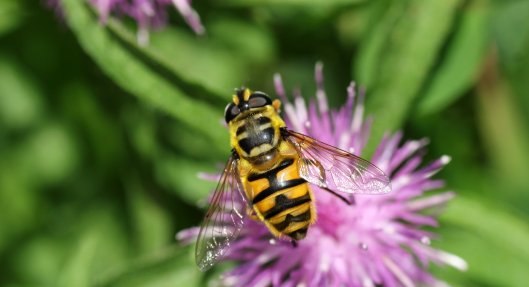
My images are the same genus but not the same species as Mary’s though their behaviour is similar. The top image is Eristalis pertinax, a very common hoverfly in much of Britain, and the lower image depicts a female (left) and male (right) Eristalis arbustorum, in a situation similar to that Mary has described, with the male awaiting his chance to pounce.

For the full story about the Mary Gillham Archive Project, check out our website, and follow our progress on Facebook and on Twitter.

Like Loading...

Crabs in Kep in Cambodia

10 Wednesday Aug 2016

Posted by sconzani in nature

≈ 3 Comments

Tags

Cambodia, crab market, crab traps, crabs, crustaceans, hermit crab, Kep

For world wildlife Wednesday this week we’re heading to Cambodia where I lived and worked for 7 months in 2013. In January that year, I visited the seaside town of Kep with some friends. Kep is particularly famous for its delicious crabs and, just as other places have huge statues of their typical food product (in New Zealand, Ohakune has an enormous carrot; in Australia, Woombye a huge pineapple – I’m sure there are others), so Kep has this large statue of a crab – a male crab I am reliably told – something to do with the width of the central plate on its tummy!

160810 kep crabs (1)
160810 kep crabs (2)

The locals make a living from farming and catching crabs, and it was interesting to watch them checking their traps in the warm waters near the crab market. Both the sunset, which we enjoyed at the one of the restaurants near the crab market, and the crabs we ate later, were superb, as were all the other types of fresh seafood we savoured in Kep: prawns, shrimps, fish, squid and octopus. Seafood is my absolute favourite food so I was in heaven.

160810 kep crabs (3)
160810 kep crabs (4)

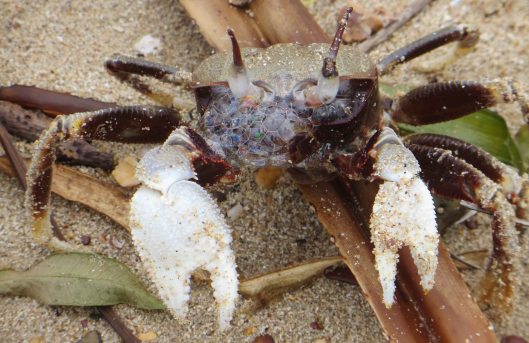
Our beach walks also featured many crabs: this large one had escaped the traps and was blowing bubbles on the sand at the water’s edge (thought to be how crabs aerate their gills when out of water), and the tiny hermit crabs were fun to watch, scuttling along the sand with their homes on their backs.

160810 kep crabs (5)

160810 kep crabs (6)
160810 kep crabs (7)
Like Loading...

The ladybird lifecycle

09 Tuesday Aug 2016

Posted by sconzani in insects, nature

≈ 7 Comments

Tags

Halyzia 16-punctata, harlequin ladybird, Harmonia axyridis, ladybird, ladybird larva, ladybird lifecycle, ladybird pupa, Orange ladybird

Just like every other insect, a ladybird goes through a complete transformation during its short, one-year life but the various stages are something I’ve only become aware of this year so I thought I’d share them with you.

160809 ladybird (1) 22 spot
160809 ladybird (2)

Adult ladybirds spend the cold winter months in a dormant state, awakening in the springtime as the weather begins to warm up. After munching away on some aphids to get their juices flowing again, they look for a member of the opposite sex and mate. I don’t have any egg photos but they are, apparently, bright yellow and are laid on the underside of leaves. Once the mating and egg-laying are complete, the adult ladybirds die.

160809 ladybird (3)
160809 ladybird (4)
160809 ladybird (5) orange Halyzia 16-punctata

Depending on the temperature and weather conditions, the eggs hatch after 3 to 10 days and the little larvae immediately begin eating: scale insects and aphids are their favourites so you can see why gardeners love them. At this stage, they look nothing at all like ladybirds, though they do have unique patterns – left and centre above are Harlequins (Harmonia axyridis) and the one on the right is an Orange (Halyzia 16-punctata).

160809 ladybird (6)
160809 ladybird (7)

After 3 to 4 weeks of constant eating, the larvae pupate, shedding their larval skin and changing into this strange-looking blob you can find attached to the tops of leaves. The metamorphosis from larvae to adult ladybird only takes 7 to 10 days – a miracle really!

160809 ladybird (8)

When the adult ladybird first emerges from its pupa, it is very pale and takes a little while for its final colours to show, though you can usually see traces of its spots. And that’s it! The adult will trundle around the leaves, eating all those pesky aphids until the winter months come, and the whole process will begin all over again.

Like Loading...

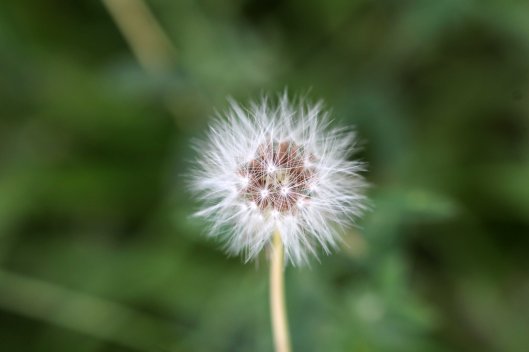
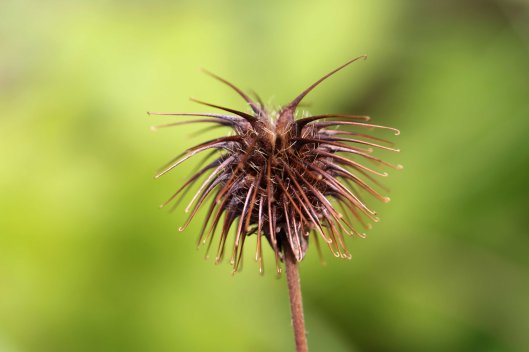
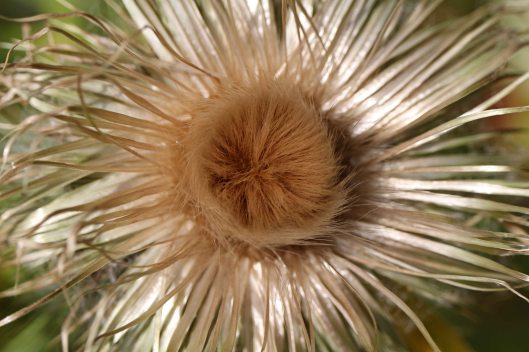
The seed is hope

08 Monday Aug 2016

Posted by sconzani in flowers, nature, plants

≈ 4 Comments

Tags

flower seeds, plant seeds, quotes about seeds, seed quotations

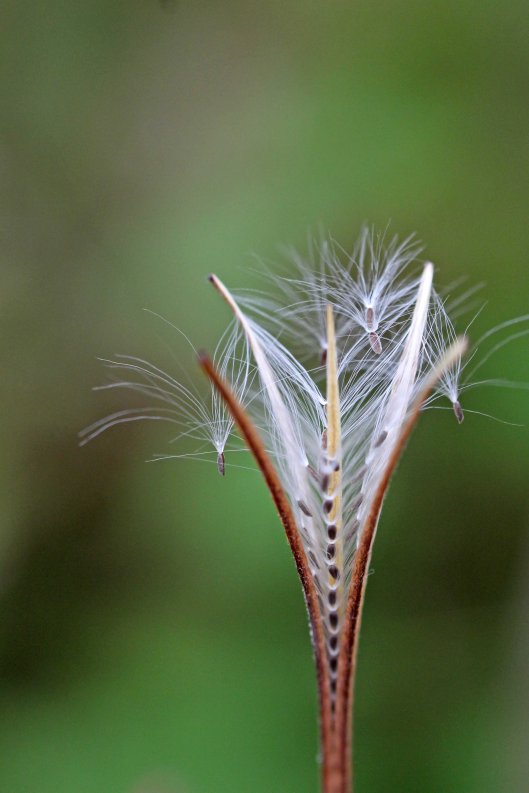
‘From a small seed a mighty trunk may grow.’ ~ Aeschylus

160808 seeds (1)

‘Don’t judge each day by the harvest you reap but by the seeds that you plant.’ ~ Robert Louis Stevenson

160808 seeds (2)

‘To see things in the seed, that is genius.’ ~ Lao Tzu

160808 seeds (3)

‘Everyone who enjoys thinks that the principal thing to the tree is the fruit, but in point of fact the principal thing to it is the seed. — Herein lies the difference between them that create and them that enjoy.’ ~ Friedrich Nietzsche

160808 seeds (4)

‘Though I do not believe that a plant will spring up where no seed has been, I have great faith in a seed. Convince me that you have a seed there, and I am prepared to expect wonders.’ ~ Henry David Thoreau

160808 seeds (5)

Like Loading...

I’m following a tree: month 7

07 Sunday Aug 2016

Posted by sconzani in nature, parks, trees

≈ 9 Comments

Tags

Bute Park, Dawn redwood, Metasequoia glyptostroboides, redwood tree

160807 dawn redwood (1)
160807 dawn redwood (2)

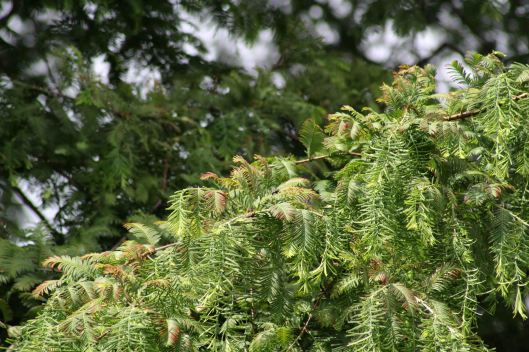
Midsummer has been and gone and, though we’ve had some glorious sunny days – and a short heat wave, we’ve also had some unseasonably cool weather. Perhaps that’s why there are definite signs of autumn to be seen in the foliage of trees and shrubs in my local parks and woodlands.

160807 dawn redwood (6)
160807 dawn redwood (7)
160807 dawn redwood (8)

Even Dawn Redwood is showing small signs of the changing seasons and, remember, most unusually for a conifer, Dawn is deciduous. So, these tiny tinges of orange and red are just a hint of how spectacular she will be when the real autumn weather comes.

160807 dawn redwood (5)

Some time during the month, Dawn seems to have suffered a little damage at the top of the tree. Either that or she’s had an incredible growth spurt in one particular branch, which I doubt. You can see the change in the photos below: the one on the left as taken in May 2016, the one on the right in late July 2016.

160807 dawn redwood (3)
160807 dawn redwood (4)

We haven’t had any particularly strong winds or stormy weather so I’m not sure what happened to cause this change but she looks rather wild and a little unkempt compared to her previously perfect pyramidal shape. It will be interesting to see if this corrects itself or if she loses that errant branch or if she just stays this way. Time alone will tell.

Tree following is fascinating and fun. Why not join in? You can find out more here. 

Like Loading...

Heavenly hoverflies

06 Saturday Aug 2016

Posted by sconzani in insects, nature

≈ 8 Comments

Tags

Cheilosia illustrata, hoverflies, hoverfly, Myathropa florea, Pellucid fly, Volucella inanis, Volucella pellucens, Volucella zonaria

It’s been ages since I shared any images of hoverflies, yet I photograph them almost every time I go wandering and the summer months are prime hover time, so let’s remedy my omission.

160806 Cheilosia illustrata

Cheilosia illustrata
I’ve nicknamed this not-so-little hoverfly, Mr Scruffy, as it’s a bumblebee mimic and therefore rather furry, and oft times a little unkempt looking. It inhabits hedgerows and the shrubby edges of woodlands, and can frequently be seen feeding on the flowers of umbellifers – I see it most often on hogweed or sun-basking on nearby leaves.

160806 Myathropa florea

Myathropa florea
With its striking and often very vibrant pattern of yellow, orange and black markings, Myathropa florea is easily identifiable and, though it flies from May to October, it seems to be the hoverfly I’m seeing most often right now. Like Mr Scruffy, it enjoys feasting on the umbellifer flowers that grow along woodland edges. Can you see why it’s often called the Batman hoverfly?

160806 Volucella inanis (1)
160806 Volucella inanis (2)

Volucella inanis
Now we come to the big boys (and girls) of the hoverfly world. Volucella inanis and its very similar friend Volucella zonaria (below) are hornet mimics but don’t worry – with their vibrant colouring they may look like hornets, but they’re harmless. V. inanis was once localised around London but is gradually spreading throughout Britain.

160806 Volucella zonaria

Volucella zonaria
Volucella zonaria is a European hoverfly which, apparently, only got established in Britain in the 1940s. Since then it’s slowly been expanding its range, though I haven’t yet seen one in Wales. My photo was taken in Exeter in 2014, when I didn’t even know such things as hoverflies existed.

160806 Volucella pellucens

Volucella pellucens
Also known as the Pellucid Fly, Volucella pellucens is quite easy to recognise, as it has a distinctive broad white band across its body. It also favours umbellifer flowers and, though it can be seen right through till October, it’s almost past its peak season so get out and see if you can find one.

Like Loading...

A confusion of geraniums

05 Friday Aug 2016

Posted by sconzani in flowers, nature, wildflowers

≈ 10 Comments

Tags

Cut-Leaved crane’s-bill, Druce’s crane’s-bill, geranium, Geranium dissectum, Geranium pratense, Geranium x oxonianum, Meadow crane's-bill

I’ve always loved geraniums, of the easy-to-grow vibrant-colour-in-a-terracotta-pot pretend-you’re-in-the-Mediterranean variety, but here in Britain there are wild native geraniums that are just as gorgeous but rather tricky to identify. This seems partly to be because you can’t always tell those that are truly wild from those that are garden escapees, cultivated from birds’ droppings or windblown seeds. And the local geraniums also seem to hybridise easily – check out this chart – so, when I look up the various identification guides, the flowers and leaves I see don’t quite fit with what the books and websites show.

Here, then, are some photos of geraniums, which may or may not include Meadow crane’s-bill (Geranium pratense) and Cut-Leaved crane’s-bill (Geranium dissectum) and Druce’s crane’s-bill (Geranium x oxonianum), or possibly something else entirely!

160805 Geranium (1)
160805 Geranium (2)
160805 Geranium (3)
160805 Geranium (4)
160805 Geranium (5)
160805 Geranium (6)
160805 Geranium (7)
160805 Geranium (8)
Like Loading...

The young ones

04 Thursday Aug 2016

Posted by sconzani in insects, nature

≈ 2 Comments

Tags

caterpillar, Drinker moth caterpillar, Large rose sawfly caterpillar, moth larvae, Old lady moth caterpillar, Pale tussock moth caterpillar, Ruby tiger moth caterpillar, Vapourer moth caterpillar

Caterpillar:
Noun. Pronunciation: /ˈkatəpɪlə/
1. The larva of a butterfly or moth, which has a segmented body resembling a worm with three pairs of true legs and several pairs of leg-like appendages.
1.1. (In general use) any insect larva resembling the larvae of caterpillars and moths, especially that of the sawfly. (Oxford Dictionary)

Here are some examples I’ve spotted of these insect larvae.

Cinnabar (1)
Cinnabar (2)

These black-and-yellow striped critters are Cinnabar moth caterpillars (Tyria jacobaeae), chewing away on their favourite food plant, ragwort.

Parsnip Depressaria pastinacella (1)
Parsnip Depressaria pastinacella (2)

The caterpillars of the Parsnip moth (Depressaria pastinacella) build themselves little silken webs within the structure of the umbellifer flowers (in particular Wild parsnip), on which they feed.

1 Drinker Philudoria potatoria
2 Old lady Mormo maura
3 Vapourer Orgyia antiqua
4 Sawfly rose larva CathaysCem
5 Ruby tiger methyr mawr
6 Pale Tussock Calliteara pudibunda

A snapshot of a few others I’ve sighted (from left to right): Drinker moth (Philudoria potatoria), Old lady moth (Momo maura), Vapourer moth (Orgyia antiqua), sawfly larva (possibly of the Large rose sawfly, Arge pagana), Ruby tiger moth (Phragmatobia fuliginosa), and, lastly, the wild extravagance of the Pale tussock moth caterpillar (Calliteara pudibunda).

Like Loading...

World wildlife Wednesday: Black swan

03 Wednesday Aug 2016

Posted by sconzani in birds, nature

≈ 7 Comments

Tags

Australian birds, birding, birdwatching, Black swan, Cygnus atratus, New Zealand birds, swan

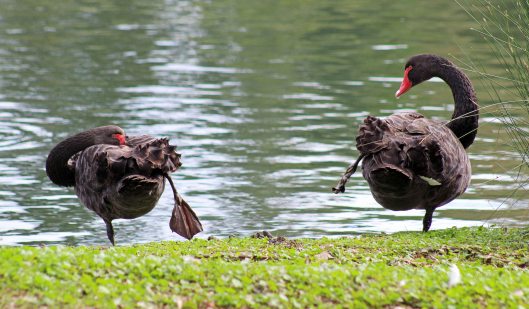
The Black swan (Cygnus atratus) is not common in Britain, where white Mute swans predominate, but they can still be seen here. Like peacocks, they were introduced to join the collections of exotic birds adorning the parks and estates of the wealthy, and some have since escaped those boundaries.

swan black (1)

Many people think of the Black swan as an Australian bird – it is, after all, both are the state symbol and the state emblem of Western Australia. However, scientists have discovered that the Black swan was present in New Zealand at the time of first human settlement, but had been hunted to extinction by the time Europeans first arrived in the early 1800s. In the 1860s, they were deliberately reintroduced from Australia and, judging by how quickly the local population grew, they may, at the same time, also have re-colonised New Zealand naturally – flown or been blown across the Tasman Sea from Australia.

swan black (2)
swan black (3)
swan black (4)
swan black (5)

The Black swan’s Latin name atratus means ‘to be clothed in black for mourning’. Perhaps that’s why some people believe it to be a harbinger of bad luck. Personally, I think the swan dressed all in black is a very stylish and elegant-looking bird (except, perhaps, when it’s doing its morning exercises 😉 ).

swan black (6)swan black (7)

Like Loading...

‘Dedicated Naturalist’: Crafty grey squirrels

02 Tuesday Aug 2016

Posted by sconzani in 'Dedicated Naturalist' Project, animals, nature

≈ 6 Comments

Tags

acorn, acorn weevil, Dr Mary Gillham, grey squirrel, Mary Gillham Archive Project, oak tree

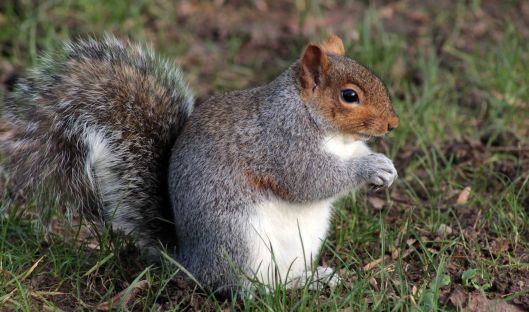
A snippet from my volunteer work on the ‘Dedicated Naturalist’ Project, helping to decipher and digitise, record and publicise the life’s work of naturalist extraordinaire, Dr Mary Gillham. This is an extract from a piece called ‘Oak trees and rabbits helped by those crafty grey squirrels’, written by Mary for the Cardiff Naturalists’ Society newsletter, June 1997:

We hear a lot about the squirrels’ intelligence in overcoming man’s best efforts to deter them from appropriating victuals put out for others. Recent work … has revealed their native wisdom in dealing with more natural foods.

160802 grey squirrel (1)

Many acorns are invaded by weevils, which are as acceptable as squirrel food as is the surrounding nut, but which shorten the life and viability of the fruit. Acorns collected are assessed for longevity by the squirrels, the infected ones eaten and the sound ones buried for another day. This guarantees them a surer food supply for winter and benefits the oak population by giving a higher than average viability of the acorns left to germinate and provide tender shoots for rabbits, rodents and sheep.

The squirrels’ ability … [is] from a high level of intellect evolved to better their own lot and – as part of the general wider plan governing the complex web of nature – to benefit others. Natural mechanisms of behaviour have more repercussions than are at first apparent!

160802 grey squirrel (2)
160802 grey squirrel (3)

For the full story about the Mary Gillham Archive Project, check out our website,  and follow our progress on Facebook and on Twitter.

Like Loading...
← Older posts
Newer posts →

About me

sconzani

sconzani

I'm a writer and photographer; researcher and blogger; birder and nature lover; countryside rambler and city strider; volunteer and biodiversity recorder.

View Full Profile →

Follow earthstar on WordPress.com

Enter your email address to follow this blog and receive notifications of new posts by email.

Recent blog posts

  • Gorse and its weevil April 5, 2026
  • Chiffchaffs chiffchaffing April 4, 2026
  • Bearded tit!!! April 3, 2026
  • A Portland Bill Kestrel April 2, 2026
  • A proliferation of Peacocks April 1, 2026

From the archives

COPYRIGHT

Unless otherwise acknowledged, the text and photographs on this blog are my own and are subject to international copyright. Nothing may be downloaded or copied without my permission.

Fellow Earth Stars!

  • Unknown's avatar
  • Unknown's avatar
  • Unknown's avatar
  • Unknown's avatar
  • Unknown's avatar
  • Unknown's avatar
  • Unknown's avatar
  • Unknown's avatar
  • Unknown's avatar
  • Unknown's avatar
  • Unknown's avatar
  • Unknown's avatar
  • Unknown's avatar
  • Unknown's avatar
  • Unknown's avatar
  • Unknown's avatar
  • Unknown's avatar
  • Unknown's avatar
  • Unknown's avatar
  • Unknown's avatar
  • Unknown's avatar
  • Unknown's avatar
  • Unknown's avatar
  • Unknown's avatar
  • Unknown's avatar
  • Unknown's avatar
  • Unknown's avatar
  • Unknown's avatar
  • Unknown's avatar
  • Unknown's avatar
  • Unknown's avatar
  • Unknown's avatar
  • Unknown's avatar
  • Unknown's avatar
  • Unknown's avatar
  • Unknown's avatar
  • Unknown's avatar
  • Unknown's avatar
  • Unknown's avatar
  • Unknown's avatar
  • Unknown's avatar
  • Unknown's avatar
  • Unknown's avatar
  • Unknown's avatar
  • Unknown's avatar
  • Unknown's avatar
  • Unknown's avatar
  • Unknown's avatar
  • Unknown's avatar
  • Unknown's avatar

Blog at WordPress.com.

Privacy & Cookies: This site uses cookies. By continuing to use this website, you agree to their use.
To find out more, including how to control cookies, see here: Cookie Policy
  • Subscribe Subscribed
    • earthstar
    • Join 642 other subscribers
    • Already have a WordPress.com account? Log in now.
    • earthstar
    • Subscribe Subscribed
    • Sign up
    • Log in
    • Report this content
    • View site in Reader
    • Manage subscriptions
    • Collapse this bar
 

Loading Comments...
 

You must be logged in to post a comment.

    %d