• ABOUT
  • BIRDING 2018
  • Birding 2019
  • BLOG POSTS
  • Butterflies 2018
  • Resources

earthstar

~ a celebration of nature

earthstar

Monthly Archives: June 2017

Enjoying the roses

10 Saturday Jun 2017

Posted by sconzani in flowers, nature

≈ Leave a comment

Tags

Dale Carnegie quote, perfume of roses, rose, roses, smelling the roses

170610 roses

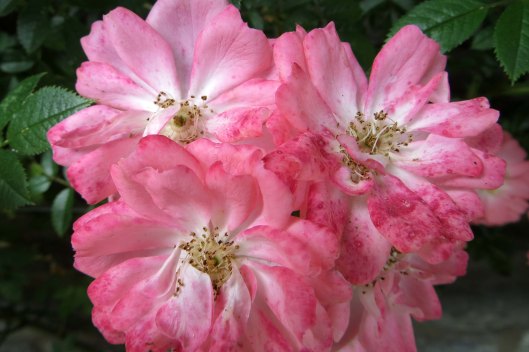
‘One of the most tragic things I know about human nature is that all of us tend to put off living. We are all dreaming of some magical rose garden over the horizon instead of enjoying the roses that are blooming outside our windows today.’ ~ Dale Carnegie

Like Loading...

Orchid overdose!

09 Friday Jun 2017

Posted by sconzani in flowers, nature, wildflowers

≈ 6 Comments

Tags

Anacamptis pyramidalis, Bee orchid, British flora, British orchids, Common spotted orchid, Cosmeston Lakes Country Park, Dactylorhiza fuchsii, Greater butterfly-orchid, native orchids, Ophrys apifera), orchid, Platanthera chlorantha, Pyramidal orchid

170609 Orchids Cosmeston

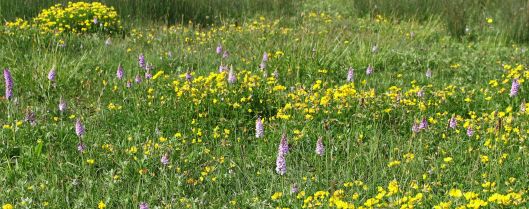
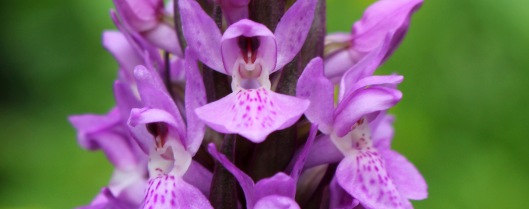
The meadows at Cosmeston Lakes Country Park are awash with orchids, Common spotted-orchids, (Dactylorhiza fuchsii), Bee orchids (Ophrys apifera), Pyramidal orchids (Anacamptis pyramidalis) and, in a secluded location off the beaten track, a tiny smattering of Greater butterfly-orchids (Platanthera chlorantha). To walk along the paths amongst these beauties is simply magical!

170609 Pyramidal orchids Cosmeston (1)
170609 Common spotted-orchid Cosmeston (1)
170609 Pyramidal orchids Cosmeston (3)
170609 Pyramidal orchids Cosmeston (2)
170609 Greater butterfly-orchid Cosmeston (2)
170609 Common spotted-orchid Cosmeston (3)
170609 Common spotted-orchid Cosmeston (2)
170609 Greater butterfly-orchid Cosmeston (3)
170609 Greater butterfly-orchid Cosmeston (1)
170609 Bee orchid Cosmeston (1)
170609 Bee orchid Cosmeston (2)
170609 Bee orchid Cosmeston (3)
Like Loading...

I made a wish …

08 Thursday Jun 2017

Posted by sconzani in flowers, nature, wildflowers

≈ 2 Comments

Tags

dandelion, dandelion seeds, making a wish, wishing on a dandelion

I made a wish, I cast my vote … but will my wish come true?

170608 Wishing on a dandelion

Like Loading...

Marsh orchids at Kenfig

07 Wednesday Jun 2017

Posted by sconzani in flowers, nature, wildflowers

≈ 3 Comments

Tags

British flora, British orchids, Dactylorhiza incarnata, Dactylorhiza praetermissa, Dactylorhiza purpurella, Early Marsh-orchid, Kenfig National Nature Reserve, native orchids, Northern Marsh-orchid, orchid, Southern marsh orchid

170607 Southern marsh-orchid (2)

Apart from 18 species of rust, there wasn’t a lot of fungi to be found during our foray at Kenfig National Nature Reserve last Saturday but what we did see was a lot of stunning marsh orchids.

170607 Southern marsh-orchid (1)
170607 Southern marsh-orchid (3)
170607 Southern marsh-orchid (4)
170607 Southern marsh-orchid (5)

Identifying these beauties can be extremely tricky, even for trained botanists, partly because they look very similar, partly because their colouration can vary quite a lot within species, and partly because they hybridise easily with each other. So, although the chances are that these are Southern Marsh-orchids (Dactylorhiza praetermissa), there may also be some Northern Marsh-orchids (Dactylorhiza purpurella) or a mixture of both. Whatever they are, they’re beautiful!

170607 Early marsh-orchid (1)
170607 Early marsh-orchid (2)

I am, however, quite sure about these next pictures. These are Early Marsh-orchids (Dactylorhiza incarnata). They thrive in damp calcareous habitats so the dune systems at Kenfig suit them perfectly – or, at least they will as long as the dune systems are managed to prevent scrub and trees taking hold: the orchids actually grow best when wind and rain are allowed to destabilise the dunes and move sand and plants around a bit.

Like Loading...

Hilary’s moths

06 Tuesday Jun 2017

Posted by sconzani in insects, nature

≈ 9 Comments

Tags

Bright-line Brown-eye, British moth, Buff ermine, Garden Grass-veneer, Ingrailed clay, moth, moths, The Spectacle

When I arrived at my friend Hilary’s house early Saturday morning, to hitch a ride to our monthly fungi foray, she had a wonderful surprise for me. She had put her moth trap out the previous night and had kept the moths for me to have a look at before she released them. (In case you’re wondering, trapping is really the only way to record and monitor the moth population, and it’s done in a way that usually causes no harm to the moths.) Here are some of the beauties I saw …

170606 Agriphila geniculea

One of the Crambidae or grass moths, the Garden Grass-veneer (Chrysoteuchia culmella)

170606 Buff ermine

I blogged about the White ermine recently – this is its cousin the Buff ermine (Spilosoma lutea).

170606 Heart and Dart (1)
170606 Heart and Dart (2)

Heart & Dart (Agrotis exclamationis), named for the heart- and dart-shaped markings on its wings.

170606 Ingrailed clay (1)
170606 Ingrailed clay (2)

Ingrailed clay (Diarsia mendica). Its name is a mystery but its caterpillars live on brambles and bilberries.

170606 Bright-line brown-eye

Bright-line Brown-eye (Lacanobia oleracea). Don’t you just love the common names of moths?

170606 Spectacle (1)
170606 Spectacle (2)

And, last but certainly not least, this amazing creature, for fairly obvious reasons, is called The Spectacle (Abrostola tripartita).

Like Loading...

Don’t try and tell me butterflies all look the same!

05 Monday Jun 2017

Posted by sconzani in insects, nature

≈ 4 Comments

Tags

British butterflies, butterflies, butterfly, Pararge aegeria, Speckled wood

These are just 3 of the 14 Speckled woods (Pararge aegeria) I encountered during a recent walk along my local coastal path, and just look at how different their faces are. They were all very obliging when it came to taking their portraits, or perhaps the way I was slowly moving my camera from side to side as I approached had momentarily mesmerised them.

170608 Speckled wood (1)
170608 Speckled wood (3)

My butterfly expert friend George says: ‘These fresh ones may be those which overwintered as larvae and are now just emerging, whereas those out earlier in the spring would have overwintered as pupae. It’s the only British butterfly which regularly overwinters in two different life history stages’. Thanks for the info, George.

170608 Speckled wood (2)

Like Loading...

Chasing the chasers

04 Sunday Jun 2017

Posted by sconzani in insects, nature, nature photography

≈ 6 Comments

Tags

British dragonflies, Broad-bodied Chaser, dragonfly, Libellula depressa

It’s dragonfly time!

170604 Broad-bodied chasers (1)

Just when the birds disappear behind the trees’ leafy boughs, the dragonflies emerge to take their place in Nature’s line-up of masterly aviators.

170604 Broad-bodied chasers (2)

Earlier this week I spent over 30 minutes watching these magnificent Broad-bodied chasers (Libellula depressa), two males circling and defending their territories from each other, keeping watch from their favourite perches, mating with two females, and those females then depositing their eggs amongst the water plants. It was magical!

170604 Broad-bodied chasers (3)

Like Loading...

Looking frazzled!

03 Saturday Jun 2017

Posted by sconzani in flowers, nature, wildflowers

≈ Leave a comment

Tags

British flora, British native flowers, British wildflowers, Ragged robin, Silene flos-cuculi

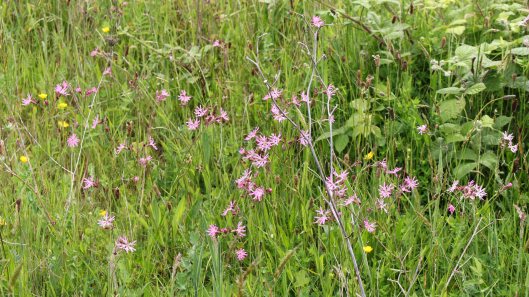
Ragged robin (Silene flos-cuculi) certainly lives up to its name. To me, it always looks a tad stressed, a touch frayed around the edges, a bit frazzled, as if it’s had a long hard day in the meadows, but its distinctive ragged shape does at least make it one of the easiest British wildflowers to identify.

Ragged robin (4)

I say ‘always’ but I don’t actually see this pretty native very often. Perhaps that’s because it prefers to dip its feet into the damper grass- and woodlands, though the word is that it has declined in recent years in many parts of Britain, mostly due to agriculture taking over its habitats.

Ragged robin (2)
Ragged robin (3)

It was, then, even more special to spot these plants in one of my local wild places this week, and I wasn’t the only one smiling at the sight. The bees were obviously pleased to see them too! Ragged Robin flowers from May through to August so I hope you’re lucky enough to spot some too.

Ragged robin (1)

Like Loading...

The bees that don’t buzz

02 Friday Jun 2017

Posted by sconzani in flowers, nature, wildflowers

≈ 6 Comments

Tags

Bee orchid, British orchids, British wildflowers, native orchids, Ophrys apifera), orchid

Finding my very first Bee orchids (Ophrys apifera) in a local park this week made my day! I know they’re designed to entice male bees to attempt mating with their flowers in order to facilitate pollination but to me they actually look like jolly smiling and laughing mouths.

170602 Bee orchid Ophrys apifera (1)
170602 Bee orchid Ophrys apifera (2)

I had to find out more, and I have to say that, when it comes to wild plants, I love the Plantlife website – as well as giving you the straight facts and figures about British plants, they also include the most interesting fact-lets, like these:

*  The aim of the mimicry is to attract passing male bees in the hope they will try to mate and thus aid pollination. In Britain, however, Bee orchids self-pollinate so the deception is not really required.
*  This wild flower was once called the “Humble Bee” orchid (Humble being a variation of Bumble).
*  According to Roman natural historian Pliny the Elder it was used by womenfolk to darken their eyebrows.
*  The Bee orchid is the County Flower of Bedfordshire.
*  In the Language of Flowers it stands for error and industry.

170602 Bee orchid Ophrys apifera (3)
170602 Bee orchid Ophrys apifera (4)
Like Loading...

Moths in the light of day

01 Thursday Jun 2017

Posted by sconzani in insects, nature

≈ 5 Comments

Tags

British moth, Camptogramma bilineata, Euclidia mi, moth, Mother Shipton, Silver-ground Carpet, Spilosoma lubricipeda, White Ermine, Xanthorhoe montanata, Yellow Shell

In the absence of butterflies, I seem to be discovering more moths. (I’m not sure why I’m not seeing many butterflies, though a friend says there’s often a May lull before a June explosion – let’s hope that’s true.)

170601 White ermine (1)
170601 White ermine (2)

White Ermine (Spilosoma lubricipeda)
I found this beauty, wearing the rather regal furry coat that gives it its name, lurking in a clump of tall grass. Flying between May and July, with an occasional second generation appearing in September–October, the White Ermine can be found throughout Britain in a variety of habitats, from heath- and moorland to gardens, hedgerows and woodlands.

170601 Silver-ground Carpet

Silver-ground Carpet (Xanthorhoe montanata)
This pretty member of the carpet group of moths was a lucky find at Cosmeston Lakes Country Park, where I chanced to spot it resting in a clump of grass in a small woodland area. It’s another May to July flier, and its caterpillars enjoy nothing better than a good munch on bedstraws, the plants of the Galium species.

170601 Yellow shell
170601 Mother Shipton

Yellow Shell and Mother Shipton
Both of these images were grab shots from a recent walk around the former rubbish tip that is now Grangemoor Park, in Cardiff. Moths have a habit of not wanting to be disturbed by camera lenses thrust in their direction, I notice, so my apologies that my photos are not very sharp.

I wish the Yellow shell (Camptogramma bilineata) (above left) hadn’t flitted off so quickly as I love its bright markings that resemble the line patterns found on some seashells, hence its name. It’s another common find throughout Britain, though it does have a preference for damper places. Its larvae feed on low-growing plants like sorrel and chickweed so look for it around that type of vegetation, usually between May and August.

Can you see why Mother Shipton (Euclidia mi) (above right) is so named? Those markings on her wings supposedly resemble a witch’s face and she is named for Old Mother Shipton, a 16th-century witch from Yorkshire who produced a series of dire prophecies. The moth, on the other hand, can be found all over Britain and Ireland, though has a particular fondness for the flower-rich meadows where grow the clovers, medics and lucernes its caterpillars like to eat.

Like Loading...
Newer posts →

About me

sconzani

sconzani

I'm a writer and photographer; researcher and blogger; birder and nature lover; countryside rambler and city strider; volunteer and biodiversity recorder.

View Full Profile →

Follow earthstar on WordPress.com

Enter your email address to follow this blog and receive notifications of new posts by email.

Recent blog posts

  • Bearded tit!!! April 3, 2026
  • A Portland Bill Kestrel April 2, 2026
  • A proliferation of Peacocks April 1, 2026
  • Little owl March 31, 2026
  • Distant seabirds March 30, 2026

From the archives

COPYRIGHT

Unless otherwise acknowledged, the text and photographs on this blog are my own and are subject to international copyright. Nothing may be downloaded or copied without my permission.

Fellow Earth Stars!

  • Unknown's avatar
  • Unknown's avatar
  • Unknown's avatar
  • Unknown's avatar
  • Unknown's avatar
  • Unknown's avatar
  • Unknown's avatar
  • Unknown's avatar
  • Unknown's avatar
  • Unknown's avatar
  • Unknown's avatar
  • Unknown's avatar
  • Unknown's avatar
  • Unknown's avatar
  • Unknown's avatar
  • Unknown's avatar
  • Unknown's avatar
  • Unknown's avatar
  • Unknown's avatar
  • Unknown's avatar
  • Unknown's avatar
  • Unknown's avatar
  • Unknown's avatar
  • Unknown's avatar
  • Unknown's avatar
  • Unknown's avatar
  • Unknown's avatar
  • Unknown's avatar
  • Unknown's avatar
  • Unknown's avatar
  • Unknown's avatar
  • Unknown's avatar
  • Unknown's avatar
  • Unknown's avatar
  • Unknown's avatar
  • Unknown's avatar
  • Unknown's avatar
  • Unknown's avatar
  • Unknown's avatar
  • Unknown's avatar
  • Unknown's avatar
  • Unknown's avatar
  • Unknown's avatar
  • Unknown's avatar
  • Unknown's avatar
  • Unknown's avatar
  • Unknown's avatar
  • Unknown's avatar
  • Unknown's avatar
  • Unknown's avatar

Blog at WordPress.com.

Privacy & Cookies: This site uses cookies. By continuing to use this website, you agree to their use.
To find out more, including how to control cookies, see here: Cookie Policy
  • Subscribe Subscribed
    • earthstar
    • Join 642 other subscribers
    • Already have a WordPress.com account? Log in now.
    • earthstar
    • Subscribe Subscribed
    • Sign up
    • Log in
    • Report this content
    • View site in Reader
    • Manage subscriptions
    • Collapse this bar
 

Loading Comments...
 

You must be logged in to post a comment.

    %d