• ABOUT
  • BIRDING 2018
  • Birding 2019
  • BLOG POSTS
  • Butterflies 2018
  • Resources

earthstar

~ a celebration of nature

earthstar

Yearly Archives: 2020

346/366 A fungal selection

11 Friday Dec 2020

Posted by sconzani in fungi, winter

≈ Leave a comment

Tags

British fungi, Common grey disco, Coral spot, Frosty bonnet, fungi, Jelly ear, King Alfred's Cakes, Lemon disco, Velvet shank, woodland fungi

Today, a selection of fungi spotted during my recent walks. Although I’ve named these fungi, my identifications are not based on microscopic examination and so cannot be positively confirmed.

The fungi are, I think, Coral spot (Nectria cinnabarina), Jelly ear (Auricularia auricula-judae), King Alfred’s cakes (Daldinia concentrica), and Velvet shank (Flammulina velutipes). And under the rotting logs in the woodland: Common grey disco (Mollisia cinerea), Lemon disco (Bisporella citrina), and Frosty bonnet (Mycena tenerrima).

Like Loading...

345/366 Italian Alder aphid

10 Thursday Dec 2020

Posted by sconzani in insects, leaves, nature, trees

≈ 3 Comments

Tags

aphids, Crypturaphis grassii, Italian Alder, Italian Alder aphid

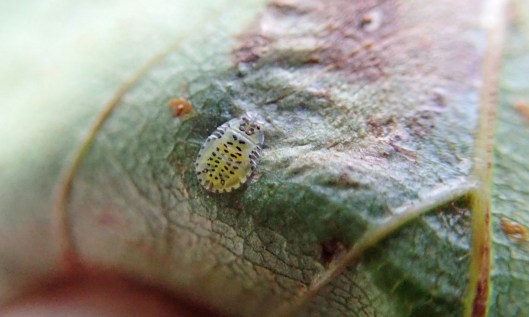
At first I thought this incredibly tiny creature was the early instar of a shield bug but, when I couldn’t find any pictures that resembled it on the British Bugs website, I turned to Twitter for help. Luckily, a botanist I know, Karen, had seen something similar posted recently in a Facebook group and very quickly supplied me with a name, Crypturaphis grassii, the Italian Alder aphid, so named because it’s only ever found on Italian Alder trees (Alnus cordata).
201210 Crypturaphis grassii (1)

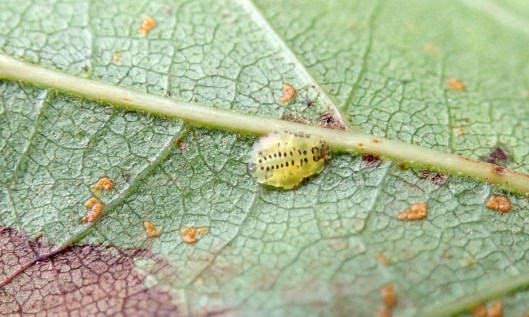
I found online a report published in 2011, on the first records of this species in Cornwall, which provides some interesting detail about these aphids. Apparently, Crypturaphis grassii is ‘native to southern Italy and Corsica and [was] first recorded in the UK in 1998’. Intrigued, I returned to the tree I’d found my first specimen on and found many more of these creatures, with variations in colour and markings. The report explains that:

Viviparous individuals [those able to birth live young] are yellowish-green to yellowish-brown, with brown spots extending along the dorsal surface, around the edge of the abdomen and on the head. Compound eyes are reddish in colour. … Immature apterae [wingless individuals] are similar but smaller, paler and lacking in dark spots, more translucent and slightly more elongate in shape. Oviparous apterae [wingless individuals that are able to lay eggs] are similar in size and shape to viviparous apterae but are brown in colour, with transverse darker abdominal stripes, rather than spots.
201210 Crypturaphis grassii (3)

201210 Crypturaphis grassii (4)
201210 Crypturaphis grassii (5)

The Italian Alder, on which the aphid feeds, was ‘commonly planted as a roadside, waterside and/or windbreak species’ during the 1980s, and, by 2011 when the report was published, the aphids had already spread widely throughout Britain, including having established colonies in the Vale of Glamorgan, which is where I found the aphids in my photographs.

201210 Crypturaphis grassii (2)

Citation: Luker, Sally. (2011). CRYPTURAPHIS GRASSII (STERNORRYNCHA: APHIDIDAE): FIRST RECORDS FOR CORNWALL. British Journal of Entomology and Natural History. 24. 205.

Like Loading...

344/366 Not just any stick

09 Wednesday Dec 2020

Posted by sconzani in fungi, trees, winter

≈ 1 Comment

Tags

blue fungi, British fungi, Cobalt crust, Terana caerulea

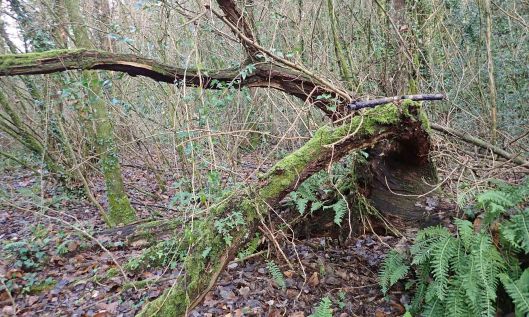
Do you see the small stick sitting on top of the big fallen branch, in the centre left of the photo? Well, that stick was the absolute highlight of my seven-and-a-half-mile walk yesterday.

201209 cobalt crust (1)

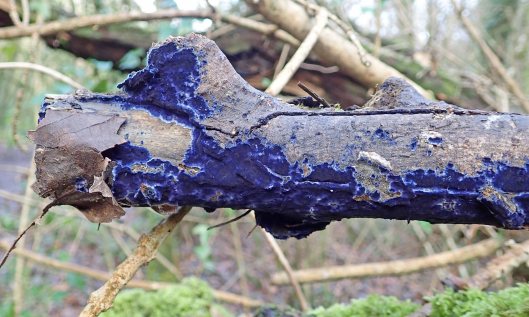
And below you can see why. This is the fungus Cobalt crust (Terana caerulea), an incredible colour to find growing on a stick in the middle of a now mostly brown woodland.

201209 cobalt crust (2)

This is the first time I’ve found Cobalt crust locally and I was/am just so excited to see it. I might just have to go back next week for another look (and, also, to get photos of the red elfcups that were just beginning to appear nearby).

201209 cobalt crust (3)

Like Loading...

343/366 Madame Mallard

08 Tuesday Dec 2020

Posted by sconzani in birds, winter

≈ Leave a comment

Tags

birding, birdwatching, British birds, female duck, female mallard, Mallard

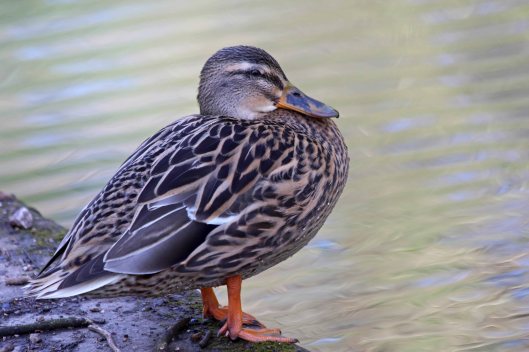
Female ducks, of various species – in this case Mallard, are often under-appreciated. But, with a little time and some close observation, I think we can all learn to appreciate the sublime subtly of their plumage, the tonal colour variations and the intricacy of their delicate patterning.

201208 female mallard

Like Loading...

342/366 Leaf mines: Cerodontha iridis

07 Monday Dec 2020

Posted by sconzani in insects, leaves, plants, winter

≈ 1 Comment

Tags

Cerodontha iridis, Iris foetidissima, Iris leaf miner, leaf mines, leaf-mining fly larvae, leafminer, Stinking iris

When I first recorded this leaf mine (found on 24 November at Cosmeston Lakes Country Park, where there is rather a lot of it in one particular area), it was named ‘Record of the Week’ by SEWBReC, the local biodiversity records centre, and hailed as only the third Welsh record (though the national recorder for this species later corrected this, as it seems several records from north Wales had not been added to the Welsh database at that stage). Since then, I’ve found these mines in five more locations, proving that once again this is an under-recorded leaf-mining species.

201207 Cerodontha iridis (1)

These leaf mines were made on Stinking iris (Iris foetidissima) by the fly Cerodontha iridis, and they can also be found in Britain on other Iris species, though I haven’t seen any of those. The mines occur in early autumn, though they can still be seen on Iris leaves later than that – I’m seeing them now, in early winter. Often the adult fly lays several eggs on one leaf and, after the larvae hatch and start munching, they create blotch mines, which may be quite large when several mines coalesce.

201207 Cerodontha iridis (2)
OLYMPUS DIGITAL CAMERA

You can read more detailed information about this species and see some excellent images, including close-ups of the larvae and their puparia, on the Bladmineerders website here.

201207 Cerodontha iridis (4)

Like Loading...

341/366 Blooming on the Barrage

06 Sunday Dec 2020

Posted by sconzani in wildflowers

≈ Leave a comment

Tags

#winter10, British wildflowers, Cardiff Bay, Cardiff Bay Barrage, winter wildflowers

During Tuesday’s walk across the Barrage in Cardiff Bay, I searched for as many wildflowers in bloom as I could find. I spotted just ten species, but it’s quite a small area and the grounds are frequently cut and strimmed by the Council’s grounds staff, so I thought that was a good number for the time of year. And the list included a few species I don’t see elsewhere, like Viper’s-bugloss (very stunted from the too-frequent cutting), Black nightshade, and Common stork’s-bill.

The wildflowers in the video are Daisy (Bellis perennis), Dandelion (Taraxacum officinale agg.), Common stork’s-bill (Erodium cicutarium), Viper’s-bugloss (Echium vulgare), Groundsel (Senecio vulgaris), Nipplewort (Lapsana communis), Black nightshade (Solanum nigrum), Herb Robert (Geranium robertianum), Smooth sow-thistle (Sonchus oleraceus), and Hoary mustard (Hirschfeldia incana).

Like Loading...

340/366 Ravens bonding

05 Saturday Dec 2020

Posted by sconzani in birds

≈ 2 Comments

Tags

birding, birdwatching, British birds, Cardiff Bay birding, Raven, Raven courtship, Raven pair bonding

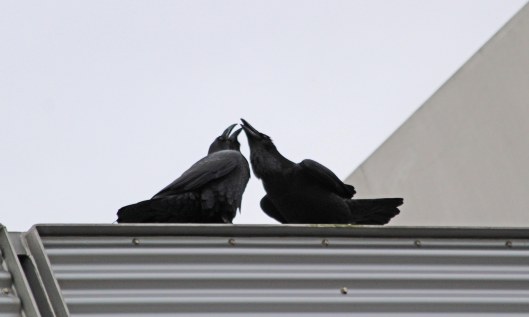
When I walked across Cardiff Bay’s Barrage and back on Tuesday, I was thrilled to spot the resident Ravens hopping about on one of the gantries. Then, as I watched, they paused next to each other and began mutual preening and murmuring in low, sweet tones.

201205 raven courtship (1)

It’s believed Ravens mate for life but even life partners need to reaffirm their pair bonding and these actions, plus dramatic aerial displays, are all important aspects of Raven courtship.

201205 raven courtship (2)

If you’ve not heard the sounds I’m talking about, the Raven love speak, there’s a short audio piece on the Audubon website here.

Like Loading...

339/366 The Nostoc is thriving

04 Friday Dec 2020

Posted by sconzani in fungi

≈ Leave a comment

Tags

cynobacterium, Nostoc

Rain may not be everyone’s favourite weather. It turns pathways to mud, may cause flooding in extreme weather events, and can make finding enough food difficult for many wild creatures, but one organism that positively thrives on the dampness is the cynobacterium Nostoc.

201204 nostoc (1)

Nostoc both fascinates and revolts me: fascinates because of its ability to survive in extreme conditions and its sinuous shapes, revolts because of its consistency and texture. I found this huge area of it on a walk along the coast a couple of days ago and just can’t resist sharing some photos. For more about Nostoc, see my blog Gloop, February 2018.

201204 nostoc (2)
201204 nostoc (3)
201204 nostoc (4)
201204 nostoc (5)
Like Loading...

338/366 Leaf mines: Acidia cognata

03 Thursday Dec 2020

Posted by sconzani in insects, leaves, plants, wildflowers

≈ Leave a comment

Tags

Acidia cognata, British flies, leaf mines, leaf-mining fly larvae, leaf-mining larvae, leafminer, Petasites fragrans, Winter heliotrope

Though the UK Fly mines website says the leaf mines of the little orange fly Acidia cognata are made in October-November, I’m sure the mines will still be visible this month, and possibly further into the winter, so this is one to look out for now when you’re out walking.

201203 acidia cognata (1)

One of the plants this fly mines – this is the one I’ve found these mines on – is Winter heliotrope (Petasites fragrans), which is particularly noticeable now, due to the pretty pink flowers that appear from November to February. Other favoured larval plants are Butterbur (Petasites hybridus), a plant very similar to Winter heliotrope, and Colt’s-foot (Tussilago farfara), the leaves of which don’t appear till after the flowers, so approximately from April onwards.

201203 acidia cognata (6)
201203 acidia cognata (7)

After hatching, the Acidia cognata larvae create a corridor on the upper surface of the leaf. As the larvae grow, the mine widens and eventually becomes more of a blotch, especially if there are several larvae on a single leaf and their mines meet. I’ve found these mines in two local patches of Winter heliotrope but not found any sign of them in other locations, so distribution does seem a little random. If you spot any, please do record your sightings as, like many leaf-miners where the adult flies are not often seen, this species is probably under-recorded.

201203 acidia cognata (2)
201203 acidia cognata (3)
201203 acidia cognata (4)
201203 acidia cognata (5)
Like Loading...

337/366 The anvil

02 Wednesday Dec 2020

Posted by sconzani in birds, winter

≈ Leave a comment

Tags

bird anvil, birding, birdwatching, British birds, snail shells, Song thrush, Song thrush's anvil

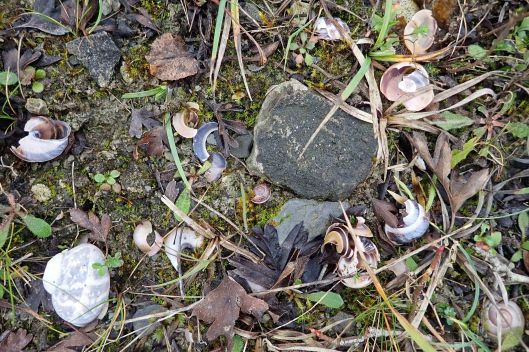
At the moment there are plenty of juicy berries on the trees and bushes, but when those disappear, or the ground’s too hard to probe for earthworms, snails become an important source of winter food for our Song thrushes. But how to get inside those protective shells to the body within? The answer is shown in the photo below – find a suitable stone, or similar hard object, and bash the snails on it.

201202 song thrush anvil

Like Loading...
← Older posts
Newer posts →

About me

sconzani

sconzani

I'm a writer and photographer; researcher and blogger; birder and nature lover; countryside rambler and city strider; volunteer and biodiversity recorder.

View Full Profile →

Follow earthstar on WordPress.com

Enter your email address to follow this blog and receive notifications of new posts by email.

Recent blog posts

  • Gorse and its weevil April 5, 2026
  • Chiffchaffs chiffchaffing April 4, 2026
  • Bearded tit!!! April 3, 2026
  • A Portland Bill Kestrel April 2, 2026
  • A proliferation of Peacocks April 1, 2026

From the archives

COPYRIGHT

Unless otherwise acknowledged, the text and photographs on this blog are my own and are subject to international copyright. Nothing may be downloaded or copied without my permission.

Fellow Earth Stars!

  • Unknown's avatar
  • Unknown's avatar
  • Unknown's avatar
  • Unknown's avatar
  • Unknown's avatar
  • Unknown's avatar
  • Unknown's avatar
  • Unknown's avatar
  • Unknown's avatar
  • Unknown's avatar
  • Unknown's avatar
  • Unknown's avatar
  • Unknown's avatar
  • Unknown's avatar
  • Unknown's avatar
  • Unknown's avatar
  • Unknown's avatar
  • Unknown's avatar
  • Unknown's avatar
  • Unknown's avatar
  • Unknown's avatar
  • Unknown's avatar
  • Unknown's avatar
  • Unknown's avatar
  • Unknown's avatar
  • Unknown's avatar
  • Unknown's avatar
  • Unknown's avatar
  • Unknown's avatar
  • Unknown's avatar
  • Unknown's avatar
  • Unknown's avatar
  • Unknown's avatar
  • Unknown's avatar
  • Unknown's avatar
  • Unknown's avatar
  • Unknown's avatar
  • Unknown's avatar
  • Unknown's avatar
  • Unknown's avatar
  • Unknown's avatar
  • Unknown's avatar
  • Unknown's avatar
  • Unknown's avatar
  • Unknown's avatar
  • Unknown's avatar
  • Unknown's avatar
  • Unknown's avatar
  • Unknown's avatar
  • Unknown's avatar

Blog at WordPress.com.

Privacy & Cookies: This site uses cookies. By continuing to use this website, you agree to their use.
To find out more, including how to control cookies, see here: Cookie Policy
  • Subscribe Subscribed
    • earthstar
    • Join 642 other subscribers
    • Already have a WordPress.com account? Log in now.
    • earthstar
    • Subscribe Subscribed
    • Sign up
    • Log in
    • Report this content
    • View site in Reader
    • Manage subscriptions
    • Collapse this bar
 

Loading Comments...
 

You must be logged in to post a comment.

    %d