• ABOUT
  • BIRDING 2018
  • Birding 2019
  • BLOG POSTS
  • Butterflies 2018
  • Resources

earthstar

~ a celebration of nature

earthstar

Yearly Archives: 2021

Yellow wagtails

05 Wednesday May 2021

Posted by sconzani in birds, spring

≈ 2 Comments

Tags

bird migration, birding, birdwatching, British birds, Cardiff Bay birding, spring migration, Yellow wagtail

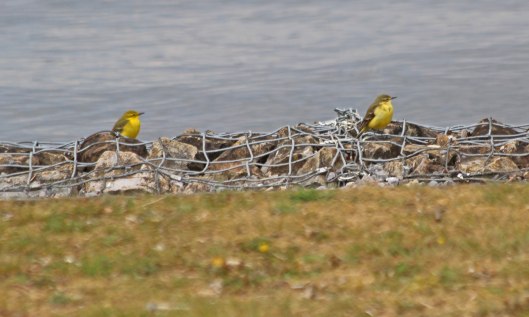
I’ve only seen Yellow wagtails a couple of times and never locally so, when they were reported flitting about Cardiff Bay, I went walking that way. On my first walk past where they’d been reported, I couldn’t find any – I dipped as they say in birder speak, and I’ve been dipping a bit lately so didn’t bother trying again the next day.
210505 yellow wagtails (1)

Then, last Friday, I thought I’d pop over to the wetlands reserve to see if I could find any Sedge warblers to photograph. Those birds were being very vocal though visually elusive but then I spotted a couple of birders I know who were obviously looking at something interesting. Turns out, it was a Whinchat, my first of the year – good news! – and then both chaps said they’d seen more Yellow wags that morning, dotting around the grassy areas on the Barrage.

210505 yellow wagtails (2)

So, a quick change of plan saw me strolling in that direction and, remarkably, the birds were still there. Four gorgeous little bursts of vibrant yellow, easily disturbed by walkers and dogs, but I managed to get some quality watching time and a few distant photos before they headed off over the water. Magic!

Like Loading...

Brimstone eggs

04 Tuesday May 2021

Posted by sconzani in insects

≈ 2 Comments

Tags

Brimstone, Brimstone butterfly, Brimstone eggs, British butterflies, butterfly eggs

This was exciting – or should that be eggs-citing?!

210504 brimstone eggs (1)

I was watching this female Brimstone, first sitting on a patch of brambles, then flying, seemingly haphazardly, through and around bushes along a woodland ride. I thought those bushes were Blackthorn but it turns out they were probably Buckthorn.

210504 brimstone eggs (2)

Then I realised the butterfly was egg-laying. In his Life Cycles of British & Irish Butterflies, Peter Eeles describes the process:

Females are particularly choosy about the plants on which they lay their eggs – even on sites with many buckthorns present, only a very small proportion are used by females, who typically lay on plants that are isolated, sheltered and growing in sunny areas, such as at the edge of a woodland ride.

210504 brimstone eggs (3)
210504 brimstone eggs (4)

The eggs start off pale green, as shown here, but soon turn yellow and then grey, as the little caterpillar develops. This is the first time I’ve seen Brimstone eggs and I’m fairly sure I’ll be able to find them again so I’m hoping to keep an eye on their progress.

Like Loading...

Whimbrel passing

03 Monday May 2021

Posted by sconzani in birds, spring

≈ Leave a comment

Tags

bird migration, birding, birdwatching, British birds, Whimbrel, Whimbrel migration

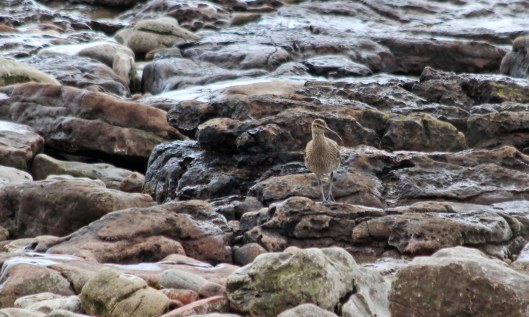
Last Thursday’s walk was very similar to walks I’ve written about previously (a Superb Sully stroll, 23 April 2019, and The Whimbrel and the Barwit, 30 April 2017), and the reason I repeat the walk, sometimes several times, at this time of year is hopefully to catch sight of migrating Whimbrel (and Bar-tailed godwit).

210503 whimbrel (3)

A local birding friend had reported sightings, and the tide was right – as the Bristol Channel has the second highest tidal range in the world, it’s best to look over high tide so the birds are relatively close to the coastal path.

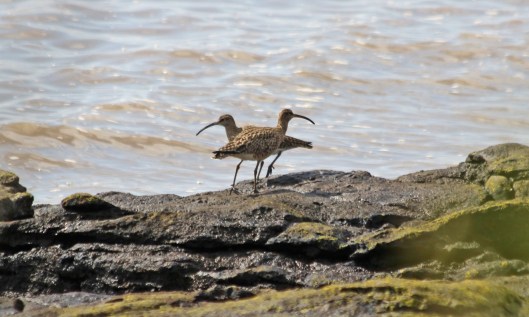
210503 whimbrel (2)

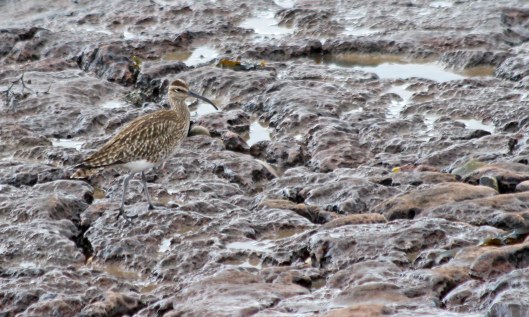
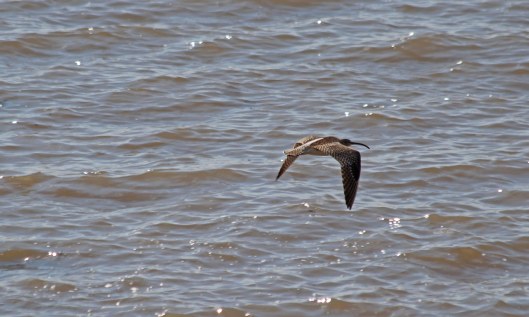
And I was lucky to see several Whimbrel. There were perhaps six or seven birds but I’m not sure of the exact number, as they were quite flighty, and would head off along the beach when disturbed by people and their dogs walking along the path and the rocks.

210503 whimbrel (4)

These birds are part of the annual migration, seen locally during April and May, when Whimbrel that over-winter in West Africa move through to their breeding grounds in more northerly latitudes (according to the Bird Guides website, Iceland, Scandinavia, the Faroes and Shetland are their likely breeding locations.)

210503 whimbrel (1)

Like Loading...

New and noticed

02 Sunday May 2021

Posted by sconzani in nature, spring, wildflowers

≈ Leave a comment

Tags

British wildflowers, Bugle, Cleavers, Common vetch, Spring colour, spring wildflowers, Wood spurge, Woodruff

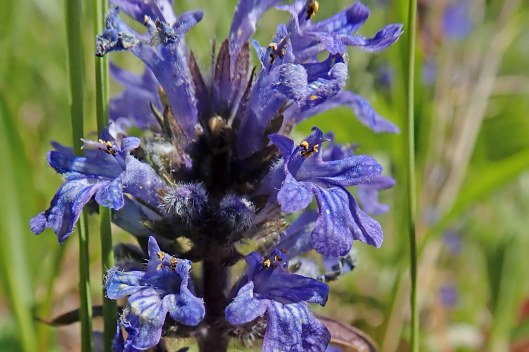
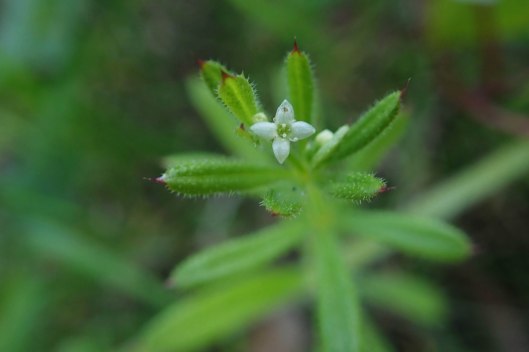
More luscious wildflowers have begun blooming in recent days. Here are some I’ve noticed:

210502 bugle (1)

As I witnessed when taking these photos, bumblebees adore Bugle (Ajuga reptans). I can’t think of a better reason to plant some in your own wildflower garden.

210502 common vetch

You can tell just by looking at its flower shape that Common vetch (Vicia sativa) is a member of the pea family. Apparently, in ancient times, people cultivated this plant and ate its seed pods, just as we do today with peas and beans.

210502 cleavers

I’ll bet you all have a bunch of names for this plant, Cleavers (Galium aparine). Sticky Willy is a favourite.

210502 woodruff

After I recognised the leaves of this plant, I revisited the spot in my local woodland each week until, finally, the beautiful flowers began to open. This is the sweet-smelling Woodruff (Galium odoratum).

210502 wood spurge

This plant was growing quite close to where I found the Woodruff and was a first sighting for me. Gardeners will, I’m sure, recognise it as a Euphorbia because Wood spurge (Euphorbia amygdaloides) is the ancestor of today’s popular garden varieties of Spurge.

Like Loading...

Butterfly as Cow parsley

01 Saturday May 2021

Posted by sconzani in insects, plants

≈ 6 Comments

Tags

British butterflies, Butterfly camouflage, Cow parsley, female Orange-tip, Orange-tip butterfly

I think you’ll agree this female Orange-tip butterfly has nailed this camouflage scenario.

210501 orange-tip (1)

She kept completely and utterly still, even when I got within a couple of inches of her for some macro photos. Amazing effort!

210501 orange-tip (2)

Like Loading...

Unfurling

30 Friday Apr 2021

Posted by sconzani in plants, spring

≈ Leave a comment

Tags

British ferns, fern frond, fern frond unfurling, ferns, signs of spring

’Tis that magical time of year when the woodland floor comes to life, with wildflowers blooming and the sap rising up to green the trees and the fronds of ferns slowly unrolling.

IMG_4879

The curled up top of a young fern frond is called a crosier, sometimes a fiddlehead. When its first cells are touched by the warming sunlight of spring, they begin to grow; as they grow, they expand; as they expand, they lengthen; and as they lengthen, they unfurl.

210430 ferns unfurling (1)

There is perhaps no more powerful symbol of the reawakening of the land in springtime than a fern frond unfurling.

Like Loading...

Blethering tam, the hedge chicken

29 Thursday Apr 2021

Posted by sconzani in birds, nature

≈ Leave a comment

Tags

birding, birdwatching, British birds, Common whitethroat, Sylvia communis, Whitethroat

I love the wonderful variety of vernacular names that have been given to the Whitethroat (Sylvia communis), local references to the bird’s love of hedgerows and bramble patches and farm fields, and its rasping singing style, and its plumage.

Flora Britannica lists the following, amongst many others: Beardie (Scotland) and Wheetie whey beard (Angus); Blethering tam (Scotland); Charlie muftie (Northamptonshire) and Muffit (Stirlingshire); Nettle creeper (North Yorkshire); Hay jack (Norfolk) and Haysucker (Devon) and Hedge chicken (Shropshire).

Flora Britannica also notes how fragile British bird populations can be: ‘There was a dramatic fall in numbers of Whitethroats after 1968, which was traced to severe drought in the southern Sahara and the death of large numbers of migrating birds which used up their fat reserves on their journey from further south in Africa’. Judging by the volume of ‘blethering’ I’m hearing in local parks and fields, the Whitethroat population has recovered well from that setback in the ‘60s but, given the global climate emergency, the future of all our beautiful birds is uncertain.

210429 whitethroat (3)

Like Loading...

Making a splash

28 Wednesday Apr 2021

Posted by sconzani in coastal fauna, fish

≈ 2 Comments

Tags

British fish, Cardiff Bay, Chelon labrosus, Grey mullet, Thick-lipped grey mullet, Thick-lipped mullet, Thicklip mullet

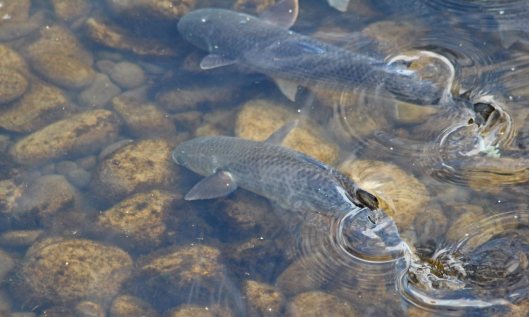
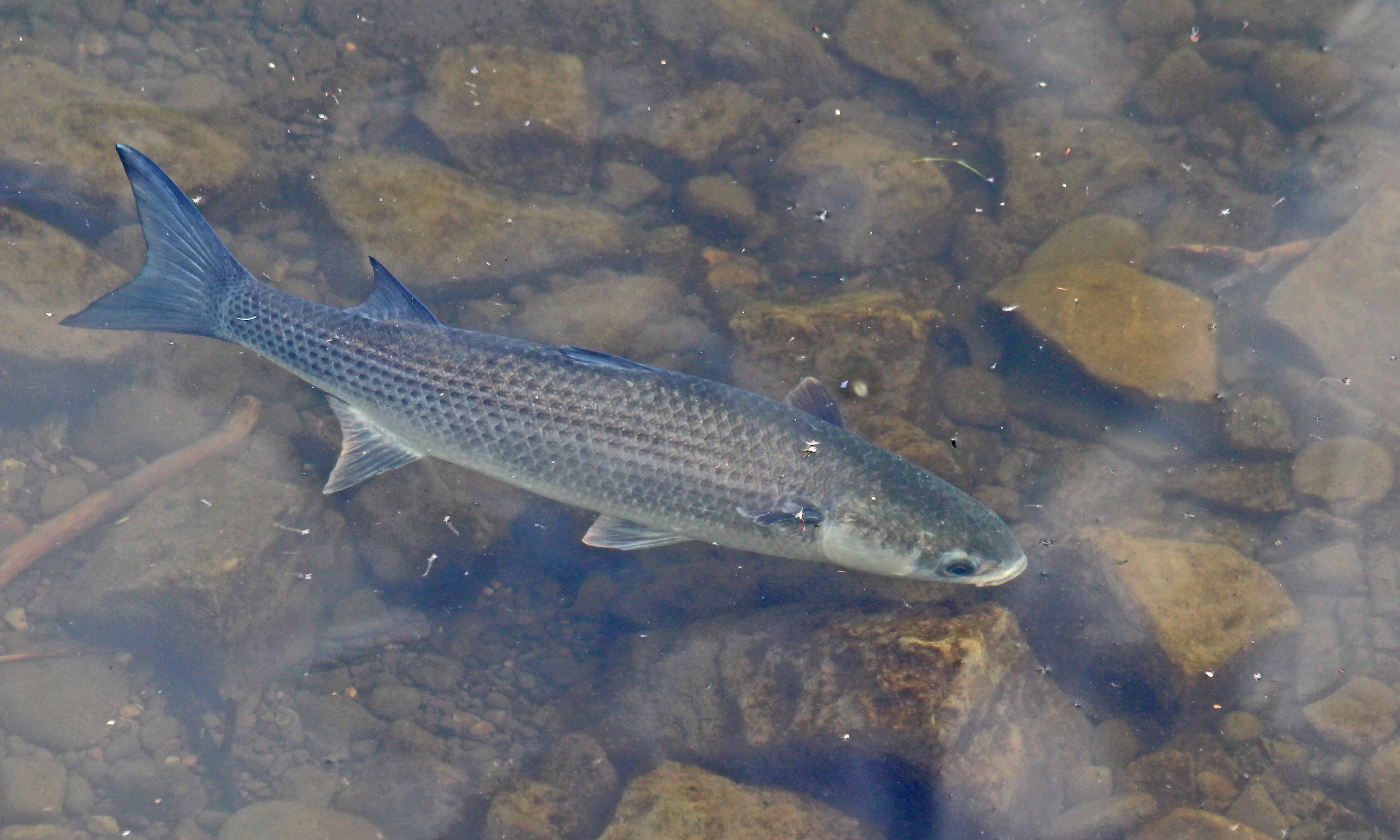
I was taking a break from not seeing the birds I was looking for on the edge of Cardiff Bay yesterday, when a loud splash drew my eye down to the water. These fish, a shoal of at least ten, perhaps more, were swirling and weaving around each other, presumably feeding.

Officially known as Thick-lipped mullet (Chelon labrosus), they are also frequently called Thick-lipped grey mullet, Thicklip mullet, Grey mullet and various other combinations of those words.

I wasn’t able to judge their size accurately, but it seems they can grow up to 75cm in length, though they mature when around 30cm at between four and six years of age. They thrive in ‘low salinity environments’ like Cardiff Bay and are often ‘found in closely shoaling schools near the surface’, just like those I saw.

They feed ‘on organic and algal material found on the upper surface sediments and mud, with the indigestible material being filtered out by the gill rakers’. I’m not sure I’d want to put any sediments or mud from Cardiff Bay in my mouth, so their filtration system must be first rate to survive the pollution.

I have to admit that they were very calming to watch, and I gained some appreciation for why people have aquariums, though I do prefer creatures to be wild and free.
Credit: Today’s fishy facts came from the UK Fish info website.

Like Loading...

The little belter

27 Tuesday Apr 2021

Posted by sconzani in birds

≈ Leave a comment

Tags

birding, birdwatching, British birds, dunnock, Hedge sparrow

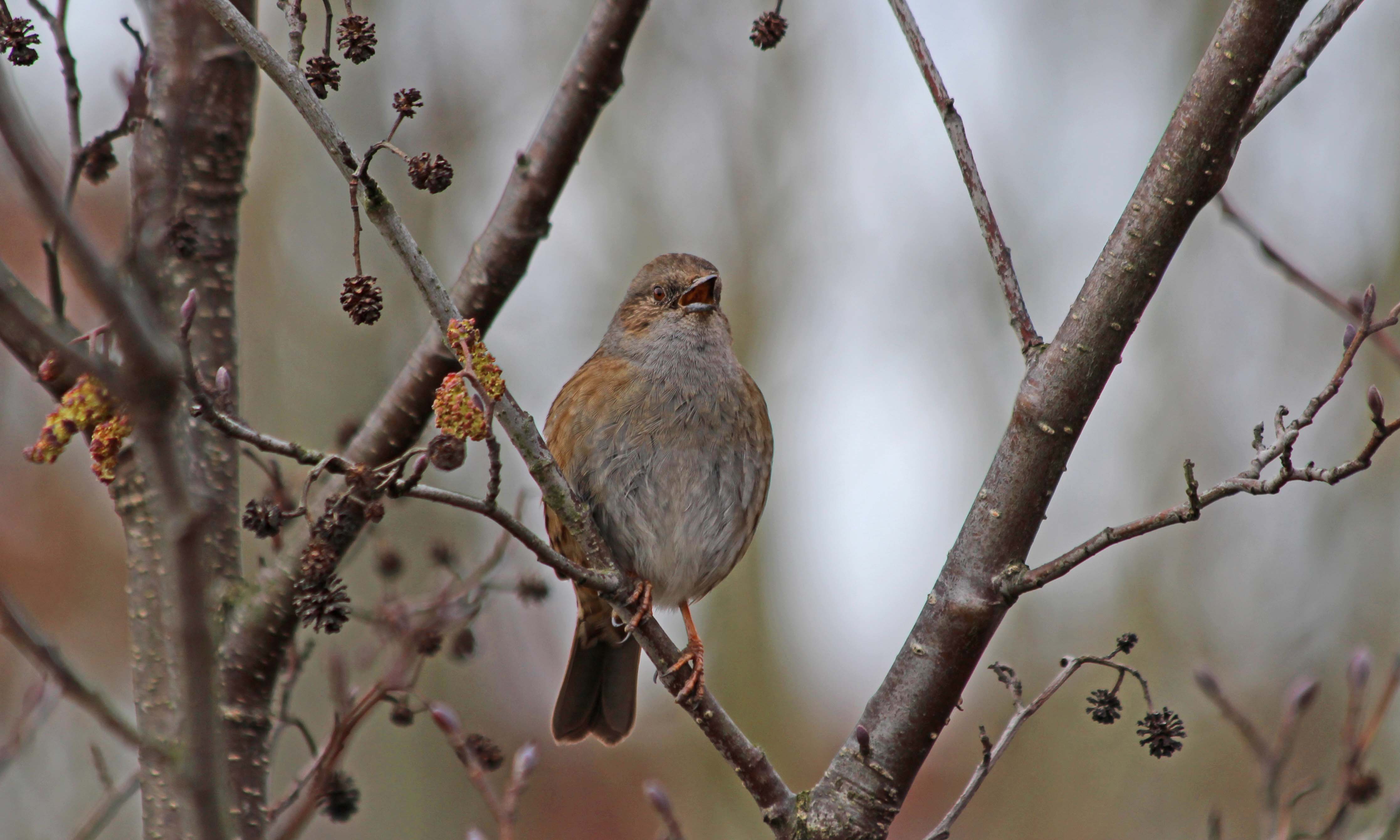
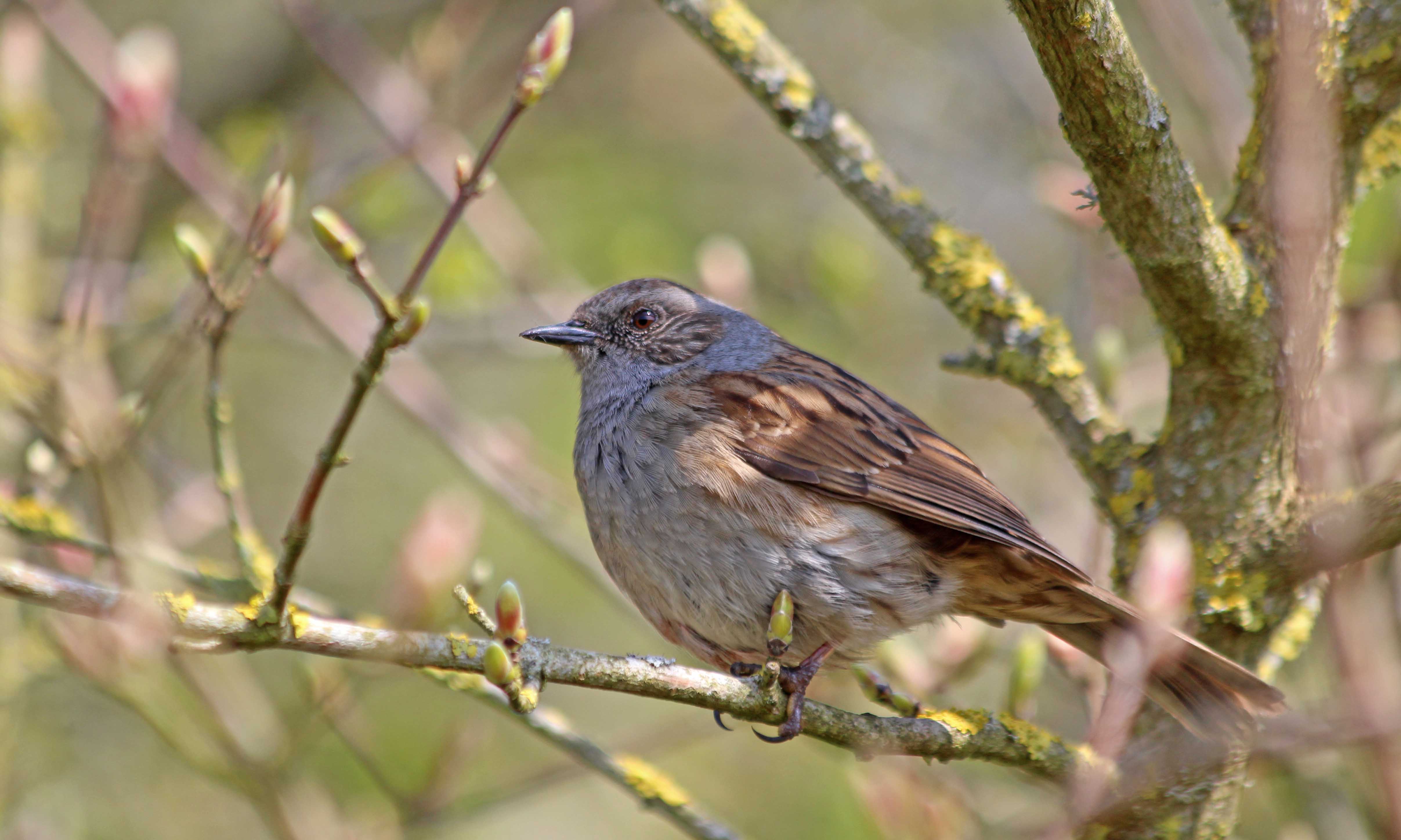
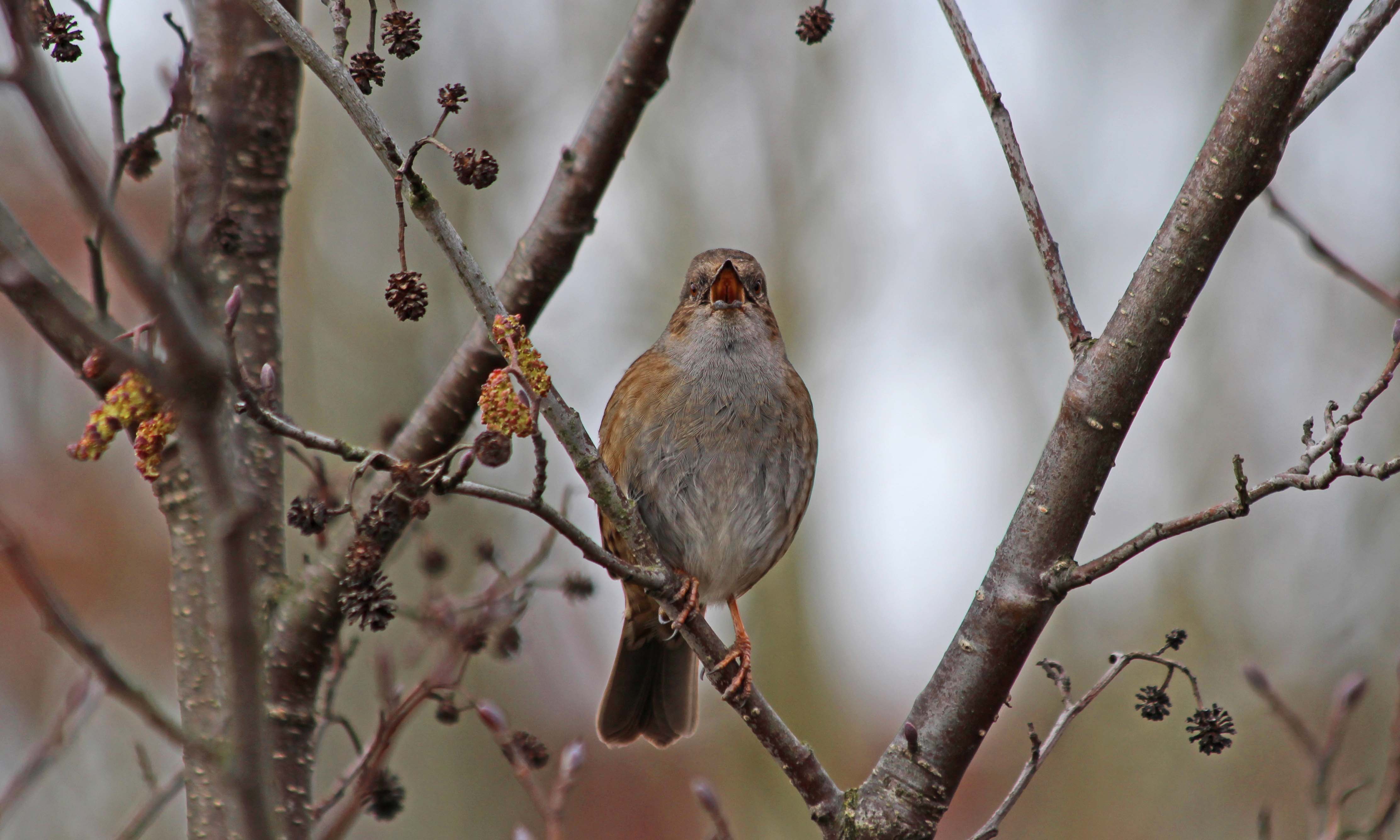
Today, just a visual celebration of the little brown bird that’s been entertaining me in recent weeks, belting out its joyful song from the top of every hedge and bush. Once, and still to many, the Hedge sparrow; now, officially, the Dunnock; always, a stunning little songster.

210427 dunnock (1)210427 dunnock (2)210427 dunnock (3)

Like Loading...

Hitchhiker

26 Monday Apr 2021

Posted by sconzani in insects

≈ Leave a comment

Tags

British insects, caddisfly

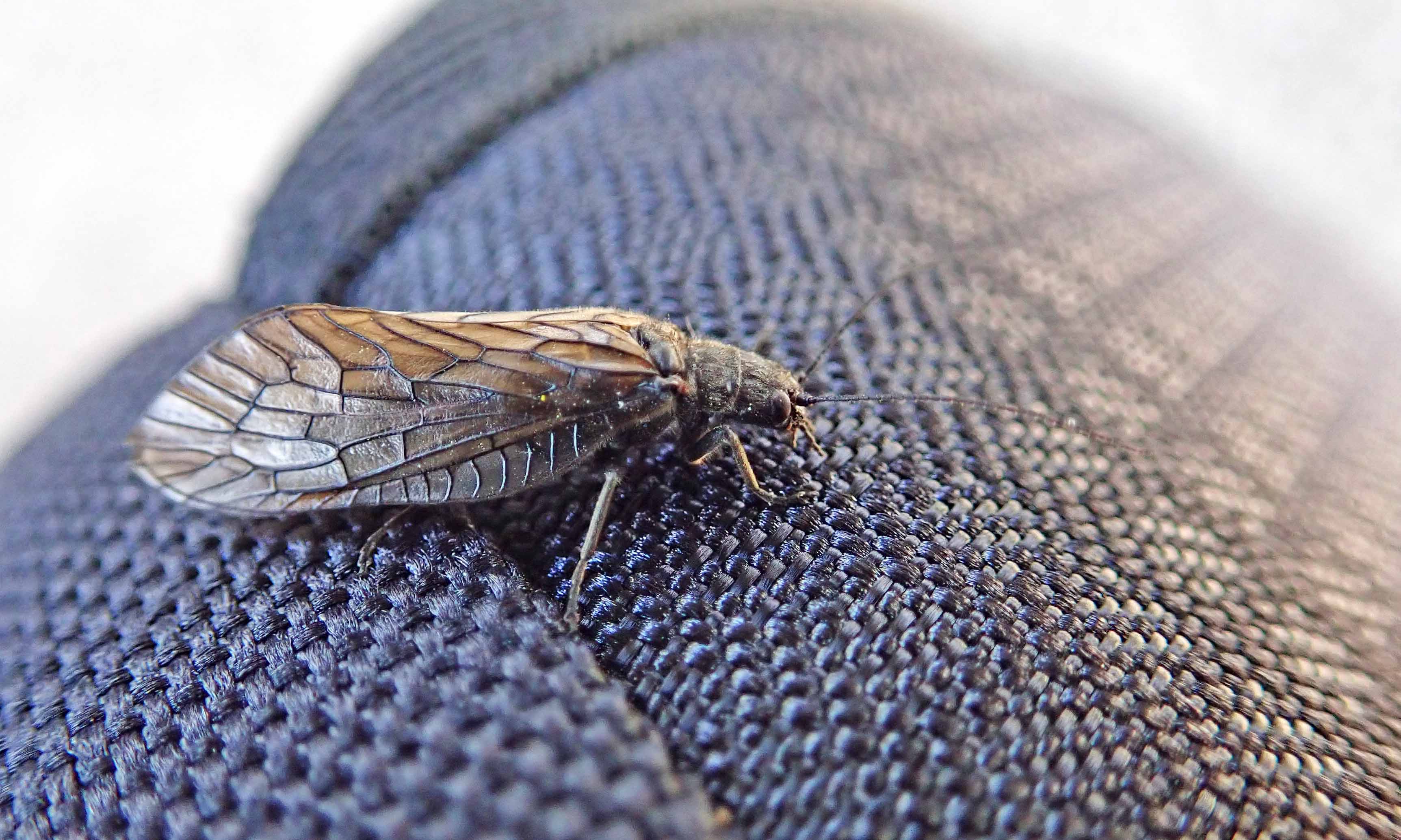
Something flitted close past my ear, pulling my hair, making a low thwack sound. I rubbed my neck, threaded my fingers through loose strands of hair, thinking an insect had landed on me … nothing. I pulled off and checked my cap … still nothing. Thirty minutes or so later, as I had finished my meander around the park, I took off my backpack to put my camera away and found this hitchhiker, a Caddisfly.

210426 caddisfly (1)

Even as I unzipped my bag to get my macro camera, it remained motionless. I got down within inches of its face and took several photos, yet still it didn’t move. Eventually, wanting to get it off my backpack, I had to poke it gently with my finger and even then it just climbed on to my finger and moved slowly around my hand. I don’t think it was injured at all, just remarkably laid back about human contact. Finally, I managed to persuade it to climb on to a nearby bush where it could snooze in the sun in peace.

210426 caddisfly (2)

Like Loading...
← Older posts
Newer posts →

About me

sconzani

sconzani

I'm a writer and photographer; researcher and blogger; birder and nature lover; countryside rambler and city strider; volunteer and biodiversity recorder.

View Full Profile →

Follow earthstar on WordPress.com

Enter your email address to follow this blog and receive notifications of new posts by email.

Recent blog posts

  • My first Holly blue April 10, 2026
  • Alder flies April 9, 2026
  • Lily beetle April 8, 2026
  • First bee-flies April 7, 2026
  • Bloody-nosed beetle April 6, 2026

From the archives

COPYRIGHT

Unless otherwise acknowledged, the text and photographs on this blog are my own and are subject to international copyright. Nothing may be downloaded or copied without my permission.

Fellow Earth Stars!

  • Unknown's avatar
  • Unknown's avatar
  • Unknown's avatar
  • Unknown's avatar
  • Unknown's avatar
  • Unknown's avatar
  • Unknown's avatar
  • Unknown's avatar
  • Unknown's avatar
  • Unknown's avatar
  • Unknown's avatar
  • Unknown's avatar
  • Unknown's avatar
  • Unknown's avatar
  • Unknown's avatar
  • Unknown's avatar
  • Unknown's avatar
  • Unknown's avatar
  • Unknown's avatar
  • Unknown's avatar
  • Unknown's avatar
  • Unknown's avatar
  • Unknown's avatar
  • Unknown's avatar
  • Unknown's avatar
  • Unknown's avatar
  • Unknown's avatar
  • Unknown's avatar
  • Unknown's avatar
  • Unknown's avatar
  • Unknown's avatar
  • Unknown's avatar
  • Unknown's avatar
  • Unknown's avatar
  • Unknown's avatar
  • Unknown's avatar
  • Unknown's avatar
  • Unknown's avatar
  • Unknown's avatar
  • Unknown's avatar
  • Unknown's avatar
  • Unknown's avatar
  • Unknown's avatar
  • Unknown's avatar
  • Unknown's avatar
  • Unknown's avatar
  • Unknown's avatar
  • Unknown's avatar
  • Unknown's avatar
  • Unknown's avatar

Blog at WordPress.com.

Privacy & Cookies: This site uses cookies. By continuing to use this website, you agree to their use.
To find out more, including how to control cookies, see here: Cookie Policy
  • Subscribe Subscribed
    • earthstar
    • Join 642 other subscribers
    • Already have a WordPress.com account? Log in now.
    • earthstar
    • Subscribe Subscribed
    • Sign up
    • Log in
    • Report this content
    • View site in Reader
    • Manage subscriptions
    • Collapse this bar
 

Loading Comments...
 

You must be logged in to post a comment.

    %d