• ABOUT
  • BIRDING 2018
  • Birding 2019
  • BLOG POSTS
  • Butterflies 2018
  • Resources

earthstar

~ a celebration of nature

earthstar

Category Archives: autumn

242/366 Bottoms on brambles

29 Saturday Aug 2020

Posted by sconzani in autumn, insects, nature, plants

≈ 4 Comments

Tags

blackberries, brambles, flies, insects on blackberries, insects on bramble, wasp

I don’t know about you but, when I’m out walking at this time of year, I’m often tempted to pluck and devour one of the luscious-looking blackberries growing on the bramble-covered fences and hedgerows.

200829 bottoms on brambles (1)
200829 bottoms on brambles (2)

Well, not any more. Not now I’ve seen how many flies like to suck at them and run their dirty little feet all over them. Just look at all those fly bottoms!

200829 bottoms on brambles (3)
200829 bottoms on brambles (4)

And let’s not even mention the very real possibility of getting stung by a wasp that’s jealously guarding ‘its’ berries. From now on, the berries are all for the beasties!

200829 bottoms on brambles (5)
200829 bottoms on brambles (6)
Like Loading...

241/366 Migrants : Spotted flycatcher

28 Friday Aug 2020

Posted by sconzani in autumn, birds, nature

≈ Leave a comment

Tags

autumn migration, bird migration, birding, birdwatching, British birds, Cosmeston Lakes Country Park, Spotted flycatcher

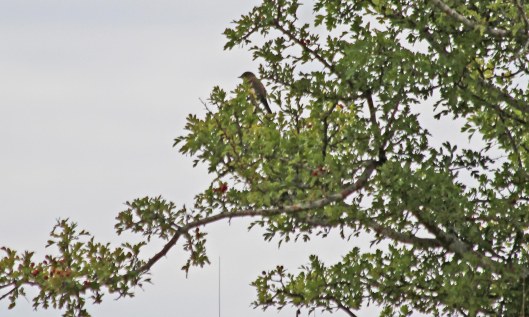
It’s over a month since I saw my first Spotted flycatchers for 2020, the family group I encountered on my visit to Slade Wood back on 21 July. But, now I’m seeing them much more regularly, in ones and twos, as they pass through my local area on their autumn migration. I spotted my first migrant on 5 August, then had to wait a week until my second sighting on the 13th but, since then, have seen them almost every time I’ve been to Cosmeston Lakes Country Park, with 2 on the 17th, 4 on the 18th, 1 on the 20th, 3 on the 22nd, 2 on the 24th, and 3 on the 26th. In fact, I tend to go to Cosmeston much more often at this time of year specifically to see what migrants I can find, and I look especially for these stunning little birds, as I love to watch their fly-catching aerobatics.

This slideshow requires JavaScript.

Like Loading...

238/366 Midge galls

25 Tuesday Aug 2020

Posted by sconzani in autumn, insects, nature, plants, wildflowers

≈ 2 Comments

Tags

British galls, British insects, British wildflowers, Cosmeston Lakes Country Park, galls on wild carrot, Kiefferia pericarpiicola, midge gall, Wild carrot

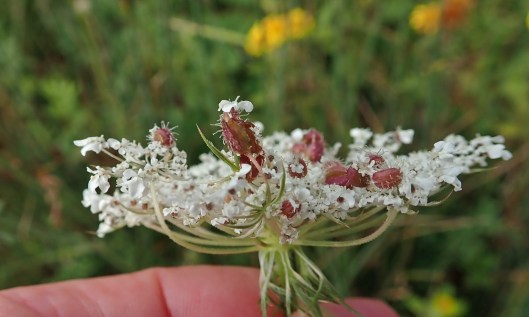
I was looking around at the various wildflowers yesterday at Cosmeston, seeing what insects might be about, when I noticed these odd growths on some of the Wild carrot flower heads. I split one open with my finger nail and a miniscule orange blob fell out; turns out that was the larva of a midge with the long-winded name of Kiefferia pericarpiicola.

200825 Kiefferia pericarpiicola (1)

The galls start off green (below left), before turning pinkish and eventually brown. According to the Nature Spot website, these galls can be seen from late summer through to autumn, after which the larvae will leave the gall and drop down to the soil to pupate. The midge only occurs in southern parts of Britain at the moment – and I only found two previous records in the Welsh biodiversity database – but perhaps that will change as our climate continues to warm and the midge flies further afield. It’s also possible, of course, that this insect is under-recorded – it seems the midge itself is almost never seen, only its gall creations.

OLYMPUS DIGITAL CAMERA
Like Loading...

237/366 Migrants : Whinchat

24 Monday Aug 2020

Posted by sconzani in autumn, birds, nature

≈ Leave a comment

Tags

autumn migration, bird migration, birding, birdwatching, British birds, Clep yr eithin, Cosmeston Lakes Country Park, Crec yr eithin, Saxicola rubetra, Whinchat

The scientific name for the Whinchat is Saxicola rubetra which, apparently, means ‘small rock-dweller’, a reference to where this delightful little bird likes to make its home: saxicola is from the Latin saxum, meaning ‘rock’, and incola, meaning ‘dwelling’, and, also Latin, rubetra means ‘a small bird’.
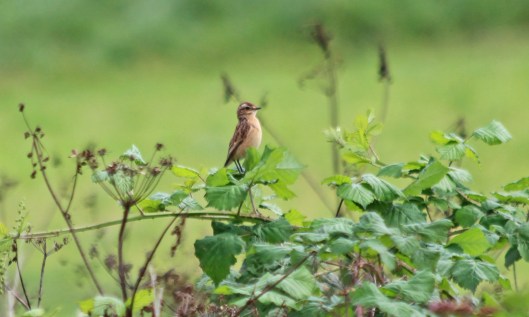
200824 whinchat (4)

In Welsh, the Whinchat is Crec yr eithin or sometimes Clep yr eithin, eithin being the Welsh word for gorse (also known as furze or whin), where the bird is often seen perching; and crec and clep both meaning clap, a reference to the bird’s call.

200824 whinchat (1)

Here in south Wales, the Whinchat is a passage migrant, meaning I only get the chance to see it locally in autumn – it passes through in spring as well, of course, but, as it’s then in a hurry to reach its breeding grounds, it usually just flies straight over. Both the gorgeous little Whinchats in my photos stopped over at Cosmeston Lakes Country Park last week, feeding up before they set out on their long migration flight south, crossing the English Channel, western Europe, the Med, North Africa, and finally the Sahara Desert before arriving at their wintering grounds in central and southern Africa.
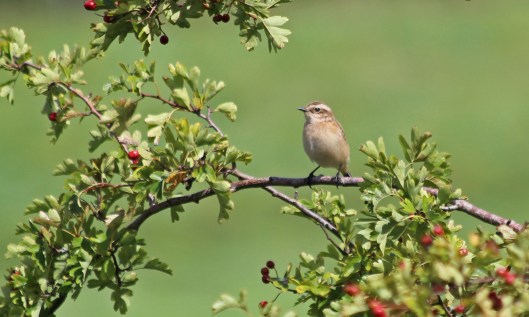
200824 whinchat (2)

According to the RSPB website, Whinchat numbers in Britain declined more than 50% between 1995 and 2008, though the reason for that decline is not known. I imagine the hazards of their long migratory flight might well have something to do with it. Safe journey, little Whinchats!
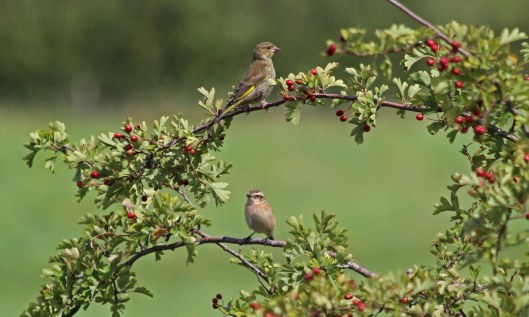
200824 whinchat (3)

I love this photo with the Greenfinch – just shows how small the Whinchat really is.

Like Loading...

233/366 Migration, migration, migration

20 Thursday Aug 2020

Posted by sconzani in autumn, birds, nature

≈ 2 Comments

Tags

autumn migration, bird migration, birding, British birds, Pied flycatcher, Redstart, Sedge warbler, Whitethroat, Willow warbler

While yesterday’s Clouded yellow butterfly was migrating northwards on the hot southerlies, our local birds were heading in the opposite direction, to their various wintering spots around the Mediterranean and in locations all over the African continent. They started heading south in ever-increasing numbers about three weeks ago – at least, that’s when I started noticing this year’s autumn migration. Blackcaps, Chiffchaffs, Swallows, Sand and House martins … for a lot of these little birds their long journey has already begun.

200820 pied flycatcher

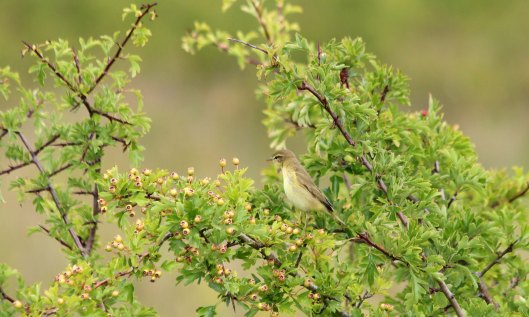
The first noteworthy bird for me was a Pied flycatcher, found by a local birder at Cosmeston one day, and I just happened to be right there he re-found it the following day. That was 22 July, the day I also began to notice how many Willow warblers there were everywhere – I’ve been seeing good numbers of these lovely little birds almost daily since then.

200820 willow warbler

On 2 August, this Sedge warbler was a surprise find in the hedgerow on a local farm. With any luck, it will be well on its way to sub-Saharan Africa by now.

200820 sedge warbler

Also on 2 August, in that same hedgerow, I noticed a lot of Whitethroats, and they’re also passing through in small numbers every day now.

200808 whitethroat (1)
200808 whitethroat (2)

I’ve seen a Redstart at Cosmeston a few times – these photos were taken on 4 August and 16 August in almost the exact same location. Might it be the same bird that has perhaps found the place to its liking and is trying to fatten up before flying onward?

200820 redstart (1)
200820 redstart (2)

In recent days, I’ve also been seeing some of my favourite migrants, Spotted flycatchers (several now seen) and Whinchat (just one so far) but I’m going to post separate blogs about those superb little birds.

Like Loading...

231/366 They’re back!

18 Tuesday Aug 2020

Posted by sconzani in autumn, birds, nature

≈ Leave a comment

Tags

autumn bird migration, birding, birdwatching, British birds, Cardiff Bay, Ely embankment, Turnstone, Turnstone breeding plumage

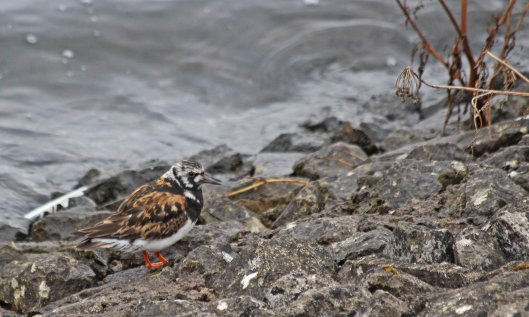
As well as seeing the Common sandpiper I blogged about yesterday, Friday’s walk along the Ely embankment made me smile for another reason – the Turnstones are back!

200818 turnstone (1)

Fresh from their breeding season in Greenland and parts of northern Canada, looking very handsome in their darker summer plumage, perhaps still a little weary from those long-haul flights, but they’ve made it.

200818 turnstone (2)

I love these characterful little birds. Most of the time they might seem a bit dull, plodding purposefully along the tide line, turning over pebbles and seaweed in their never-ending search for insect snacks, or sitting, a little hunched over, snoozing in the sun.

200818 turnstone (3)

Yet I’ve also seen a large group of them, in a coastal town in southern England, in the midst of a huge storm, when the ferocity of the waves had driven them up off the beach on to an expanse of grass where large puddles had accumulated, behaving like crazy kids, chattering away happily to each other while they ran in and out of the puddles, excited, splashing and flapping their wings, and so obviously having fun.

200818 turnstone (4)

There were four Turnstones on the embankment on Friday. Maybe they’re locals, or maybe they just stopped over for a rest before heading further south, but I’m sure I’ll be seeing many more of these special birds in the weeks to come.

Like Loading...

227/366 Guelder rose

14 Friday Aug 2020

Posted by sconzani in autumn, nature, plants

≈ 2 Comments

Tags

autumn berries, autumn colour, Guelder rose

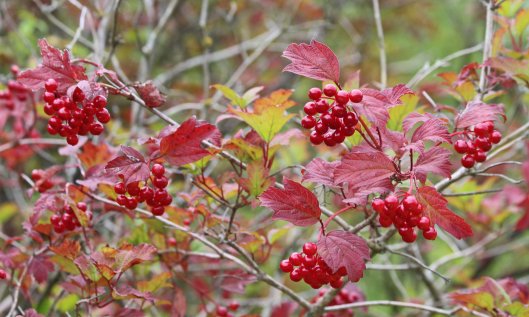
You thought I was joking with yesterday’s post about autumn arriving early this year, didn’t you? Well, the gorgeous colours of this Guelder rose look very autumnal to me. Bring on the glorious shades of autumn!

200814 guelder rose

Like Loading...

333/365 A Bay full of birds

29 Friday Nov 2019

Posted by sconzani in autumn, birds, nature

≈ 4 Comments

Tags

birding, birdwatching, Black-headed gull, British birds, Cardiff Bay, Cardiff Bay birds, Chiffchaff, Coot, Goosander, Great Crested Grebe, Kingfisher, Linnet, Pied wagtail, Turnstone

What a wonderful long walk I had around Cardiff Bay today! Here are some of the birds I spotted along the way.

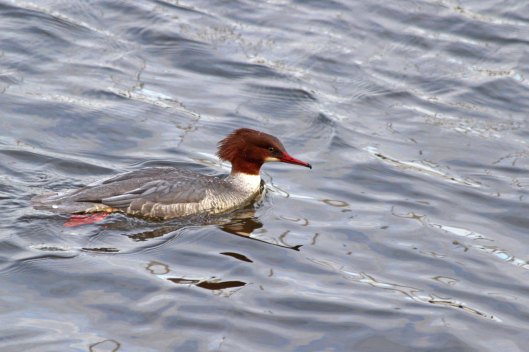
191129 1 goosander

There were nine Goosanders in total, four in the River Ely where it flows in to the Bay and another five further east, in the Bay proper.

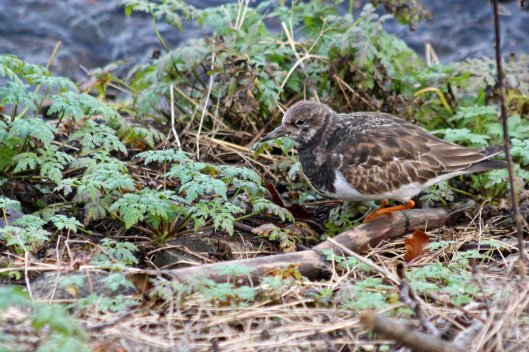
191129 2 turnstone

My favourite little Turnstones, again four along the Ely embankment and more near Mermaid Quay.

191129 3 linnet

Linnets, a small flock of six flitting about the grassy slopes of the Barrage.

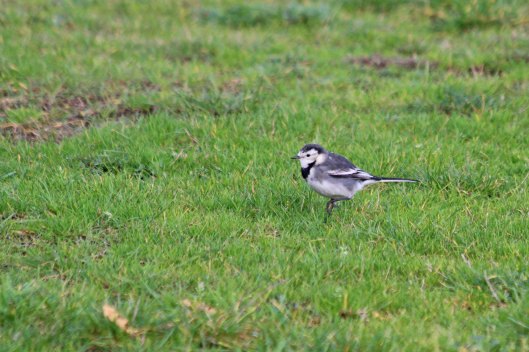
191129 4 pied wagtail

Pied wagtails – I lost count of these cheery little characters who appeared wherever I wandered.

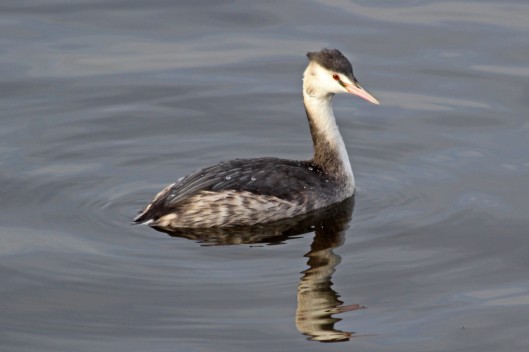
191129 5 Great crested grebe

One of several Great crested grebes that live in the Bay, constantly diving for fish.

191129 6 black-headed gull

I was getting ‘the look’ from this Black-headed gull, in the pond at the wetlands reserve, for not supplying food!

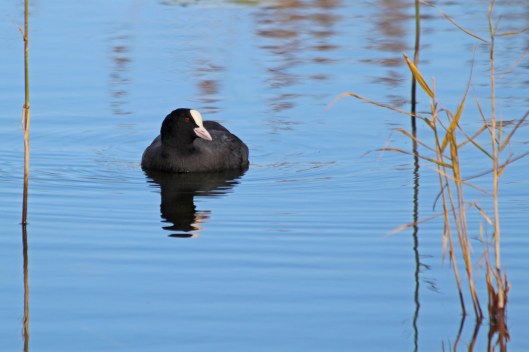
191129 7 coot

This Coot was also hoping for food.

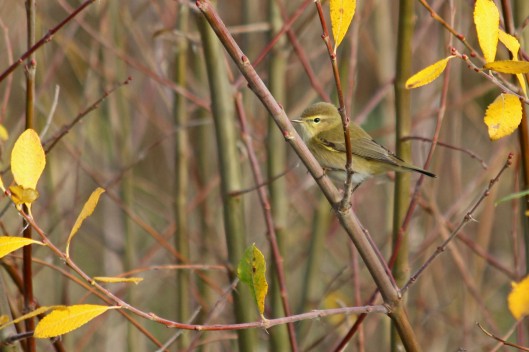
191129 8 chiffchaff

This Chiffchaff was a surprise – it’s either very late migrating or has decided to over-winter in Britain, as some now do. Interestingly, I saw a Chiffchaff yesterday too, in a different location.

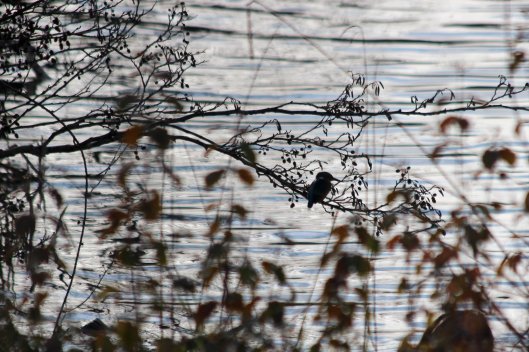
191129 9 kingfisher

The best possible end to my walk – a Kingfisher peep-peep-peeped in to the pool near Hamadryad Park and perched on a branch over the water.

Like Loading...

331/365 Groovy bonnets

27 Wednesday Nov 2019

Posted by sconzani in autumn, fungi, nature

≈ 3 Comments

Tags

autumn fungi, Bonnet fungi, British fungi, Grooved bonnet, Mycena fungi, Mycena polygramma

Finally some fungi I can identify with confidence because, as Pat O’Reilly explains on the First Nature website,

Cap colour is rarely of much help when you are struggling to identify a Mycena, as they vary so much with age, location, humidity and growing substrate. If you look closely at the stem of a Grooved Bonnet you will see that it has longitudinal striations, whereas other common bonnet mushrooms have smooth stems.

So, the striated stems you can, hopefully, see in my second photo below prove that these lovely little bonnets I found growing in a tree in the grounds of a local church are … taaa daaa! … Grooved bonnets (Mycena polygramma).

191127 grooved bonnets (4)
191127 grooved bonnets (2)
191127 grooved bonnets (1)
191127 grooved bonnets (3)
Like Loading...

330/365 A good day for lichens

26 Tuesday Nov 2019

Posted by sconzani in autumn, lichen, nature, trees

≈ 4 Comments

Tags

British lichens, lichen, lichen on trees, yellow lichen

191126 lichen (1)

‘There is a low mist in the woods—It is a good day to study lichens. The view so confined—it compels your attention to near objects—& the white background reveals the disks of the lichens distinctly—They appear more loose-flowing—expanded—flattened out—the colors brighter—for the damp—The round yellowish green lichens on the white pines loom through the mist (or are seen dimly) like shields—whose devices you would fain read.’  ~  Henry David Thoreau, A Year in Thoreau’s Journal 1851, Penguin, New York, 1993

191126 lichen (2)191126 lichen (3)191126 lichen (4)

Like Loading...
← Older posts
Newer posts →

About me

sconzani

sconzani

I'm a writer and photographer; researcher and blogger; birder and nature lover; countryside rambler and city strider; volunteer and biodiversity recorder.

View Full Profile →

Follow earthstar on WordPress.com

Enter your email address to follow this blog and receive notifications of new posts by email.

Recent blog posts

  • Busy Blue tits March 17, 2026
  • Cuttlebones March 16, 2026
  • No woodland here March 15, 2026
  • Family comes first March 14, 2026
  • Local Little egrets March 13, 2026

From the archives

COPYRIGHT

Unless otherwise acknowledged, the text and photographs on this blog are my own and are subject to international copyright. Nothing may be downloaded or copied without my permission.

Fellow Earth Stars!

  • Unknown's avatar
  • Unknown's avatar
  • Unknown's avatar
  • Unknown's avatar
  • Unknown's avatar
  • Unknown's avatar
  • Unknown's avatar
  • Unknown's avatar
  • Unknown's avatar
  • Unknown's avatar
  • Unknown's avatar
  • Unknown's avatar
  • Unknown's avatar
  • Unknown's avatar
  • Unknown's avatar
  • Unknown's avatar
  • Unknown's avatar
  • Unknown's avatar
  • Unknown's avatar
  • Unknown's avatar
  • Unknown's avatar
  • Unknown's avatar
  • Unknown's avatar
  • Unknown's avatar
  • Unknown's avatar
  • Unknown's avatar
  • Unknown's avatar
  • Unknown's avatar
  • Unknown's avatar
  • Unknown's avatar
  • Unknown's avatar
  • Unknown's avatar
  • Unknown's avatar
  • Unknown's avatar
  • Unknown's avatar
  • Unknown's avatar
  • Unknown's avatar
  • Unknown's avatar
  • Unknown's avatar
  • Unknown's avatar
  • Unknown's avatar
  • Unknown's avatar
  • Unknown's avatar
  • Unknown's avatar
  • Unknown's avatar
  • Unknown's avatar
  • Unknown's avatar
  • Unknown's avatar
  • Unknown's avatar
  • Unknown's avatar

Blog at WordPress.com.

Privacy & Cookies: This site uses cookies. By continuing to use this website, you agree to their use.
To find out more, including how to control cookies, see here: Cookie Policy
  • Subscribe Subscribed
    • earthstar
    • Join 668 other subscribers
    • Already have a WordPress.com account? Log in now.
    • earthstar
    • Subscribe Subscribed
    • Sign up
    • Log in
    • Report this content
    • View site in Reader
    • Manage subscriptions
    • Collapse this bar
 

Loading Comments...
 

You must be logged in to post a comment.

    %d