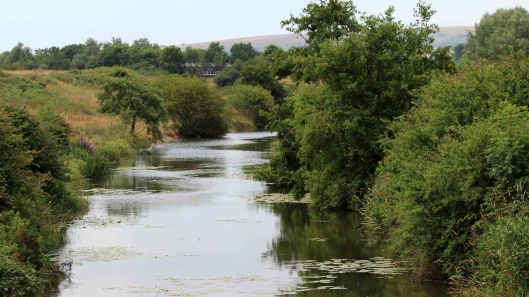
• ABOUT
  • BIRDING 2018
  • Birding 2019
  • BLOG POSTS
  • Butterflies 2018
  • Resources

earthstar

~ a celebration of nature

earthstar

Category Archives: insects

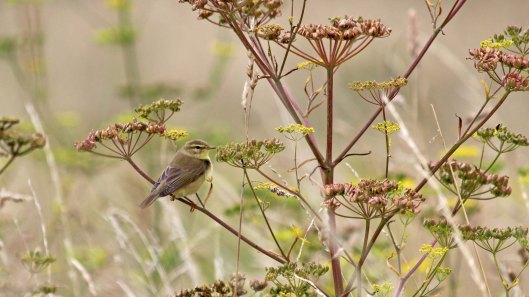
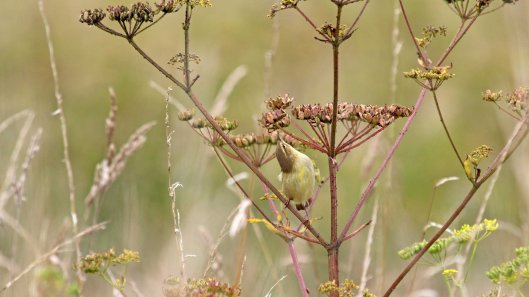
The aphid-eaters

15 Wednesday Aug 2018

Posted by sconzani in birds, insects, nature, plants

≈ 8 Comments

Tags

aphids, birding, birdwatching, British birds, Cosmeston, Cosmeston Lakes Country Park, ladybirds, Wild parsnip, Willow warbler, Willow warbler migration

180815 willow warbler (5)

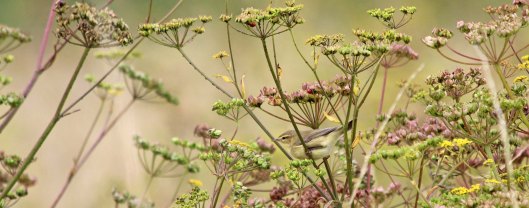
Do you remember last Friday I blogged about the abundance of ladybirds at Cosmeston? They were feasting on the huge numbers of aphids on the Wild parsnip plants. Well, it turns out the ladybirds have had some competition for those aphids this week, as the migrating Willow warblers move through. I don’t think we need to worry though – there are more than enough aphids to go around!

180815 willow warbler (1)180815 willow warbler (2)180815 willow warbler (3)180815 willow warbler (4)

Like Loading...

The quickness of the wing

12 Sunday Aug 2018

Posted by sconzani in insects, nature

≈ Leave a comment

Tags

British butterflies, butterflies, butterfly, Lycaena phlaeas, Small copper

‘The quickness of the wing deceives the eye.’ So write Brett Westwood and Stephen Moss in their brilliant book Wonderland: A year of Britain’s wildlife day by day (John Murray, London, 2017). They’re describing those butterflies that ‘fly so haphazardly and so fast that they are little more than hallucinations, a flicker of motion at the edge of our vision, making us question whether we’ve seen one at all.’

180812 small copper (1)
180812 small copper (2)

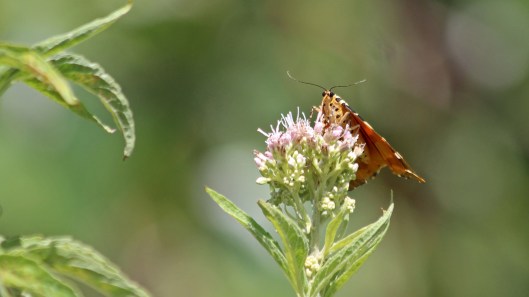
The Small copper (Lycaena phlaeas) is one such butterfly but, I find, with a pinch of stealth, a sprinkle of luck and a tablespoonful of patience, it will settle and even pose for photos. And the outcome is no hallucination but rather a delicious creation, even a gourmet would admire.

180812 small copper (3)
180812 small copper (4)
180812 small copper (5)
180812 small copper (6)
Like Loading...

What do ladybirds eat?

10 Friday Aug 2018

Posted by sconzani in flowers, insects, ladybird, nature, plants, wildflowers

≈ 1 Comment

Tags

7-spot ladybirds, aphids, Cosmeston, Cosmeston Lakes Country Park, harlequin ladybird, ladybirds, Wild parsnip

I googled ‘What do ladybirds eat?’ today because I was trying to work out why there are so many ladybirds – about a 50 / 50 split between 7-spots and Harlequins – on the Wild parsnip plants at Cosmeston Lakes Country Park. It turns out ladybirds are particularly keen on aphids and, as you can see in some of my photos, there are rather a lot of aphids on these plants. Good news for the ladybirds!

180810 ladybirds on wild parsnip (1)
180810 ladybirds on wild parsnip (2)
180810 ladybirds on wild parsnip (3)
180810 ladybirds on wild parsnip (4)
180810 ladybirds on wild parsnip (5)
180810 ladybirds on wild parsnip (6)
180810 ladybirds on wild parsnip (7)
180810 ladybirds on wild parsnip (8)
180810 ladybirds on wild parsnip (9)
180810 ladybirds on wild parsnip (10)
180810 ladybirds on wild parsnip (11)
180810 ladybirds on wild parsnip (12)
180810 ladybirds on wild parsnip (13)
180810 ladybirds on wild parsnip (14)
Like Loading...

Two more lovelies

08 Wednesday Aug 2018

Posted by sconzani in insects, nature

≈ 4 Comments

Tags

British butterflies, butterflies, butterfly, Clouded yellow, Colias croceus, Lasiommata megera, Wall brown, Wall butterfly

As I mentioned in yesterday’s post, last Sunday’s birding didn’t only produce some nice bird sightings, it also featured an abundance of beautiful butterflies, including two newbies for me.

180808 clouded yellow (1)
180808 clouded yellow (2)

I’ve been keeping an eye out for Clouded yellows (Colias croceus) for a couple of months now, as these immigrants can fly in from the southern parts of Europe and even north Africa as early as June. The occasional sighting has been reported in my area, with one being seen at Lavernock as recently as last Friday, but I hadn’t managed to spot one myself … until last Sunday.

180808 clouded yellows (3)

Ace birder Gareth spotted the first as we walked along the coastal path at Rumney Great Wharf, on the eastern side of Cardiff, and then a second was spotted soon afterwards. And then, as we retraced our steps back to the starting point of our walk, I spied two more, obviously a male and female engaged in their pre-mating aerial display. Luckily, their focus on mating meant I was able to get some open-wing photos, which, though not particularly sharp, are quite difficult with this butterfly, as it usually zooms along at quite a rate of knots.

180808 wall (1)

The second butterfly, which was again spotted by Gareth, was a first-ever sighting for me. This is a Wall (Lasiommata megera, until recently called a Wall brown), so named because of its liking for sunning itself on rocks, banks and, you guessed it, walls (though this one was not living up to its name!).

180808 wall (3)
180808 wall (2)

This particular Wall had been in the wars and was missing half of one wing and a third of the other, but was still flying well enough. I’m not sure I would have spotted it myself as, in flight, it looked very much like a small Meadow brown or a Gatekeeper, so I’m particularly grateful for Gareth’s sharp eyes.

I’ve had a fabulous summer of butterfly sightings, with my species total now on 34, but will these two be the final two species I see for 2018? Only time will tell.

Like Loading...

The Painted Ladies

06 Monday Aug 2018

Posted by sconzani in insects, nature

≈ Leave a comment

Tags

British butterflies, butterflies, butterfly, migrating butterlies, Painted Lady

A google search on “Painted Ladies” will take you to San Francisco, as this is the name used by Americans to describe the local Victorian and Edwardian buildings, particularly houses, that have been repainted in multiple colours to highlight the details of their architectural style.

180806 painted lady (2)

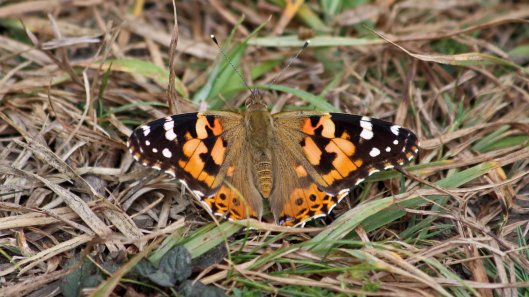
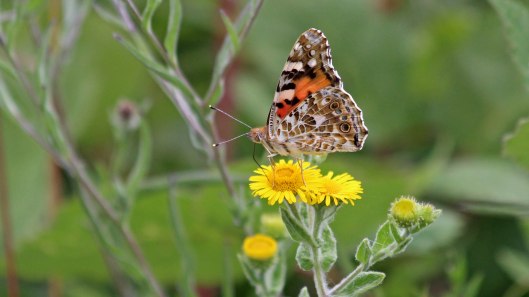
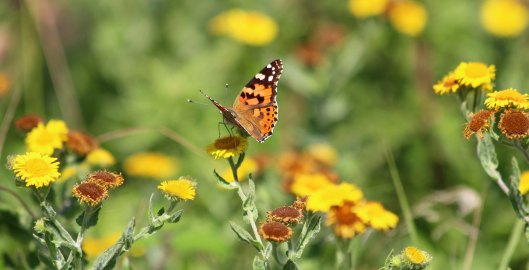
Britain’s Painted ladies have also been painted in multiple colours but not by human hands – these are the masterpieces of Mother Nature.

180806 painted lady (3)

And they are not static – they fly, and not just around our local meadows and gardens – these beauties fly all the way from North Africa and the Middle East to dazzle us with their kaleidoscope of colour.

180806 painted lady (4)

Some years – 2009 was one – these butterflies arrive in huge numbers – and I do mean huge. That summer, tens of millions of Painted ladies arrived in Britain and the skies were filled with fluttering colour. I hope I live to see such a sight.

180806 painted lady (1)

Like Loading...

It’s a biggie

05 Sunday Aug 2018

Posted by sconzani in insects, nature

≈ 4 Comments

Tags

Britain's largest tachnid fly, British flies, diptera, flies, fly, Tachina grossa

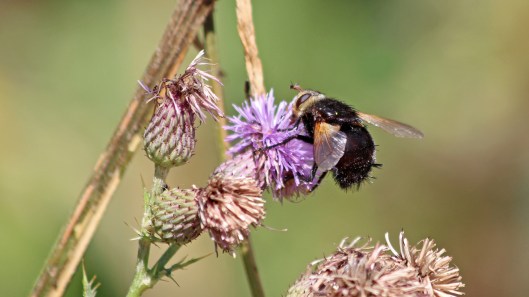
At first glance I thought this big brute was a hoverfly, ’cause I know there are some very large hoverflies, but one look at those eyes told me otherwise. Meet Tachina grossa, the largest Tachnid fly in Britain and Europe.

180805 Tachina grossa (4)

As you can see, it feeds on pollen and nectar and, though it’s harmless to us humans, it’s no friend of moths. The female Tachina grossa lays her eggs on living larvae, in particular the large hairy caterpillars of the Oak eggar moth and the Fox moth. The fly larvae eat the caterpillars from the inside, eventually but not immediately killing them.

180805 Tachina grossa (1)
180805 Tachina grossa (3)

So, it may look kind of cute in the photograph below but I’m just glad I’m not a large hairy caterpillar.

180805 Tachina grossa (2)

Like Loading...

Three in one day

04 Saturday Aug 2018

Posted by sconzani in insects, nature

≈ Leave a comment

Tags

British moths, Jersey tiger, Jersey tiger moth, Lavernock Nature Reserve, moths, tiger moth

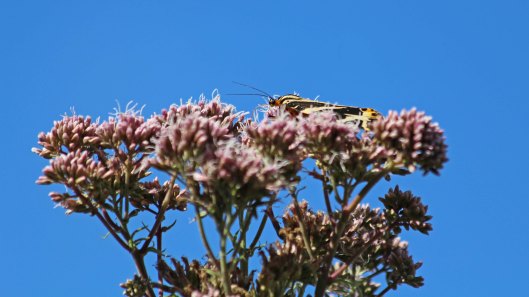
Many of you probably knew that last Sunday 29 July was International Tiger Day but I’ll bet you didn’t know that Tuesday the 31st was Jersey Tiger Day!

180804 Jersey tiger (1)

Well, of course you didn’t because I just made that up. And why?

180804 Jersey tiger (2)

Because that was the day I saw my first Jersey Tiger moths for the year.

180804 Jersey tiger (3)

And I didn’t just see one – I saw three of these most gorgeous of moths.

180804 Jersey tiger (4)

Want to know why I was so delighted to see them? Read on …

Like Loading...

The flower of the moment is …

03 Friday Aug 2018

Posted by sconzani in flowers, insects, nature, wildflowers

≈ 2 Comments

Tags

British butterflies, British wildflowers, butterflies, Common fleabane, fleabane, insects on fleabane, Lavernock Nature Reserve, Pulicaria dysenterica

The flower of the moment is Fleabane (Pulicaria dysenterica) or, at least it is at Lavernock Nature Reserve.

180803 fleabane

I’ve read that Fleabane usually grows in ditches and damp meadows so, despite the recent drought conditions, I guess there must be water somewhere below the wildflower meadows at Lavernock, as they are currently awash with these bright golden flowers. And, at a time when most other wildflowers have dried up and died off, the Fleabane is providing a much-needed source of pollen and nectar for butterflies and other assorted mini-beasties.

180803 bee on fleabane
180803 brimstone on fleabane
180803 comma on fleabane (1)
180803 common blue on fleabane (4)
180803 cricket on fleabane
180803 small white on fleabane
180803 small copper on fleabane
180803 gatekeeper on fleabane
180803 meadow brown on fleabane
180803 green-veined white on fleabane
180803 painted lady on fleabane
180803 red admiral on fleabane
180803 speckled wood on fleabane
180803 six-spot burnet on fleabane
Like Loading...

Banded demoiselles

01 Wednesday Aug 2018

Posted by sconzani in insects, nature, walks

≈ Leave a comment

Tags

Arlington Reservoir, Banded Demoiselle, British damselflies, Cuckmere River, damselflies

One of the many highlights of my recent walk around Arlington Reservoir in East Sussex with my friend Jill was being able to get quite close to several pairs of Banded demoiselle damselflies (while simultaneously heeding Jill’s warning that if I fell in the stream – actually the Cuckmere River – she wasn’t going to rescue me – ha!).

180801 Arlington stream

And actually this was off the main Arlington trail, as there was an old church that looked interesting not far away and we’d headed off down a public footpath towards it.

180801 Banded demoiselle (1)

Although I’ve seen a number of Beautiful demoiselles at my local nature reserves in Wales, I haven’t seen any Banded … and they are such gorgeous creatures, especially the bright blue males when they’re flying. Makes me believe in fairies!

180801 Banded demoiselle (2)

If you’re ever in the area, Arlington is a lovely place for a walk, with colourful and insect-rich wildflower meadows and plenty of birdlife, just the right amount of exercise in its circular walk and a cafe with icecreams at the end.

Like Loading...

Birding at RSPB Dungeness

31 Tuesday Jul 2018

Posted by sconzani in birds, insects, nature

≈ 4 Comments

Tags

birding, birdwatching, British birds, British butterflies, Common tern, Egyptian Goose, Emperor dragonfly, RSPB Dungeness, Snipe, Wood sandpiper

I had never been to RSPB Dungeness until my visit with my friend Jill two weeks ago but, if you can get past the fact that there’s a nuclear power station buzzing away just down the road, then you should be able to appreciate what a wonderful place it is. (British people seem to take nuclear power stations for granted but, as a nuclear-free New Zealander, I still find them quite scary places and really rather menacing!)

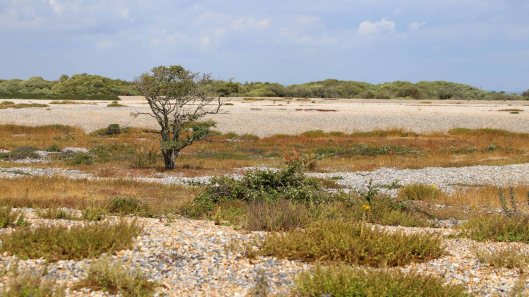
180731 Dungeness nuclear power station180731 RSPB Dungeness

This is a unique landscape of low rolling shingle banks, interspersed with patchy areas of low scrub and large shallow pools – it’s water bird heaven!

180731 Common terns (2)
180731 Common terns (1)

180731 Common terns (3)

Our first highlight was seeing the Common terns that breed at Dungeness. Terns are such agile flyers and to see their young fledglings was a real treat.
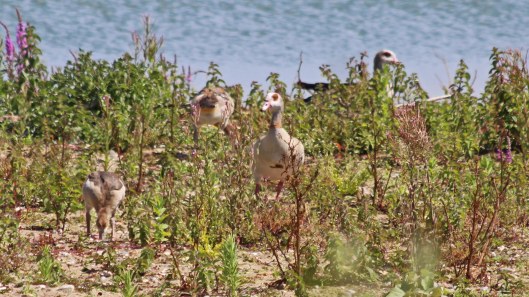
180731 Egyptian geese

Eqyptian geese have also bred here, and we saw a pair with two well-grown goslings.

180731 snipe

I had my best-ever views of a Snipe that decided to come out and poke around the muddy edges of one of the pools. These are normally such secretive birds so it was a real pleasure to watch this bird foraging.
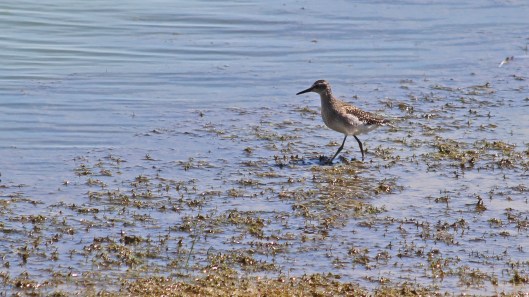
180731 wood sandpiper

And the Snipe was joined by not one but two Wood sandpipers.

180731 water birds galore

Each of the six hides on the two-mile-long main trail offers different views, different birds, and, after motoring down to a cafe near the lighthouse (and that power station), we also stopped off on our return to check out the two shorter trails and hides on the opposite side of the road. Here we had good, though distant views of a Greenshank and a Bar-tailed godwit. Cracking!

180731 b Painted lady
180731 b peacock
180731 b small copper

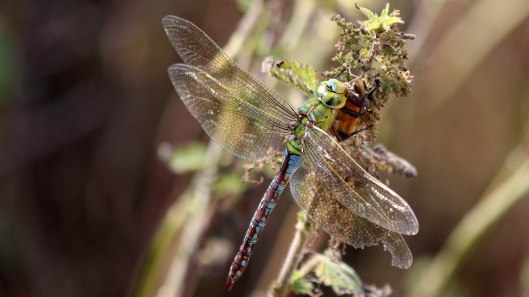
As well as the birds, the wildflowers added lots of pretty colour to our wander, and we were entertained as we walked by large numbers of beautiful butterflies and debonaire dragonflies, though it wasn’t quite so pleasant watching an Emperor dragon biting the wings off a Gatekeeper.
180731 b emperor

Here’s my bird list for the day (not including a lot of smaller birds that were flitting about the bushes while I was marvelling at the butterflies): Teal, Lesser black-backed gull, Tufted duck, Mallard, Herring gull, Common tern (with young), Cormorant, Sandwich tern, Common sandpiper, Wood sandpiper (2), Snipe, Egyptian goose (and goslings), Ringed plover, Pochard, Little grebe, Great crested grebe, Lapwing,Coot, Dunlin, Goldeneye, Reed warbler, Redshank, Woodpigeon, Oystercatcher, Grey heron, Great white egret (2), Greylag goose, Mute swan, Black-headed gull, Shelduck, Shoveler, Carrion crow, Swallow, House martin, Greenshank, Bar-tailed godwit, Pied wagtail, Gadwall and Magpie.

Like Loading...
← Older posts
Newer posts →

About me

sconzani

sconzani

I'm a writer and photographer; researcher and blogger; birder and nature lover; countryside rambler and city strider; volunteer and biodiversity recorder.

View Full Profile →

Follow earthstar on WordPress.com

Enter your email address to follow this blog and receive notifications of new posts by email.

Recent blog posts

  • Recent Reed buntings April 17, 2026
  • Tiny but feisty April 16, 2026
  • NFY: Large and Small whites April 15, 2026
  • A loveliness of ladybirds April 14, 2026
  • Hairy-footed flower bees April 13, 2026

From the archives

COPYRIGHT

Unless otherwise acknowledged, the text and photographs on this blog are my own and are subject to international copyright. Nothing may be downloaded or copied without my permission.

Fellow Earth Stars!

  • Unknown's avatar
  • Unknown's avatar
  • Unknown's avatar
  • Unknown's avatar
  • Unknown's avatar
  • Unknown's avatar
  • Unknown's avatar
  • Unknown's avatar
  • Unknown's avatar
  • Unknown's avatar
  • Unknown's avatar
  • Unknown's avatar
  • Unknown's avatar
  • Unknown's avatar
  • Unknown's avatar
  • Unknown's avatar
  • Unknown's avatar
  • Unknown's avatar
  • Unknown's avatar
  • Unknown's avatar
  • Unknown's avatar
  • Unknown's avatar
  • Unknown's avatar
  • Unknown's avatar
  • Unknown's avatar
  • Unknown's avatar
  • Unknown's avatar
  • Unknown's avatar
  • Unknown's avatar
  • Unknown's avatar
  • Unknown's avatar
  • Unknown's avatar
  • Unknown's avatar
  • Unknown's avatar
  • Unknown's avatar
  • Unknown's avatar
  • Unknown's avatar
  • Unknown's avatar
  • Unknown's avatar
  • Unknown's avatar
  • Unknown's avatar
  • Unknown's avatar
  • Unknown's avatar
  • Unknown's avatar
  • Unknown's avatar
  • Unknown's avatar
  • Unknown's avatar
  • Unknown's avatar
  • Unknown's avatar
  • Unknown's avatar

Blog at WordPress.com.

Privacy & Cookies: This site uses cookies. By continuing to use this website, you agree to their use.
To find out more, including how to control cookies, see here: Cookie Policy
  • Subscribe Subscribed
    • earthstar
    • Join 642 other subscribers
    • Already have a WordPress.com account? Log in now.
    • earthstar
    • Subscribe Subscribed
    • Sign up
    • Log in
    • Report this content
    • View site in Reader
    • Manage subscriptions
    • Collapse this bar
 

Loading Comments...
 

You must be logged in to post a comment.

    %d