• ABOUT
  • BIRDING 2018
  • Birding 2019
  • BLOG POSTS
  • Butterflies 2018
  • Resources

earthstar

~ a celebration of nature

earthstar

Category Archives: insects

U is for unidentified

26 Sunday Dec 2021

Posted by sconzani in fungi, insects, lichen, wildflowers

≈ 2 Comments

Tags

unidentified fauna, Unidentified flora

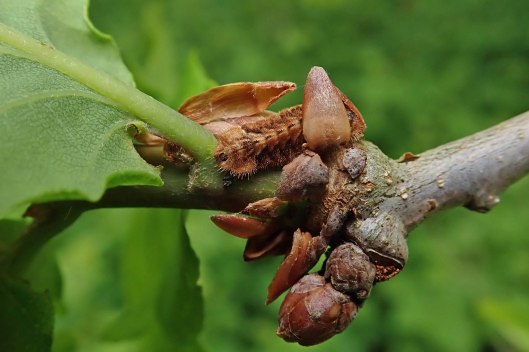
This post is really an acknowledgment of my lack of knowledge – everything shown in the photos below remains unidentified, and these are just some photos I’ve kept. Most photos get deleted once I’ve spent a little time trying to put a name to their subject, but failed. It may sometimes seem as if I can put a name to most flora and fauna I see but that’s definitely not the case. And I’m okay with that. I don’t need to identify everything – in fact, unless I’m searching for something specific, it’s often much nicer simply to look and admire, be amazed and enjoy.

211226 flower
211226 fungi
211226 grasses
211226 larva
211226 leafhopper
211226 leafmine
211226 lichen
211226 moth
211226 sawfly
211226 spider egg sac
211226 wasp
211226 whiteflies
Like Loading...

S is for Stigmella aceris

24 Friday Dec 2021

Posted by sconzani in insects, leaves, trees

≈ 2 Comments

Tags

leaf-mining moth larvae, leaf-mining moths, leafmines, leafmines on Field maple, leafmines on Norway maple, Stigmella aceris

As the leafmine season draws to a close (though I do still have a couple of finds to share early in 2022), I thought I’d post an update on our progress of monitoring the spread of the moth Stigmella aceris in the wider Cardiff area, a moth that was first recorded in Wales in 2019.

211224 stigmella aceris on field maple

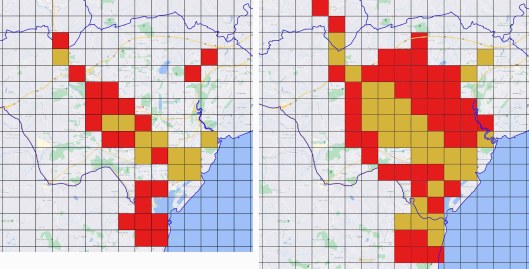
The map on the left below shows 1km squares where the moth’s larval leafmines were present as at 11 November 2020; the map on the right as at 29 November 2021. The red-coloured squares represent new finds during that year; the mustard-coloured squares are finds from previous years, i.e. in the left map, the mustard squares were finds made in 2019; in the map on the right, the mustard squares show the finds at the end of 2020. I am just one of several enthusiastic local members of Team leafmine who have been helping with this surveying, walking many miles to check each 1km square and, as the maps show, we have been able to confirm that Stigmella aceris has spread quite extensively in 2021.
211224 stigmella aceris maps

The moth’s presence, of course, does depend on the presence of its larval food plants, the trees Field maple and Norway maple, so blank squares can indicate an absence of trees, rather than a failure to find any mines. Where the moth has been present for more than a year, it can be prolific, with several mines on each leaf of Field or Norway maple, whereas in newly colonised places, I’ve often found just one or two mines from a whole tree load of fallen leaves. It will be fascinating to check this tiny moth’s progress again in 2022.


211224 stigmella aceris on norway maple

Like Loading...

R is for Roesel’s bush-cricket

23 Thursday Dec 2021

Posted by sconzani in insects

≈ Leave a comment

Tags

British bush-crickets, British crickets, bush-cricket

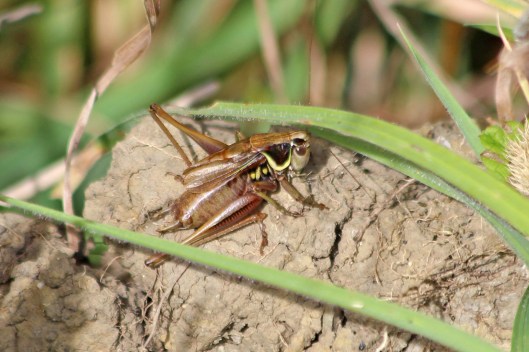
My cricketing highlight of the year (definitely nothing to do with the sport, believe me!) came back in September when I finally found my first Roesel’s bush-cricket. Next summer, I’m hoping to tune my ears in to its distinctive stridulation to find more of these handsome creatures.

211223 roesel's bush cricket

Like Loading...

P is for Parent bug

21 Tuesday Dec 2021

Posted by sconzani in insects

≈ Leave a comment

Tags

British bugs, bugs, Elasmucha grisea, Parent bug, Parent bug nymphs

September was the month I saw my first huddle of Parent bug nymphs, and incredibly cute it was too. I’d only seen the adult bug a couple of times before that, so I was rather pleased to spot another in late October (below right). There is really quite a striking difference between the nymphs and their parents.

211221 parent bug (1)
211221 parent bug (2)
Like Loading...

N is for nettle

19 Sunday Dec 2021

Posted by sconzani in insects, plants

≈ 4 Comments

Tags

British insects, insects on nettle, Nettle, Stinging nettle

This is a plug for the much-maligned Nettle, a plant most of us humans quickly learn to recognise in order to avoid its stings, though most wildlife seems well able to avoid them. I’ve read that Nettles support 40 species of insect but I wonder if that number is on the conservative side. Here are a few insects I spotted on them earlier this year: 7-spot ladybird larva, the 1st instar of a Common green shieldbug, Grypocoris stysi, Nettle weevil, the larva of the hoverfly Scaeva pyrastri, and a Speckled bush-cricket nymph.

211219 nettles 7spot ladybird larva
211219 nettles common green shieldbug 1st instar
211219 nettles grypocoris stysi
211219 nettles nettle weevil
211219 nettles Scaeva pyrastri hoverfly larva
211219 nettles speckled bush-cricket nymph
Like Loading...

M is for Marsh fritillary

18 Saturday Dec 2021

Posted by sconzani in insects

≈ 2 Comments

Tags

Aberbargoed Grasslands, British butterflies, butterfly, fritillaries, Marsh fritillary

I was so very pleased when the Covid regulations were relaxed enough during the summer to allow me to visit Aberbargoed National Nature Reserve to see my beloved Marsh fritillaries, particularly as I hadn’t managed to see any in 2020. These are just such magical butterflies that I actually braved the train journey four times. Though I was too early on my first visit and only a few faded, jaded individuals remained when I visited for the final time in late June, I remember my mask hiding a beaming smile all the way home on those other train journeys.

211218 marsh fritillary

Like Loading...

L is for leafhoppers

17 Friday Dec 2021

Posted by sconzani in insects

≈ Leave a comment

Tags

British leafhoppers, Cicadellidae, Eupterycyba jucunda, leafhopper, Linnavuoriana sexmaculata

Given my frequent recent posts, you might have been forgiven for thinking that I would choose leafmines for the letter L, but no. Leafhoppers, more formally known as the Cicadellidae, are another family of insects I sometimes dabble in but am determined to look more closely at in 2022 as there are so many species lurking under leaves that I have yet to discover. Back in July, I blogged about the first new species I was able to add to my list for 2021, Eupterycyba jucunda.

211217 Eupterycyba jucunda

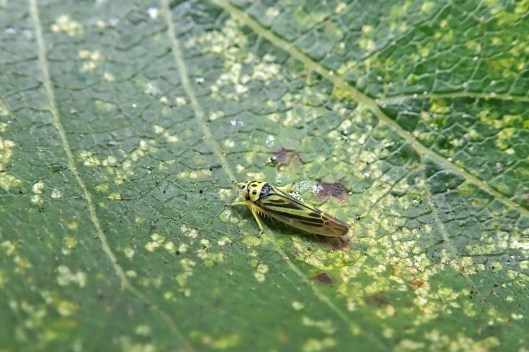
And, more recently, on 28 November, I found another, Linnavuoriana sexmaculata. Once again, this was found by turning over leaves, in this case one of the Salix genus – willows, sallows, osiers, as we more commonly call them. Though some species of leafhopper can be tricky to identify, both its host plant and the bug’s markings (sexmaculata means six-spotted) made this one a little easier.

211217 Linnavuoriana sexmaculata

Like Loading...

H is for hairstreak

13 Monday Dec 2021

Posted by sconzani in insects

≈ Leave a comment

Tags

British butterflies, butterfly, hairstreak butterflies, hairstreaks, Purple hairstreak, White-letter hairstreak

Another day, another letter, more butterflies but this has been a great year for hairstreak butterflies. The first highlight was finding my first ever Purple hairstreak larva at the end of May. I spotted it on two subsequent visits before it disappeared, hopefully to pupate.

211213 purple hairstreak larva

I only saw one Purple hairstreak butterfly in that woodland – in a different area so probably not the metamorphosed larva – but did see the butterflies at two other local sites.

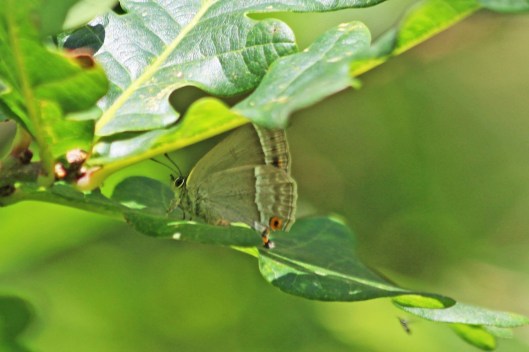
211213 purple hairstreak

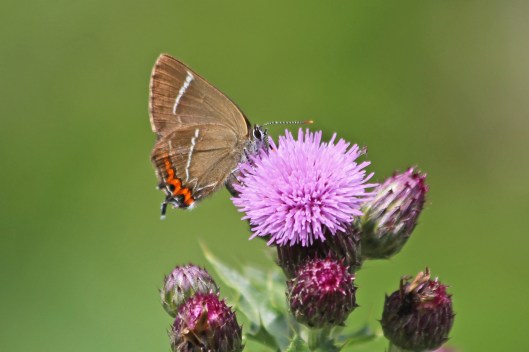
And, though I was delighted with my Purple hairstreak sightings this year, I was even more thrilled by the many White-letter hairstreaks I saw. This comes partly from learning to recognise and remember where the Wych elms grow in my local area but also partly from luck – my best sighting of the year, my white-letter day, was simply a case of being in the right place at the right time.

211213 white-letter hairstreak

Like Loading...

G is for Grayling

12 Sunday Dec 2021

Posted by sconzani in insects

≈ 2 Comments

Tags

British butterflies, butterflies on coal tips, butterfly, Grayling

Though I was delighted and encouraged by the number of Grayling butterflies I saw on a coal tip up the Welsh valleys back in July, my experience does not reflect the reality of the present situation for the Grayling in Britain. Butterfly Conservation has recently released its ‘New Red List of British butterflies’ and, unfortunately, the status of the Grayling has moved from vulnerable to endangered. What my sighting tells me, though, is how truly important the former coal spoil tips are. They are often dismissed as useless brownfield sites but, in fact, former industrial sites like these are often rich in biodiversity and need to be preserved.

211212 grayling

Like Loading...

E is for Emerald damselfly

10 Friday Dec 2021

Posted by sconzani in insects

≈ Leave a comment

Tags

British damselflies, damselfly, Emerald damselfly, Odonata

Seeing this Emerald damselfly was the highlight of my odonata year. I think I need to broaden my horizons to see some new species in 2022.

211210 emerald damselfly

Like Loading...
← Older posts
Newer posts →

About me

sconzani

sconzani

I'm a writer and photographer; researcher and blogger; birder and nature lover; countryside rambler and city strider; volunteer and biodiversity recorder.

View Full Profile →

Follow earthstar on WordPress.com

Enter your email address to follow this blog and receive notifications of new posts by email.

Recent blog posts

  • Alder flies April 9, 2026
  • Lily beetle April 8, 2026
  • First bee-flies April 7, 2026
  • Bloody-nosed beetle April 6, 2026
  • Gorse and its weevil April 5, 2026

From the archives

COPYRIGHT

Unless otherwise acknowledged, the text and photographs on this blog are my own and are subject to international copyright. Nothing may be downloaded or copied without my permission.

Fellow Earth Stars!

  • Unknown's avatar
  • Unknown's avatar
  • Unknown's avatar
  • Unknown's avatar
  • Unknown's avatar
  • Unknown's avatar
  • Unknown's avatar
  • Unknown's avatar
  • Unknown's avatar
  • Unknown's avatar
  • Unknown's avatar
  • Unknown's avatar
  • Unknown's avatar
  • Unknown's avatar
  • Unknown's avatar
  • Unknown's avatar
  • Unknown's avatar
  • Unknown's avatar
  • Unknown's avatar
  • Unknown's avatar
  • Unknown's avatar
  • Unknown's avatar
  • Unknown's avatar
  • Unknown's avatar
  • Unknown's avatar
  • Unknown's avatar
  • Unknown's avatar
  • Unknown's avatar
  • Unknown's avatar
  • Unknown's avatar
  • Unknown's avatar
  • Unknown's avatar
  • Unknown's avatar
  • Unknown's avatar
  • Unknown's avatar
  • Unknown's avatar
  • Unknown's avatar
  • Unknown's avatar
  • Unknown's avatar
  • Unknown's avatar
  • Unknown's avatar
  • Unknown's avatar
  • Unknown's avatar
  • Unknown's avatar
  • Unknown's avatar
  • Unknown's avatar
  • Unknown's avatar
  • Unknown's avatar
  • Unknown's avatar
  • Unknown's avatar

Blog at WordPress.com.

Privacy & Cookies: This site uses cookies. By continuing to use this website, you agree to their use.
To find out more, including how to control cookies, see here: Cookie Policy
  • Subscribe Subscribed
    • earthstar
    • Join 642 other subscribers
    • Already have a WordPress.com account? Log in now.
    • earthstar
    • Subscribe Subscribed
    • Sign up
    • Log in
    • Report this content
    • View site in Reader
    • Manage subscriptions
    • Collapse this bar
 

Loading Comments...
 

You must be logged in to post a comment.

    %d