• ABOUT
  • BIRDING 2018
  • Birding 2019
  • BLOG POSTS
  • Butterflies 2018
  • Resources

earthstar

~ a celebration of nature

earthstar

Category Archives: insects

316/366 Green islands

11 Wednesday Nov 2020

Posted by sconzani in autumn, insects, trees

≈ 3 Comments

Tags

beech, gall causing midge, galls on Beech, green islands, green islands on Beech leaves, Hartigiola annulipes, leaf mines, leaf mines on Beech, Stigmella tityrella

It’s late autumn, nearly winter, and, as you would expect, the leaves on this Beech tree have all now changed from vivid summer green to autumn brown … or have they? If you look more closely at this image, you’ll notice that some of the leaves have what entomologists, moth-ers and others in the know call ‘green islands’.

201111 green islands on beech

Butterfly Conservation’s Associate Director of Recording and Monitoring Richard Fox explained the reason for this most succinctly in a recent post on Twitter: ‘Thanks to Wolbachia bacteria in its body, the caterpillar uses cytokinin to maintain a green island of plant tissue in which it can feed in autumn.’

201111 green island stigmella tityrella (2)
201111 green island stigmella tityrella (1)

Fox was referring to leaf-mining moth caterpillars, like the Stigmella tityrella moth larvae that produced the mines in the leaves shown above, but other insects also manipulate the physiology of leaves so they can continue feeding. Another example from the same Beech tree can be seen below – here the larvae of the gall-inducing midge Hartigiola annulipes have also caused green islands to form in the leaves.
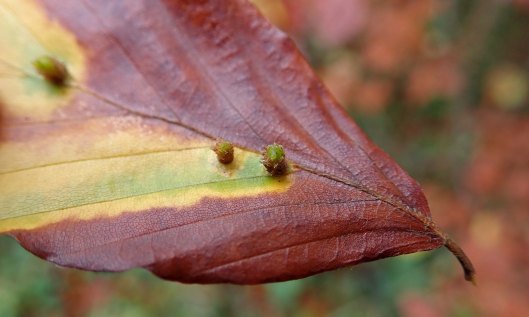
201111 Hartigiola annulipes green islands (1)

If you want to read more on the science behind this process, I found a paper entitled ‘Plant green-island phenotype induced by leaf-miners is mediated by bacterial symbionts‘, on the Royal Society website.

Like Loading...

314/366 Leaf mines: Parornix anglicella

09 Monday Nov 2020

Posted by sconzani in autumn, insects, leaves, trees

≈ Leave a comment

Tags

British moths, Hawthorn, leaf mines, leaf mines on Hawthorn, moth larvae in leaf mines, moth leafmines, Parornix anglicella

Here’s another leaf mine to look for in your local hedgerows, a very distinctive mine on Hawthorn (Crataegus sp.) made by the larvae of the micro moth Parornix anglicella, also known as the Hawthorn slender.

201109 parornix anglicella cones (1)

Although the newly hatched moth larva initially creates a corridor mine and then a blotch, it later makes itself a cone-shaped tent, using silk to adhere the bent-over edge to the main part of the leaf, and these cones are very easy to spot. Turn over the leaf to view the underside and you’ll find incredibly beautiful, almost sculptural structures, some resembling miniature latticework pyramids.

201109 parornix anglicella cones (2)
201109 parornix anglicella cones (3)
201109 parornix anglicella cones (4)
201109 parornix anglicella cones (5)

You can read more scientific detail about the leaf mine on the UK Fly Mines website here, and see what the adult moth looks like on the UK Moths website here.

201109 parornix anglicella cones (6)

Like Loading...

307/366 Leaf mines: Tischeria ekebladella

02 Monday Nov 2020

Posted by sconzani in autumn, insects

≈ Leave a comment

Tags

blotch mines on Oak, British moths, leaf mines on Oak, moth larvae, moth larvae in leaf mines, moth leafmines, Tischeria ekebladella

I mentioned in a recent post (Gone galling, again, 28 October) that October was a good month to find galls and mines on leaves and, in fact, that also extends into November, or until the deciduous trees have shed their leaves and those fallen leaves have turned to mush, and the leaves of wild plants have also become unrecognisable in the mud under our feet.

201102 Tischeria ekebladella (1)

So, let’s start this mini series on leaf mines with a look at the blotch mines made on Oak (and sometimes Sweet chestnut) by the larvae of the micro moth Tischeria ekebladella. The blotch starts off looking quite white but often browns, from the centre, with age, giving it a look that one astute observer described as a fried egg. The larva creates a cocoon within the blotch and remains there until its ready to pupate in the springtime. The adult moth emerges from pupation and is on the wing in May and June.

201102 Tischeria ekebladella (2)
201102 Tischeria ekebladella (3)

By holding leaves up to the light, I managed to photograph larvae within a couple of mines, though, one of our local moth experts, George, who’s a senior moth ecologist with Butterfly Conservation, told me that the larva in the photo on the right below looks to have been parasitised and a different creature’s larva seems to have emerged from the Tischeria larva. Such is the way of Nature.

201102 Tischeria ekebladella (4)
201102 Tischeria ekebladella (5)
Like Loading...

305/366 Insecting

31 Saturday Oct 2020

Posted by sconzani in autumn, insects

≈ Leave a comment

Tags

British bees, British insects, Buff-tailed bumblebee, Common carder bee, Common Darter, Common earwig, Ivy bee, Ivy bee burrow

Despite the appalling weather – frequent heavy rain and occasional strong winds – we’ve been experiencing over the last couple of weeks, I have managed still to find a few hardy insects, persisting by cunningly finding sheltered places to avoid the worst of the inclement conditions.

201031 buff-tailed bumble
201031 common carder

These bees seem to have the right idea. On the left is a Buff-tailed bumblebee, which I watched emerging from inside the cosy, fluffy duvet of an Old man’s beard seedhead and, on the right, a Common carder that seems to have the same idea and be looking for a place to snuggle down.

201031 earwigs (1)
201031 earwigs (2)

Also looking cosy, these Common earwigs were huddling in the cups of umbellifer seedheads.

201031 common darters

Common darters have still been active in the more sheltered spots during the occasional sunny periods, these at Cosmeston Lakes Country Park.

201031 ivy bees (1)
201031 ivy bees (2)

The last of this year’s brood of Ivy bees were still feeding their grubs. They had made use of a rabbit scrape to excavate the underground burrows where their eggs are laid, grubs hatch and pupate and will remain until emerging as adult bees next autumn.

Like Loading...

302/366 Gone galling, again

28 Wednesday Oct 2020

Posted by sconzani in autumn, insects, leaves, trees

≈ 1 Comment

Tags

Aceria macrochela, gall mites, gall-causing mites, galls, galls on Field maple, galls on Spindle, mite galls, Stenacis euonymi

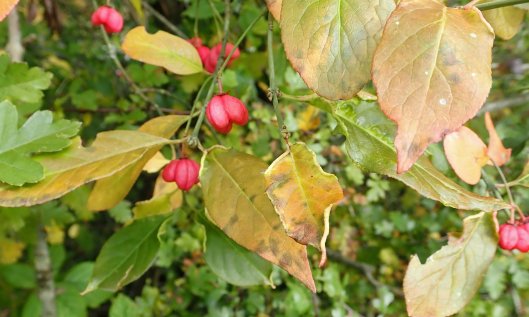
October is a good month to check out life on leaves (and I’ll be writing some posts about the various leaf mines I’ve been finding) but today I want to show you a couple of gall species that are new to me. The first is quite common and easy to find, the second perhaps less so.

The first species is Aceria macrochela, a microscopic mite that spends its larval life in these tiny bumps on the leaves of Field maple (Acer campestre). You can read more about them and see more images on the mighty Nature Spot website.

201028 Aceria macrochela (1)
201028 Aceria macrochela (2)
201028 Aceria macrochela (3)
201028 Aceria macrochela (4)

And the second is also a mite, this one called Stenacis euonymi, whose larvae make their homes in the rolled-up edges of leaves on Spindle (Euonymus europaeus). If you have trouble with tree identification, as I often do, this is a good time to look for these as the gloriously obvious fruit of the Spindle are easy to spot.

201028 Stenacis euonymi (1)

Looking on the NBN (Nature Biodiversity Network) Atlas I see there are currently only 112 UK records for this species (113 including mine, which doesn’t show yet) but that’s probably due to it being under-recorded, so if you spot these, please do record your sighting.

201028 Stenacis euonymi (2)
201028 Stenacis euonymi (3)
Like Loading...

298/366 The last Meadow brown

24 Saturday Oct 2020

Posted by sconzani in autumn, insects

≈ Leave a comment

Tags

British butterflies, butterfly, butterflying, Meadow Brown

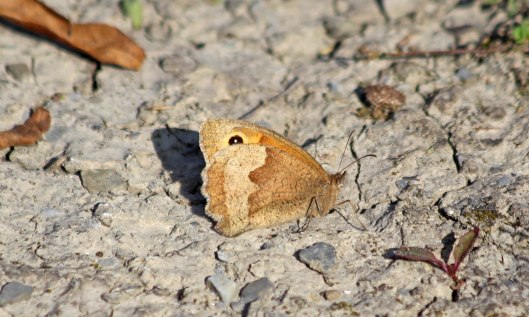
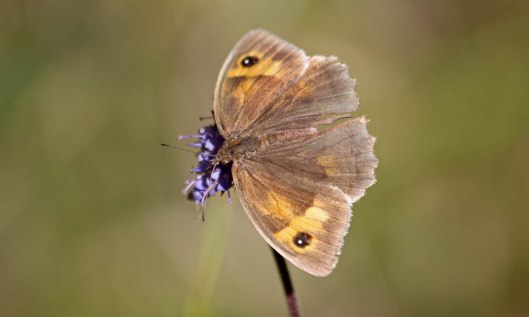
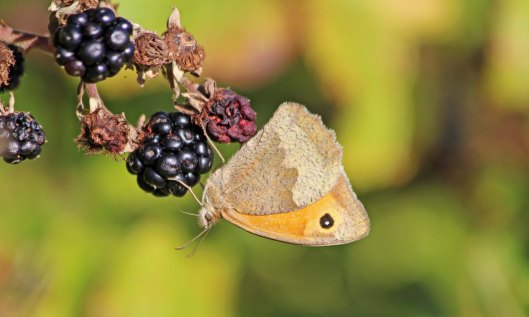
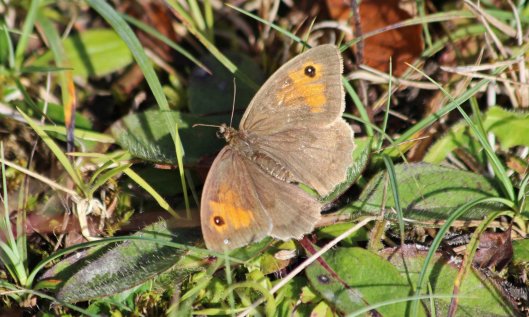
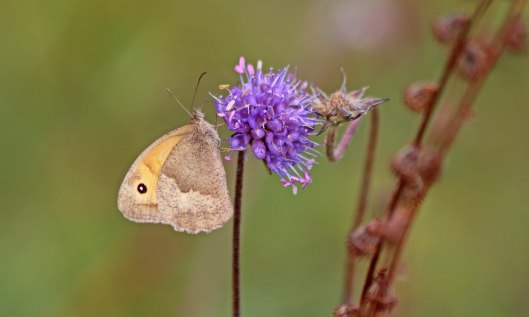
Meadow brown butterflies have a long season, on the wing from early June to the end of October, and those dates are exactly what I’ve observed in my area this year and last.

201024 meadow brown 200918

In 2019, I spotted my first Meadow brown on 5 June and the last was a single butterfly seen on 7 October.

201024 meadow brown 200925

This year, I saw my first Meadow Brown at Cosmeston Lakes Country Park on 1 June.

201024 meadow brown 200927

And, as September was drawing to a close, I kept a special eye out for these lovely butterflies, each time taking a photograph and asking myself, ‘Will this be the last Meadow brown of the year?’

201024 meadow brown 201001

I knew time was fast slipping away for them and, on 5 October, again at Cosmeston, it really was the last time I would see a Meadow brown in 2020. That butterfly is the one shown below … and I’m already looking forward to seeing them again next June.

201024 meadow brown 201005

Like Loading...

293/366 Stigmella aceris

19 Monday Oct 2020

Posted by sconzani in autumn, insects, leaves, trees

≈ 5 Comments

Tags

British moths, Field maple, leaf mines on maple, leaf-mining moth larvae, leafminer, Norway maple, Scarce Maple pigmy, Stigmella aceris

I’ve been hunting for leaf mines in recent days, the mines made by the larvae of the micro moth Stigmella aceris, which can be found at this time of year on the leaves of Norway and Field maples. Unfortunately, I haven’t made any finds of my own but my Twitter pal Gareth had the honour of finding the first mines in the Vale of Glamorgan last week so I went and checked out his find site to get a look at the mines for myself.

201019 leafmine (1)

According to the UK Moths website, this moth was classified as rare until 40 years ago, when it began increasing its range ‘dramatically’. It can now be found throughout central and southern England, and also in south Wales – it was found for the first time in Cardiff in November 2019.

201019 leafmine (2)

I’ve never seen the adult moth, which has the common name of Scarce maple pigmy – and probably never will – but you can see a photo of it on the British Lepidoptera weebly site here.

201019 leafmine (3)
201019 leafmine (4)

And now I’m heading out to check more Maple trees before their leaves all fall and turn to mush …

201019 leafmine (5)

Like Loading...

290/366 A host of hawkers

16 Friday Oct 2020

Posted by sconzani in autumn, insects

≈ Leave a comment

Tags

Aeshna mixta, British dragonflies, Cosmeston Lakes Country Park, dragonfly, Migrant hawker

You might think, as I certainly did, that the much cooler overnight temperatures we’re now experiencing here in south Wales would mean an end to the hawking flights of dragonflies over our fields and along our hedgerows but I was rather dramatically proved wrong during yesterday’s meander around Cosmeston Lakes Country Park. I didn’t spot just one or two Migrant hawkers but seven (!), the most I’ve seen in one day ever. These are three of them, two of the males and the solitary female. A delight of dragonflies!

201015 migrant hawker (1)201015 migrant hawker (2)201015 migrant hawker (3)

Like Loading...

282/366 Saffron surprise

08 Thursday Oct 2020

Posted by sconzani in autumn, insects

≈ Leave a comment

Tags

British butterflies, butterfly, Clouded yellow, Colias croceus, Cosmeston Lakes Country Park

After the strong winds and heavy rain of recent days the last thing I expected to see at Cosmeston yesterday was this Clouded yellow butterfly (Colias croceus). I was initially surprised at what good condition it was in but, in his Life Cycles of British & Irish Butterflies, Peter Eeles writes that ‘In good years, this species can produce up to three broods in the south of England, with the third brood emerging in late September and October.’ Presumably, this is also true for south Wales and, as several other butterflies have had additional broods this year, I wonder if this saffron beauty is one of a newly emerged third brood.

201008 clouded yellow

Like Loading...

281/366 Hairy and handsome

07 Wednesday Oct 2020

Posted by sconzani in insects

≈ Leave a comment

Tags

British bugs, Hairy shieldbug, shieldbug

I imagine this little guy was trying to shelter on this building wall, attempting, as I was, to avoid the worst of the wind and rain. At least it could easily fly off into the nearby bushes, whereas I had a 20-minute uphill walk to get home. Oh, and in case you don’t know, this is a Hairy shieldbug – you can read more about these handsome creatures in my post Hairy shieldbugs, April 2020.

201007 hairy shieldbug

Like Loading...
← Older posts
Newer posts →

About me

sconzani

sconzani

I'm a writer and photographer; researcher and blogger; birder and nature lover; countryside rambler and city strider; volunteer and biodiversity recorder.

View Full Profile →

Follow earthstar on WordPress.com

Enter your email address to follow this blog and receive notifications of new posts by email.

Recent blog posts

  • In flower now April 12, 2026
  • A surprise Slow-worm April 11, 2026
  • My first Holly blue April 10, 2026
  • Alder flies April 9, 2026
  • Lily beetle April 8, 2026

From the archives

COPYRIGHT

Unless otherwise acknowledged, the text and photographs on this blog are my own and are subject to international copyright. Nothing may be downloaded or copied without my permission.

Fellow Earth Stars!

  • Unknown's avatar
  • Unknown's avatar
  • Unknown's avatar
  • Unknown's avatar
  • Unknown's avatar
  • Unknown's avatar
  • Unknown's avatar
  • Unknown's avatar
  • Unknown's avatar
  • Unknown's avatar
  • Unknown's avatar
  • Unknown's avatar
  • Unknown's avatar
  • Unknown's avatar
  • Unknown's avatar
  • Unknown's avatar
  • Unknown's avatar
  • Unknown's avatar
  • Unknown's avatar
  • Unknown's avatar
  • Unknown's avatar
  • Unknown's avatar
  • Unknown's avatar
  • Unknown's avatar
  • Unknown's avatar
  • Unknown's avatar
  • Unknown's avatar
  • Unknown's avatar
  • Unknown's avatar
  • Unknown's avatar
  • Unknown's avatar
  • Unknown's avatar
  • Unknown's avatar
  • Unknown's avatar
  • Unknown's avatar
  • Unknown's avatar
  • Unknown's avatar
  • Unknown's avatar
  • Unknown's avatar
  • Unknown's avatar
  • Unknown's avatar
  • Unknown's avatar
  • Unknown's avatar
  • Unknown's avatar
  • Unknown's avatar
  • Unknown's avatar
  • Unknown's avatar
  • Unknown's avatar
  • Unknown's avatar
  • Unknown's avatar

Blog at WordPress.com.

Privacy & Cookies: This site uses cookies. By continuing to use this website, you agree to their use.
To find out more, including how to control cookies, see here: Cookie Policy
  • Subscribe Subscribed
    • earthstar
    • Join 642 other subscribers
    • Already have a WordPress.com account? Log in now.
    • earthstar
    • Subscribe Subscribed
    • Sign up
    • Log in
    • Report this content
    • View site in Reader
    • Manage subscriptions
    • Collapse this bar
 

Loading Comments...
 

You must be logged in to post a comment.

    %d