• ABOUT
  • BIRDING 2018
  • Birding 2019
  • BLOG POSTS
  • Butterflies 2018
  • Resources

earthstar

~ a celebration of nature

earthstar

Category Archives: nature photography

Swamped with swamphens

05 Friday Feb 2016

Posted by sconzani in birds, nature, nature photography

≈ 1 Comment

Tags

birding, birds, birdwatching, Grey-headed swamphen, Purple Gallinule

After reading my recent post The Moorhen, the gallinule and the pukeko, my friend Viv, who lives in Thailand, sent me this wonderful photo of their local swamphen. This is the Grey-headed swamphen (Porphyrio poliocephalus) and Viv writes:
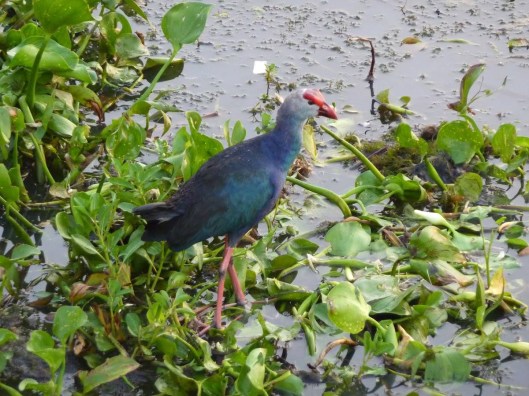
160205 Grey-headed swamphen

‘This was taken 4 years ago on a wetland area in a National Park down south in Songkla province. They were everywhere there striding across the water hyacinth searching for food. I have seen one Swamp hen locally, on another wetland area that borders the paddy fields but it’s not being managed and the reeds have swamped everything so spotting wildlife, especially birds, is difficult.’

One of my fellow bloggers, Theresa Green, also got in touch with details of the swamphens she saw when she lived in southern Spain. Hers were Purple Gallinules (Porphyrio porphyrio) and she has written an excellent well-illustrated blog about these birds and their antics that you can check out here.

Like Loading...

The Daffy and the Taffy

04 Thursday Feb 2016

Posted by sconzani in flowers, nature, nature photography

≈ 6 Comments

Tags

daffodil, Welsh national emblem, Welsh symbol

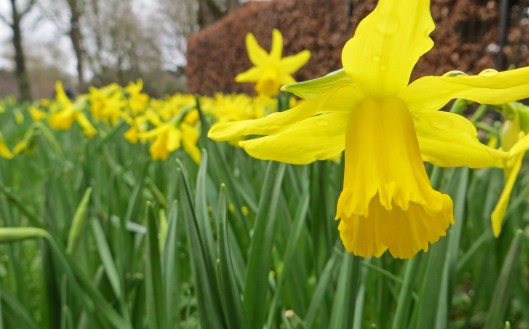
As the daffodil is one of the national symbols of Wales, I naturally expect to see a lot of daffodils here and, though it is still very early in the season, so far I have not been disappointed. As I couldn’t help but wonder why the daffodil is an official Welsh emblem, I’ve been investigating.

160204 daffodil (1)

It seems the origins are somewhat obscure. It could be because the daffodil was the favourite flower of the only Welshman to have been Prime Minister of Britain, David Lloyd George, who apparently wore the flower each year on St David’s Day and supposedly ordered its use in the celebration of Edward’s investiture as Prince of Wales in 1911 (though that event was in July and photographs show no daffodils present).

160204 daffodil (2)

one of the more unusual Welsh varieties of daffodil

It could perhaps be because the flower usually blooms in early spring which usually coincides with the celebration of the Welsh patron Saint David’s Day on 1 March (not late January, like this year). Or it could be a confusion of words: that other national Welsh emblem, the leek, is cenhinen in the Welsh language, whereas the Welsh for daffodil is cenhinen pedr. Did the two terms just get confused over time? The truth may never be known.

160204 daffodil (3)

Like Loading...

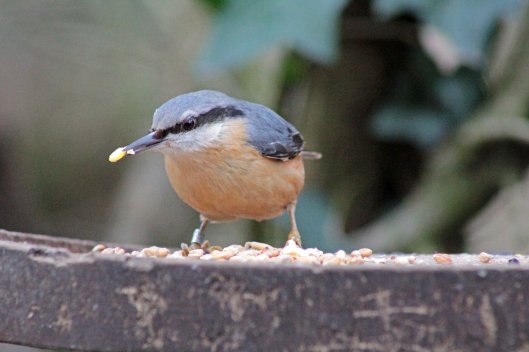
Chatting to a nuthatch

03 Wednesday Feb 2016

Posted by sconzani in birds, nature, nature photography

≈ 4 Comments

Tags

birding, birds, birdwatching, British birds, nuthatch

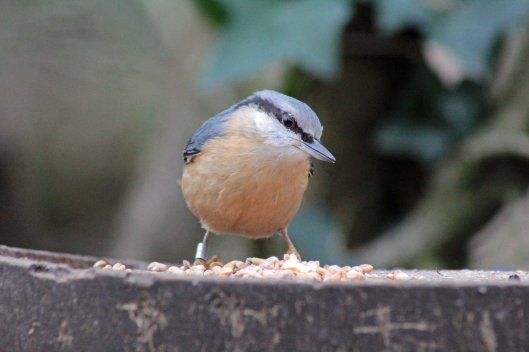
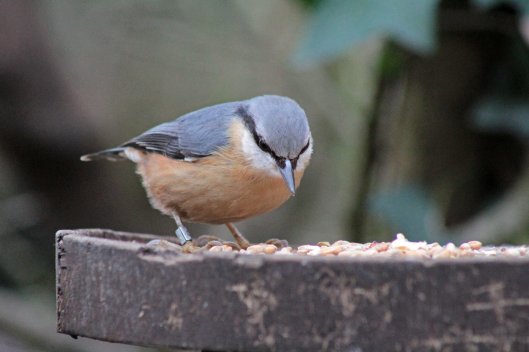
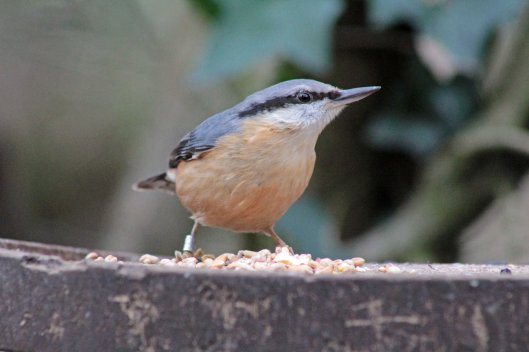
Forest Farm Nature Reserve, a few days ago …

160203 nuthatch (1)

Nuthatch: ‘Oi, you there. The lady with the camera.’
Me: ‘Well, hello to you too, nuthatch. How’re you doing today?’

160203 nuthatch (2)

Nuthatch: ‘Never mind the pleasantries. Where’re the sunflower seeds? Don’t ya know I prefer sunflower seeds?’
Me: ‘Sorry, I don’t have any seeds.’

160203 nuthatch (3)

Nuthatch: ‘Well, if you want photos, you’ve gotta pay, y’know. Is this my best side?’
Me: ‘You’re very demanding. Yes, very handsome.’

160203 nuthatch (4)

Nuthatch: ‘Sunflower seeds or nyjer seeds are best. I’ll take this stuff if I have to but I prefer the seeds.’
Me: ‘I’ll make sure I bring payment next time. I like your bling.’

160203 nuthatch (5)

Nuthatch: ‘The bling? Well, I would’ve preferred black m’self but they don’t give you a choice, y’know.’
Me: ‘Silver goes well with your colouring. Thanks for the photos. ’Til next time.’

Like Loading...

The original source of iodine

02 Tuesday Feb 2016

Posted by sconzani in nature, nature photography, plants, seaweed

≈ Leave a comment

Tags

bladder wrack, kelp, seashore plant, seaside

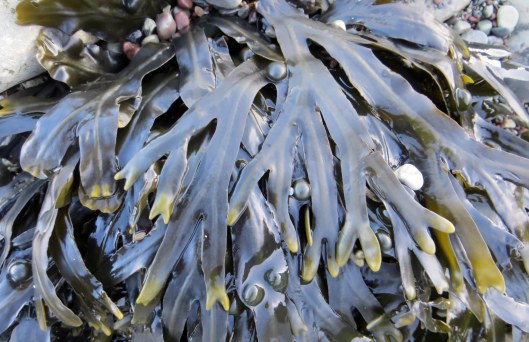
For the first time this year I’ve been to the seaside – not a long sandy beach, but the boulder-strewn former harbour entrance at the bottom of the crumbling cliffs of Penarth Head where many rocks on the lower half of the shore have bladder wrack growing on them. Fucus vesiculosus is probably the most common seaweed to be found on British shores, and grows on the coasts of most of the oceans and seas in the northern hemisphere.

160202 bladderwrack (1)

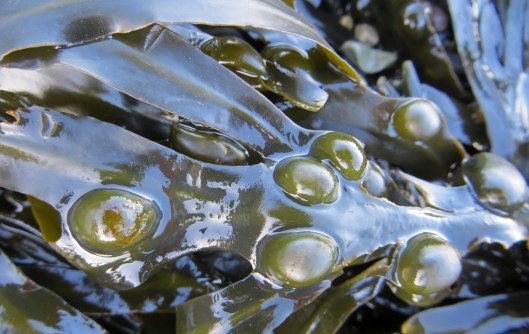
As its common name implies, this member of the kelp family uses air bladders for buoyancy, to help float its fronds upwards towards the light. When growing in an area with more violent wave action, it grows less bladders as the wave movement helps elevate its fronds instead. It is intolerant of drying out, so its fronds flop together in a moist heap which helps keep water loss to a minimum between tides.

160202 bladderwrack (2)

Though herbalists have used bladder wrack for centuries to stimulate thyroid function, and for the treatment of rheumatism and some skin diseases, it was only in 1819 that J. F. Coindet validated its efficacy scientifically, when he discovered that bladder wrack contained iodine. Extracts were subsequently used in medicines to treat goitre and other thyroid diseases.

Like Loading...

He of the many many legs

01 Monday Feb 2016

Posted by sconzani in insects, nature, nature photography

≈ Leave a comment

Tags

flat-backed millipede, millipede, minibeasts

Though the word millipede comes from the Latin for ‘thousand feet’, the Common flat-backed millipede (Polydesmus angustus) only usually has between 40 and 70 feet, and no species of millipede has more than 750. I guess whoever originally named them got tired of counting!

160201 Millipede (Polydesmus complanatus) (3)

Growing up to 25mm long, this little creature is actually the largest and most common millipede in Britain, though it’s seen more frequently in England and Wales. Just like the woodlice it’s with here, it prefers damp shaded places, perhaps under logs, stones or bark, or amongst leaf litter, in woods and on farm lands but also in the home garden. Although it has many many legs, it actually moves quite slowly so, rather than running away from perceived danger, it secretes an unpleasant chemical from pores along its body to deter predators.

160201 Millipede (Polydesmus complanatus) (2)

The millipede’s favourite foods include fungi and dead vegetation, and it is a useful recycler of nutrients back into the soil. This little millipede gets its name from its broad body armour which makes its body look rather flat and helps it push its way into narrow crevices under bark or beneath stones.

Like Loading...

The moorhen, the gallinule and the pukeko

31 Sunday Jan 2016

Posted by sconzani in birds, nature, nature photography

≈ 10 Comments

Tags

birding, birds, birdwatching, British birds, New Zealand birds, Peruvian birds, Pukeko, Purple Gallinule

The British moorhen (Gallinula chloropus) looks very familiar to me as we have a similar bird in my native New Zealand, and I remember also being surprised during a visit to the Amazon jungle when I lived in Peru to see a bird I recognised from home – their purple gallinule (Porphyrio martinicus) looks remarkably like the New Zealand pukeko (Porphyrio melanotus melanotus). All three birds make the same high-pitched squeak and have that same cheeky strut, continuously flashing their white undertail as they sashay along, though there are some colour differences. The beaks of each are different, and the plumage of the moorhen seems much less vibrant to my eye.

160130 pukeko

New Zealand pukeko (above) & purple gallinule, from the Peruvian Amazon (below)

160130 Purple gallinule Manu

The moorhen (below) is widespread throughout Britain, second only to the mallard in the extent of its habitable range. Prior to 1954, when nest predation was made illegal, eggs were regularly taken for food – apparently they go well with bacon! The bird itself can be shot and eaten during the season, though I’m not sure how palatable their strong dark meat would be, and I really can’t imagine how anyone would want to kill or eat a bird that is so pretty and so highly entertaining.

160130 moorhen

Like Loading...

The sunburst lichen

30 Saturday Jan 2016

Posted by sconzani in lichen, nature, nature photography

≈ Leave a comment

Tags

lichen, lichen on trees, Xanthoria parietina

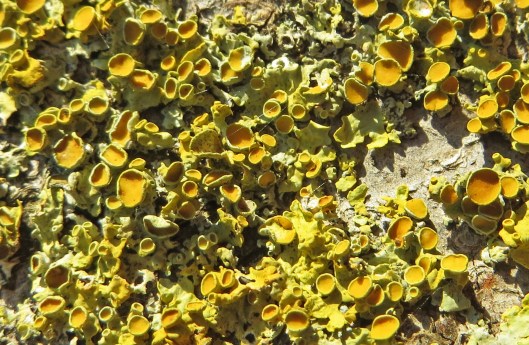
Though lichens are generally intolerant of pollution, this vibrant yellow and orange beauty is an exception and is even tolerant of heavy metal contamination. Its common names include common orange lichen, yellow scale, maritime sunburst lichen and shore lichen, from which you might correctly deduce that Xanthoria parietina is just as common on a rock at the seaside as it is on a tree in the city. It is also something of a globetrotter, being found throughout Britain and most of Europe, in North America, Africa and Asia, as well as in Australia.

xanthoria parietina (5)

Working from the belief that a plant could treat a disease it most looked like, medieval herbalists used Xanthoria parietina to treat jaundice because of its yellow colour, and scientific research has since shown that it has potent antiviral properties. And, given the intense yellow and orange colours of this lichen, it’s probably no surprise to learn that it has also been used as a dye. It is, for example, one of the traditional plant materials used to dye wool in the Scottish highlands and islands, though the colour it produces is brown, not yellow.

xanthoria parietina (1)

Like Loading...

Birding at Forest Farm

29 Friday Jan 2016

Posted by sconzani in birds, nature, nature photography

≈ 2 Comments

Tags

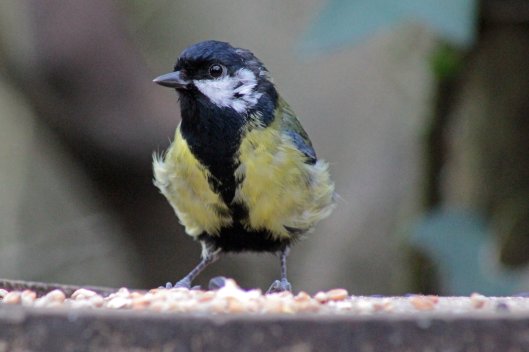
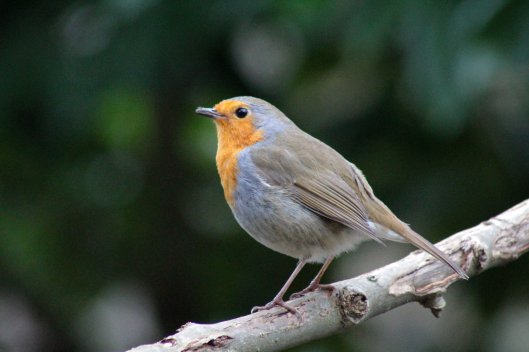
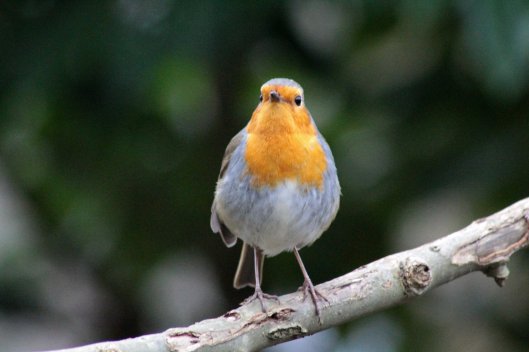
birding, birds, birdwatching, British birds, dunnock, Great tit, nuthatch, robin

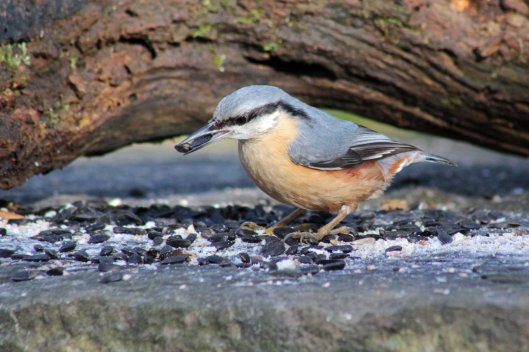
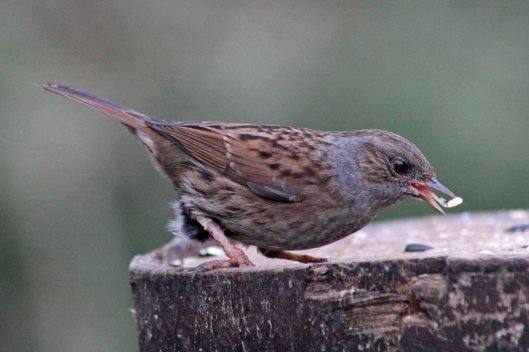
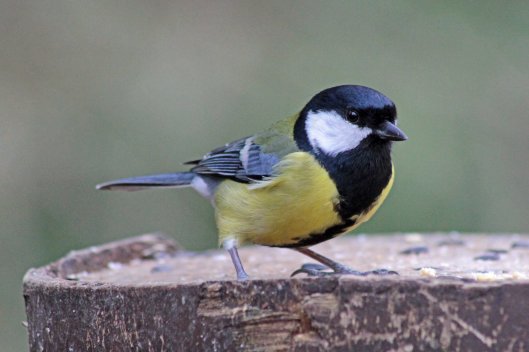
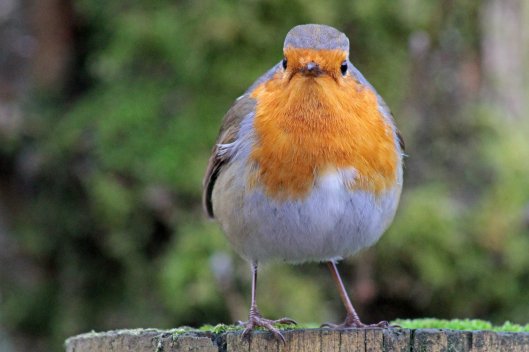
Forest Farm Nature Reserve, just north of Cardiff, is one of my favourite places, for a wander alongside the old Glamorgan Canal, for ferreting amongst the undergrowth for fungi, for enjoying the fresh air and an invigorating walk, and for photographing the local birds. With three bird hides and numerous informal feeding places scattered throughout the reserve, it’s almost impossible not to see birds. Mostly, they’re the familiar woodland and garden birds but Forest Farm is also well known for those extremely skilful anglers, the gorgeous kingfishers.

Here are some of the more common birds I photographed yesterday.

160131 1 nuthatch

Mr Greedy, the nuthatch

160131 2 dunnock

Mr Hungry, the dunnock

160131 3 great tit

Mr Handsome, the great tit

160131 4 robin

Mr Grumpy, the robin

160131 5 great tit

Mr Scruffy, the great tit

Like Loading...

Cramp balls

28 Thursday Jan 2016

Posted by sconzani in fungi, nature, nature photography

≈ 1 Comment

Tags

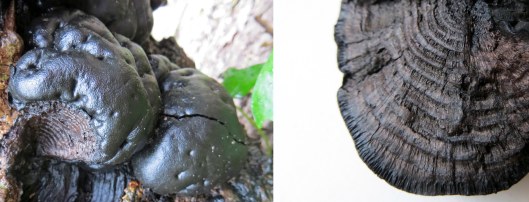
Cramp balls, Daldinia concentrica, fungi, fungus, King Alfred's Cakes, tinder

In my recent post about the fungi King Alfred’s Cakes, I mentioned that one of its other common names is cramp balls. It seems, in times past, folk believed that if you carried around these little fungi you wouldn’t suffer from night cramps. No one seems to know why they believed this!

160127 king alfreds cakes (1)

There is, however, another reason to carry cramp balls – they make good tinder. For this reason, cramp balls are also known as coal fungus and carbon balls, though they won’t light just by holding a match to them. The balls first need to be mature and very dry, and then it’s best to slice them in half and use something like a flint and steel to produce a spark. The cramp ball will smoulder, rather than produce a flame – for that you need something like straw or small twigs to start your fire.

160127 king alfreds cakes (2)

When you cut open the cramp ball, you will see concentric rings of grey and black inside (hence its scientific name Daldinia concentrica). These are similar to the growth rings inside a tree, though here they each represent a season of reproduction. Who would think that a small black lump of fungus could be so interesting?

Like Loading...

Conversations with robins: 2

27 Wednesday Jan 2016

Posted by sconzani in birds, nature, nature photography

≈ 2 Comments

Tags

birding, birds, birdwatching, British birds, robin

Roath Park Wild Gardens, after a drenching from Storm Jonas …

160128 robin (1)

Me: ‘Hello, robin. How are you doing today?’
Robin: ‘I’m a bit hungry, lady. Do you have food for me?’

160128 robin (2)

Me: ‘No, sorry, I haven’t been to the shop to buy more birdseed yet.’
Robin: ‘Well, that’s a bit slack, especially when you expect us robins to pose for your photos.’

160128 robin (3)

Me: ‘Yes, I know. I’m sorry. I could scuff up some leaves for you. There are probably plenty of worms under there.’
Robin: ‘That would be good. Your shoes are already covered in dirt so a little more wouldn’t hurt.’

160128 robin (4)

Me: ‘It is rather muddy on these paths after all the rain that came with Storm Jonas.’
Robin: ‘It wasn’t very nice for us robins with all that wind, either. But thank you for the leaf scuffing.’

160128 robin (5)

Me: ‘I’ll leave you to fly down and look for worms, then. See you again soon.’
Robin: ‘Tra la la la la.’

Like Loading...
← Older posts
Newer posts →

About me

sconzani

sconzani

I'm a writer and photographer; researcher and blogger; birder and nature lover; countryside rambler and city strider; volunteer and biodiversity recorder.

View Full Profile →

Follow earthstar on WordPress.com

Enter your email address to follow this blog and receive notifications of new posts by email.

Recent blog posts

  • Kestrel 2026 : 86 January 31, 2026
  • Birch polypore January 30, 2026
  • The Marl Med gull January 29, 2026
  • Recording Grey squirrels January 28, 2026
  • Jimmy Wren January 27, 2026

From the archives

COPYRIGHT

Unless otherwise acknowledged, the text and photographs on this blog are my own and are subject to international copyright. Nothing may be downloaded or copied without my permission.

Fellow Earth Stars!

  • Unknown's avatar
  • Unknown's avatar
  • Unknown's avatar
  • Unknown's avatar
  • Unknown's avatar
  • Unknown's avatar
  • Unknown's avatar
  • Unknown's avatar
  • Unknown's avatar
  • Unknown's avatar
  • Unknown's avatar
  • Unknown's avatar
  • Unknown's avatar
  • Unknown's avatar
  • Unknown's avatar
  • Unknown's avatar
  • Unknown's avatar
  • Unknown's avatar
  • Unknown's avatar
  • Unknown's avatar
  • Unknown's avatar
  • Unknown's avatar
  • Unknown's avatar
  • Unknown's avatar
  • Unknown's avatar
  • Unknown's avatar
  • Unknown's avatar
  • Unknown's avatar
  • Unknown's avatar
  • Unknown's avatar
  • Unknown's avatar
  • Unknown's avatar
  • Unknown's avatar
  • Unknown's avatar
  • Unknown's avatar
  • Unknown's avatar
  • Unknown's avatar
  • Unknown's avatar
  • Unknown's avatar
  • Unknown's avatar
  • Unknown's avatar
  • Unknown's avatar
  • Unknown's avatar
  • Unknown's avatar
  • Unknown's avatar
  • Unknown's avatar
  • Unknown's avatar
  • Unknown's avatar
  • Unknown's avatar
  • Unknown's avatar

Blog at WordPress.com.

Privacy & Cookies: This site uses cookies. By continuing to use this website, you agree to their use.
To find out more, including how to control cookies, see here: Cookie Policy
  • Subscribe Subscribed
    • earthstar
    • Join 670 other subscribers
    • Already have a WordPress.com account? Log in now.
    • earthstar
    • Subscribe Subscribed
    • Sign up
    • Log in
    • Report this content
    • View site in Reader
    • Manage subscriptions
    • Collapse this bar
 

Loading Comments...
 

You must be logged in to post a comment.

    %d