• ABOUT
  • BIRDING 2018
  • Birding 2019
  • BLOG POSTS
  • Butterflies 2018
  • Resources

earthstar

~ a celebration of nature

earthstar

Category Archives: nature

Oak galls: Currants and spangles

22 Tuesday Aug 2017

Posted by sconzani in insects, leaves, nature, trees

≈ 7 Comments

Tags

Common spangle gall, Currant gall, galls on oak, Neuroterus quercusbaccarum, Oak gall, Oak gall wasp, oak tree, Spangle gall

This is part one of the story of Oak galls – there will be a sequel (possibly two) because the poor old oak tree, one of the most iconic of British trees, the one almost everyone can identify, is also one of the trees most attacked by galls (though, in this case, the galls do little, if any, damage to the actual tree). This first Oak attack story is a bit like the chicken and the egg – which came first? – as Neuroterus quercusbaccarum, a wasp so tiny that only expert spotters ever actually see it, has the ability to reproduce both sexually and asexually, producing two types of gall on oak trees: the sexual generation is produced inside the Currant galls and the asexual generation develops inside the Common spangle galls.

170822 Neuroterus quercusbaccarum Oak Currant gall (1)
170822 Neuroterus quercusbaccarum Oak Currant gall (2)
170822 Neuroterus quercusbaccarum Oak Currant gall (3)

Let’s start with the Currants. As their name suggests, they look a little like currants or berries, maturing in colour from yellow and green to red and purple. In spring, you can find these attached to an Oak’s catkins or to the undersides of leaves.
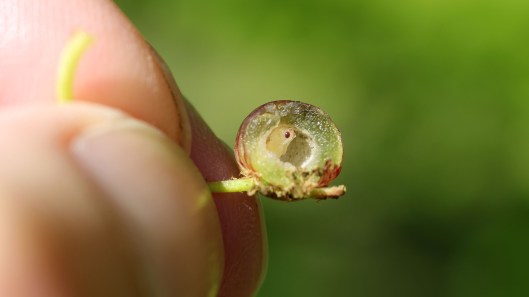
170822 Neuroterus quercusbaccarum Oak Currant gall

Inside, tiny larvae develop, emerging as adult wasps in June. These wasps are either male or female, they mate soon after emerging, then lay their eggs within the epidermis on the undersides of oak leaves.

170822 Neuroterus quercusbaccarum Spangle gall (1)
170822 Neuroterus quercusbaccarum Spangle gall (2)
170822 Neuroterus quercusbaccarum Spangle gall (3)

Now to the Spangles. When the eggs of the Currant gall generation hatch and their larvae begin to develop within the oak leaves, they create Spangle galls on the undersides of those leaves. The galls look a little like inverted saucers, with a slight hump in the middle. They are hairy and often quite a bright pinkish red to begin with, maturing eventually to a dull brown. Once mature, in late summer, the spangles detach and fall to the ground to be covered by the leaves of the oak, when they fall in autumn. The larvae overwinter in their cosy spangles, hatching in the spring when, without the need to mate, they lay their eggs on the oak’s leaves and catkins, thus producing the alternate generation of Currant galls. And so the cycle continues …
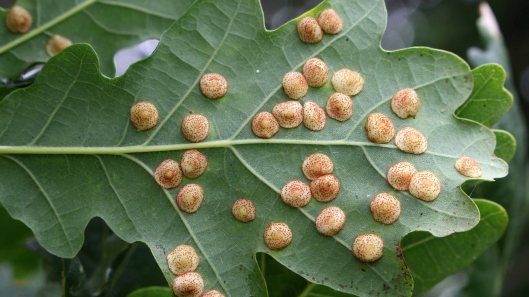
170822 Neuroterus quercusbaccarum Spangle gall (4)

Like Loading...

Bay birds

21 Monday Aug 2017

Posted by sconzani in birds, nature

≈ 6 Comments

Tags

birding, birdwatching, British birds, Cardiff Bay, Cardiff Bay wetlands, Great Crested Grebe, House martin, Linnet, Moorhen, Pied wagtail, swan, Turnstone

I had a super walk around Cardiff Bay yesterday …

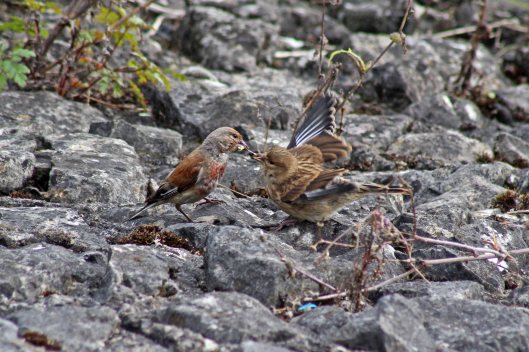
170821a Linnets

A family of four Linnets were feeding on the Ely embankment. The seeds of Herb Robert seemed to be their food of choice.

170821b Linnets

This is one of six Turnstones foraging along the shoreline. I love their breeding plumage, which is now just beginning to change back to their less colourful winter plumage.

170821c Turnstone

These House martin chicks were poking their heads out of a nest on a house at the end of Penarth Marina.

170821d House martins

A close-up of one of a family of six immature Swans by the Barrage.

170821e Swan

And a little further long, this juvenile Pied wagtail was slipping and sliding along the wires at the shoreline.

170821f Pied wagtail

At Cardiff Bay wetlands, I followed a flock of tits and friends, and snapped this lovely bird. It might be a warbler or it might be a Chiffchaff – I couldn’t be sure as I didn’t hear its song and it wouldn’t show me its legs!

170821g Warbler or Chiffchaff

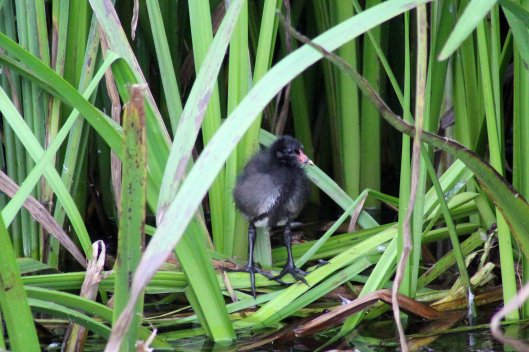
This young Moorhen was sticking close to the reeds while its parent was engaged in nest reconstruction, which seems just a little late in the year.

170821h Moorhen

And back over the other side of the Bay, by Ferry Court, this is one of three immature Great crested grebes that were swimming around amongst the Coots, Tufted ducks and Swans.

170821i Great crested grebe

Like Loading...

Butterfly bliss!

20 Sunday Aug 2017

Posted by sconzani in insects, nature

≈ 7 Comments

Tags

British butterflies, butterflies, butterfly, Lycaena phlaeas, Small copper

It’s three weeks since I caught a fleeting glimpse – and shot some very shaky photos – of my first-ever Small copper butterfly (Lycaena phlaeas), and I’ve been keeping an eye out for them wherever I go ever since. Ten days ago, I saw another, briefly, but a man came walking along the path and scared it away just as I was lining up for better images. Then, four days ago, another of these little beauties popped up on a flower right in front of me at Cosmeston and I got some reasonable, though not sharp photos – the wind was howling across the field that day.

170820 Small Copper Cosmeston (1)
170820 Small Copper Cosmeston (2)
170820 Small Copper Cosmeston (3)

And, finally, two days ago, when I was revisiting one of my former haunts, the glorious old meadows near Llanishen Reservoir, I saw first two, then another one Small copper, and these were so busy feasting and ‘interacting’ that I was able to watch them for ages. Butterfly bliss!

170820 Small copper Llanishen (1)
170820 Small copper Llanishen (2)
170820 Small copper Llanishen (3)

170820 Small copper Llanishen (4)

Like Loading...

Decorative bunting

19 Saturday Aug 2017

Posted by sconzani in birds, nature, nature photography

≈ 2 Comments

Tags

birding, birdwatching, British birds, bunting, decorative bunting, Reed bunting

‘Are you looking for outdoor bunting?’ read the ad in the local newspaper.

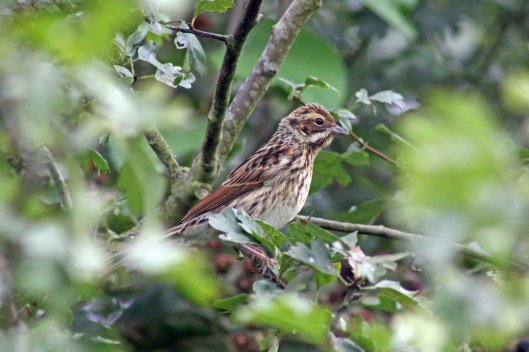
170819 Reed bunting (1)

Well, no, actually, I was outdoors looking for Spotted flies – this rather handsome Reed bunting was an added bonus!

170819 Reed bunting (2)

It did look a little out of place, sitting in a leafy tree amongst a long row of leafy trees, rather than in or very near the reed beds around the lakes.

170819 Reed bunting (3)

But it was certainly a very decorative addition to my afternoon’s birdwatching.

170819 Reed bunting (4)

Like Loading...

The everlasting thistle

18 Friday Aug 2017

Posted by sconzani in flowers, nature, wildflowers

≈ 5 Comments

Tags

British flora, British wildflowers, Carlina vulgaris, Carline thistle, Cosmeston Lakes Country Park, everlasting flower, Everlasting thistle, thistle

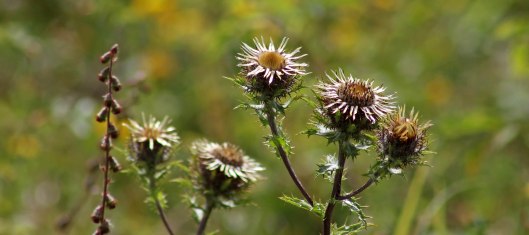
My new favourite flower resembles something you might find in a dried arrangement rather than a flower in full bloom but such is the look of the Carline thistle (Carlina vulgaris).

170818 Carline thistle (1)

It grows best on calcareous soils in Wales and England – they are thriving on the dry, stony grassland areas at Cosmeston Lakes Country Park. It’s spiny, as you would expect from a thistle, but is not a tall plant, probably no more than knee-height, and it sends up its spiky flower heads on solitary stems that have between 2 and 5 flowers on top.

170818 Carline thistle (2)
170818 Carline thistle (3)
170818 Carline thistle (4)

At first glance, you might think the flowers were dead but, if you look closer, you can see that they’re just like any other daisy-like flower, except for their brownish hues. When the sun touches them, they positively glow, and when the weather is cold and wet, they close up. The flowers can be seen from July through to September, after which they will dry out and often last right through the winter. I’m thinking that once they finish flowering, I might have to snaffle a couple to enjoy at home over the winter.

170818 Carline thistle (5)

Like Loading...

What’s on the teasel, 1

17 Thursday Aug 2017

Posted by sconzani in flowers, insects, nature, wildflowers

≈ 8 Comments

Tags

British insects, Dolycoris baccarum, Green shieldbug, insect behaviour, insects on teasels, Palomena prasina, Sloe shieldbug, Teasel

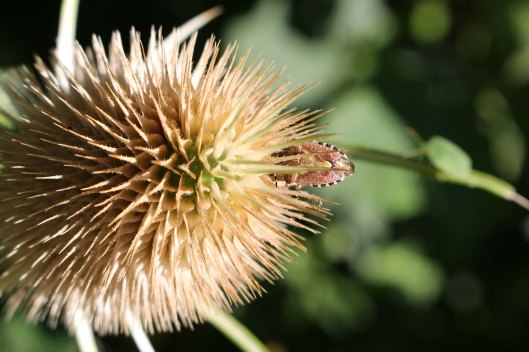
This is the sight that greeted me as I wandered home through Dingle Park the other day.

170817 whats on the teasel (1)

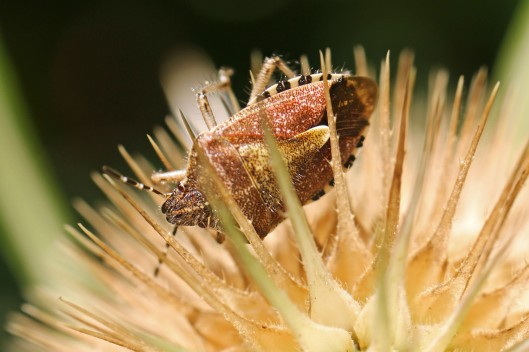
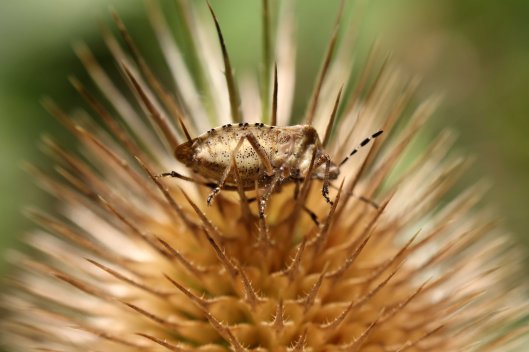
A Sloe shieldbug (Dolycoris baccarum) had its head buried deeply into the gaps between the spines of a teasel flower head. The tiny purple flowers had finished so it wasn’t nectaring, and I would’ve thought the flower head too tough for it to be sucking plant sap, so what on earth was it doing?

170817 whats on the teasel (2)

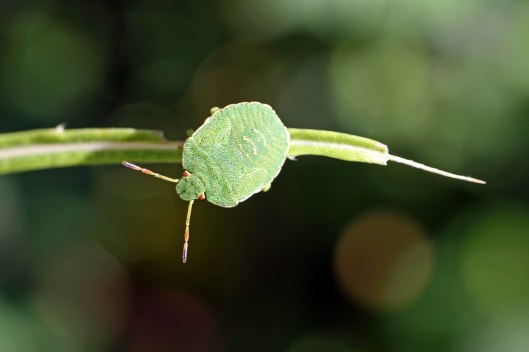
This little Green shieldbug nymph (Palomena prasina), watching from a nearby grass stem (you can see it in the background of the first image), looked as confused and bemused as I was.

170817 whats on the teasel (3)

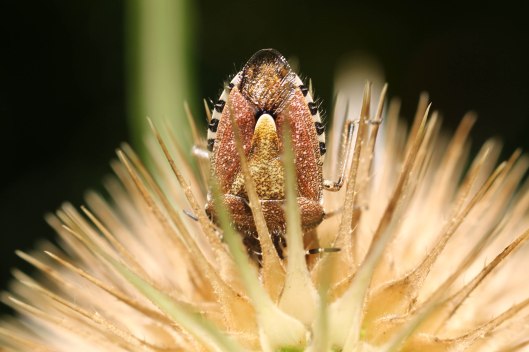
After a few minutes, the Parent bug backed out of its spiny possie but it didn’t move from the teasel.

170817 whats on the teasel (4)

This was a good opportunity to get a photo of the underside of the bug … but I never did discover what it had been doing.

170817 whats on the teasel (5)

Like Loading...

Clouded yellows

16 Wednesday Aug 2017

Posted by sconzani in insects, nature

≈ 7 Comments

Tags

British butterflies, butterflies, butterfly, Clouded yellow, Colias croceus, Lavernock Nature Reserve

Some days are just good days! On the same day that I finally caught up with the Spotted flycatchers at Cosmeston, I also saw my first Clouded yellow butterflies, and I’d been chasing those for a couple of weeks as well.

170816 Clouded yellow (2)

Colias croceus is primarily an immigrant – it has occasionally been known to overwinter but is usually killed by the cold and damp of British winters – and flies in for the summer months from southern Europe and north Africa. Way back in 1947, there was a huge migration, with numbers estimated at 36,000, but most years the numbers are much less, and this year very few of my butterfly-watching friends have seen any. So, I count myself very privileged indeed to have seen two at Lavernock Nature Reserve last Sunday.

170816 Clouded yellow (3)
170816 Clouded yellow (1)
Like Loading...

Chasing a Spotted Fly

15 Tuesday Aug 2017

Posted by sconzani in birds, nature

≈ 5 Comments

Tags

birding, birdwatching, British birds, Cosmeston Lakes Country Park, flycatcher, Muscicapa striata, Spotted flycatcher

There’s a local birdwatcher I follow on Twitter who always makes the most amazing sightings and I read his tweets – 6/8 ‘Spotted Flycatcher, 2 Garden Warblers, 40 Willow Warblers and 2 Tree Pipits’ and 8/8 ‘Grasshopper Warbler, 2 Spot Fly, Redstart, 2 Garden Warbler, 2 Lesser Whitethroat, 25 Willow Warbler, 2 Sedge Warbler’ – with great envy. These particular sightings were all at Cosmeston, one of my local country parks, so I decided to go looking for myself.

170815 Spotted flycatcher (1)

Spot the bird

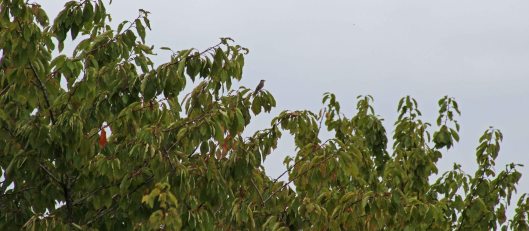
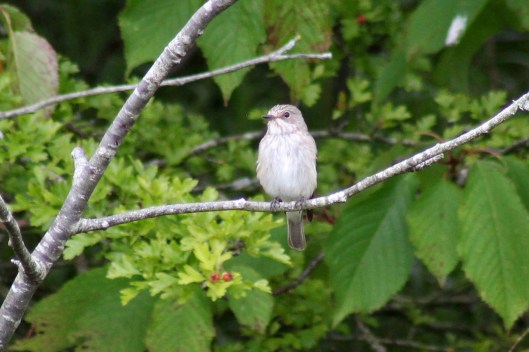
Warblers can be difficult to identify but I’d never seen a Spotted flycatcher (Muscicapa striata) so I made that my target. And it took me three visits and many many photographs of Chiffchaffs before I finally found them, by chance, not in the area where they’d been reported to be.

170815 Spotted flycatcher (4)

170815 Spotted flycatcher (2)
170815 Spotted flycatcher (5)

There were two birds and they were unmistakable as they were doing exactly what their name suggests, catching flies. From a perch in trees, they sat scanning the surrounding air space, then flying out quickly to grab their prey before returning to their perch to scoff it. Spotted flycatchers are migrants, arriving in Britain in April-May and then leaving again in September. It may be that these two birds were stocking up on food before heading off on their long journey to spend the winter in Africa. Intrigued? There’s an excellent article by the British Trust for Ornithology here.

170815 Spotted flycatcher (3)

Like Loading...

Not one but three!

14 Monday Aug 2017

Posted by sconzani in insects, nature

≈ 1 Comment

Tags

British moths, Euplagia quadripunctaria, Jersey tiger, Lavernock Nature Reserve, moth, moths, UK moths

So, my question today is how many moths does it take to make a colony?

170814 Jersey tiger 100817170814 Jersey tiger 130817 (1)170814 Jersey tiger 130817 (2)

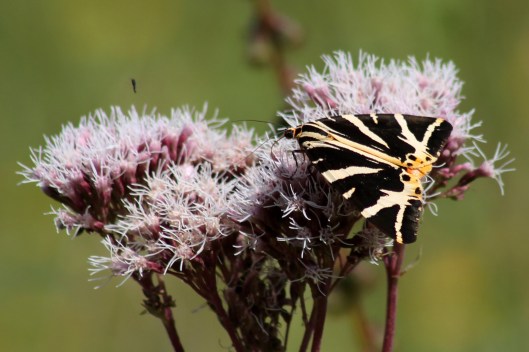
I passed through Lavernock Nature Reserve again yesterday and found two more Jersey tigers (Euplagia quadripunctaria). I can tell neither of these is the same as the one I saw three days earlier because the spots on their wings are all different (see inside bottom edge of right wing in these photos of all three, as shown below). I’m hoping this means there is now a colony of Jersey tigers becoming established in the reserve, rather than immigrants all arriving at the same time.

170814 Jersey tiger 100817 crop
170814 Jersey tiger 130817 crop (1)
170814 Jersey tiger 130817 crop (2)
Like Loading...

Fluttering at Lavernock

13 Sunday Aug 2017

Posted by sconzani in insects, nature

≈ 10 Comments

Tags

Brimstone butterfly, British butterflies, British moths, butterflies, Common blue, Large white, Lavernock Nature Reserve, moths, Painted Lady, Peacock, Red Admiral, Silver Y moth, Small copper

Now, I know I’ve been posting quite a few butterfly photos lately but I just adore them and, as summer will soon be over and they’ll disappear for another year, I can’t help but share their beauty while I can. So, as well as that gorgeous Jersey tiger I showed you yesterday, here are just a few of the 16 species of Lepidoptera from Lavernock Nature Reserve on Thursday: there were 4 Brimstone butterflies; large numbers of Common blues; this pair of Large whites mating; 5 Painted ladies; 2 stunning Peacocks; 4 Red admirals; 2 Silver Y moths that just wouldn’t keep still for a sharp photo; and only my second-ever Small copper that got scared off when someone came walking down the path towards me.

170813 Brimstone butterfly
170813 Common blue
170813 Large whites mating
170813 Painted lady
170813 Peacock
170813 Red admiral
170813 Silver Y moth
170813 Small copper
Like Loading...
← Older posts
Newer posts →

About me

sconzani

sconzani

I'm a writer and photographer; researcher and blogger; birder and nature lover; countryside rambler and city strider; volunteer and biodiversity recorder.

View Full Profile →

Follow earthstar on WordPress.com

Enter your email address to follow this blog and receive notifications of new posts by email.

Recent blog posts

  • Peak Wild garlic April 26, 2026
  • First damsels of 2026 April 25, 2026
  • NFY: Green-veined white April 24, 2026
  • The return of the Willow warblers April 23, 2026
  • Bug: Harpocera thoracica April 22, 2026

From the archives

COPYRIGHT

Unless otherwise acknowledged, the text and photographs on this blog are my own and are subject to international copyright. Nothing may be downloaded or copied without my permission.

Fellow Earth Stars!

  • Unknown's avatar
  • Unknown's avatar
  • Unknown's avatar
  • Unknown's avatar
  • Unknown's avatar
  • Unknown's avatar
  • Unknown's avatar
  • Unknown's avatar
  • Unknown's avatar
  • Unknown's avatar
  • Unknown's avatar
  • Unknown's avatar
  • Unknown's avatar
  • Unknown's avatar
  • Unknown's avatar
  • Unknown's avatar
  • Unknown's avatar
  • Unknown's avatar
  • Unknown's avatar
  • Unknown's avatar
  • Unknown's avatar
  • Unknown's avatar
  • Unknown's avatar
  • Unknown's avatar
  • Unknown's avatar
  • Unknown's avatar
  • Unknown's avatar
  • Unknown's avatar
  • Unknown's avatar
  • Unknown's avatar
  • Unknown's avatar
  • Unknown's avatar
  • Unknown's avatar
  • Unknown's avatar
  • Unknown's avatar
  • Unknown's avatar
  • Unknown's avatar
  • Unknown's avatar
  • Unknown's avatar
  • Unknown's avatar
  • Unknown's avatar
  • Unknown's avatar
  • Unknown's avatar
  • Unknown's avatar
  • Unknown's avatar
  • Unknown's avatar
  • Unknown's avatar
  • Unknown's avatar
  • Unknown's avatar
  • Unknown's avatar

Blog at WordPress.com.

Privacy & Cookies: This site uses cookies. By continuing to use this website, you agree to their use.
To find out more, including how to control cookies, see here: Cookie Policy
  • Subscribe Subscribed
    • earthstar
    • Join 642 other subscribers
    • Already have a WordPress.com account? Log in now.
    • earthstar
    • Subscribe Subscribed
    • Sign up
    • Log in
    • Report this content
    • View site in Reader
    • Manage subscriptions
    • Collapse this bar
 

Loading Comments...
 

You must be logged in to post a comment.

    %d