• ABOUT
  • BIRDING 2018
  • Birding 2019
  • BLOG POSTS
  • Butterflies 2018
  • Resources

earthstar

~ a celebration of nature

earthstar

Category Archives: nature

Home to House martins

23 Sunday Jul 2017

Posted by sconzani in birds, nature

≈ 4 Comments

Tags

birding, birdwatching, British birds, Delichon urbicum, House martin, House martin nests, mud birds' nests, nests of mud

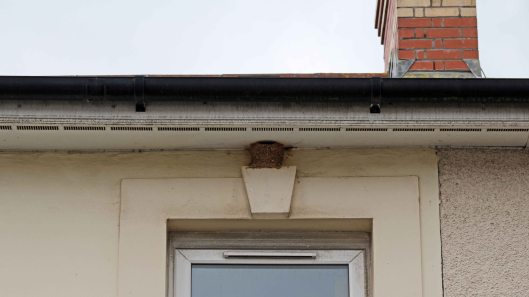
Take a blob of mud, mix with grass or straw, and build! A rounded shape works well. Add an interior lining of feathers, moss and other soft vegetable matter et voilà! You have the perfect nest in which to raise your brood of House martins.
170723 House martin nest (1)

There’s a street near my home, where the houses have the perfect architectural feature for House martin nests. Just below the eaves and above the first floor windows there are small abutments, the tops of which provide perfect little ledges where the House martins can prop their mud-pellet homes. On a recent walk past I counted twelve nests, though not all appeared to be occupied.

170723 House martin nest (2)
170723 House martin nest (3)
170723 House martin nest (4)
170723 House martin nest (5)
170723 House martin nest (6)
170723 House martin nest (7)

Of course, House martins (Delichon urbicum) would once have built their nests on cliffs – and some still do – but many have now become urban dwellers. The little colony in my local street is not uncommon as they prefer to dwell in groups, occasionally in large groups of several hundred nests though small groups of five to ten are more usual. Old nests are refurbished by returning birds, though not necessarily the original builders, and new nests are built where there’s space available, taking only one to two weeks to construct.

170723 House martin nest (8)

Though most humans live happily alongside their avian visitors, some get annoyed by their noise and the mess they create. Luckily, House martins and their nests are protected under the Wildlife and Countryside Act 1981 so it’s illegal to remove an active nest. I would feel privileged indeed to have a nest of these gorgeous little birds attached to my home.

170723 House martin nest (9)
170723 House martin nest (10)
Like Loading...

Spots before my eyes

22 Saturday Jul 2017

Posted by sconzani in insects, nature

≈ 5 Comments

Tags

6-spot Burnet, British moths, Cosmeston Lakes Country Park, moth, moths, Six-spot burnet, UK moths, Zygaena filipendulae

170722 6-spot Burnet moth (1)

I have never before seen as many 6-spot Burnet moths (Zygaena filipendulae) as I saw last Monday in one of the fields at Cosmeston Lakes Country Park. I stopped counting at one hundred and there were many many more. They are gorgeous little flying machines and glowed like wee red bumblebees as they flitted from the sunshine-yellow ragwort flowers to the more subtle but no less glorious lilac and purple blooms of knapweed, meadow thistle and teasel. They were wondrous to behold.

170722 6-spot Burnet moth (2)
170722 6-spot Burnet moth (3)
170722 6-spot Burnet moth (4)
170722 6-spot Burnet moth (5)
170722 6-spot Burnet moth (6)
170722 6-spot Burnet moth (7)
170722 6-spot Burnet moth (8)
170722 6-spot Burnet moth (9)
170722 6-spot Burnet moth (10)
170722 6-spot Burnet moth (11)
170722 6-spot Burnet moth (12)
170722 6-spot Burnet moth (13)
Like Loading...

The Pimpernels

21 Friday Jul 2017

Posted by sconzani in flowers, nature, plants, wildflowers

≈ 5 Comments

Tags

Anagallis arvensis, Anagallis arvensis ssp. foemina, Anagallis tenella, Blue pimpernel, Bog pimpernel, British flora, Lysimachia nemorum, pimpernel, Scarlet pimpernel, Yellow pimpernel

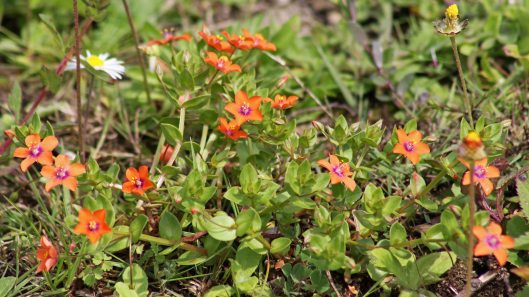
For Floral Friday this week I bring you the Pimpernels.

170721 Scarlet pimpernel

First, the pimpernel flower many of you will be familiar with, Scarlet pimpernel (Anagallis arvensis), also known as Old man’s weathervane and Poor man’s weatherglass due to its habit of shutting its petals when the weather becomes wet or dull. (I imagine they will be very firmly shut against today’s wind and rain!) The flower also functions as a timekeeper as it opens its petals around 8am and closes them at 2pm, even when the weather’s fine.

170721 Blue-flowered Scarlet pimpernel (1)
170721 Blue-flowered Scarlet pimpernel (2)

I only learned quite recently that the Scarlet has a subspecies, the Blue pimpernel (Anagallis arvensis ssp. foemina). This is supposedly quite rare and mostly found in southern England, though the one in my photographs is growing in my friend Hilary’s south Wales garden.

170721 Bog pimpernel

As its name suggests, the Bog pimpernel (Anagallis tenella) prefers watery places, marshy areas and soggy peat bogs. Its delicate pink flowers sprinkle the ground like petals under a blossoming cherry tree.

170721 Yellow pimpernel

There is also a yellow-flowered pimpernel – you guessed it, the Yellow pimpernel (Lysimachia nemorum) – that is commonly seen in established deciduous woodland and alongside shaded streams. Although it carries the name pimpernel, this lovely little plant is actually a separate genus and is more closely related to plants like Creeping-Jenny (Lysimachia nummularia) and Yellow loosestrife (L. vulgaris).

How many of these lovely pimpernels have you managed to see?

Like Loading...

Not so Common darters

20 Thursday Jul 2017

Posted by sconzani in insects, nature

≈ 8 Comments

Tags

British dragonflies, Common Darter, dragonflies, dragonfly, National Dragonfly Week, Sympetrum striolatum

170720 Common darter (1)

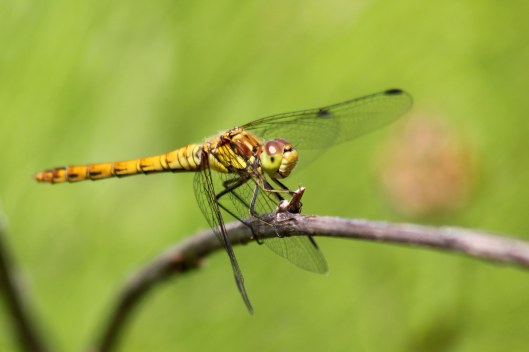
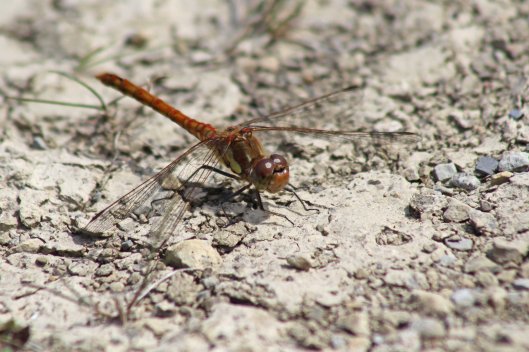
I haven’t been seeing a lot of dragonflies this year – probably just me not going to the right places, rather than an actual scarcity – but I have seen two Common darters (Sympetrum striolatum) in the past week. Although I blogged about these beauties around this time last year, I thought I’d share these latest images to celebrate National Dragonfly Week, which is happening right now.

170720 Common darter (2)

I had a bit of luck this week as I finally managed to photograph one of these lovely creatures in flight. It’s not the sharpest of shots but I’ll take it.

170720 Common darter (3)

Like Loading...

Aliens in a Cardiff park

19 Wednesday Jul 2017

Posted by sconzani in nature, plants, wildflowers

≈ 4 Comments

Tags

alien flora, alien plants, Canadian Fleabane, Fennel, French bartsia, Himalayan Balsam, Himalayan blackberry, Hoary mustard, Large-flowered evening primrose, Mary Gillham Archive Project, Small-flowered evening primrose, Tansy, White mignonette, Wild radish

On Sunday the Mary Gillham Archive Project teamed up with the Cardiff Naturalists’ Society to replicate a walk that Mary Gillham had participated in many moons ago, looking for aliens in Cardiff. Of course, I don’t mean the little-green-man type of alien – these were alien plants, though the definition of alien in this case seemed quite diverse. They may have been non-native plants that had arrived in Cardiff in the sand that served as ballast in the days of sailing ships, like Canadian Fleabane (Conyza canadensis).

170719 Cardiff naturalists
170719 Canadian fleabane

They may arrived in shipments of imported grain or bird seed or perhaps in bales of wool, like Hoary mustard (Hirschfeldia incana) and White mignonette (Reseda alba). Or they may have initially been decorative plants, like the Large-flowered evening primrose (Oenothera glazoviana) that was introduced from North America in the early 17th century and has since become naturalised.

170719 Hoary mustard
170719 Large-flowered evening primrose

As well as those plants named above, we also saw the following aliens: Small-flowered evening primrose (Oenothera cambrica) (introduced to cultivation in Britain in 1775); Himalayan blackberry (Rubus armeniacus) (a garden escapee); French bartsia (Odontites jaubertianus) (mode of introduction unknown); Wild radish (Raphanus raphanistrum subsp. raphanistrum) (presumed to have spread as a weed of cultivation); Fennel (Foeniculum vulgare) (probably introduced by the Romans); Tansy (Tanacetum vulgare) (an escapee from cultivation); and, of course, the notorious Himalayan balsam (Impatiens glandulifera) (introduced as an ornamental garden plant in 1839).

The aliens are among us and they’re thriving!

170719 Fennel
170719 Himalayan balsam
170719 Himalayan blackberry
170719 Small-flowered evening primrose
170719 Tansy
170719 Wild radish

Much of the information about the origins of these plants came from the Online Atlas of the British and Irish Flora.

Like Loading...

A tale of three bindweeds

18 Tuesday Jul 2017

Posted by sconzani in flowers, nature, wildflowers

≈ 8 Comments

Tags

bindweed, Bindweed flower, British flora, British wildflowers, Field bindweed, Hedge bindweed, Large bindweed

170718 Bindweed (3)

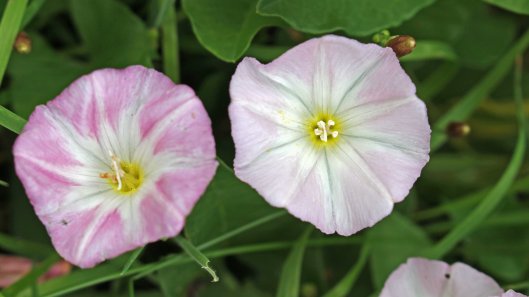
There are, in fact, five species of bindweed in Britain but I’ve only encountered three so far. One, the Field bindweed (Convolvulus arvensis) is, I think, the easiest to identify: it’s quite small, and its flowers are a delicate swirl of pink and white (as shown below).

170718 Field bindweed

Then there are the two bindweeds that have large white flowers, Hedge bindweed (Calystegia sepium) and the aptly named Large bindweed (Calystegia silvatica). To my untrained eye, these two look remarkably similar but I have recently learnt how to tell them apart so I thought I’d share that little snippet of knowledge. My wildflower key tells me that Hedge bindweed has an epicalyx of 2 bracteoles that don’t (or scarcely) overlap, whereas the Large bindweed has strongly inflated, overlapping bracteoles. Okay, so you might now be thinking, “Huh?” Well, the photos below show the difference: Hedge, left, and Large, right. Easy now, right?

170718 Bracteoles Hedge bindweed
170718 Bracteoles Large bindweed

Oh, and one more thing I found out while looking at all those bindweeds. The flowers often look like a little fairy has come along and snipped pretty patterns in their petals with miniature scissors. A fanciful idea I admit, but it’s almost true – these have been created by bees and other insects desperate to get at the sweet nectar inside so they cut their way into the flower bud before it opens.

170718 Bindweed (1)
170718 Bindweed (2)
Like Loading...

Birding at Goldcliff Lagoons

17 Monday Jul 2017

Posted by sconzani in birds, nature

≈ 6 Comments

Tags

birding, birdwatching, British birds, Buzzard, Common Gull, Glamorgan Bird Club, Goldcliff lagoons, Little egret, Newport Wetlands, waders

170717 Goldcliff reen

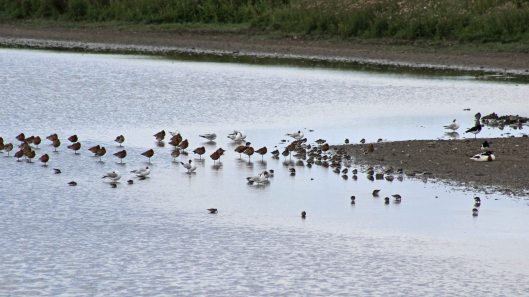
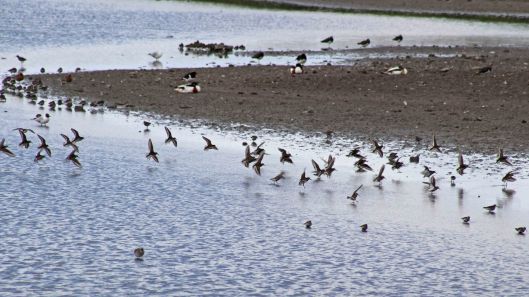
I thoroughly enjoyed my first visit to Goldcliff lagoons and Newport Wetlands with my Glamorgan Bird Club buddies this week. As their names suggest, these sites are perfectly suited to water birds and waders so in the two photos below the birds include Black-tailed godwits, Dunlins, Ringed and Little ringed plovers, Black-headed and Herring gulls, Oystercatchers and Turnstones, Lapwings and Shelducks.

170717 Waders (1)170717 Waders (2)

Apparently, 67 species were seen (or heard) though my personal list only totalled 44 – this is because the birds are mostly quite distant at these sites, and I don’t have binoculars, and I can only see so far with the 300mm lens on my camera, so some birds just elude my eyes.

170717 Buzzard
170717 Common & Black-headed gulls
170717 Little egret

I did, however, manage to grab a blurry shot of a water vole that a fellow birder spotted, and saw some lovely butterflies and moths, and my sightings did include my first ever Knot and Common gull, so I was happy.

170717 Green-veined white
170717 local sheep
170717 Water vole
Like Loading...

Two more leafhoppers

16 Sunday Jul 2017

Posted by sconzani in insects, nature

≈ 2 Comments

Tags

British bugs, British insects, British leafhoppers, Cicadellidae, Eurhadina cocinnia, Eurhadina loewii, leafhopper

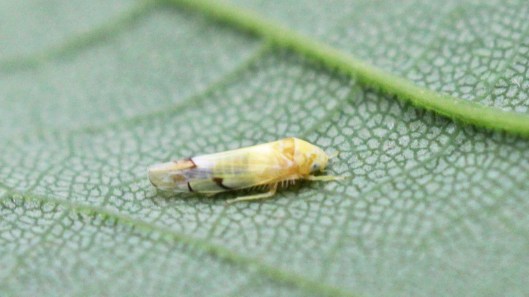
I’ve been leaf-turning again and one thing you’re almost sure to find if you turn over enough leaves is a leafhopper. These are two recent finds, their identities now confirmed by the national recorder. Both are small – around 4mm long when adults, and both can be seen from around June to September.

170712 Eurhadina cocinnia

Eurhadina cocinnia
These little guys have a preference for oak trees but can also be found on other deciduous tree, and are common throughout Britain.

170712 Eurhadina loewii

Eurhadina loewii
E. loewii prefers Sycamore trees and, occasionally, Field maple, and lives in most English counties and in south Wales, but hasn’t yet crossed the Brecon Beacons.

The two photos below are interesting, I think. The one on the left shows E. loweii in its larval form and the photo on the right shows an empty skin, after the larva has gone through one of several moults between its emergence from an egg until the time it’s ready to pupate.

170712 Eurhadina loewii larva
170712 Eurhadina loewii larval skin
Like Loading...

End of the day

15 Saturday Jul 2017

Posted by sconzani in birds, nature

≈ Leave a comment

Tags

birding, birdwatching, British birds, Corvus monedula, flock of jackdaws, jackdaw, Jackdaw flock, jackdaws roosting

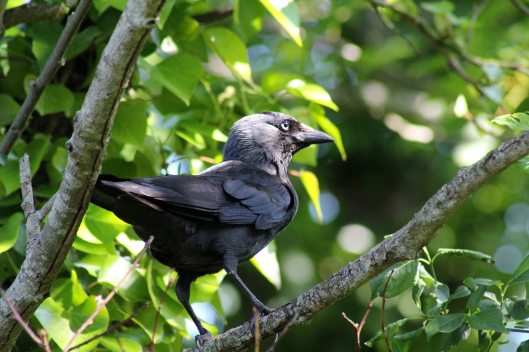
It’s 8pm and I hear them before I see them, squawking, arguing, flapping furiously. And then they arrive, all at once, circling and swooping and jostling, each trying to grab the best vantage point on the steeple, finials and rooftop of the church across the road. I’ve counted at least 40 but there are many more on neighbouring building roofs, chimney stacks and tv aerials. They don’t stay long, perhaps 10 minutes, and off they fly, to roost for the night.

170715 Jackdaws (2)

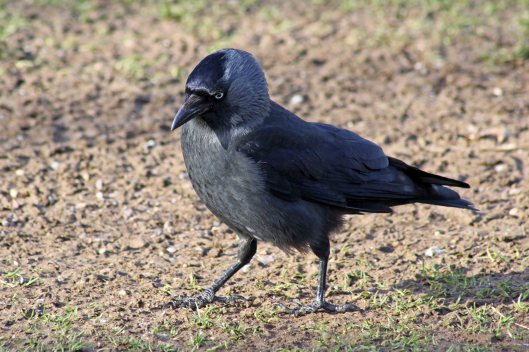
They’re jackdaws (Corvus monedula), members of the crow family, sociable, curious, intelligent, and devoted to their partners. I am particularly attracted to their bright blue eyes.

170715 Jackdaws (1)

170715 Jackdaws (4)
170715 Jackdaws (5)
170715 Jackdaws (6)


Like Loading...

Fireweed, Bombweed

14 Friday Jul 2017

Posted by sconzani in nature, wildflowers

≈ 16 Comments

Tags

Bombweed, British flora, British wildflowers, Chamerion angustifolium, Fireweed, Rosebay willowherb

170714 Rosebay willowherb (5)

It takes a while to learn the differences between the different willowherbs (and the ease with which they hybridise doesn’t help!) but this, the Rosebay willowherb (Chamerion angustifolium), is probably the one most people know best. It was a garden escapee originally, first recorded growing in the wild in 1769, and was considered quite scarce until World War I, when the plant took advantage of woodland areas where timber had been felled (and the area burned) to assist the war effort. Rosebay willowherb’s liking for areas that have been burned is the reason for its common name of Fireweed and is why, during World War II, it thrived in London’s bomb craters, thus earning the plant its other common name of Bombweed. Some people curse it for its invasive tendencies but, for me, there is no prettier sight that a stand of Rosebay willowherb glowing in the bright summer sunshine.

170714 Rosebay willowherb (1)
170714 Rosebay willowherb (2)
170714 Rosebay willowherb (3)
170714 Rosebay willowherb (4)
170714 Rosebay willowherb (6)
170714 Rosebay willowherb (7)
170714 Rosebay willowherb (8)
Like Loading...
← Older posts
Newer posts →

About me

sconzani

sconzani

I'm a writer and photographer; researcher and blogger; birder and nature lover; countryside rambler and city strider; volunteer and biodiversity recorder.

View Full Profile →

Follow earthstar on WordPress.com

Enter your email address to follow this blog and receive notifications of new posts by email.

Recent blog posts

  • Peak Wild garlic April 26, 2026
  • First damsels of 2026 April 25, 2026
  • NFY: Green-veined white April 24, 2026
  • The return of the Willow warblers April 23, 2026
  • Bug: Harpocera thoracica April 22, 2026

From the archives

COPYRIGHT

Unless otherwise acknowledged, the text and photographs on this blog are my own and are subject to international copyright. Nothing may be downloaded or copied without my permission.

Fellow Earth Stars!

  • Unknown's avatar
  • Unknown's avatar
  • Unknown's avatar
  • Unknown's avatar
  • Unknown's avatar
  • Unknown's avatar
  • Unknown's avatar
  • Unknown's avatar
  • Unknown's avatar
  • Unknown's avatar
  • Unknown's avatar
  • Unknown's avatar
  • Unknown's avatar
  • Unknown's avatar
  • Unknown's avatar
  • Unknown's avatar
  • Unknown's avatar
  • Unknown's avatar
  • Unknown's avatar
  • Unknown's avatar
  • Unknown's avatar
  • Unknown's avatar
  • Unknown's avatar
  • Unknown's avatar
  • Unknown's avatar
  • Unknown's avatar
  • Unknown's avatar
  • Unknown's avatar
  • Unknown's avatar
  • Unknown's avatar
  • Unknown's avatar
  • Unknown's avatar
  • Unknown's avatar
  • Unknown's avatar
  • Unknown's avatar
  • Unknown's avatar
  • Unknown's avatar
  • Unknown's avatar
  • Unknown's avatar
  • Unknown's avatar
  • Unknown's avatar
  • Unknown's avatar
  • Unknown's avatar
  • Unknown's avatar
  • Unknown's avatar
  • Unknown's avatar
  • Unknown's avatar
  • Unknown's avatar
  • Unknown's avatar
  • Unknown's avatar

Blog at WordPress.com.

Privacy & Cookies: This site uses cookies. By continuing to use this website, you agree to their use.
To find out more, including how to control cookies, see here: Cookie Policy
  • Subscribe Subscribed
    • earthstar
    • Join 642 other subscribers
    • Already have a WordPress.com account? Log in now.
    • earthstar
    • Subscribe Subscribed
    • Sign up
    • Log in
    • Report this content
    • View site in Reader
    • Manage subscriptions
    • Collapse this bar
 

Loading Comments...
 

You must be logged in to post a comment.

    %d