• ABOUT
  • BIRDING 2018
  • Birding 2019
  • BLOG POSTS
  • Butterflies 2018
  • Resources

earthstar

~ a celebration of nature

earthstar

Category Archives: trees

Leafmines: Parornix anglicella revisited

14 Monday Oct 2024

Posted by sconzani in insects, trees

≈ Leave a comment

Tags

British moths, cones on Hawthorn leaves, Hawthorn, leaf-mining moth, leaf-mining moth larvae, leafmines on Hawthorn, moth larva spinning, Parornix anglicella

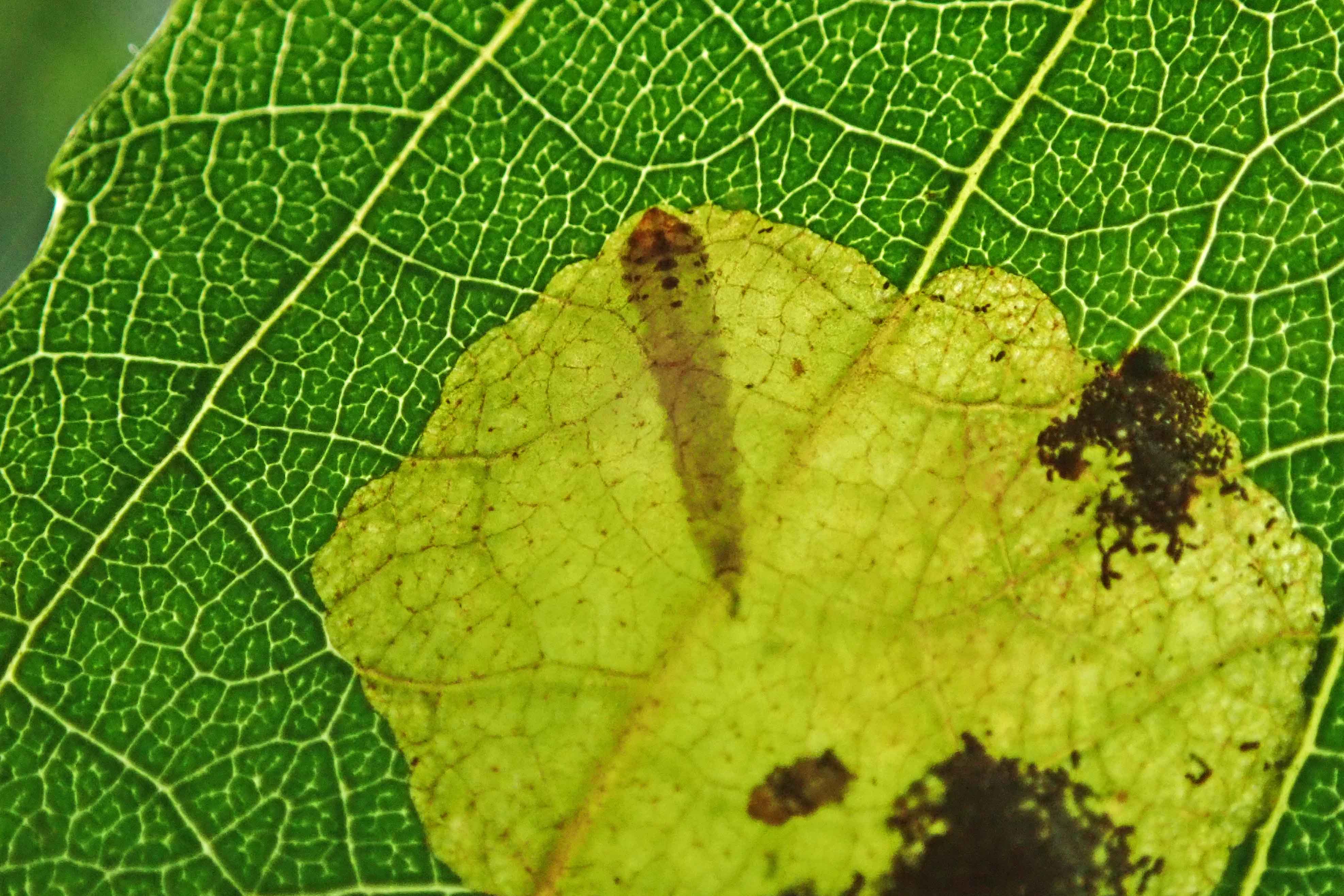
Recently, when checking Hawthorn leaves for leafmines, I spotted two of these larvae spinning on separate but close Hawthorn bushes so took several photos of both and a short video of one.

241014 Parornix anglicella (1)

As the majority of photographs show larvae from above not below, and these both looked to have dark spot-like markings, I was confused about which species they might be, perhaps Parornix anglicella or maybe Phyllonorycter oxyacanthae. And I wasn’t the only one scratching my head, as my online expert contacts weren’t sure either – one of them even contacted their own expert to get an opinion. A return visit by me was clearly required, to try to re-find the larvae, possibly get more images, and see what had developed from their spinning activities.

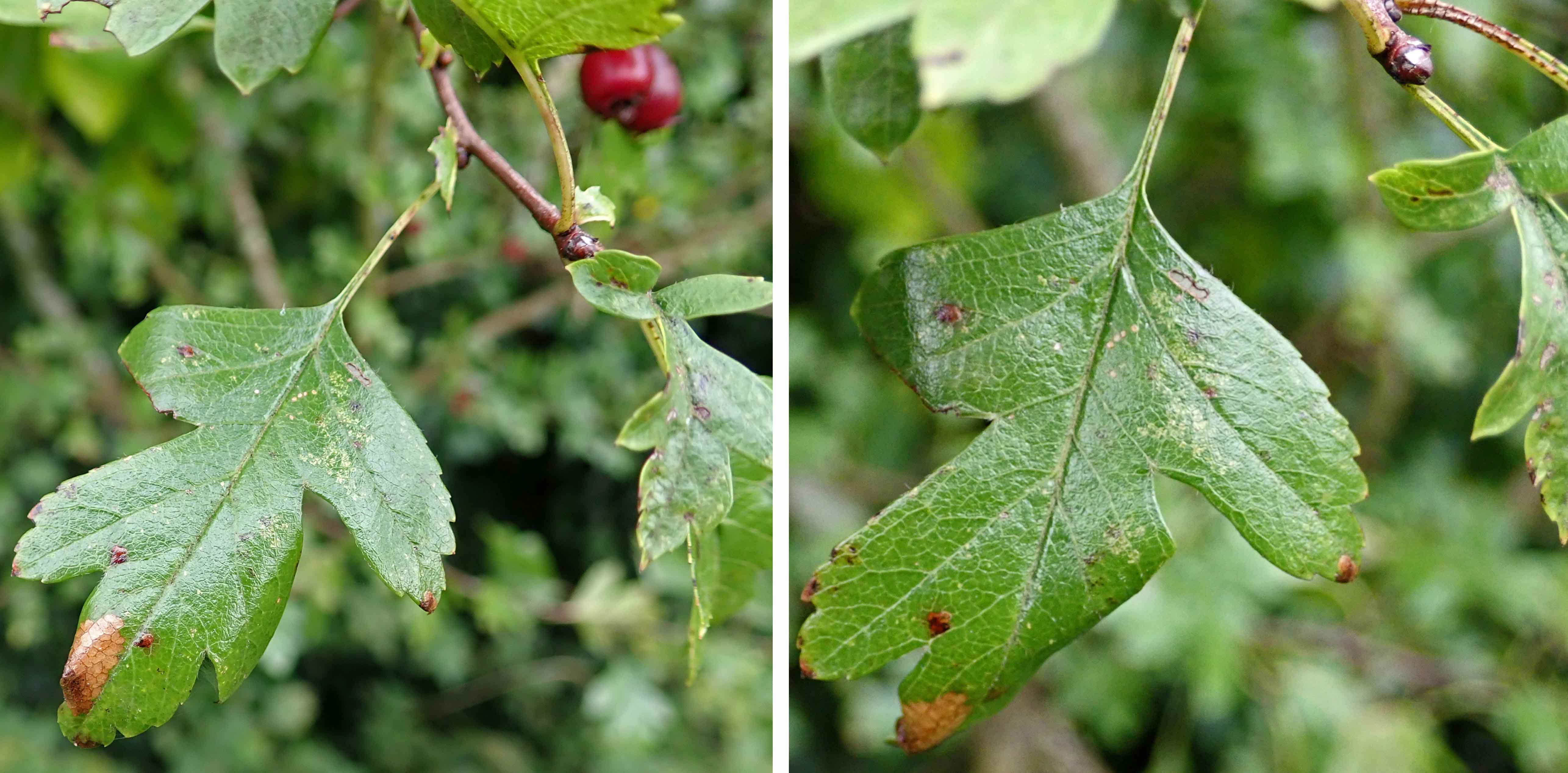
So, while the location was fresh in my memory, I walked that way again the following day, and, amazingly, managed to find one of the leaves – not an easy task finding an individual leaf in a Hawthorn bush but the photo below shows the leaf in question, on consecutive days.
241014 Parornix anglicella (2)

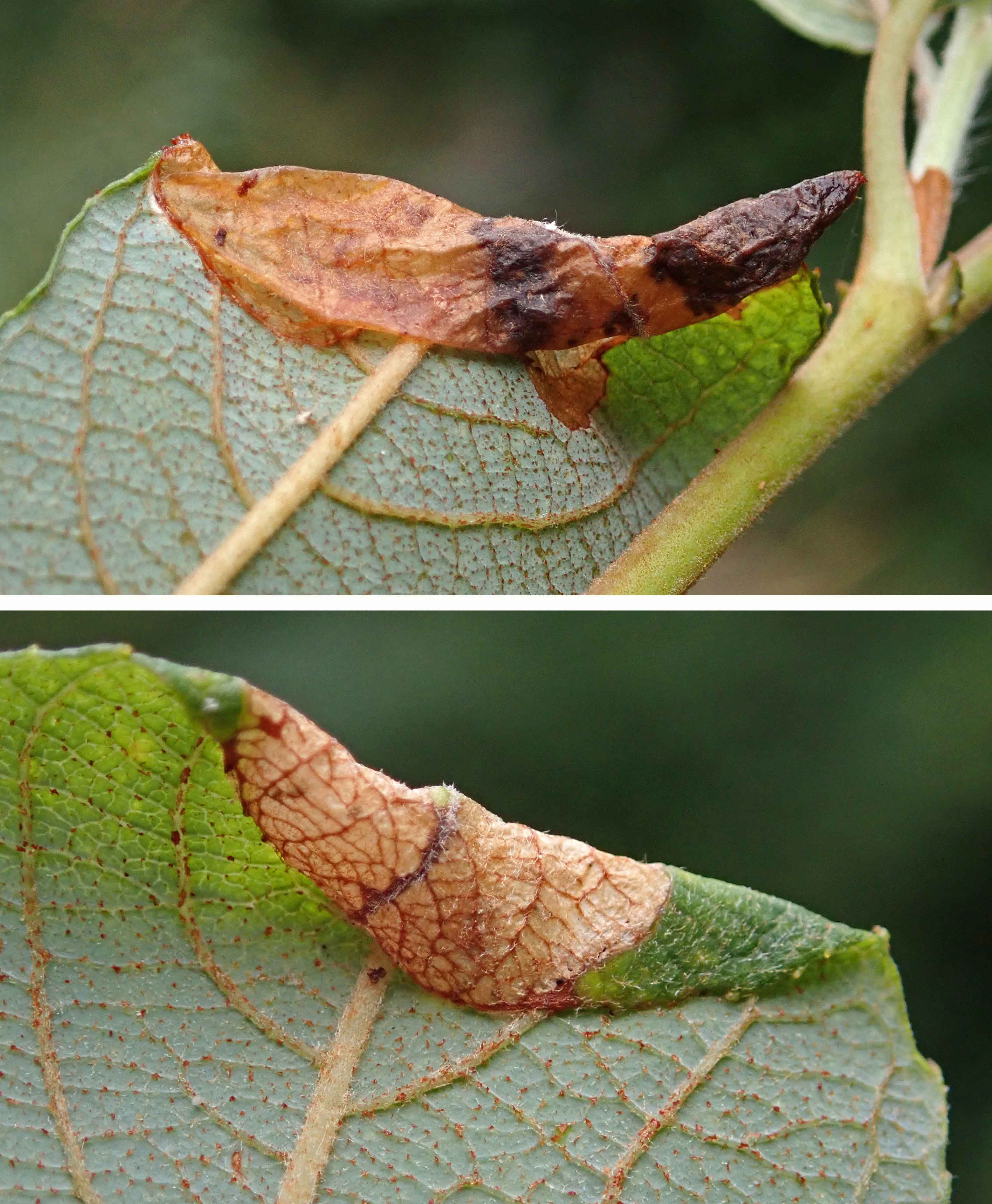
And, when I turned the leaf over, there was the proof of identification, the distinctive cone of Parornix anglicella, still very green as the larva within hadn’t yet had time to eat all the leaf from inside. Turns out the expert’s expert had been correct!

241014 Parornix anglicella (3)

Like Loading...

Leafmines: Aulagromyza tremulae

07 Monday Oct 2024

Posted by sconzani in insects, trees

≈ Leave a comment

Tags

Aspen, Aulagromyza tremulae, leaf-mining flies, leaf-mining fly larvae, leafmines on Aspen, leafmines on Black poplar

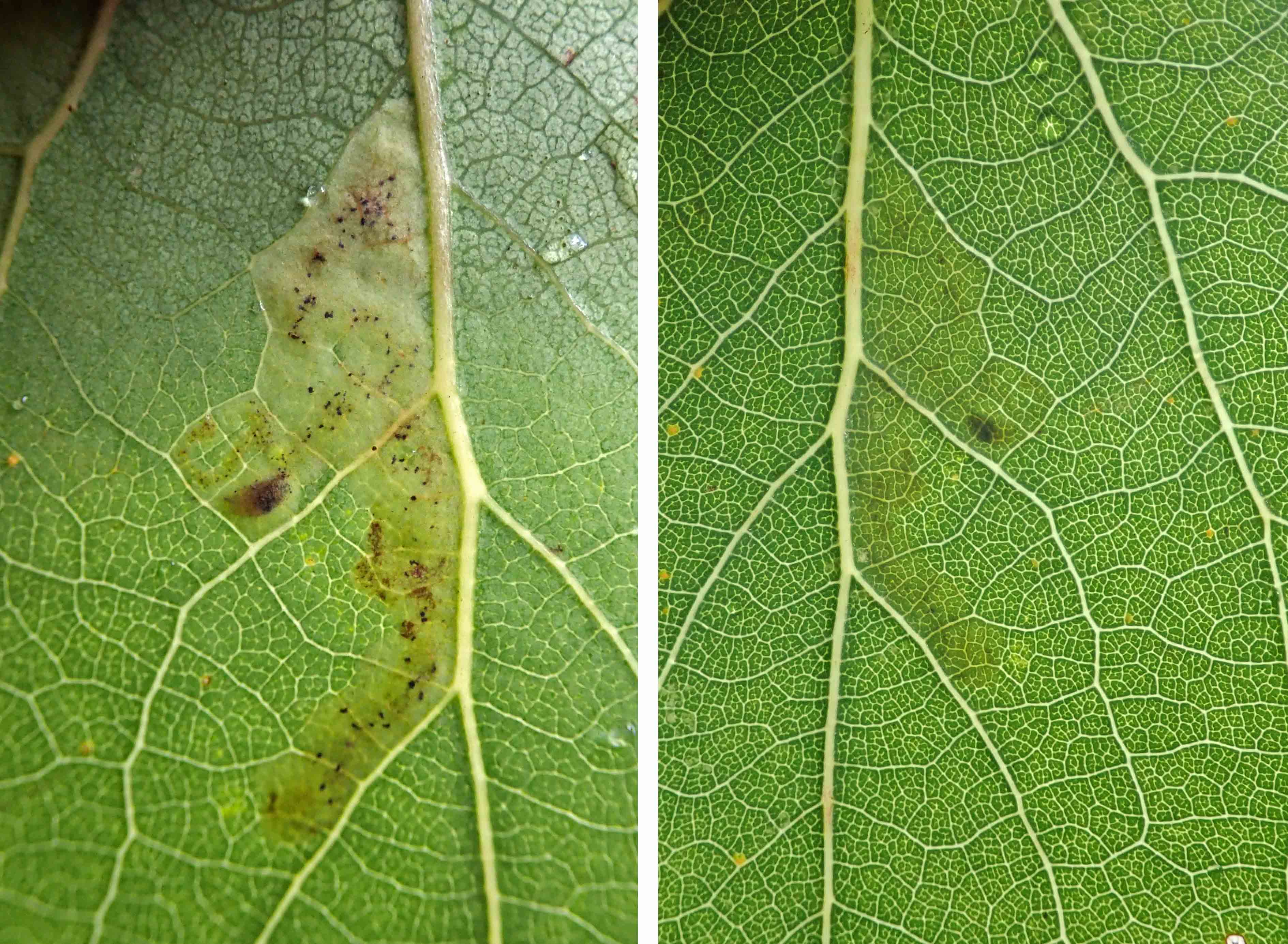
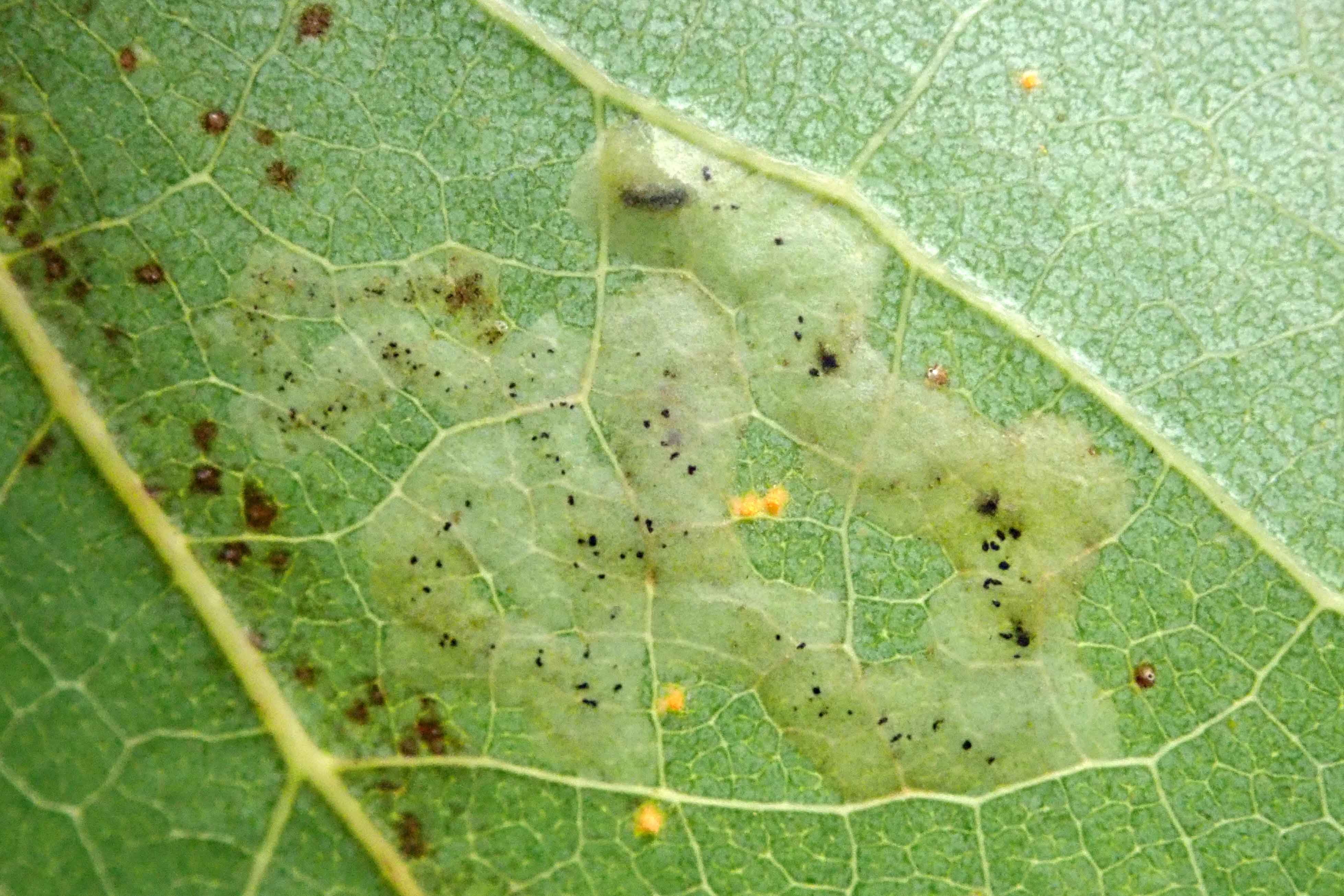
I don’t find many leafmines on Aspen, probably because there aren’t a lot of Aspen trees growing locally. Also, I haven’t been finding many mines made by creatures other than moths but today’s find is an exception, as these silvery meandering gallery mines on Aspen leaves were made by the larva of the tiny fly Aulagromyza tremulae.

241007 Aulagromyza tremulae (1)

If I hadn’t been doing a spot of leaf-turning, I could easily have missed these mines, as they are almost exclusively made in the lower surface of the leaf (see images below showing the lower and upper leaf surfaces). This is one of the characteristics that distinguishes these mines from those of other species, though Barry Warrington, who runs the National Agromyzidae Recording Scheme and website, discovered this wasn’t always the case when he recently bred Aulagromyza tremulae flies from upper surface mines. (Barry has confirmed the identity of the mines pictured here, fortunately.)

241007 Aulagromyza tremulae (2)

This little fly has two broods per year, so mines can be found on Aspen (Populus tremula), and also on Black poplar (Populus nigra), in the early summer and again in early autumn. I haven’t managed to find any images of the adult fly so maybe I should try to breed one through to see what they look like. If that happens, there’ll definitely be a show-and-tell post.

Like Loading...

Leafmines: Caloptilia rufipennella

23 Monday Sep 2024

Posted by sconzani in insects, trees

≈ Leave a comment

Tags

British leafminers, Caloptilia rufipennella, leaf-mining moth larvae, leaf-mining moths, leafminers on Sycamore, sycamore

I was really pleased with my leaf-turning results on this particular Sycamore tree as I managed to find all three stages of this leaf-mining larva’s progress through the leaves. They illustrate quite well the breeding cycle of the little brown moth, Caloptilia rufipennella (you can see what it looks like on the UK Moths website).

240923 Caloptilia rufipennella (1)

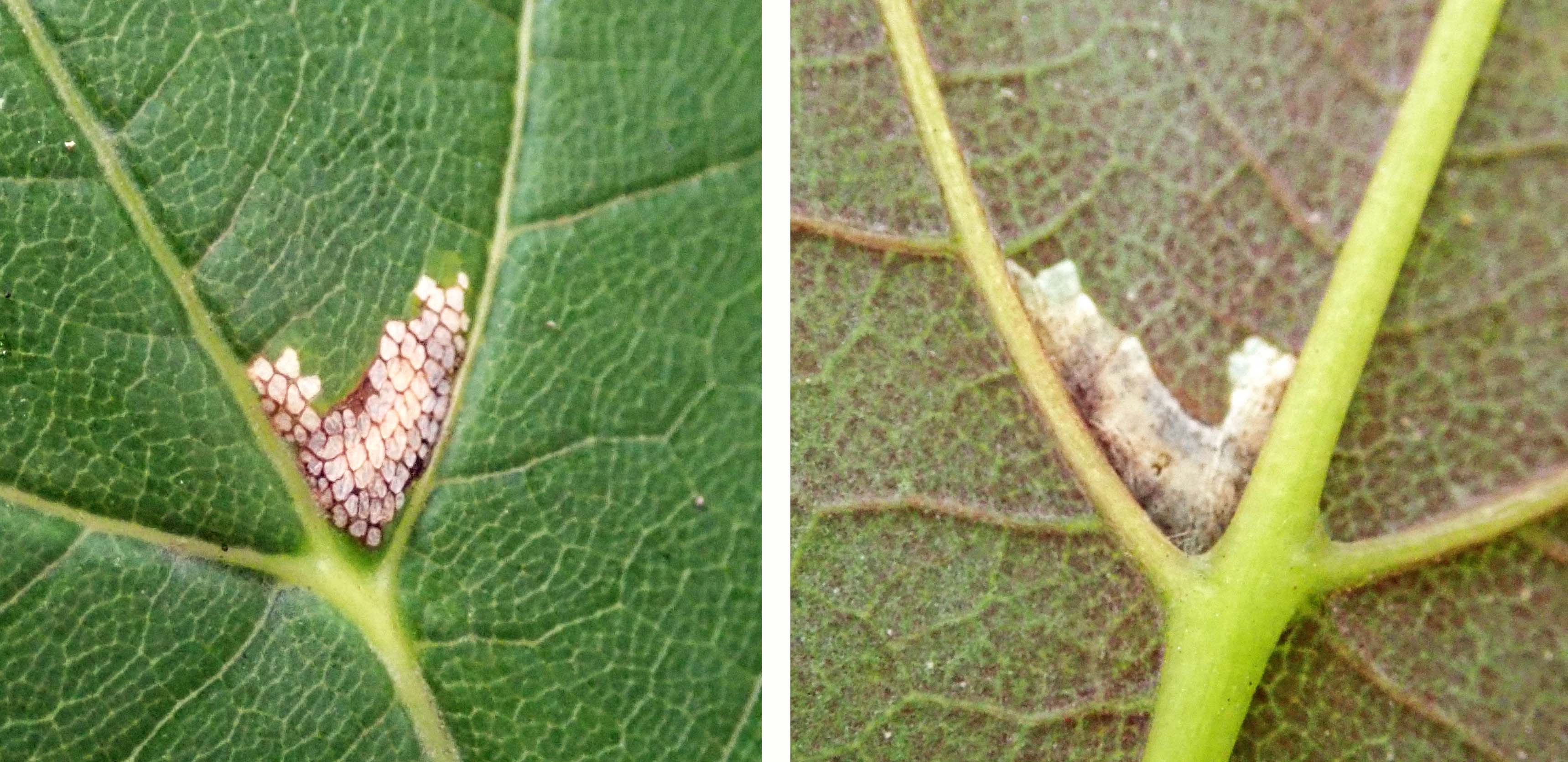
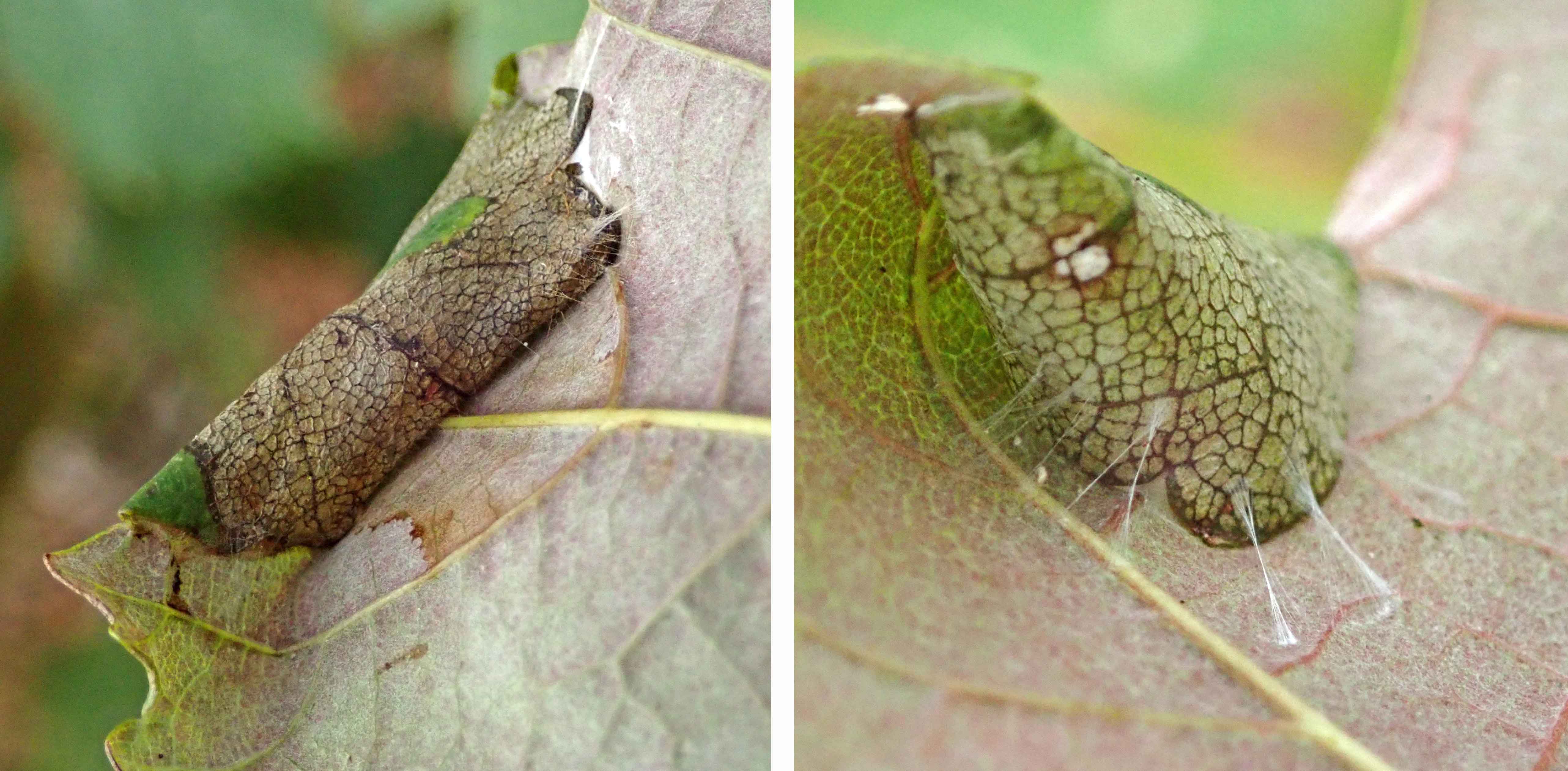
After hatching from its egg, the larva chews away at the leaf, always in the angle between the veins, creating a small, often triangular-shaped blotch. The photos above show the upper and lower sides of the leaf where it has been feeding. The larva then moves to the tips of the lobes of the leaf where it creates a series of two or three cones, folding the tip of the lobe to create a little shelter in which to feed, each cone bigger than the previous one as the larva grows (as shown below).

240923 Caloptilia rufipennella (2)

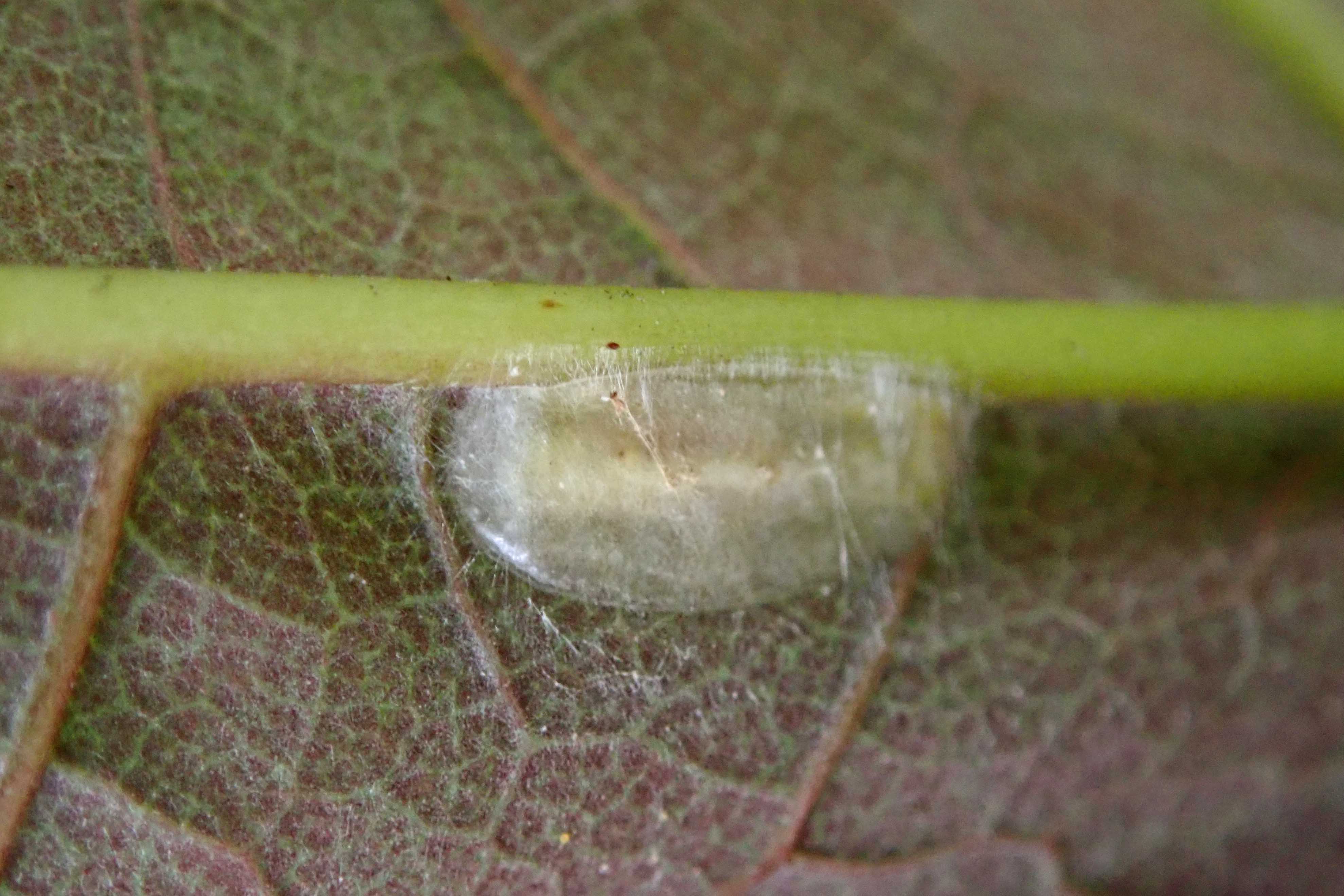
And finally, once it’s fully grown, the larva weaves itself a little cocoon in which to pupate (see below). Interestingly, the UK Moths website says that Caloptilia rufipennella was discovered in Britain as recently as 1970 but is now quite common in most of England and Scotland. Wales doesn’t get a mention but the Welsh national database shows records starting in 1980 and now scattered across the country.

OLYMPUS DIGITAL CAMERA

Like Loading...

Galls: Dasineura crataegi

04 Wednesday Sep 2024

Posted by sconzani in insects, plants, trees

≈ Leave a comment

Tags

British galls, Dasineura crataegi, gall-causing mites, galls caused by mites, galls on Hawthorn, Hawthorn button-top gall, plant galls

Teeny tiny mites have caused this damage to the tips of new branches on Hawthorn bushes (Crataegus species). Mites are so tiny that they can feed on individual plant cells, and it is this feeding that distorts and deforms the new leaf growth. These particular mites are called Dasineura crataegi, and the galls they create are known as Hawthorn button-top galls.

240904 Dasineura crataegi

Apparently, these galls are quite common but I’ve only seen them recently. All plant growth in the field where these Hawthorn bushes are growing is usually cut to the ground in late Autumn but that cut wasn’t down last year, possibly because it was too wet. This has allowed Hawthorn seedlings to grow where they usually wouldn’t, and it is on these young Hawthorns that the mites are thriving. It will be interesting to see if the galls appear again next year if the annual cut goes ahead.

Like Loading...

Leafmines: Caloptilia stigmatella

02 Monday Sep 2024

Posted by sconzani in insects, trees

≈ Leave a comment

Tags

British moths, Caloptilia stigmatella, leaf mines on poplar, leaf mines on willow, leaf-mining moth larvae, leaf-mining moths

Another Monday, another new leaf mine – they’re never ending!

240902 Caloptilia stigmatella (1)

Now, this may not look like a mine but what’s happened is this: once hatched from its egg, the larva chewed an initial linear mine in the surface on the underside of the leaf – this species uses willow (Salix sp.) and poplar (Populus sp.). Then it munched out a blotch at the edge of the leaf and rolled the edge over to create a cone. As you see here, the larva will often create two or even three cones before it pupates.

240902 Caloptilia stigmatella (2)

These mines and cones are the work of the moth Caloptilia stigmatella. You can see more examples of the mines and get more information on the British Leafminers website here, and see photos of the adult of the species on the UK Moths website here.

Like Loading...

Lime aphids

19 Monday Aug 2024

Posted by sconzani in insects, trees

≈ Leave a comment

Tags

aphids on Lime trees, British aphids, Eucallipterus tiliae, insects on Lime trees, Lime aphid, Lime trees

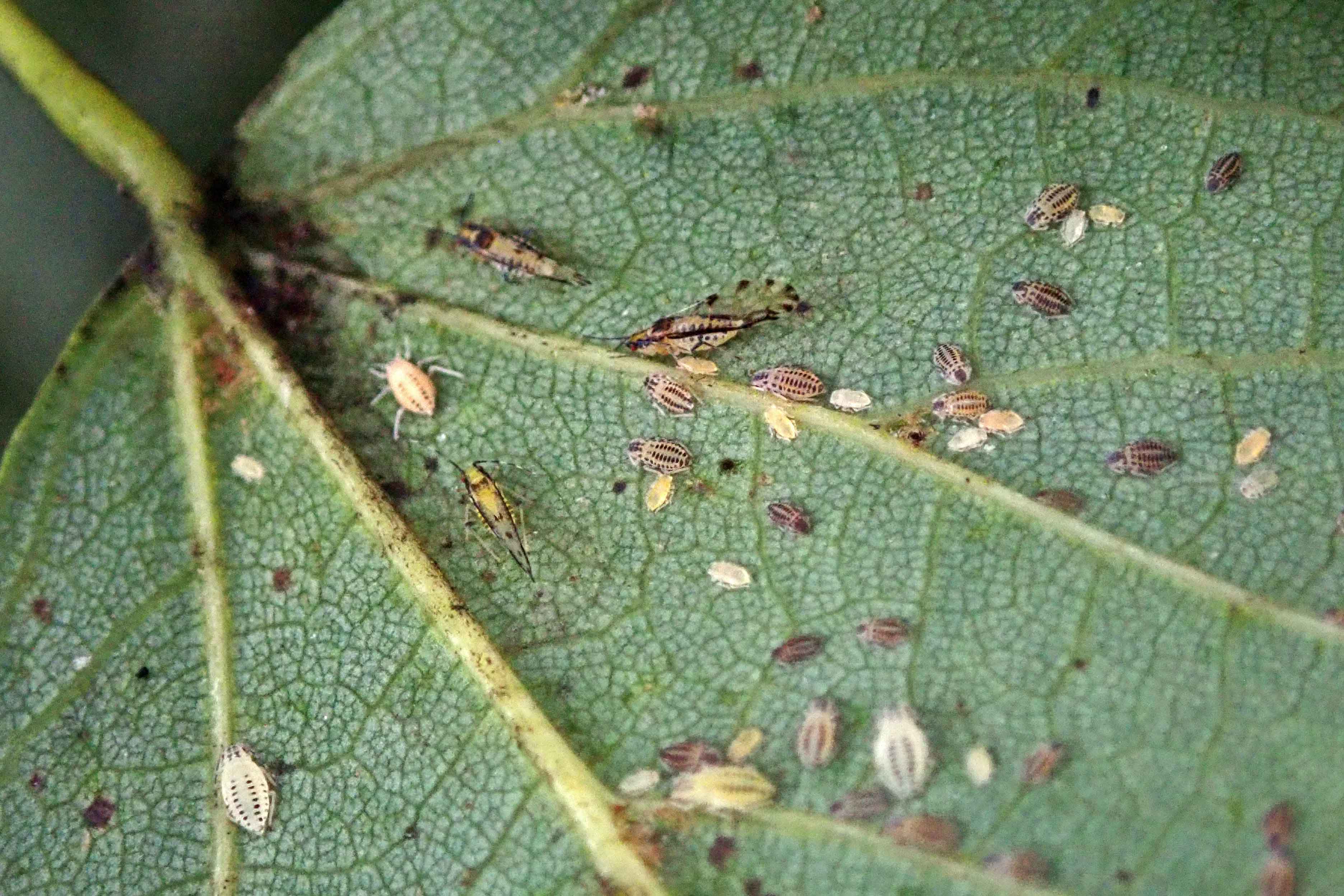
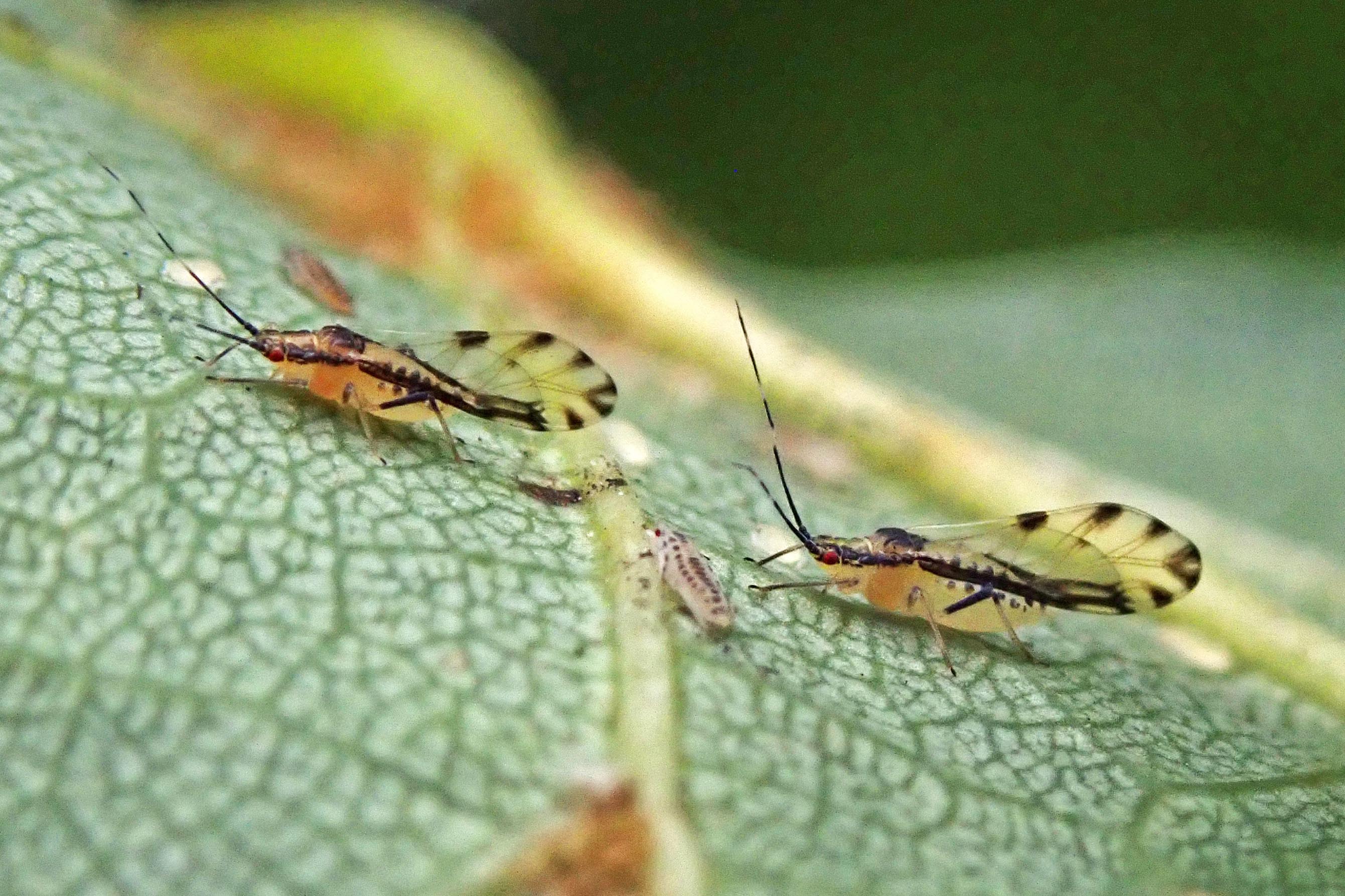
Last Tuesday, on my way home from exploring a local park, I stopped to investigate the leaves of a Lime tree (Tilia species, not sure which one) as I’ve never really found anything of much interest on Limes. Well, that soon changed because the undersides of these leaves were awash with aphids, unsurprisingly Lime aphids (Eucallipterus tiliae), a species I’d never seen before.

240819 eucallipterus tiliae (1)

And when I checked on the Welsh biodiversity database later in the day, I was surprised to find only five previous Welsh records. As is the way with many small creatures though, I now believe these aphids are under-recorded as the following day, walking in the opposite direction, I found two more colonies. It seems more people need to become leaf-turners and leaf-botherers so we can get a clearer, more accurate picture of our insect populations.

240819 Eucallipterus tiliae (2)

If you’re interested in learning more about these aphids and their life cycle, the Influential Points website has an excellent page, with very clear images though slightly technical scientific information.

Like Loading...

Leafmines: Cameraria ochridella

05 Monday Aug 2024

Posted by sconzani in insects, trees

≈ Leave a comment

Tags

British moths, Cameraria ochridella, Horse chestnut leaf-mining moth, Horse chestnut leafminer, Horse chestnut tree, leaf-mining moth larvae

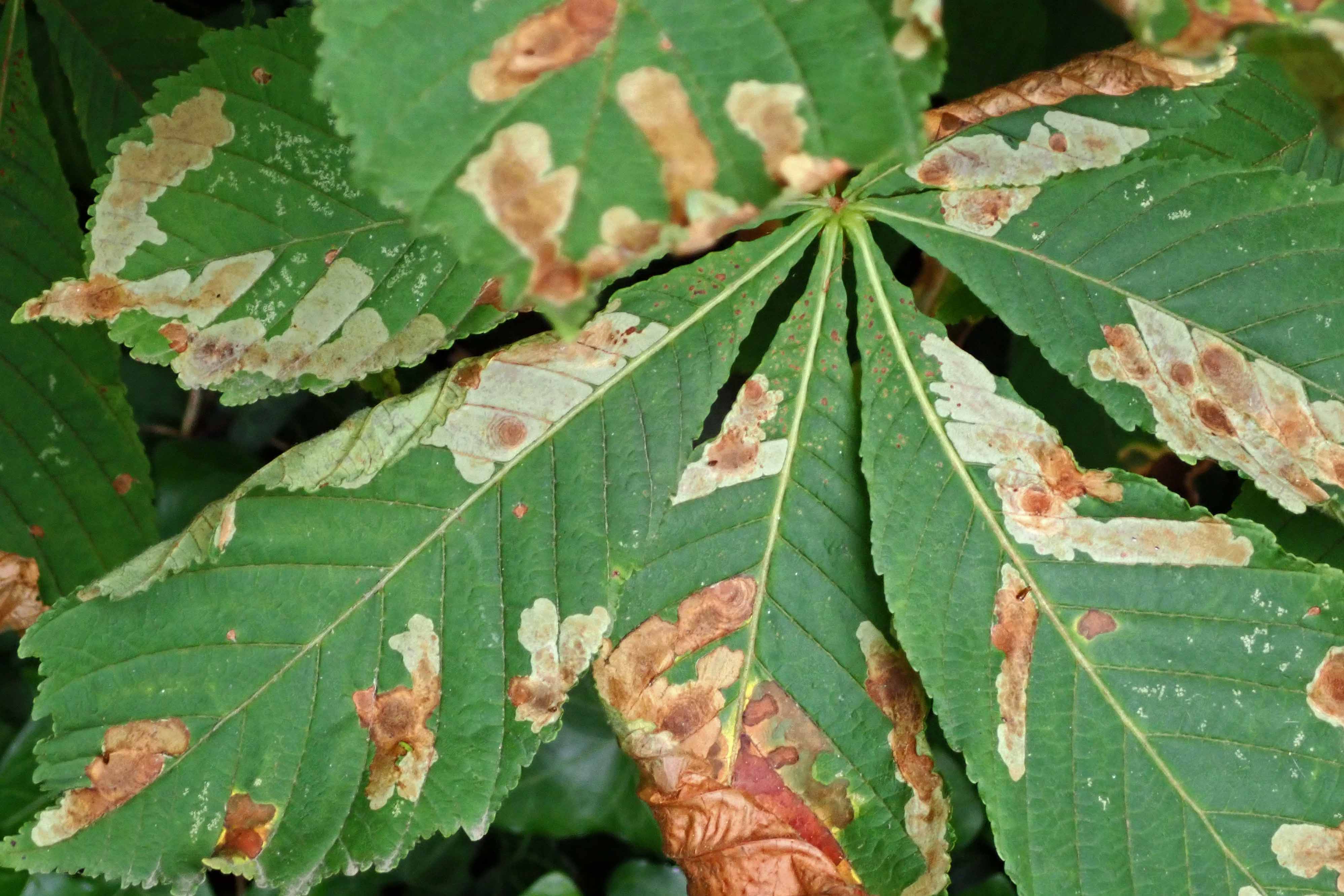
As it’s very common, I’m sure you’ve all seen this damage on the leaves of Horse chestnut trees. These are leafmines, made by the larvae of the Horse chestnut leafminer (Cameraria ochridella) (see my blog Horse chestnut leafminer, 18 July 2018).

240805 Cameraria ochridella (1)

Until last Friday, I’d only ever seen the leafmines, never the adult moth. But, as I walked past this particular Horse chestnut tree, lots of tiny creatures were flitting around its lower leaves. At first, I wasn’t sure what the creatures were – they looked like little flies. Then one of them landed on a leaf in front of me and I managed to get a closer look – a moth, not a fly, and very prettily marked too.

240805 Cameraria ochridella (2)

I must have stood watching for 15 minutes or more, waiting for a moth to settle and snapping a few quick photos before it zipped off … and again … and again. It was a good test of my patience, and I’m really glad I was in the right place at the right time to see these beautiful moths.

240805 Cameraria ochridella (3)

Like Loading...

New location for Purple hairstreak

30 Tuesday Jul 2024

Posted by sconzani in insects, trees

≈ Leave a comment

Tags

British butterflies, butterfly, butterfly on Oak, hairstreak butterflies, Heath Park, Oak, Purple hairstreak

Since I discovered a Purple hairstreak, a couple of years ago, at Cosmeston Lakes Country Park, where they’d never been recorded before, I’ve been convinced that these gorgeous little butterflies are more common than most people realise. It’s just that, because they’re very small and spend most of their time high up in the tops of Oak trees, nobody notices them. So, being an habitual leaf-starer anyway, I now spend 10-15 minutes at this time of year staring at Oak trees, just in case. Last week, my leaf-staring paid off once again, when I was exploring Cardiff’s Heath Park. There are lots of large old Oaks in the park so it seemed a likely location, despite there being no recorded sightings. And this was my reward – even better than I expected, as it fluttered down from the top of the tree to a lower branch and posed nicely while I got some photos.

240730 purple hairstreak

Like Loading...

Leafmines: Heterarthrus vagans

29 Monday Jul 2024

Posted by sconzani in insects, trees

≈ Leave a comment

Tags

Alder, British leafminers, Heterarthrus vagans, leaf-mining sawfly larvae, leafmines on Alder, sawfly larva

Another Monday, another leafmine. I noticed this one while checking out Alder leaves to see what small creatures had been munching holes in their leaves (more on those later this week). This blotch mine was made by the larva of sawfly Heterarthrus vagans (you can see what the adult sawfly looks like on the Sawflies website here).

240729 Heterarthrus vagans (1)

I thought initially this might have been the larva of sawfly Fenusa dohrnii – I was right about it being a sawfly but had the species wrong. Fortunately, I had held the leaf up to the light to get a slightly clearer photo of the larva within as, from looking at that, British Leafminers expert Rob was able to tell me: ‘It has a black “bow tie” … so is a Heterarthrus and as it is Alder it is Heterarthrus vagans‘. Who knew sawfly larvae wore bow ties? But it seems all the Heterarthrus species larvae have them. Very smart!

240729 Heterarthrus vagans (2)

Like Loading...

Leafmines: Coleophora siccifolia

22 Monday Jul 2024

Posted by sconzani in insects, trees

≈ Leave a comment

Tags

British moths, Coleophora mining Hawthorn, Coleophora siccifolia, Hawthorn, leaf-mining moth larvae, leafmines on Hawthorn

As often happens, my search for these leafmines was inspired by a post on Twitter/X. In this instance, George, a locally based senior ecologist with Butterfly Conservation, posted that he had found, for the first time in Glamorgan, the larval cases of the tiny moth Coleophora siccifolia. The find site was on a part of the south Wales coastal path within bus-and-walking distance from home so, on the next fine day, off I set.

240722 Coleophora siccifolia (1)

Searching the leaves of Hawthorn, I found lots of evidence where Coleophora larvae had been feeding. As they live in cases, there’s usually a tiny hole where the larva has parked its case and poked its head and part of its body inside the layers of the leaf to feed, thus creating a distinctive blotch (as you can see in the photograph above).

240722 Coleophora siccifolia (2)

As the British leafminers website relates, the larvae also mine the leaves of Apple, Rowan and Birch, and the cases they create from bits of leaves are quite distinctive. George had found several cases but I only managed to find one, and that one was empty. Still, now that we know Coleophora siccifolia can be found locally, I’ll keep on looking for more.

Like Loading...
← Older posts
Newer posts →

About me

sconzani

sconzani

I'm a writer and photographer; researcher and blogger; birder and nature lover; countryside rambler and city strider; volunteer and biodiversity recorder.

View Full Profile →

Follow earthstar on WordPress.com

Enter your email address to follow this blog and receive notifications of new posts by email.

Recent blog posts

  • City Hall Peregrine January 12, 2026
  • Blackthorn in bloom January 11, 2026
  • Weevil: Mecinus pyraster January 10, 2026
  • Red in beak and claw January 9, 2026
  • Who’s watching who? January 8, 2026

From the archives

COPYRIGHT

Unless otherwise acknowledged, the text and photographs on this blog are my own and are subject to international copyright. Nothing may be downloaded or copied without my permission.

Fellow Earth Stars!

  • Unknown's avatar
  • Unknown's avatar
  • Unknown's avatar
  • Unknown's avatar
  • Unknown's avatar
  • Unknown's avatar
  • Unknown's avatar
  • Unknown's avatar
  • Unknown's avatar
  • Unknown's avatar
  • Unknown's avatar
  • Unknown's avatar
  • Unknown's avatar
  • Unknown's avatar
  • Unknown's avatar
  • Unknown's avatar
  • Unknown's avatar
  • Unknown's avatar
  • Unknown's avatar
  • Unknown's avatar
  • Unknown's avatar
  • Unknown's avatar
  • Unknown's avatar
  • Unknown's avatar
  • Unknown's avatar
  • Unknown's avatar
  • Unknown's avatar
  • Unknown's avatar
  • Unknown's avatar
  • Unknown's avatar
  • Unknown's avatar
  • Unknown's avatar
  • Unknown's avatar
  • Unknown's avatar
  • Unknown's avatar
  • Unknown's avatar
  • Unknown's avatar
  • Unknown's avatar
  • Unknown's avatar
  • Unknown's avatar
  • Unknown's avatar
  • Unknown's avatar
  • Unknown's avatar
  • Unknown's avatar
  • Unknown's avatar
  • Unknown's avatar
  • Unknown's avatar
  • Unknown's avatar
  • Unknown's avatar
  • Unknown's avatar

Blog at WordPress.com.

Privacy & Cookies: This site uses cookies. By continuing to use this website, you agree to their use.
To find out more, including how to control cookies, see here: Cookie Policy
  • Subscribe Subscribed
    • earthstar
    • Join 669 other subscribers
    • Already have a WordPress.com account? Log in now.
    • earthstar
    • Subscribe Subscribed
    • Sign up
    • Log in
    • Report this content
    • View site in Reader
    • Manage subscriptions
    • Collapse this bar
 

Loading Comments...
 

You must be logged in to post a comment.

    %d