• ABOUT
  • BIRDING 2018
  • Birding 2019
  • BLOG POSTS
  • Butterflies 2018
  • Resources

earthstar

~ a celebration of nature

earthstar

Category Archives: wildflowers

86/366 Dandelions and Brimstones

26 Thursday Mar 2020

Posted by sconzani in insects, nature, spring, wildflowers

≈ 4 Comments

Tags

Brimstone, Brimstone butterfly, British butterflies, British wildflowers, dandelion, Gonepteryx rhamni, Grangemoor Park

Here’s why it should be an offence to cut, spray or otherwise destroy blooming wildflowers – in this case, Dandelions, in particular.

200326 brimstone (1)

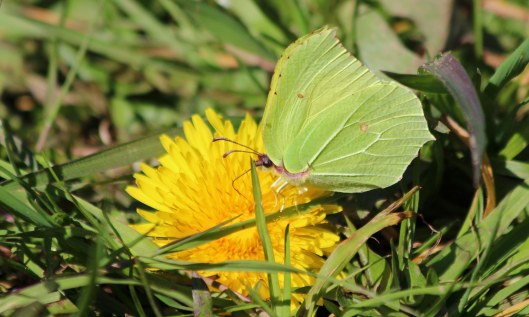
During yesterday’s daily exercise walk around Grangemoor Park I saw at least five Brimstone butterflies. These were all males, newly emerged from hibernation and already flying frantically back and forth along their chosen path-sides and hedgerows, seeking out females to mate with.

200326 brimstone (2)

As there aren’t yet many wildflowers in bloom at Grangemoor, when it came time to refuel for their next patrol flight, every single one of these Brimstones stopped and supped on Dandelion nectar. In fact, once I twigged to what they were doing, I took to checking every Dandelion I saw, just in case it held a butterfly. So, please, PLEASE, leave your Dandelions for the insects to feed on.

200326 brimstone (3)

Like Loading...

82/366 Wildflowerhour : the Brassicas

22 Sunday Mar 2020

Posted by sconzani in nature, spring, wildflowers

≈ 6 Comments

Tags

American winter-cress, Brassicas, British wildflowers, Common whitelowgrass, Cuckooflower, Hoary mustard, Sea radish, Shepherd's purse, Wavy bitter-cress

This week’s challenge for #Wildflowerhour was to find as many of the Brassica family in flower as possible. I’m rather pleased with the number I’ve found, though I’m not 100% sure of my plant IDs, so if you think I’ve got any wrong, please do comment below. And I’ll edit this post if I need to, to reflect the corrected information.
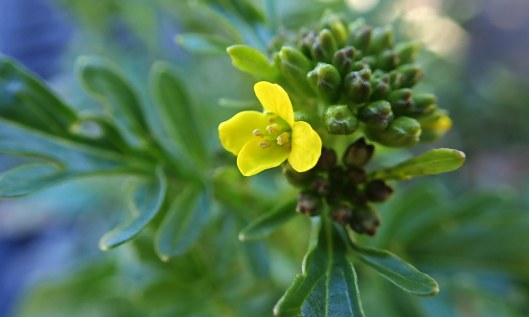
200322 American winter-cress

American winter-cress (Barbarea verna): this is the identification I’m least confident about, as it’s a plant I’ve not seen before, and only a couple of flowers were actually open, but the leaf shape seems to fit.

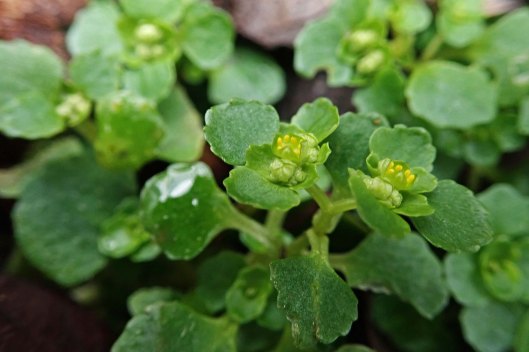
200322 Common whitlow grass

Common whitlowgrass (Erophila verna): his plant is very common in my area but it’s one I often overlook because of its small size. It’s a pretty wee thing though.

200322 cuckooflowers

Cuckooflower (Cardamine pratensis): found earlier this week but this is a new photograph as I’ve since revisited the site. It’s certainly earlier in this particular location than in the other places I’ve usually found this plant, which, I suspect, is due to aggressive cutting by the local council in those other locations (Cardiff Bay and Hamadryad Park).
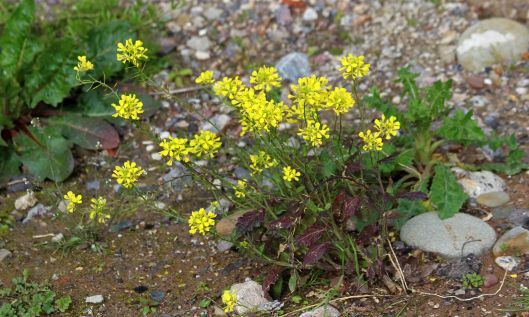
200322 hoary mustard

Hoary mustard (Hirschfeldia incana): Argh, so many plants that look similar! The only reason I’m reasonably confident about this one is that I’ve posted a photo of it previously on Twitter and an expert named it for me.

200322 sea radish

Sea radish (Raphanus raphanistrum ssp maritimus): This is another plant previously identified by one of the Twitterati and, though this was a slightly different location, it was also on the shores of Cardiff Bay so hopefully I’ve got this one right.
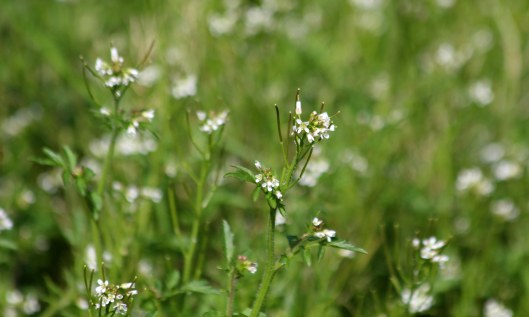
200322 wavy bitter-cress

Wavy bitter-cress (Cardmine flexuosa): The bitter-cresses always confuse me but, though it’s hard to see them, these flowers have six stamens, which is a key ID point to confirm this as Wavy rather than Hairy bitter-cress.

200322 Shepherd's-purse

Shepherd’s-purse (Bursa pastoralis): The purse-shaped seedpods of this lovely little plant make it unmistakable, thank goodness.

Like Loading...

78/366 Dainty beauties

18 Wednesday Mar 2020

Posted by sconzani in nature, spring, wildflowers

≈ 3 Comments

Tags

British wildflowers, Cardamine pratensis, Cuckooflower, Lady's smock, spring wildflowers

Yesterday’s star finds, during a walk around Grangemoor Park, were my first Cuckooflowers of 2020. They’re such dainty little beauties and, with a newly arrived Chiffchaff calling in the trees behind, it felt like Spring really had arrived.

This slideshow requires JavaScript.

Like Loading...

75/366 A plant of many names

15 Sunday Mar 2020

Posted by sconzani in nature, plants, wildflowers

≈ 2 Comments

Tags

British wildflowers, Common lungwort, Cosmeston Lakes Country Park, Lungwort

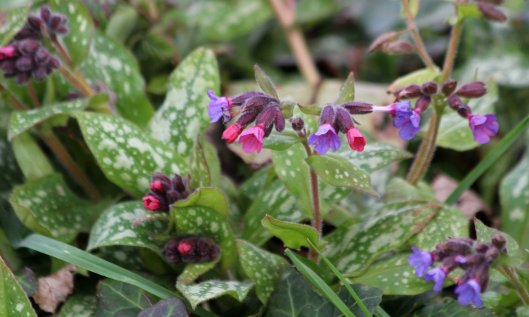
With its spotted leaves and flowers that start out pink but change quickly to blue, Common lungwort (Pulmonaria officinalis) is a very attractive plant. I’ve blogged before about the origin of its name and some of its other common names but the Royal Horticultural Society website has an even longer long list of vernacular names for this plant: Jerusalem sage, Adam and Eve, Bedlam cowslip, beggar’s basket, bugloss cowslip, Jerusalem cowslip, lady’s cowslip, lady’s milk, Mary’s honeysuckle, Mary’s tears, sage of Bethlehem, soldiers and sailors, spotted dog, and Virgin Mary’s honeysuckle.

200320 lungwort (1)

I’m sure many of the Lungwort plants I see are relatively recent garden escapes but the plants shown in today’s photos may perhaps be a little older. They were growing along the boundary fence of the medieval village at Cosmeston Lakes Country Park, a village which is a reconstruction of the actual buildings that existed on this site around 600 years ago. Was it one of the herbal plants used by the locals in those days? I like to think so.

200320 lungwort (2)
200320 lungwort (3)
Like Loading...

68/366 Pavement plants

08 Sunday Mar 2020

Posted by sconzani in nature, spring, wildflowers

≈ 2 Comments

Tags

#PavementPlants, #WildflowerHour, British wildflowers, Coltsfoot, Common cornsalad, Daisy, dandelion, Herb Robert, Lesser Celandine, primrose, Red dead-nettle, Shepherd's purse

Now that Spring has sprung, the folks who run #WildflowerHour on social media are issuing weekly challenges for followers to focus their searches around. This week it was #PavementPlants, searching for any plants in bloom that were growing in the cracks or along the edges of their local pavements. Challenges like this do mean you get some odd looks from people when you’re photographing your finds but I’m very used to that these days.

Here’s what I found: Coltsfoot (I love how tenacious these plants are – they were pushing up between the cracks in an old set of steps connecting two local streets); Common cornsalad; Daisy; Dandelion; Herb Robert; Lesser celandine; Primrose; Red dead-nettle; and Shepherd’s-purse.

This slideshow requires JavaScript.

Like Loading...

62/366 A flying start

02 Monday Mar 2020

Posted by sconzani in insects, nature, spring, wildflowers

≈ 4 Comments

Tags

Alexanders, dandelion, flies, hoverflies, solitary bee

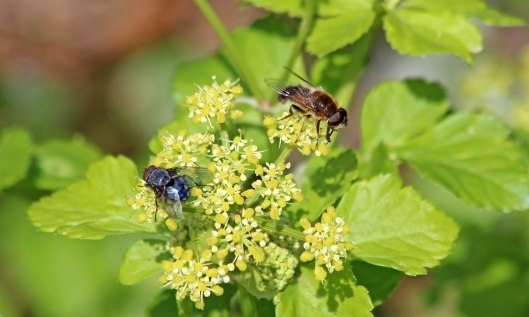
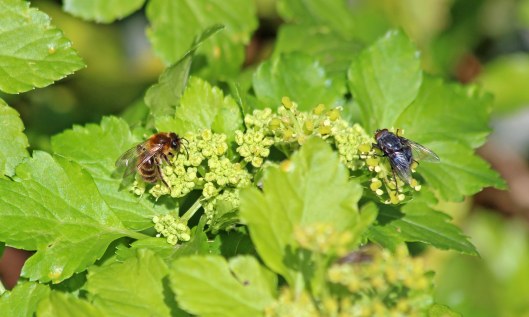
A little bit of sunshine and a sheltered spot, plus a few blooming wildflowers – in this case, dandelions and Alexanders, alongside a south Wales coastal road – and out came the flying critters: solitary bees a’buzzing, various species of flies a’flying and hoverflies a’hovering. Spring is off to a flying start!

200302 flying critters (1)

200302 flying critters (2)
200302 flying critters (3)

200302 flying critters (4)

Like Loading...

61/366 Lilac and yellow

01 Sunday Mar 2020

Posted by sconzani in flowers, nature, wildflowers

≈ 2 Comments

Tags

#WildflowerHour, British wildflowers, Dog violet, primrose, Winter aconite

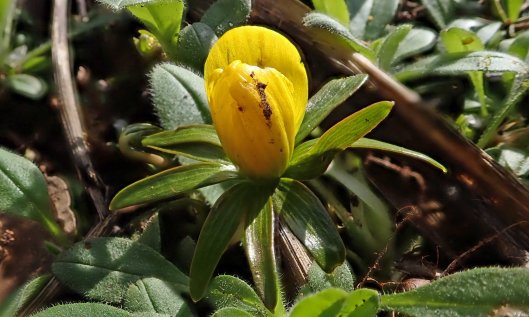
Rather than a full list of wildflower sightings this week, I’m focusing on just three, this week’s new (to me) blooms. And, in fact, this first wildflower, Winter aconite (Eranthis hyemalis), was a first-ever sighting for me. Originally from southern Europe, this plant is a member of the buttercup family, and, if the database records of this beautiful flower are any indication, it’s a plant that is quite rare in the wild in Wales.

200301 winter aconite

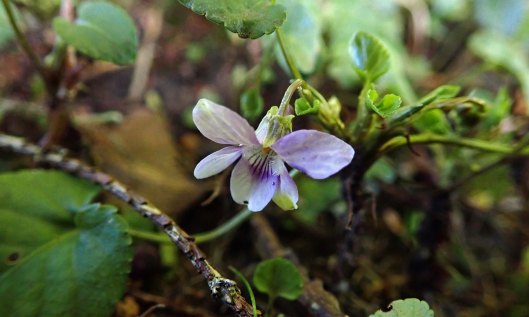
This is a dog-violet, possibly Early dog-violet, though I didn’t take good enough photos of the particular features needed to differentiate the Early (Viola reichenbachiana) from the Common (Viola riviniana).

200301 early dog-violet

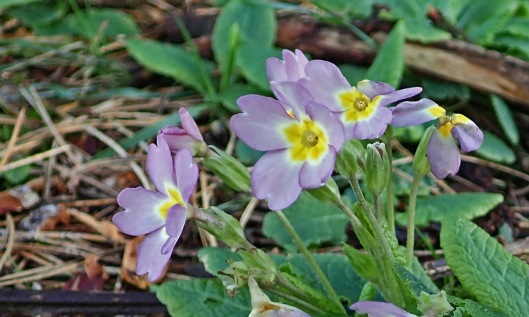
And, finally, this delightful combination of the two colours of the above blooms, lilac and yellow, a Primrose. Though not the usual cream-coloured flower we most commonly see, this is, I believe, a natural colour variation of the native Primrose, rather than something humans have bred.

200301 primrose pink variety

Like Loading...

54/366 Winter 29!

23 Sunday Feb 2020

Posted by sconzani in nature, wildflowers

≈ 4 Comments

Tags

British flora, British wildflowers, wildflowers in bloom, winter wildflowers

Despite the appalling weather we’ve been having, the natural world obviously feels the coming of Spring as this week I’ve found 29 wildflowers in bloom, including firsts of Coltsfoot, Common corn salad, Spotted medick and Wood anemone.

The full list is: Alexanders, Coltsfoot, Common comfrey, Common cornsalad, Common field speedwell, Cow parsley, Creeping buttercup, Daisy, Dandelion, Forget-me-not, Gorse, Groundsel, Hairy bitter-cress, Herb Robert, Hogweed, Ivy-leaved toadflax, Lesser celandine, Nipplewort, Oxeye daisy, Primrose, Red dead nettle, Red valerian, Shepherd’s-purse, Smooth sow-thistle, Snowdrop, Spotted medick, Sun spurge, Winter heliotrope and Wood anemone.

This slideshow requires JavaScript.

Like Loading...

40/366 In bloom this week

09 Sunday Feb 2020

Posted by sconzani in nature, spring, wildflowers

≈ 9 Comments

Tags

Alexanders, British wildflowers, Cherry plum blossom, crocus, Dog's mercury, Lesser Celandine, snowdrop, Spring blossom

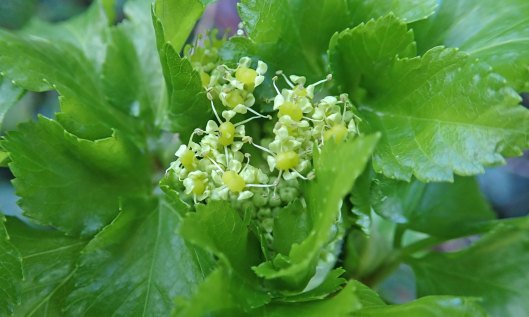
This week’s wanderings produced sightings of two new wildflowers for the year, Dog’s mercury (Mercurialis perennis), thriving under a hedgerow, and Alexanders (Smyrnium olusatrum), an exceedingly common plant along the local coastal path.

200209 1 Dogs mercury200209 2 alexanders

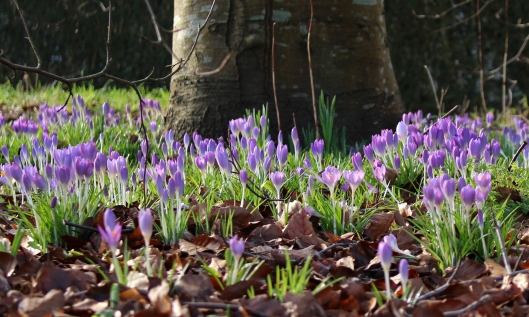
I’d seen Crocuses already but this swathe, growing on a small green in the village of Michaelston-le-Pit, was a lilac delight.

200209 3 crocuses

Not a wildflower, but the local Cherry plum trees have burst into bloom this week. They say Spring to me!

200209 4 cherry plum

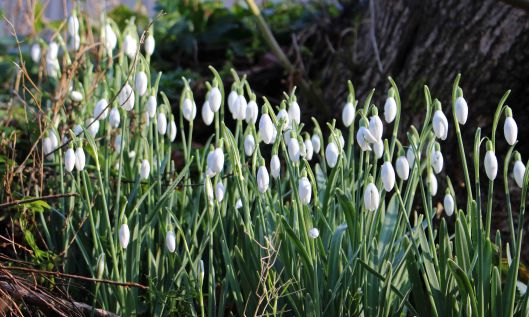
Snowdrops are out en masse now, and more and more bursts of bright yellow Lesser celandines can be found, sprinkled along paths and in the local woodlands. So cheery!

200209 5 snowdrops200209 6 lesser celandine

Like Loading...

35/366 A flowering saxifrage

04 Tuesday Feb 2020

Posted by sconzani in nature, spring, wildflowers

≈ 2 Comments

Tags

British wildflowers, Chrysosplenium oppositifolium, Opposite-leaved golden saxifrage

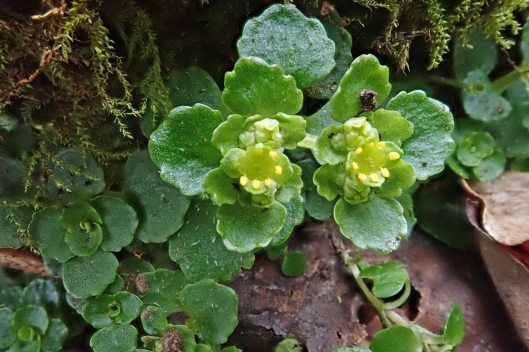
Today’s walk produced yet more evidence of our changing climate in the form of another very early Spring flower, this time Opposite-leaved golden saxifrage (Chrysosplenium oppositifolium), which my wildflower guide tells me shouldn’t be flowering for at least another month.

200204 opposite-leaved golden saxifrage (2)

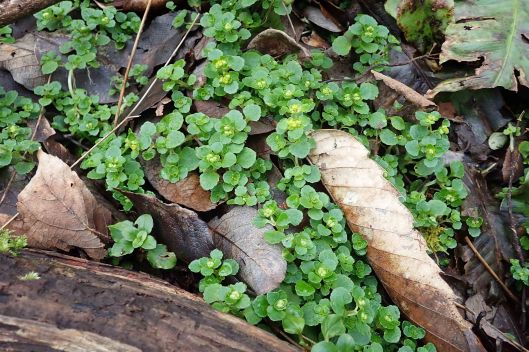
Today’s location was typical of this plant’s favoured habitat: in woodland, along the edges of a well-shaded small stream. Its liking for damp conditions is perhaps one of the reasons it grows best in western parts of Britain and is less common in the eastern counties.

200204 opposite-leaved golden saxifrage (3)

It can be confused with its cousin Alternate-leaved golden saxifrage (Chrysosplenium alternifolium) – the key thing, as the names suggest, is to check the arrangement of the leaves. In the first photo and the one below you can see how the pairs of leaves are growing opposite each other along the stem. You can only see its slightly odd flowers – they have no petals, just eight yellow stamens.

200204 opposite-leaved golden saxifrage (1)

Like Loading...
← Older posts
Newer posts →

About me

sconzani

sconzani

I'm a writer and photographer; researcher and blogger; birder and nature lover; countryside rambler and city strider; volunteer and biodiversity recorder.

View Full Profile →

Follow earthstar on WordPress.com

Enter your email address to follow this blog and receive notifications of new posts by email.

Recent blog posts

  • Springtime invasives March 22, 2026
  • Singing Dunnocks March 21, 2026
  • New cat: Large yellow underwing March 20, 2026
  • Curious Coal tit March 19, 2026
  • A huddle of 7-spots March 18, 2026

From the archives

COPYRIGHT

Unless otherwise acknowledged, the text and photographs on this blog are my own and are subject to international copyright. Nothing may be downloaded or copied without my permission.

Fellow Earth Stars!

  • Unknown's avatar
  • Unknown's avatar
  • Unknown's avatar
  • Unknown's avatar
  • Unknown's avatar
  • Unknown's avatar
  • Unknown's avatar
  • Unknown's avatar
  • Unknown's avatar
  • Unknown's avatar
  • Unknown's avatar
  • Unknown's avatar
  • Unknown's avatar
  • Unknown's avatar
  • Unknown's avatar
  • Unknown's avatar
  • Unknown's avatar
  • Unknown's avatar
  • Unknown's avatar
  • Unknown's avatar
  • Unknown's avatar
  • Unknown's avatar
  • Unknown's avatar
  • Unknown's avatar
  • Unknown's avatar
  • Unknown's avatar
  • Unknown's avatar
  • Unknown's avatar
  • Unknown's avatar
  • Unknown's avatar
  • Unknown's avatar
  • Unknown's avatar
  • Unknown's avatar
  • Unknown's avatar
  • Unknown's avatar
  • Unknown's avatar
  • Unknown's avatar
  • Unknown's avatar
  • Unknown's avatar
  • Unknown's avatar
  • Unknown's avatar
  • Unknown's avatar
  • Unknown's avatar
  • Unknown's avatar
  • Unknown's avatar
  • Unknown's avatar
  • Unknown's avatar
  • Unknown's avatar
  • Unknown's avatar
  • Unknown's avatar

Blog at WordPress.com.

Privacy & Cookies: This site uses cookies. By continuing to use this website, you agree to their use.
To find out more, including how to control cookies, see here: Cookie Policy
  • Subscribe Subscribed
    • earthstar
    • Join 668 other subscribers
    • Already have a WordPress.com account? Log in now.
    • earthstar
    • Subscribe Subscribed
    • Sign up
    • Log in
    • Report this content
    • View site in Reader
    • Manage subscriptions
    • Collapse this bar
 

Loading Comments...
 

You must be logged in to post a comment.

    %d