• ABOUT
  • BIRDING 2018
  • Birding 2019
  • BLOG POSTS
  • Butterflies 2018
  • Resources

earthstar

~ a celebration of nature

earthstar

Category Archives: wildflowers

152/366 Pyramids and bees

31 Sunday May 2020

Posted by sconzani in nature, wildflowers

≈ 3 Comments

Tags

Anacamptis pyramidalis, Bee orchid, British orchids, Grangemoor Park, native orchids, Ophrys apifera), Pyramidal orchid

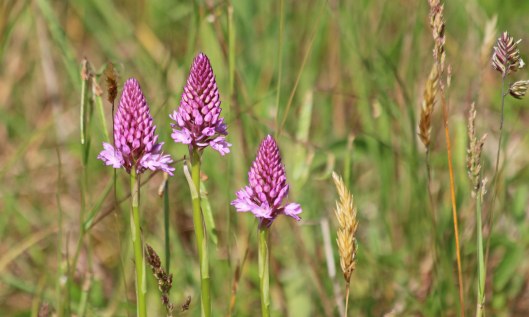
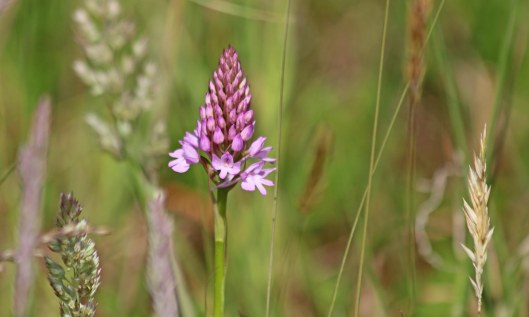
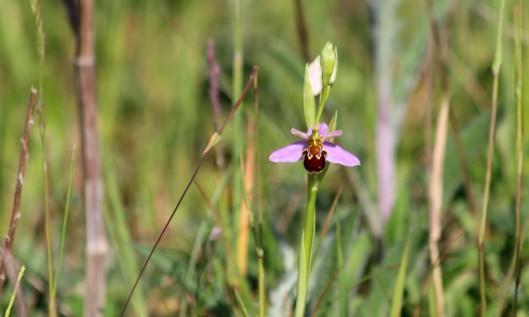
You might be wondering what pyramids and bees have in common. Well, in this case, they’re both orchids: the Pyramidal orchid (Anacamptis pyramidalis) and the Bee orchid (Ophrys apifera), and I was very pleasantly surprised to see rather a lot of them, especially the Bees, during my most recent walk around Grangemoor Park.
200531 pyramidal orchid (1)

With their classic triangular shape, Pyramidal orchids are easy to identify. They usually flower during June and July, and each flower spike can contain up to a hundred individual flowers. Interesting fact: the Pyramidal orchid is the county flower of the Isle of Wight.
200531 pyramidal orchid (2)200531 bee orchid (2)

Bee orchids are my favourite orchids. Their markings and furry texture may be intended to attract bumblebees (and the flowers also produce a female bee smell, apparently) but it’s their laughing ‘faces’ that enchant me and always make me smile. And the people of Bedfordshire made the perfect choice when they selected the Bee orchid as their county flower.

200531 bee orchid (1)

Like Loading...

150/366 Short bobs and Black Jacks

29 Friday May 2020

Posted by sconzani in nature, plants, wildflowers

≈ 6 Comments

Tags

Black Jacks, British wildflowers, Plantago lanceolata, Ribwort plantain, Short bobs

When I saw this field of Ribwort plantain (Plantago lanceolata) nodding their flower heads in the gentle breeze, I had to make them my post for the day.

200529 ribwort plantain (1)

My Flora Britannica lists several common names for this plant, including Fighting cocks, Short bobs, Soldiers and sailors, and Black Jacks, which all come from the fact that the plant is apparently used for children’s games. This is not something I had heard of but it seems one variation of the game is similar to conkers, where kids try to knock off each other’s flower heads.

200529 ribwort plantain (2)
200529 ribwort plantain (3)

Though the gardeners amongst you may regard this as a pesky garden weed, I think it’s an attractive plant. Its flowers provide sustenance for insects like butterflies, moths and hoverflies and, if its seed heads are not chopped off, they provide food for seed-eating birds like Goldfinches. Interestingly, though, the Plantlife website says ‘ribwort plantain is surprisingly unpopular with slugs and snails [as] they find the leaves unpalatable.’

Like Loading...

145/366 Common spotteds

24 Sunday May 2020

Posted by sconzani in flowers, nature, wildflowers

≈ 5 Comments

Tags

British orchids, Common spotted orchid, Cosmeston Lakes Country Park, native orchids

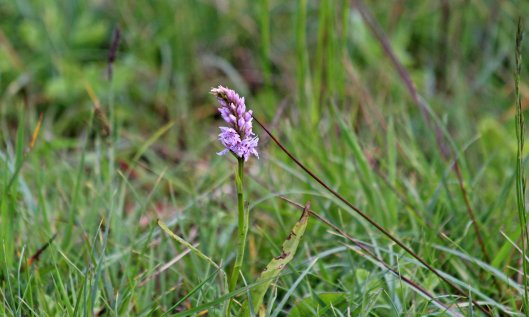
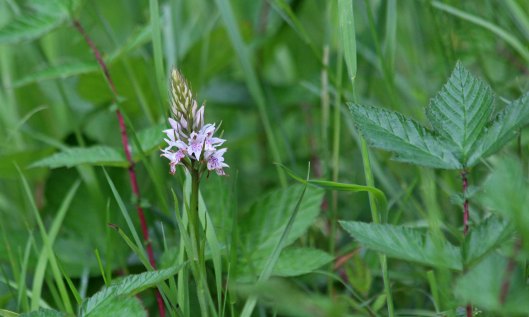
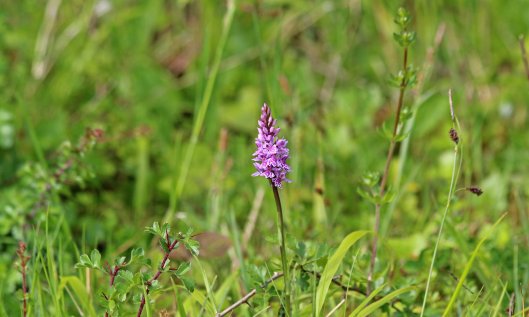
The occasional smatterings of rain we’ve had in the last few days have eased, ever so slightly, the drought conditions hereabouts, and the flush of new growth that was evident during this morning’s early walk through the fields at Cosmeston included my first Common spotted orchids of the year. Superb!

200524 common spotted orchid (1)200524 common spotted orchid (2)200524 common spotted orchid (3)200524 common spotted orchid (4)

Like Loading...

135/366 Swollen thighs

14 Thursday May 2020

Posted by sconzani in insects, nature, wildflowers

≈ 2 Comments

Tags

British insects, Buttercup, Grangemoor Park, Oedemera nobilis, Swollen-thighed beetle, Thick-legged beetle

You know summer’s just around the corner when the Swollen-thighed beetles (Oedemera nobilis) start to appear. The Ox-eye daisies and buttercups were full of them at Grangemoor Park on Tuesday.

200514 swollen-thighed beetle

Like Loading...

133/366 First Common blue

12 Tuesday May 2020

Posted by sconzani in insects, nature, wildflowers

≈ 6 Comments

Tags

British butterflies, British wildflowers, butterfly, Common blue butterfly, wildflowers on road verges, wildflowers on roadsides

One of the benefits of some local councils not mowing all the road verges at the moment is that wildflowers that would normally be strimmed to death are now being allowed to grow and bloom.

200512 Common blue butterfly (1)

Not only does this mean we get to enjoy their glorious rainbow of colours but the wildflowers’ pollen and nectar also provide a nutritious feast for all the newly emerging insects.

200512 Common blue butterfly (2)

And it was on one such uncut verge that I spotted my first Common blue butterfly of the year today, this stunning, pristine, little male.

200512 Common blue butterfly (3)

If only the councils would mow less all the time, then we’d be able to enjoy both the flowers and the insects all through spring and summer, and it would also go a little way to reversing the huge decline in insect life that’s happening all over the world.

200512 Common blue butterfly (4)

Like Loading...

131/366 New bloomers

10 Sunday May 2020

Posted by sconzani in nature, spring, wildflowers

≈ 5 Comments

Tags

Bittersweet nightshade, British wildflowers, Common milkwort, Cut-Leaved crane’s-bill, Flax, Goat's-beard, Spring colour, Wood avens

Here are this week’s newly flowering wildflowers …

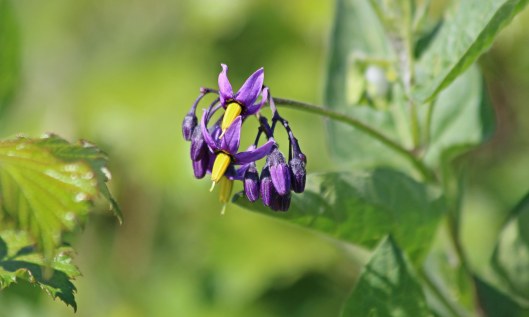
200510 bittersweet nightshade

Bittersweet nightshade (Solanum dulcamara), also known as Woody nightshade and Deadly nightshade, though my Flora Britannica assures me this is actually one of the less poisonous members of the nightshade family.

200510 cut-leaved crane's-bill

Cut-leaved crane’s-bill (Geranium dissectum), one of the many lovely members of the extended Geranium family.

200510 flax

Flax (Linum usitatissimum), a small delicate plant, with beautiful pale blue flowers. This is rather different from the plant I, as a New Zealander, usually associate with this name – see my September 2018 post Flax.

200510 goat's-beard

Goat’s-beard (Tragopogon pratensis). As well as producing these glorious large sunny flowers, this wildflower, also known as Jack-go-to-bed-at-noon, has the most wonderful seedheads.

200510 wood avens

Wood avens (Geum urbanum) – you may know this wildflower by its alternate name of Herb Bennet.

200510 milkwort

Common milkwort (Polygala vulgaris). Discovered during my walk to Lavernock Nature Reserve earlier this week, this was the first time I’d seen this pretty little plant, though it’s very small and was almost hidden amongst the other wildflowers and grasses so it may be that I had simply overlooked it on previous visits.

One theory behind its common name is that the flowers of milkwort are shaped like udders and so medieval herbalists, following the ‘signature’ belief (that body parts can be treated by plants that resemble them), used to prescribe this plant to nursing mothers to increase their milk flow.

Like Loading...

124/366 Ragged robin

03 Sunday May 2020

Posted by sconzani in nature, spring, wildflowers

≈ 7 Comments

Tags

Bee-fly, British wildflowers, Grangemoor Park, Lychnis flos-cuculi, Ragged robin, Silene flos-cuculi, Spring colour, spring flowers

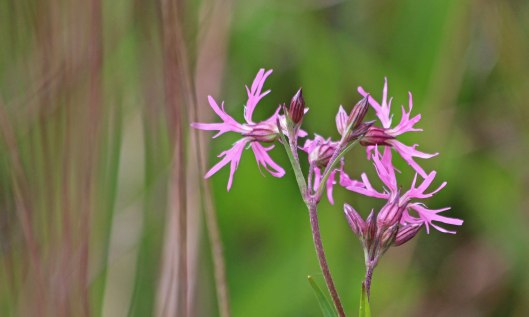
At Grangemoor Park on Friday, I spotted my first flowering Ragged robin for the year.

200503 ragged robin (1)

This gorgeous wildflower was formerly known as Lychnis flos-cuculi, but is now Silene flos-cuculi – from a scientific article I browsed, this seems a complicated story of almost constant reclassification of the species! You will still see both names used in books and on line, which is why I’ve mentioned both here.

200503 ragged robin (2)

According to a couple of books I discovered on the ‘language of flowers’, Ragged robin’s symbolic meaning is ‘wit’, and it is dedicated to Saint Barnabas. The ever-informative First Nature website says:

Lychnis, the genus name, comes from the Greek noun lychnos, meaning lamp; it refers to the use of a plant in this genus as the wick of an oil lamp. The specific epithet flos-cuculi means ‘flower of the cuckoo’ and was probably chosen because the first flowers of Ragged Robin appear just as the first cuckoos are being heard (in Britain and Ireland at least) in May.

200503 ragged robin (3)

A special moment: to try to stop it swaying in the breeze so I could get a sharp photo, I was holding one of the blooms when a bee-fly decided to zoom in for a feed of nectar. That super long proboscis comes in handy for long narrow flowers like these.

200503 ragged robin (4)

Like Loading...

117/366 It’s Pea time

26 Sunday Apr 2020

Posted by sconzani in nature, spring, wildflowers

≈ Leave a comment

Tags

British wildflowers, Bush vetch, Common bird's foot trefoil, Common vetch, Grass vetchling, Red campion, Spring colour, spring wildflowers

You know the summer’s not far away when members of the extensive Pea family start to flower and, during this week’s exercise walks, I’ve spotted four Pea species newly come in to flower. The first were three of the vetches …

200426 Bush vetch

Bush vetch (Vicia sepium)

200426 Common vetch

Common vetch (Vicia sativa) … and friends.

200426 Grass vetchling

Grass vetchling (Lathyrus nissolia)

200426 bird's-foot trefoil

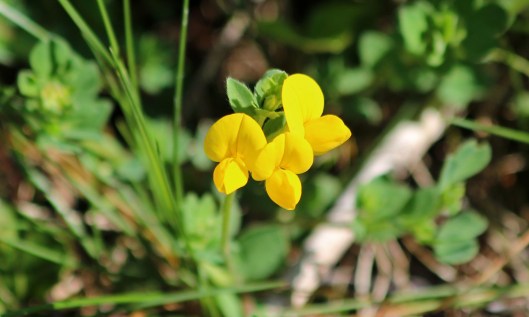
And, also, one of my all-time favourites – possibly because it’s also a favourite with a lot of the butterflies and day-flying moths I adore so much, Common bird’s-foot trefoil (Lotus corniculatus).

200426 Red campion

Oh, and this week’s new blooms also included one not-a-pea wildflower, the always lovely Red campion (Silene dioica).

Like Loading...

110/366 Even earlier purples

19 Sunday Apr 2020

Posted by sconzani in flowers, nature, spring, wildflowers

≈ 2 Comments

Tags

British orchids, Early purple orchid, native orchids, Orchis macula

I spotted 8 flower spikes of Early-purple orchid (Orchis macula) during my walk last Wednesday, 15 April, though not all the flowers were yet open.

200419 early-purple orchids (1)

This sighting was earlier than last year’s, which was on 23 April and which the locals told me was earlier than usual. It seems like climate change keeps changing the goal posts for these orchids.

200419 early-purple orchids (2)
200419 early-purple orchids (3)

200419 early-purple orchids (4)

Like Loading...

103/366 A week of new wildflowers

12 Sunday Apr 2020

Posted by sconzani in nature, spring, wildflowers

≈ 8 Comments

Tags

British wildflowers, Cleavers, Cowslip, False oxlip, Garlic mustard, Ground ivy, Lords-and-ladies, spring wildflowers, Yellow archangel

Spring is really starting to ramp up a notch now – shame we can’t get out and enjoy more time in the wild world. Still, if I choose the right route for my daily exercise walk, I can still hear the birds and see the flowers, and I appreciate them now even more than I usually do. Here’s a catch up with the latest plants I’ve found in flower this week.

200412 1 cleavers

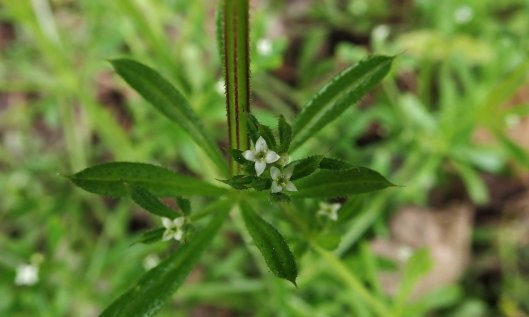
Cleavers (Galium aparine) : I’m sure everyone has their own favourite among the wide variety of common names for this plant: Sticky Bob, Kisses, Goosegrass are just a few – take your pick, or tell me what you call it.

200412 2 cowslip
200412 3 false oxlip

I’m lumping these two together as a comparison: on the left is Cowslip (Primula veris) and on the right is False oxlip (Primula veris x vulgaris), the hybrid of Cowslip and Primrose. I’ve previously had trouble identifying these correctly but one clue I’ve read recently is that Cowslip flowers all nod in a single direction, whereas False oxlips flop around in all directions.

200412 4 garlic mustard

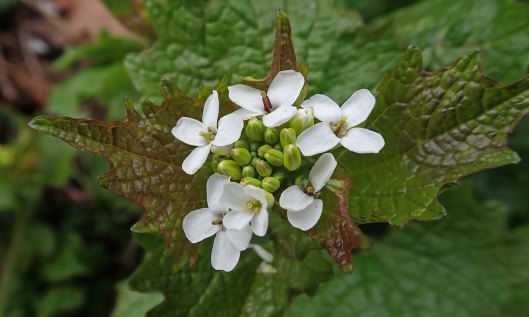
Garlic mustard (Alliaria petiolata) : these lovely plants seem almost to have sprung up overnight under every local hedgerow. You may know them by one of their vernacular names, Jack-by-the-hedge.

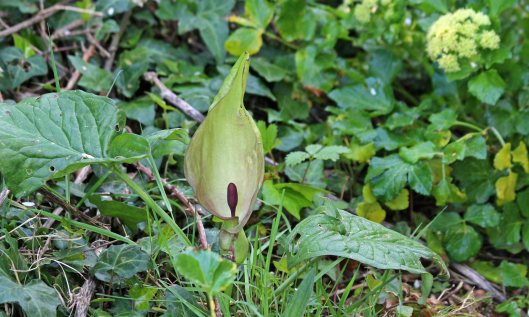
200412 5 lords-and-ladies

Lords-and -ladies (Arum maculatum), another plant with a ‘Jack’ vernacular name, in this case Jack-in-the-pulpit. I’ve seen so many leaves of these plants and quite a few sheathed flowers but, this week, I finally saw some open flowers.

200412 6 Yellow archangel

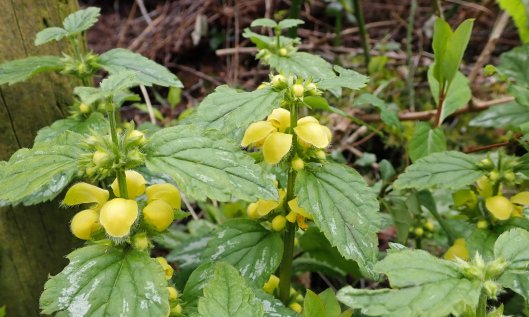
Yellow archangel (Lamium galeobdolon) : these may well have been a garden escape as they were growing along a lane near a large area of allotments but I’m still counting them. From their appearance, it’s easy to tell that these are part of the Dead-nettle family (my favourite kinds of nettles!).

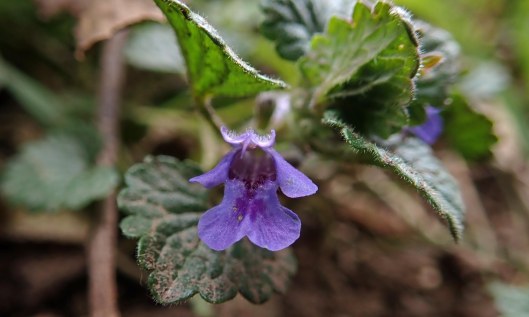
200412 7 ground ivy

Ground ivy (Glechoma hederacea) : I found these decorating the edges of the same lane as the Yellow archangel, down low beneath the brambles and assorted shrubs and bushes. And, also like the Yellow archangel, Ground ivy is a member of the Dead-nettle family.

Like Loading...
← Older posts
Newer posts →

About me

sconzani

sconzani

I'm a writer and photographer; researcher and blogger; birder and nature lover; countryside rambler and city strider; volunteer and biodiversity recorder.
View Full Profile →

Follow earthstar on WordPress.com

Enter your email address to follow this blog and receive notifications of new posts by email.
Recent blog posts

  • Nesting material April 28, 2026
  • Lifer: Box bug April 27, 2026
  • Peak Wild garlic April 26, 2026
  • First damsels of 2026 April 25, 2026
  • NFY: Green-veined white April 24, 2026

From the archives

COPYRIGHT

Unless otherwise acknowledged, the text and photographs on this blog are my own and are subject to international copyright. Nothing may be downloaded or copied without my permission.

Fellow Earth Stars!

  • Unknown's avatar
  • Unknown's avatar
  • Unknown's avatar
  • Unknown's avatar
  • Unknown's avatar
  • Unknown's avatar
  • Unknown's avatar
  • Unknown's avatar
  • Unknown's avatar
  • Unknown's avatar
  • Unknown's avatar
  • Unknown's avatar
  • Unknown's avatar
  • Unknown's avatar
  • Unknown's avatar
  • Unknown's avatar
  • Unknown's avatar
  • Unknown's avatar
  • Unknown's avatar
  • Unknown's avatar
  • Unknown's avatar
  • Unknown's avatar
  • Unknown's avatar
  • Unknown's avatar
  • Unknown's avatar
  • Unknown's avatar
  • Unknown's avatar
  • Unknown's avatar
  • Unknown's avatar
  • Unknown's avatar
  • Unknown's avatar
  • Unknown's avatar
  • Unknown's avatar
  • Unknown's avatar
  • Unknown's avatar
  • Unknown's avatar
  • Unknown's avatar
  • Unknown's avatar
  • Unknown's avatar
  • Unknown's avatar
  • Unknown's avatar
  • Unknown's avatar
  • Unknown's avatar
  • Unknown's avatar
  • Unknown's avatar
  • Unknown's avatar
  • Unknown's avatar
  • Unknown's avatar
  • Unknown's avatar
  • Unknown's avatar

Blog at WordPress.com.

Privacy & Cookies: This site uses cookies. By continuing to use this website, you agree to their use.
To find out more, including how to control cookies, see here: Cookie Policy
  • Subscribe Subscribed
    • earthstar
    • Join 642 other subscribers
    • Already have a WordPress.com account? Log in now.
    • earthstar
    • Subscribe Subscribed
    • Sign up
    • Log in
    • Report this content
    • View site in Reader
    • Manage subscriptions
    • Collapse this bar

Loading Comments...

You must be logged in to post a comment.

    %d