
The Carline thistle (Carlina vulgaris): in the summer months it looks like an everlasting flower; in the autumn it glistens silver and gold.

13 Tuesday Aug 2019
Posted in flowers, nature, wildflowers
The Carline thistle (Carlina vulgaris): in the summer months it looks like an everlasting flower; in the autumn it glistens silver and gold.
07 Wednesday Aug 2019
Posted in 365DaysWildin2019, flowers, insects, nature, wildflowers
Tags
British wildflowers, Dingy footman, Gatekeeper, Hemp agrimony, Painted Lady, Red Admiral, Ringlet, Six-spot burnet, Speckled wood, Willow beauty moth
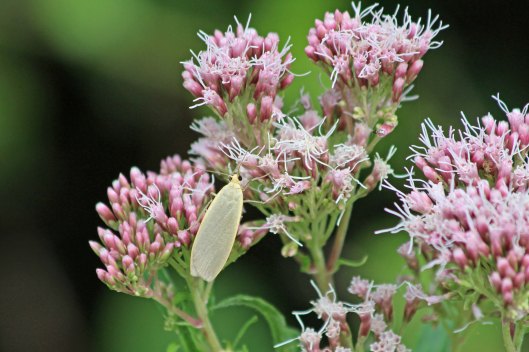
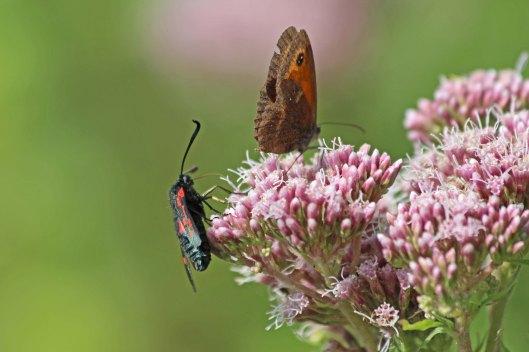
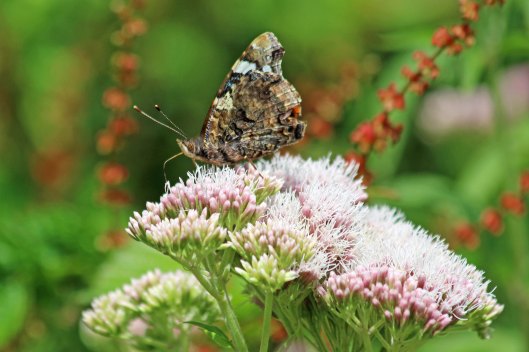
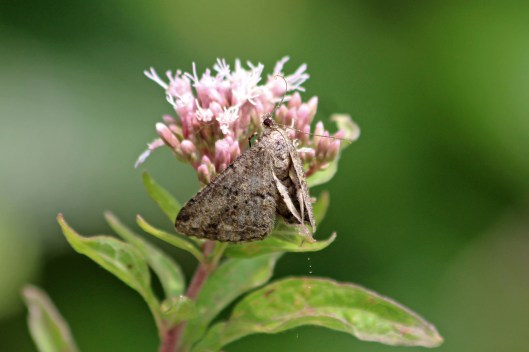
I’ve been spending a lot of time over the past couple of weeks staring at Hemp agrimony flowers. I’ve not yet found what I’ve been searching for – you’ll be the first to know when/if I do – but, in the meantime, here are just a few of the lovely creatures I’ve spotted nectaring on these pretty flowers: a Dingy footman moth, a Six-spot burnet moth and a Gatekeeper, a Painted lady, a Red admiral, a Ringlet, a Speckled wood and what might be a Willow beauty moth, but the jury’s still out on that one.



03 Saturday Aug 2019
Posted in 365DaysWildin2019, insects, nature, wildflowers
Tags
Alners Gorse, British butterflies, butterfly, butterflying, Comma, Essex skipper, Purple hairstgreak, Red Admiral, Small copper
Off we went again, our gallant gang of four, this time in search of the rare Brown hairstreak at Butterfly Conservation’s Alners Gorse reserve in Dorset.
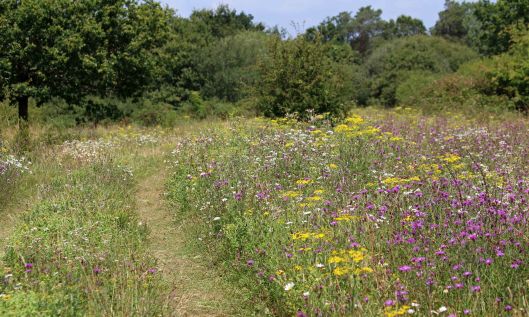
This reserve is beautiful, the colourful swathes of wildflowers reminiscent of a painting by Monet or Van Gogh, the wide range of trees providing diverse habitats for local wildlife and welcome shade for butterfliers on yet another hot summer’s day.

Unfortunately, the Brown hairstreaks eluded us, and most of the other 20-odd people wandering around the reserve, staring intently, as we were, at bramble bushes, hedgerows and oak trees.

One person, on turning a corner in the path, had almost bumped into a Brown, but the butterfly immediately flew off and wasn’t seen again. A couple said they’d seen one high in a tree but much tree staring failed to produce another sighting.

Still, there were butterflies in abundance and my list for the day totalled a very respectable seventeen: Silver-washed fritillary, Purple hairstreak, Comma, Peacock, Red admiral, Painted lady, Essex skipper, Small skipper, Small white, Green-veined white, Common blue, Small copper, Brimstone, Meadow brown, Ringlet, Gatekeeper and Speckled wood. My companions also saw Marbled white, bringing the group total to eighteen – I was obviously staring at a tree at that time!
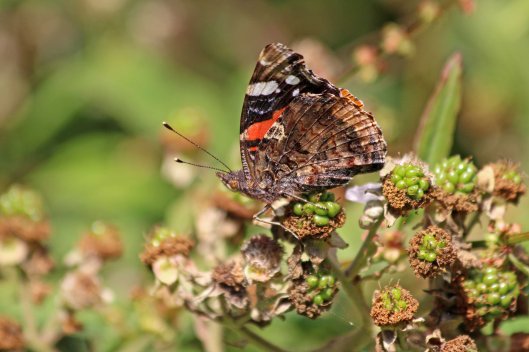
Alners Gorse is a well known site for Marsh fritillaries – now finished for this year, and we saw large numbers of other insects – hoverflies, bees, flies, crickets and grasshoppers, and several species of dragonfly, so it’s well worth a visit at any time of the year.

31 Wednesday Jul 2019
Posted in 365DaysWildin2019, flowers, insects, nature, wildflowers
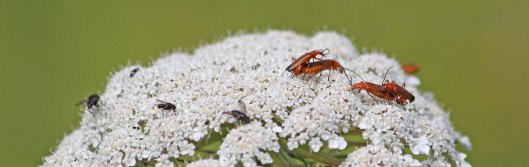
It seems unbelievable to me that some people still think that bees – in particular, honey bees, which are essentially a farmed species – are the only insects that pollinate flowers. You have only to look at a particular type of flower – in this case, umbellifers – to see the wide range of insects that visit and feed on them. And each of these little creatures gets covered in pollen while feeding so, when they fly on to the next flower, they are automatically contributing to flower pollination.


28 Sunday Jul 2019
Posted in 365DaysWildin2019, flowers, nature, wildflowers
I almost left it too late!

I’ve been keeping an eye on these Broad-leaved helleborines for over a month now: at my first visit, the flowers scarcely showed a tinge of red; at my second visit, on 14 July, a couple were in bloom but most still to open; and this morning, many of them had already started to go over.


And, as today was quite windy, my photos are not very sharp so I’ve added in a couple from two weeks ago.
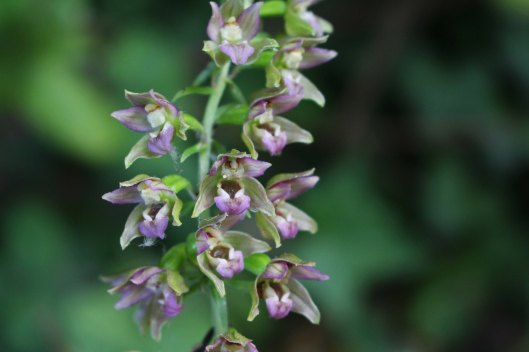
Hey ho, at least I managed to see them in all their beauty before they disappear for another year.


18 Thursday Jul 2019
Posted in 365DaysWildin2019, nature, plants, wildflowers
Tags
#365DaysWild, British flora, Cirsium acaule, Cosmeston, Cosmeston Lakes Country Park, Dwarf thistle, thistle, wildflowers
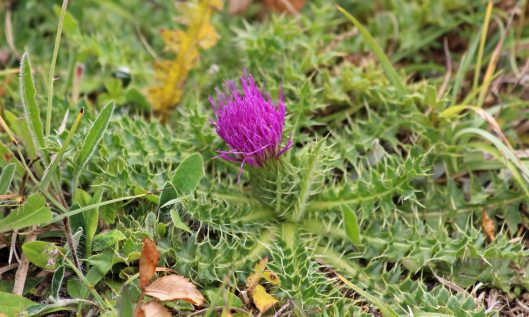
During today’s walk around Cosmeston I spotted a plant I’ve not seen before – or, at least, I’ve not consciously noticed before. It’s so easy to just walk over the things growing under your feet – although, in this case, if you were walking barefoot you couldn’t help but notice it!

It’s the Dwarf thistle (Cirsium acaule), and it’s easily identifiable as its single flower almost completely lacks a stem – the gorgeous purple flower sits right on top of a rosette of wavy and spiny edged leaves.


This thistle prefers to grow in low grasslands, particularly on calcareous soils, so it does tend to be quite localised but can be found in England as far north as Yorkshire and in south Wales.
14 Sunday Jul 2019
Posted in 365DaysWildin2019, flowers, nature, wildflowers
Tags
British wildflowers, Dyer’s greenweed, imperial colours, Marsh woundwort, purple wildflowers, Rosebay willowherb, Yellow loosestrife, yellow wildflowers
It occurs to me when looking at recent flower photos I’ve taken that the wildflowers currently in bloom have a very imperial look to them: masses of purple, the colour favoured by the emperors of Rome, and swathes of yellow, the colour that dominated the imperial wardrobe in China.
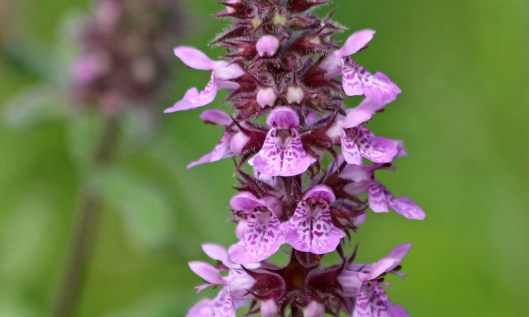
Marsh woundwort (Stachys palustris), found growing in the wildflower meadows in Cardiff’s Hailey Park this week; once regarded as the most effective of the wound-healing woundwort family.

Dyer’s greenweed (Genista tinctoria), plentiful at Lavernock Nature Reserve; also found in archaeological remains left by Vikings in York, proving its use as a yellow dye since at least the 9th century.
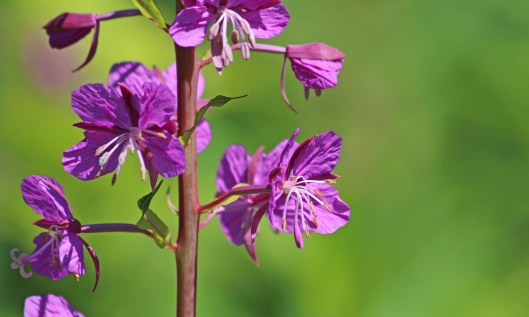
Rosebay willowherb (Chamerion angustifolium), firing up the conservation areas at Cathays Cemetery; nicknamed ‘bombweed’ during World War II when it grew in the London ruins created by German bombing raids.
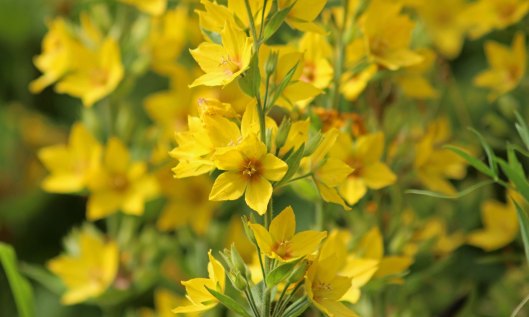
Yellow loosestrife (Lysimachia vulgaris), ablaze beside the River Taff in Cardiff; named in honour of Macedonian King Lysimachus who supposedly fed it to his cattle to calm them, hence lose + strife!
The interesting snippets about these plants were mostly extracted from my Flora Britannica.
04 Thursday Jul 2019
Posted in 365DaysWildin2019, flowers, nature, wildflowers
Tags
#365DaysWild, British orchids, Epipactis palustris, Marsh helleborine, native orchids, orchids, orchids at brownfield site, Rhoose Point Nature Reserve
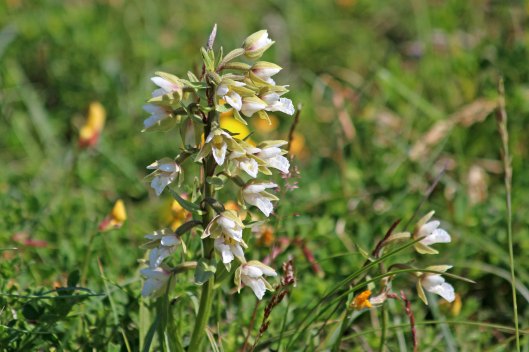
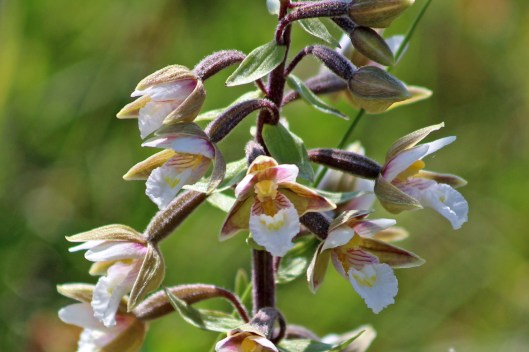
Like many brownfield sites, the former limestone quarries at Rhoose Point, the southernmost point in Wales, are now a nature-filled paradise, and yesterday one area was positively teeming with these beautiful Marsh helleborines (Epipactis palustris).

As their name implies, these orchids need water to flourish: the First Nature website says ‘This plant thrives in habitats which are usually submerged with water during the winter and maintain high levels of moisture during the summer. Dune slacks are often home to vast colonies, as are fens which are fed by alkaline springs running through limestone rocks – chalk being the other essential element to enable the Marsh Helleborine to flourish.’
I love what Richard Mabey has to say about orchids in Flora Botannica:
These days [their lightweight seed] often fetches up on artificially open habitats, low in nutrients and free of competition (quarries, for example), which replicate orchid-rich natural habitats such as sand dunes and cliff tops. It is this paradoxical, opportunistic quality of many orchids – the exquisite bloom transforming the spoil tip – that has become the basis for the true modern myth of the family, a botanical version of Beauty and the Beast.

The Marsh helleborines (and the many other species of orchid) that grow so well in the old Rhoose quarries are a stunning example of this transformation.
01 Monday Jul 2019
Posted in 365DaysWildin2019, flowers, nature, wildflowers
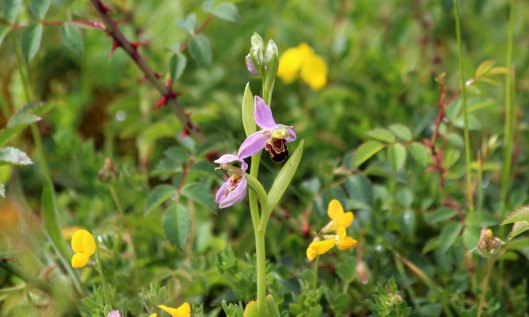
Some of the beautiful Bee orchids in my local wild places are starting to go over now, punished perhaps by the extreme June heat we’ve been experiencing. So, before they disappear completely for another year, I thought I’d share some of their wonderfully cheery, smiling faces. No two are the same.


29 Saturday Jun 2019
Posted in 365DaysWildin2019, insects, nature, wildflowers
Tags
British butterflies, butterflies, butterfly, butterflying, Collard Hill, Large blue, Large blue butterfly, Marbled white, Wild thyme
Scenario: Three friends go seeking rare butterflies across the border in England.

Second location: Collard Hill, in Somerset. A hot walk up the steep hill for more incredible views across picturesque Somerset. And we weren’t far from the legendary Glastonbury Tor.

Support act: Marbled white. My first sightings of these little beauties for the year, and we saw several flitting back and forth above the long grass.

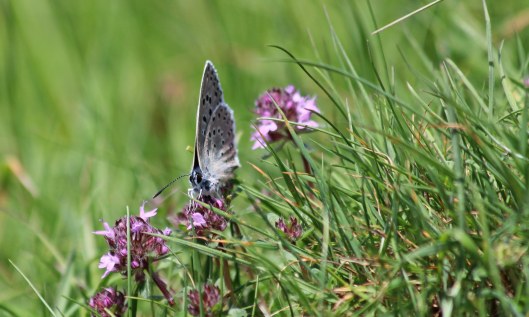
Star attraction: Large blue. Incredibly, this butterfly was declared extinct in Britain in the 1970s but was reintroduced from Sweden to Green Down, a Somerset Wildlife Trust site, in 1992. Since then the butterflies have mostly thrived (though they are affected by weather, habitat and ant conditions – for more on that, check out the National Trust Large blue blog) and they’ve been reintroduced to several other areas, including this site at Collard Hill.
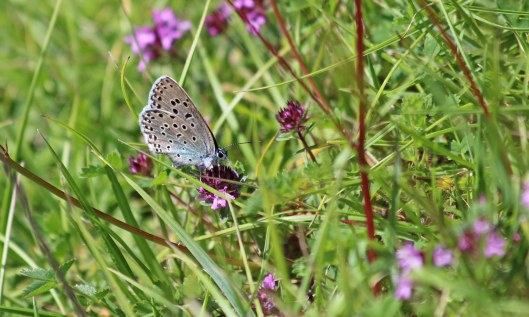
During our visit, it was very windy at the top and very hot in the lee of the hill, not ideal conditions for seeing the butterflies but, after following the animal tracks back and forth across the hillside, we finally had good sightings of three Large blues on their favourite food plant, Wild thyme. One female was even ovipositing, which bodes well for the coming years.
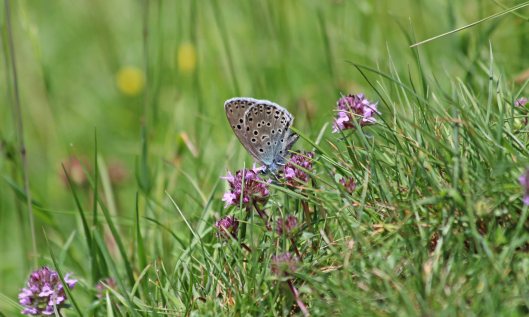
It was amazing to see both these Large blues and, earlier in the day, the Heath fritillaries, both lifers for me, and I want to say a huge thank you to Gareth and Alan for letting me join their butterflying expedition. It was a truly magical day!
 earthstar
You must be logged in to post a comment.