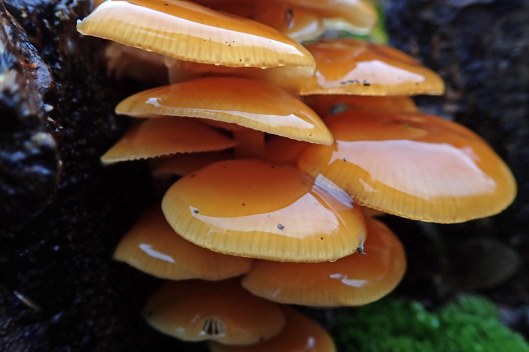
Golden shanks

Tags

, , , ,

Velvet shanks (Flammulina velutipes) always look to me like they would taste delicious, like layers of crumpets dripping in runny golden honey. And, though I’ve never tried them, they are indeed edible; the commercially grown versions (also known as Enoki) can be purchased in cans and jars, very occasionally fresh in some supermarkets and many specialist food shops.

230113 velvet shanks

Not a wiglet

Tags

, , ,

Well, I’m not often right but I’m wrong again! So, when is a wiglet not a wiglet? When it’s a ground beetle, one of the Carabidae family. After reading Tuesday’s post, the top local biodiversity recorder sent me a message, saying he thought the juvenile insect was a ground beetle (thank you, Graham) and, after googling, I believe he’s absolutely right.

230112 ground beetle juvenile

My photos didn’t really do the tiny creature justice – you can see some amazing macro images by photographer Paul Iddon, especially of its impressive mouth parts, on the Open Photography Forums website. Also, while googling I found an article on the website of the University of Kentucky, Recognizing Insect Larval Types, which includes excellent information and diagrams to aid identification of insect in their early stages of life. Some of the terminology is American but it’s well worth a look if you’re interested in the subject, and there’s a downloadable pdf.

Spreading its wings

Tags

, , , ,

To get this photo, I got drenched, hailed on, flashed by lightning and rumbled by thunder … but it was worth every drop of rain. Seen here with the Tufted ducks it has befriended and a local Gadwall, this female Ring-necked duck is one of two that have been in the local area for several months. They have mostly spent their days together on Lisvane Reservoir in north Cardiff but the turn of the new year has seen this particular duck spread its wings, spending a day or two in Cardiff Bay, and several days, as today, at Cosmeston Lakes Country Park.

230111 ring-necked duck

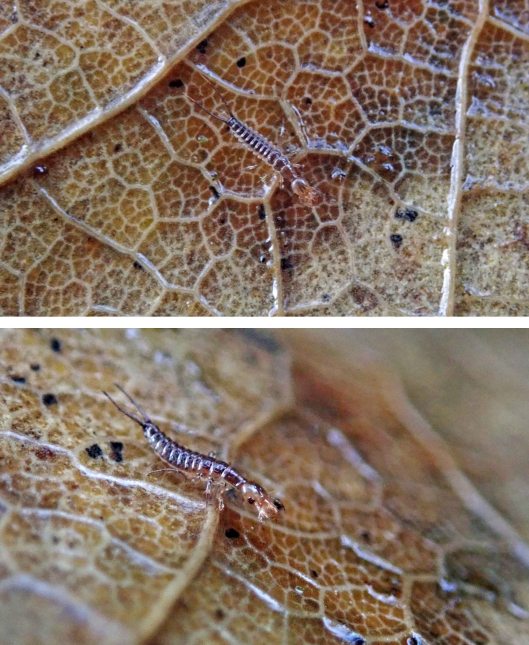
A wiglet, I think

Tags

, , , ,

Did you know juvenile earwigs are called wiglets? I didn’t until I started looking online for images, trying to verify if this really is a juvenile earwig. I’m still not 100% sure but, with those hind pincers, what else could it be? This find was another from my recent leaf-turning adventures.

If you’re interested in earwigs and their relatives, the website Orthoptera and allied insects has some excellent downloadable identification guides for grasshoppers, crickets, earwigs, cockroaches and stick-insects. I have contacted them about my wiglet.

230110 juvenile earwig

Little poser

Tags

, , ,

I always stop when I hear Long-tailed tits, partly because their little flocks are often accompanied by other small birds, which might include something of particular interest, but also because they’re just a joy to watch as they flit from branch to branch, picking up almost invisible invertebrates, hanging upside down or leaning sideways to check every crack and crevice. They’re mostly too quick for sharp photos but this little poser paused for a moment or two on a fence post, just long enough for a couple of reasonable images.

230109 long-tailed tit

New year, new plant hunt

Tags

, , , ,

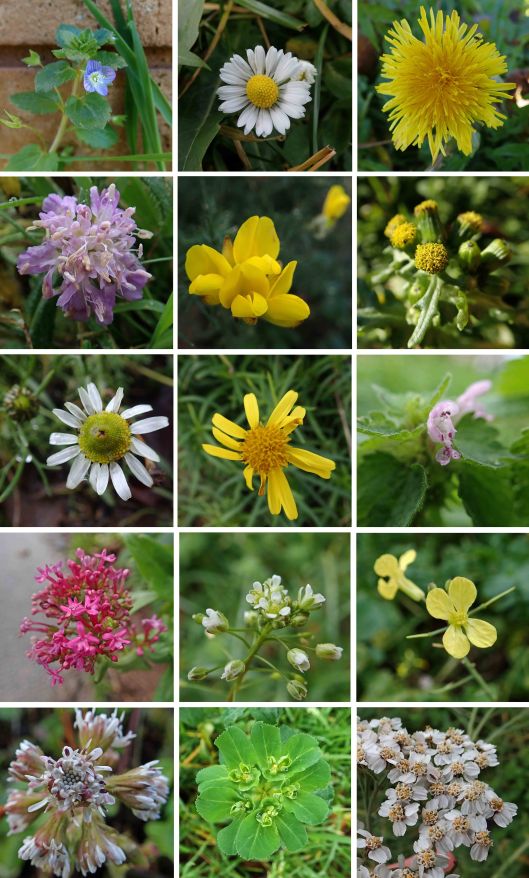
I flagged the forthcoming New Year Plant Hunt in a post last week, hoping to encourage those of you in the UK to include wildflowers in bloom in your new year rambles. From all reports, the hunt went well but, as was my experience, the numbers of wildflowers in bloom were quite low this year, due either to the December cold snap or, locally, both the cold and the lingering rain. I managed to find 15 flowering species during this week’s walks: Common field-speedwell, Daisy, Dandelion, Field scabious, Gorse, Groundsel, Mayweed, Narrow-leaved ragwort, Red dead-nettle, Red valerian, Shepherd’s-purse, Sea radish, Winter heliotrope, Sun spurge, and Yarrow.

230108 wildflowers

Turning over a new leaf

Tags

, , , , , ,

During Wednesday’s walk I spent a little time turning over soggy Sycamore leaves in a small wooded area, hoping for hoverly larvae but just as keen to see what other miniscule beasties might be living in the leaf litter (there were loads). I thought I’d struck pay dirt with this find but was later advised by a hoverfly expert that this is, in fact, a fly larva, one of the Lauxaniidae family of small flies. I’d never really thought about fly larvae before and assumed, before this find, that they were all a bit like the wriggling white maggots you find on rotting meat, so this was a nice surprise. I will be turning over more leaves very soon.

230107 Lauxaniidae larva

Fern Friday: Common polypody

Tags

, , ,

Fern Friday will be a very occasional series as I try to learn to identify the various fern species I encounter during my meanders. Common polypody is one I see quite often but it turns out not to be as straight forward as I was hoping. It seems that the various Polypodiaceae look very similar and require expert examination to be sure of their species. So, I’m lumping mine together as Polypodium vulgare sensu lato (i.e. broadly speaking, these are Common polypody).

230106 polypody (1)

As you can see, this specimen was growing on an old stone wall, acidic rocks and walls being their preferred habitat, though they can also grow as epiphytes on trees. The fronds of a fern are divided into pinnae (like leaflets): if divided just once, like the Common polypody, they are described as pinnate; if twice, they are bipinnate; if three times, tripinnate (further Fern Friday posts will show examples of these multi-pinnate species).
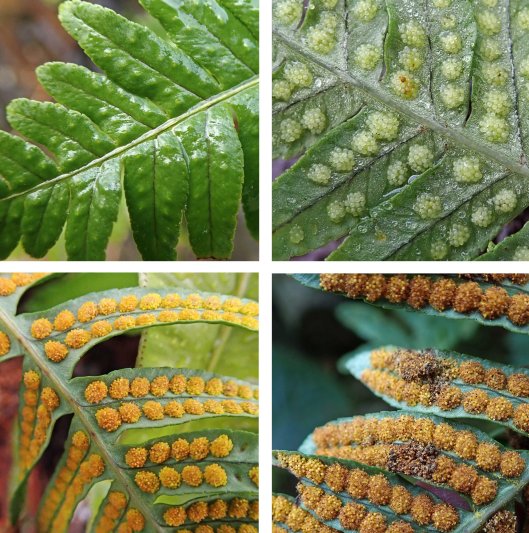
230106 polypody (2)

On the underside of a fern leaf the sorus (plural sori) can be found. The sorus is a small cluster of sporangia, where the spores the fern uses for reproduction develop. In the Common polypody, the sori, which are usually round, start off a pale yellow and change to an orangey brown when mature. You may recall that these sori are sometimes home to the larvae of a tiny moth, Psychoides filicivora (see my 19 December post, Leafmines: Psychoides filicivora,2).

New year, first insect

Tags

, , ,

Appropriately enough for someone who likes finding leaf mines, the first insect I spotted this year was a leafminer, the larva of the moth Phyllonorycter leucographella. I blogged about these back in November 2020 (Leafmines: Phyllonorycter leucographella), when, as now, I found the mines on the orange-berried variety of Firethorn (Pyracantha coccinea). As the entry on this species on the British Leafminers website explains, the autumn generation of these larvae, like this one, overwinter in their mine, before pupating and emerging in the spring.

230104 Phyllonorycter leucographella on pyracantha

The larvae can also be found on many other plant species: the photo below shows the same moth species mining the leaf of a Plane tree in October 2021. In this case, you can see the empty pupal case still in the mine and the exuvia poking out at the top of the mine, from where the moth has emerged.

230104 Phyllonorycter leucographella on plane