Feeding on Ragwort

Tags

, , , , ,

Do you remember my plug for the beauty of a local field full of Ragwort (Seedheads: Ragwort, 11 September)? Well, as I expected that field is now alive with seed-eating birds, enjoying the bounty provided by the Ragwort. Numbers of Goldfinches and Linnets are increasing daily as the news goes out in the bird world that there is food aplenty. And, though it’s not such good news for the seed-eaters, the local Peregrines and Sparrowhawks are also benefitting from the increase in the small bird population.

221025 goldfinch on ragwort

A live slug

Tags

, ,

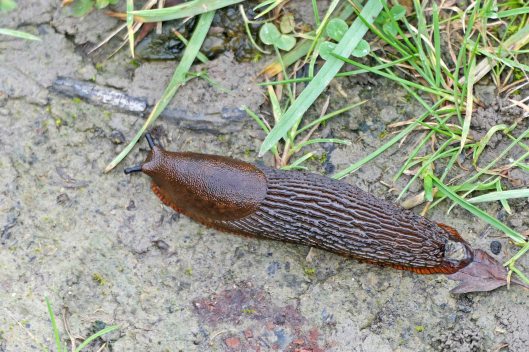
I was rather concerned when, last month, I read a report that ecologists were concerned the slug and snail populations may have been devastated by the summer heatwaves and drought (The Guardian, 27 September 2022). Though I’m sure many gardeners would rejoice at this news, their slimy little enemies do play an essential part in our ecosystems, breaking down vegetation and aerating soils, as well as being food for birds, hedgehogs, etc. Fortunately, for the slugs and snails, they are apparently excellent reproducers so their populations should bounce back next year. Still, I was really pleased to spot this handsome Large red slug (Arion rufus) sliding along the path during yesterday’s walk.

221024 slug

The Fieldfares arrive

Tags

, , , , , , ,

The strong easterlies of the last three days, 19th to 21st inclusive, have seen a huge influx of winter thrushes arriving in Britain. The BTO’s Birdtrack blog reports that the reason for such a large arrival is undoubtedly to do with the weather but is also linked ‘to the almost total failure of rowan berries across Scandinavia, where large flocks have already been recorded further west and south than is usual for the time of year’.

221022 fieldfare (1)

Although that blog only mentions the arrivals on England’s east coast, we’ve also seen huge numbers streaming through here in south Wales. Though these thrushes are mostly nocturnal migrants, they often continue their flights for the first few morning hours, before finding somewhere to feed and roost for the rest of the day. During my local walks, particularly in the coastal fields and at Cosmeston, I’ve seen flocks of 50-100 birds constantly passing overhead.

221022 fieldfare (3)

The birds have been a mix of Redwings and Fieldfares but, yesterday, the majority were Fieldfare. Though they were all quite flighty – and a hunting Sparrowhawk kept unsettling the flocks, it was simply amazing to see so many of these beautiful birds. I hope to share better photos of both Fieldfares and Redwings in the coming months.

221022 fieldfare (2)

Lemon disco, probably

Tags

, ,

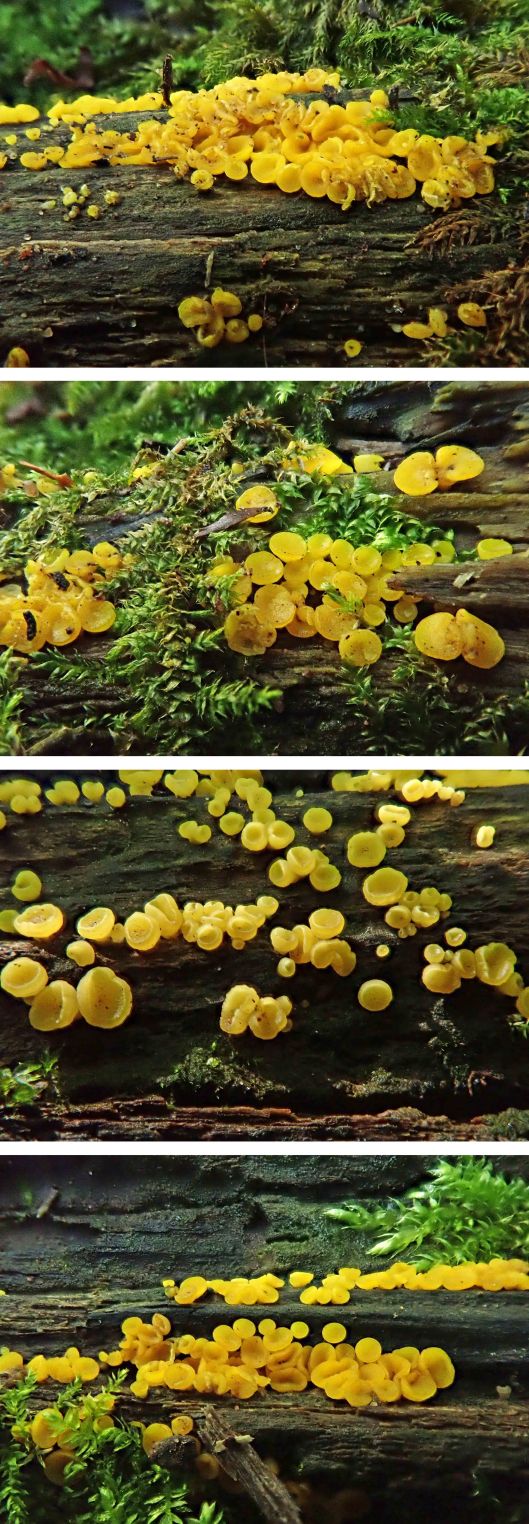
Lemon Disco (Bisporella citrina) – I used probably in the title because I can’t confirm that identification microscopically – is one of the most common discos. And, at this time of the year, when the daylight hours are shortening and the weather can be wet and grey, it’s a delight to find these bright bursts of yellow, sometimes in their thousands, during a woodland wander.

221021 lemon disco

A ringed Lesser black-backed gull

Tags

, , , , , ,

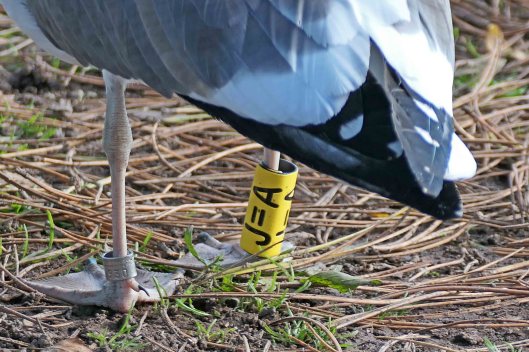
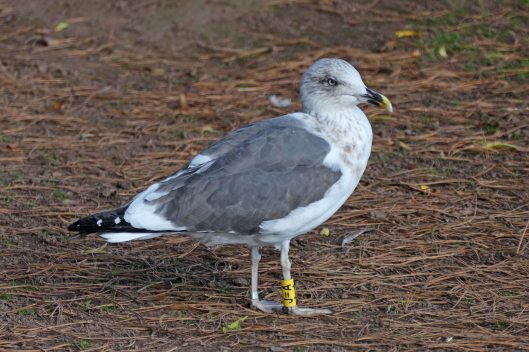
Whenever I spot a colour-ringed gull, I always try to get photographs of the ring so I can report the sighting and find out the bird’s history. Sometimes that history is quite exciting, with birds being reported from foreign shores, but this particular seabird, a Lesser black-backed gull spotted at Roath Park lake last week, is a bit of a stay-at-home.

221020 ringed lbb gull (2)

According to Peter Rock, urban gull expert and ringing scheme organiser, the gull was ringed in Cardiff in 2020 but has only ever been sighted at the lake. Peter does say that it might ‘set off late to spend its winter somewhere unknown’ … or it might just hang around in Cardiff all year, as many gulls do. If I visit the lake during the winter months, I will certainly be looking out for it.

221020 ringed lbb gull (1)

Shaggy inkcaps

Tags

, , , ,

They might look sturdy but these Shaggy inkcaps (Coprinus comatus) from yesterday’s walk would probably be gone if I had walked this way again today. You can see the taller one in the centre has already turned to mush, in the process producing a black ink that some people use for their artworks (see, for example, this work by Jo Brown, who creates amazing art inspired by fungi, and the rest of the natural world).

221019 shaggy inkcap

Red-backed shrike

Tags

, , , , , , , ,

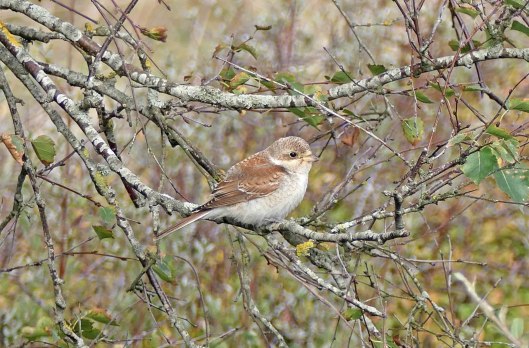
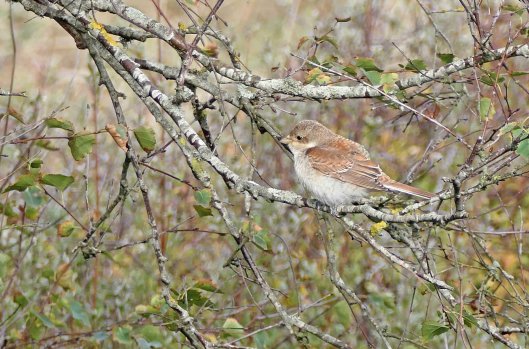
Shrikes are known as butcher birds, perhaps because of their powerful hooked beaks, more likely because of their tendency to create larders by impaling excess prey on spikes in trees and bushes. I have previously seen a distant Great grey shrike but last Sunday I had the opportunity to watch my very first Red-backed shrike at fairly close quarters, and what a stunning bird it is!
221018 red-backed shrike (a)

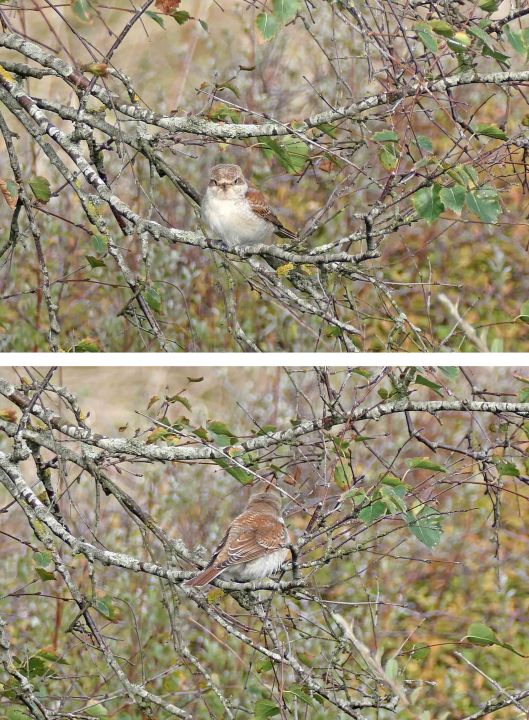
The Red-backed shrike (Lanius collurio) was once a reasonably common bird in southern England but, like so many British birds that have suffered from habitat decline, it is now classified as red-listed. And, though it’s thought one or two pairs still breed in England each year, these birds are mostly seen on passage, migrating to their northern breeding grounds in May-June, then heading to their over-wintering grounds in southern Africa between August and October.
221018 red-backed shrike (b)

When I was reading up about these birds, I discovered a 2018 article on the Bird Guides website, reporting on the altitudes reached by migrating birds, which noted that, from Sweden (one of the countries where these birds breed), the Red-backed shrike ‘flies at up to 3,650 metres. Both individuals [the other bird was the Great reed warbler] flew the highest above ground across the Mediterranean Sea and the Sahara, but the shrike also reached high flight altitudes closer to its winter grounds in southern Africa.’ It seems incredible to me that the small bird I saw sitting in a tree amongst the sand dunes at Kenfig National Nature Reserve would soon be flying up to 3 kilometres high in the sky over southern Africa!

221018 red-backed shrike (c)

Three Little egrets

Tags

, , ,

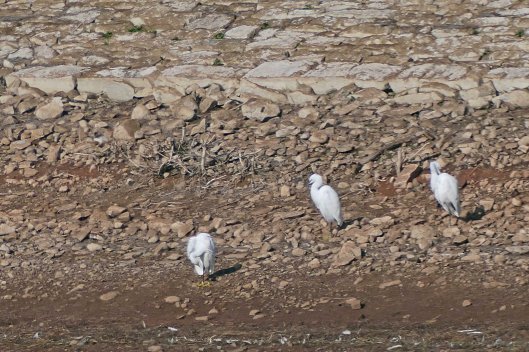
Three Little egrets standing on a wall
And if one Little egret should suddenly fly away
There’d be two Little egrets – that would still make my day!

Apologies for the poor rhyme. I still find it amazing to see such exotic-looking birds in a local Welsh setting but their numbers are certainly increasing. These were on the banks of Llanishen Reservoir in north Cardiff last Thursday.

221017 little egrets