Counting spots

Tags

, , , , , , ,

I love the bright pops of colour ladybirds (or ladybugs, as they’re known in some countries) provide on the leaves of trees, shrubs and grasses as I’m meandering through the landscape. And they’re usually easy to identify, simply by counting their spots, which is always a bonus with insects. These are a few I’ve recently encountered: 14-spot (Propylea quattuordecimpunctata) and 22-spot (Psyllobora vigintiduopunctata); a new species for me, the 24-spot ladybird (Subcoccinella vigintiquattuorpunctata) (recognisable by its red head, even if you can’t count the spots); and two that are named for their colours so no spot counting required, the Cream-spot (Calvia quattuordecimguttata) (okay, this could be confusing as it has 14 spots and isn’t really cream, more of a red-brown) and the Orange ladybird (Halyzia sedecimguttata).

220618 ladybirds

Moths are amazing

Tags

,

At the risk of stating the obvious, moths are amazing! And I’ve been lucky to find some gorgeous examples in recent weeks. As I’m running out of image storage space on this blog, the easiest way to share my photos is via a slideshow video. Here, then, is a short tribute to moths, a celebration of their incredible diversity of shapes and sizes, patterns and colours.

Pearls in the grass

Tags

, , , , ,

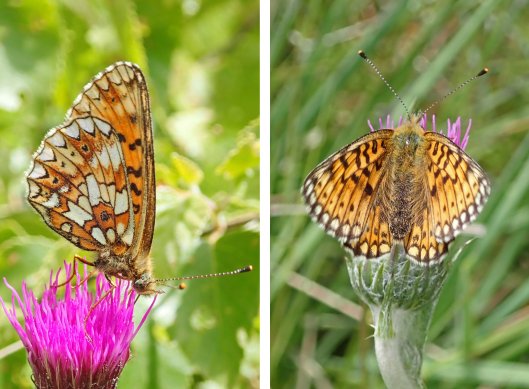
I can’t think of a nicer way to spend a day than to enjoy a lovely catch up with my friend Shar while wandering around a grasslands reserve looking for butterflies. Having a second pair of sharp eyes was also a bonus as the weather was quite dull, the butterflies few and mostly inactive. Still, we managed some good close sightings of Small pearl-bordered fritillaries (Boloria selene), a butterfly that thrives in the damp grassland habitat of Aberbargoed Grasslands NNR and, though one of the reserve’s largest fields was burnt recently, there are promising signs that both the violets required for this butterfly’s larvae and the thistles, bramble and bugle that provide food for the adults have survived the fire. Let’s hope both the plants and the butterflies bounce back from what could so easily have been a truly tragic event.

220616 small pearl-bordered fritillary

Grass bugs

Tags

, , ,

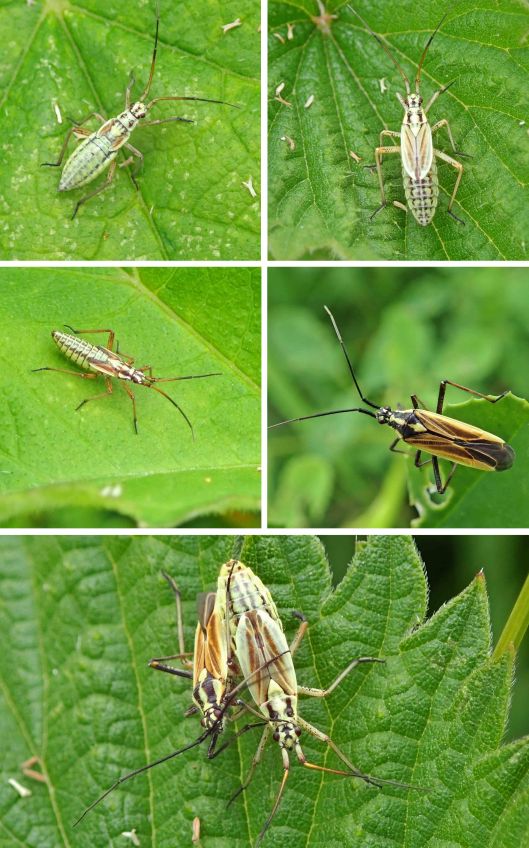
The Miridae family of plant / leaf / grass bugs is huge, with thousands of species worldwide. This one, Leptopterna dolabrata, is a species I often see in the local meadows at this time of year and, during a recent walk, I found a little colony of them, with several adult males and females, mating adults, and nymphs that I have tentatively identified from looking at their colouring as male and female, though I may be wrong about those. So, the photos below are, I think, female nymph (left) and adult (right), male nymph (left) and adult (right), and, most obviously, a male and female mating.

220615 Leptopterna dolabrata

Leafmines: Orchestes signifer

Tags

, , , ,

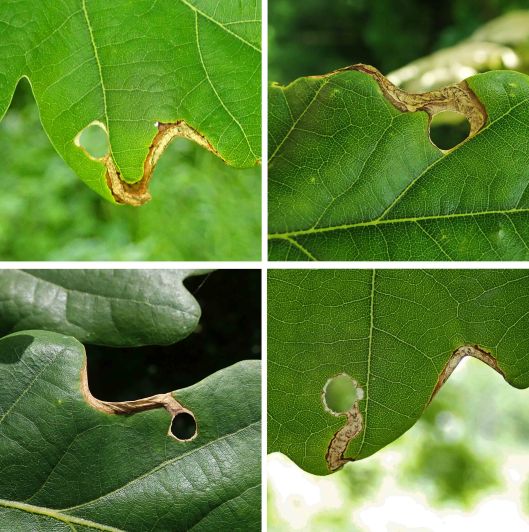
From my previous posts, including the recent A weirdness of weevils, I’m sure it’s obvious that I’m a huge fan of weevils, but I’d never given a thought to their life cycle until I found these leafmines. The mines are the work of the larvae of the weevil Orchestes signifer. The gallery mines follow the edges of Oak leaves before terminating in a small blotch. At that point, the larvae make themselves a case by cutting out the circular blotch, and, snugly encased, they drop to the ground to pupate. You can find a photo of the black-and-white adult weevil on the British Leafminers website.

220613 Orchestes signifer

Yellow rattle

Tags

, ,

Yellow rattle (Rhinanthus minor), the meadow-maker, the miracle-working semi-parasitic plant that weakens the overwhelming grasses in our fields by feeding on their nutrients, thus allowing more delicate wildflowers their chance to thrive. The rattle in the name comes from the noise of the ripe seeds in their pods and, according to the Plantlife website, cattle love its taste – ‘when let into a field it is the first thing they will eat’, so it’s a win for the cattle, and a win for wildflowers.

220612 yellow rattle

Cheeky little flitters

Tags

, , , ,

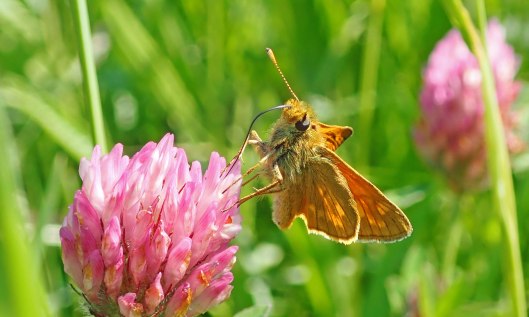
The skippers are here! I spotted my first Large skipper of the year on Wednesday 1 June but that butterfly flitted quickly past a couple of times before disappearing, seemingly by magic, and it wasn’t until last Friday, a hot sunny day, that more skippers appeared. On that day’s walk I saw six in total, in four different locations, and the cheeky little flitters even posed obligingly for photographs.

220610 large skipper (1)

Of course, they weren’t actually posing for me. Male Large skippers like to find themselves a perch from which to survey their domain and keep a look out for any passing females. Even after flitting up to scare other males off their patch or to follow females in the hopes of mating, they will still return to their chosen perch. So, if you’re having trouble getting a good look at these glorious golden butterflies or taking their photographs, it can be a good idea to just stand still and watch a while until you work out their perching spot.

220610 large skipper (2)

Rose leaf galls

Tags

, , , , , , , ,

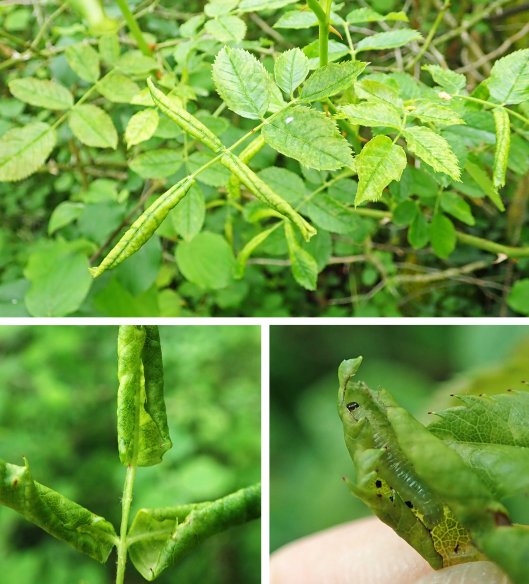
I was alerted to the possibility of finding these galls by a post I saw on Twitter – social media certainly is good for spreading the word about what to look for when and where.

220609 Blennocampa phyllocolpa

These galls, these downward rollings of the leaf edges on rose species, are due to the larvae of the sawfly Blennocampa phyllocolpa. Presumably, they cause the leaves to roll in order to create shelters for themselves, as the leaves seem otherwise unharmed, though, when I carefully unrolled perhaps 10 leaves, I only found a larva in one of them. The adult sawfly is a tiny black creature, photos of which you can see on The Sawflies (Symphata) of Britain and Ireland website. If you have roses in your garden, you may already be aware of this sawfly’s activities on your plants.