Black-tailed skimmer

Tags

, , , ,

Though the British Dragonfly Society website says this species ‘favours lakes, slow rivers, ponds and occasionally marshy area[s], that have open water and bare patches along the shore’, I usually find Black-tailed skimmers (Orthetrum cancellatum) locally in wildflower fields and along woodland rides, not always with water or damp habitat nearby.

220628 black-tailed skimmer (2)

Perhaps it’s their flexibility in preferred habitat that has enabled this dragonfly to spread so widely – the BDS website again: ‘Quite common in south-east Britain. This species has spread significantly in both England and Wales since the late 1980s.’ Although I saw my first Black-tailed skimmer of the year over three weeks ago, on 2 June, this particular skimmer is the first I’ve managed to get close enough to for reasonable photographs.

220628 black-tailed skimmer (1)

Skippers, small but few

Tags

, , , ,

First spotted locally on 15 June, Small skippers are now appearing in greater quantities though, from my observations, both Large and Small skipper numbers are well down on recent years. This may well be climate related but it’s also environmental. In two of the local areas I have previously seen skippers in abundance, humans have been tinkering. In one case, the edges of a field were cut back much more than in previous years, with grassy edges cut to the dirt and the scrub- and bramble-edged hedgerows heavily flailed. And in the other location, an old meadow, the long grasses were cut but the trimmings left to rot, a community orchard was planted where wildflowers and waxcap fungi previously thrived and, once again, the bramble-and-scrub edges have recently been decimated, despite this being bird-nesting season. The good news is that I’ve found another good skipper field though, unfortunately, it has been earmarked for a housing development by the Welsh government (though locals are fighting to preserve their green fields). I fear for our butterflies, such vulnerable little creatures in an increasingly hostile world.

220627 small skipper

Thousands of Pyramidal orchids

Tags

, , , ,

I learned, earlier this week, that the rangers and volunteers at Cosmeston Lakes Country Park do an annual count of the orchids growing in the east paddock. On Friday 17 June, they counted an amazing 4828 Pyramidal orchids (as well as 5254 Common-spotted and 155 Bee orchids). These are just a few of those splendorous Pyramidals.

220626 pyramidal orchids

Lightning and Brimstone

Tags

, ,

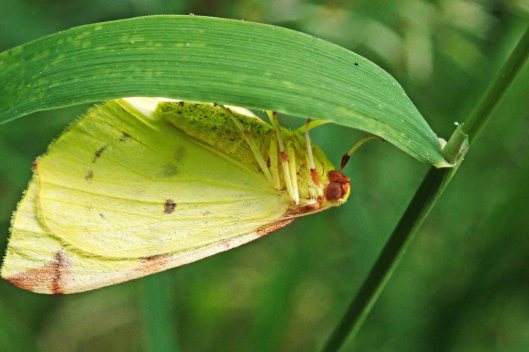
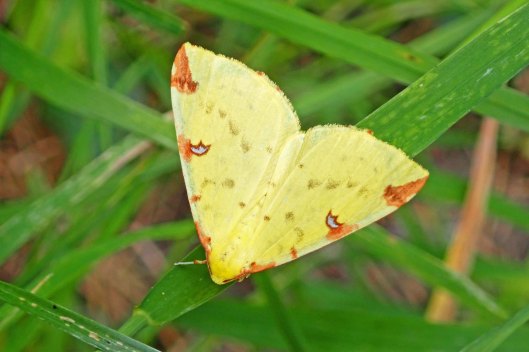
Showcasing this Brimstone moth (Opisthograptis luteolata) I found on Thursday seems entirely appropriate today as I was caught out during this morning’s walk by a sudden thunderstorm. One of the lightning strikes was very close by, almost overhead, and there was a very strong smell of brimstone, the archaic name for sulphur.

220625 brimstone moth (2)

The moth was resting, perched upside down under a blade of grass. Amazingly, it stayed completely still as I got very close and twisted the grass to get better photos. Very obliging and very beautiful!

220625 brimstone moth (1)

Red, no danger

Tags

, , , , ,

Bright red in the landscape always draws my eye (witness Wednesday’s beetles), so this burst of vibrant colour on a low-growing rose bush immediately attracted me. And the fact that the rose was ‘persuaded’ to create this object by the larvae of a tiny wasp is really quite mind-blowing. That wasp is a Bedeguar gall wasp (Diplolepis rosae), and you may remember my somewhat haphazard but ultimately successful attempts to see one of these wasps when I kept a gall in a jar to see what emerged (Bedeguar gall wasp, May 2020). This time I’m restricting myself to admiring the wasp’s astonishing creation.

220624 bedeguar gall

A longhorn

Tags

, , , ,

As if it knew I was purposefully looking for insects to celebrate National Insect Week, this beetle, my first longhorn of the year, was sunning itself in a hedgerow as I passed by this morning. This is Rutpela maculata (no common name), one of the Cerambycidae and the only longhorn beetle I see regularly in my local area. The black-and-yellow colouration of these beetles varies quite a bit but they always look handsome.

220623 longhorn beetle

Red for danger?

Tags

, , ,

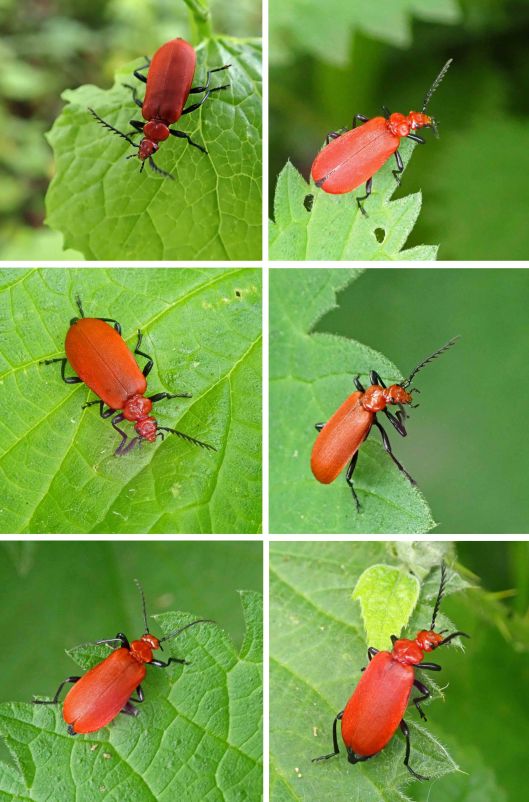
I was minding my own business, head in a tree as often happens, when one of these crazy little dudes flew into me today. Maybe it thought I was a trunk. It rolled a couple of times in mid air, tumbled, then recovered in time to land on a nettle, scrabbled about, righted itself, then turned and gave me the most indignant look, as if its crazy flying was all my fault. These are Red-headed cardinal beetles (Pyrochroa serraticornis), frequenters of shady woodlands, predators on other insects, occasional menaces of the airways.

220622 red-headed cardinal

Cyllecoris histrionius

Tags

, , , ,

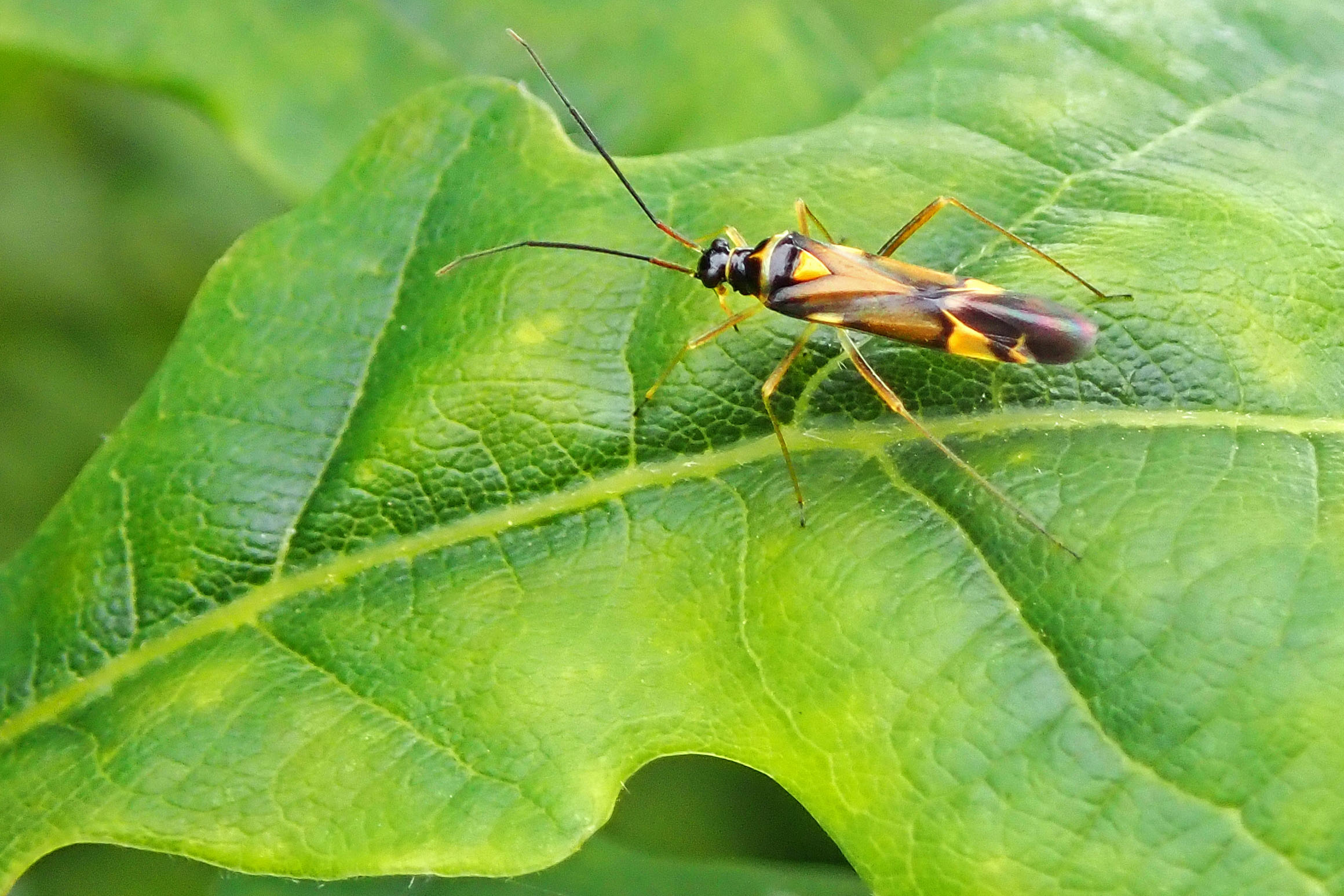
It’s National Insect Week here in Britain so I thought I’d share a new bug I found while checking out life on the leaves of Oak trees. And if you think today’s bug looks a bit like last week’s bug, Leptopterna dolabrata, you’d be absolutely right. Meet Cyllecoris histrionius, another member of the Miridae family. This bug species overwinters as an egg, the larvae hatch in the Spring, then the adults are active from May to July. Oak leaves are their usual habitat; there they can be found munching away on aphids and other tiny insects.

220621 Cyllecoris histrionius

Small heath

Tags

, , , ,

As well as the Heath spotted-orchids pictured in yesterday’s blog and the Small pearl-bordered fritillaries featured last Thursday, another of the stars of the Aberbargoed Grasslands NNR is the Small heath (Coenonympha pamphilus). Fortunately, this lovely little butterfly has adapted to life in a wide variety of habitats, not just damp grasslands, so, although it is still classed as vulnerable in the most recent conservation status report released last month by Butterfly Conservation, it is in a much better position to cope with environmental changes that those butterflies that require more specialised habitats.

220620 small heath