Gallant-soldier

Tags

, ,

During Friday’s search for more leafmines, I ventured along roads I hadn’t walked before, and I’m so glad I did as I found a new plant – well, an abundance of new plants really, growing all along the roadside verge in front of Cardiff’s main Royal Mail delivery centre. This is Gallant-soldier (Galinsoga parviflora).
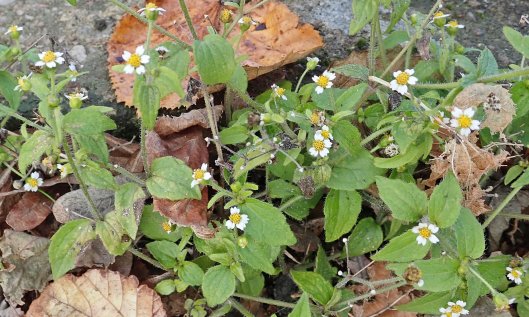
211121 gallant soldier (1)

I’ve read several variations of its history in Britain: here’s what is written in Flora Britannica:

Gallant-soldier … was brought to Kew Gardens from Peru in 1793, bearing a name that commemorated the Spanish botanist Don Mariano Martinez de Galinsoga. The plant itself was rather less imperious, being a thin, lax and greenish-flowered daisy with weedy habits. In the early 1860s it escaped from Kew and became widely established in gutters, gardens and waste places around Richmond … Galinsoga was corrupted to ‘Gallant soldier’.
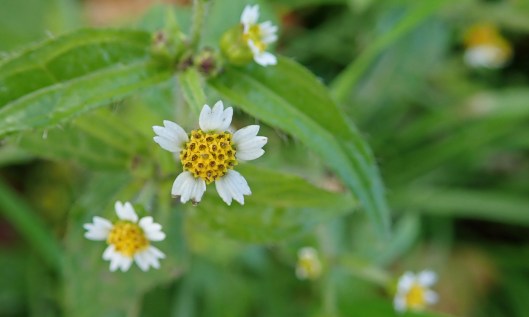
211121 gallant soldier (2)

Since their escape from Kew, these soldiers have marched far and wide, though they haven’t yet reached all parts of the British Isles, and there are not a lot of Welsh records. You can see a map of their whereabouts on the NBN Atlas website.

Clubs and stagshorns

Tags

, , , ,

The one in which we look at yellow stick-like fungi, poking up out of the ground, or wood.

Club fungi can be difficult to identify positively so I can’t be completely sure of my names here, though I have had some help from an expert. So, this first fungus, found in local deciduous woodland, is probably Handsome club (Clavulinopsis laeticolor).

211119 yellow club

This next club fungus looks superficially similar to the last but this one had sprouted in mossy grassland, meaning it is likely Yellow club (Clavulinopsis helvola).

211119 small stagshorn

And this third yellow stick-like fungus is paler, almost translucent and jelly-like, and was flourishing on decaying wood. I’m fairly sure this is Small stagshorn (Calocera cornea).

A bonus butterfly

Tags

, , ,

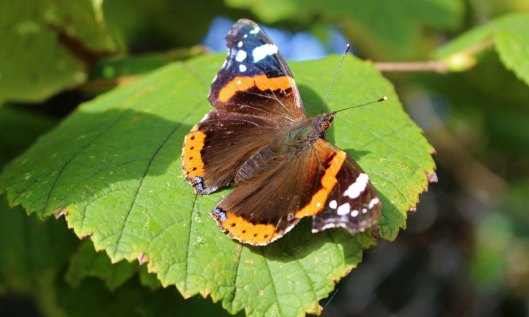
During yesterday’s meandering walk around north Cardiff, surveying for one particular leaf-mining moth, I almost stepped in front of an oncoming car, such was my delight at seeing this butterfly flutter up from the pavement in front of me and head across the road. Fortunately, it was a quiet no-exit road, the car driver was going very slowly, and kindly waved me across in front of him. Fortunately, too, the butterfly, this glorious Red admiral, had settled on the roadside hedge opposite so I was able to enjoy watching it enjoy the autumn sunshine.

211118 red admiral

Opportunists

Tags

, , ,

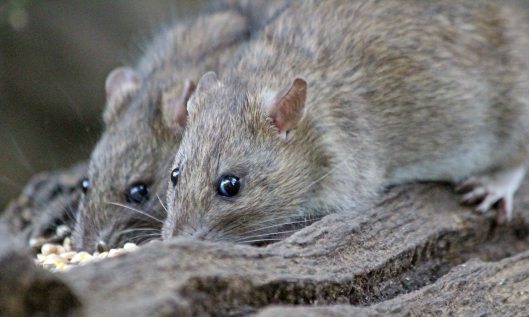
The rat population at Cosmeston Lakes Country Park is thriving thanks to the generosity of those folk who leave seed for the birds. The rodents are fearless opportunists and extremely cheeky, approaching to grab their share of the bounty even before people have stepped away, but they do at least share the seed with the birds. The rats stuff their mouths full of seed and scuttle away, whereas the squirrels monopolise the seed, staying put and not allowing the birds to approach.

211117 rats

Doomed

Tags

, , , ,

During Sunday morning’s meander around Cosmeston, I watched this little drama play out on a fence post: the larva of one of the Syrphus* species of hoverfly was being injected with eggs by a parasitic wasp. The poor larva was bucking about, desperately trying to get rid of the intruder, but to no avail. The wasp’s ovipositor was firmly wedged into the hoverfly larva, pumping eggs into its body. The larva will be eaten from the inside by the wasp’s larvae when they hatch.

*My ID was wrong. When I recorded this find, I got the following message from national recorder Geoffrey Wilkinson: ‘This is a small 3rd-stage Epistrophe grossulariae – the rear breathing tube is longer than broad and is two-toned in colour (brown tipped, clear base). Although the colour pattern has yet to fully develop you can just see the fish-bone pattern of green and make out the black dorsal dashes.’

Leafmines: Scrobipalpa acuminatella

Tags

, , , , , ,

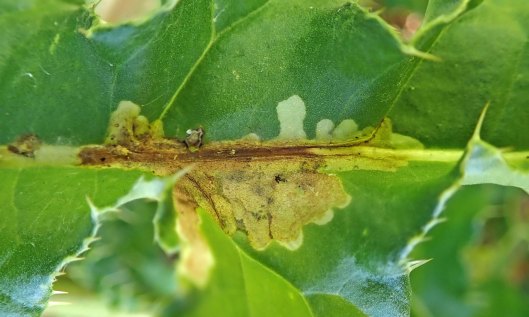
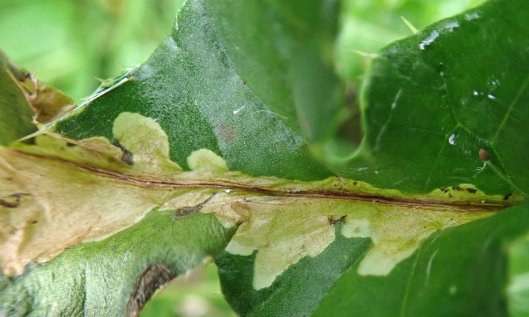
This week’s mines can be found on thistles, on species of both Cirsium and Carduus – in my case, the plant is Creeping thistle (Cirsium arvense).

211115 Scrobipalpa acuminatella (1)

These mines have been made by the larvae of the moth Scrobipalpa acuminatella, the adult of which can be seen on the UK Moths website. As the website points out, these moths have two generations each year, so we get two chances to see the mines.

211115 Scrobipalpa acuminatella (2)

These moth larvae make their home in the midribs of thistle leaves, venturing out to eat during the night and making blotches as they do, then returning to the midrib to shelter during the daytime.

211115 Scrobipalpa acuminatella (3)

Birding around the Bay

Tags

, , , ,

Some recent sightings from my circuits around Cardiff Bay …

211113 common sandpiper

Common sandpiper, an unexpected sighting, as I was under the impression that these birds migrated to Africa to over-winter

211113 coot

Coot: often overlooked, frequently fractious, undeniably handsome

211113 crow

Carrion crow, frequently seen poking about on the stone embankments around the Bay

211113 goosander

Goosander, likely an eclipse male, i.e. in the process of changing from summer to winter plumage

211113 grey heron

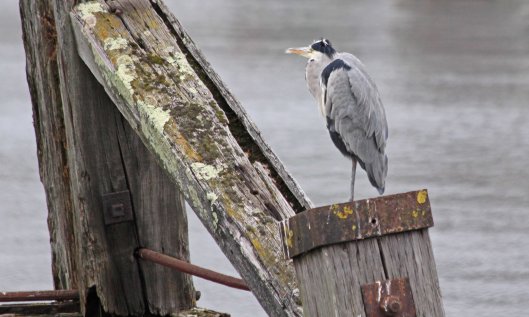
A Grey heron – presumably the same Grey heron – that I’ve seen a couple of times lately on the dolphins and pontoons near Mermaid Quay

211113 mute swan

A Mute swan reflecting

211113 pied wagtail

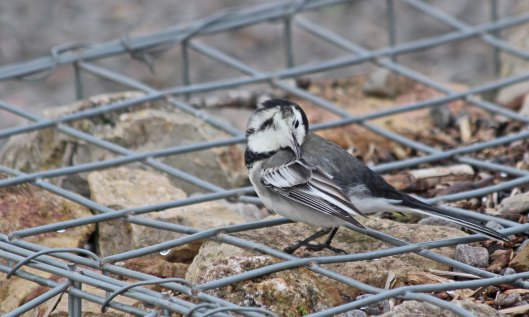
A Pied wagtail preening

211113 ring-necked and tufted ducks

The currently resident Ring-necked duck with one of its Tufted duck friends

211113 rock pipit

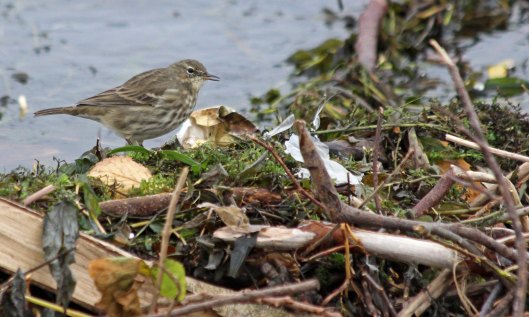
Rock pipit, one of a healthy population of these birds that inhabit the unhealthy, rubbish-filled peripheries of Cardiff Bay.