Do you have a favourite bug? I think the shieldbug is mine. Always cute, often comical, reasonably easy to identify – what’s not to love?
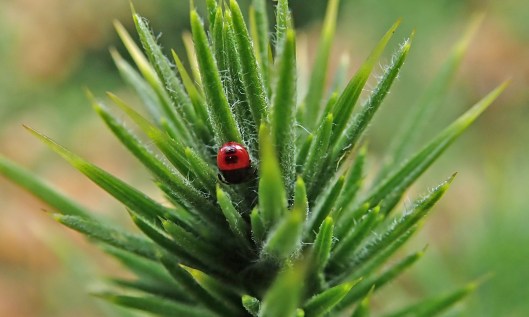
Gorse shieldbug, 2nd instar
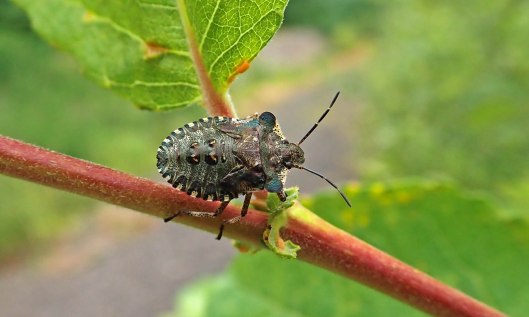
Red-legged shieldbug, final instar
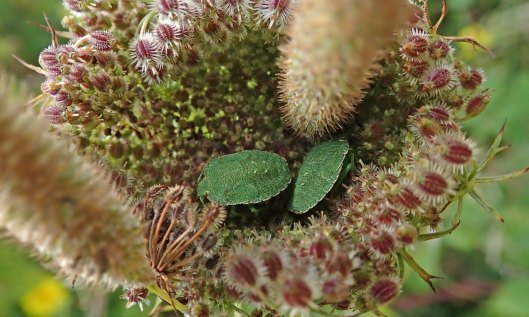
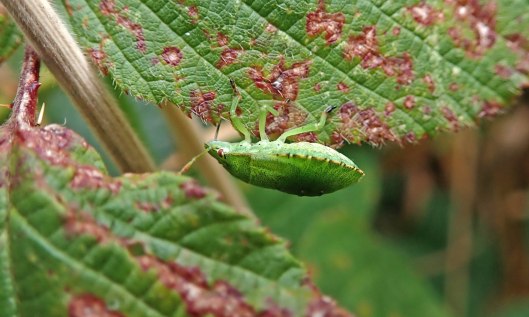
And a selection of Common green shieldbugs


03 Friday Sep 2021
Posted in insects
Do you have a favourite bug? I think the shieldbug is mine. Always cute, often comical, reasonably easy to identify – what’s not to love?
Gorse shieldbug, 2nd instar
Red-legged shieldbug, final instar
And a selection of Common green shieldbugs
02 Thursday Sep 2021
Posted in mammal
It almost looks like it’s sleeping, recovering from scurrying rapidly about by taking a short nap on the warm bare earth … but no. A tiny four centimetres in length, furry tailed and the tail about two thirds the length of its body so, I think, a Pygmy shrew. The words from a Neil Young song spring to mind: ‘It’s better to burn out than to fade away’ – this little shrew lived, and died, those lyrics.

01 Wednesday Sep 2021
Tags
autumn berries, bird migration, birding, Blackcap, Blackcap eating Elderberries, British birds, Elderberry, Sambucus nigra
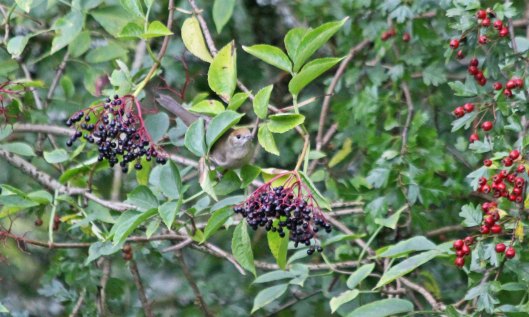
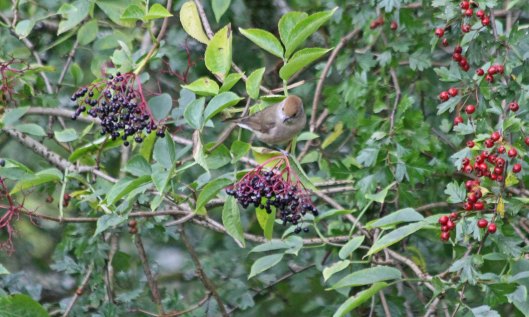
It’s not only humans that like to go foraging for ripe berries in the autumn. Though the raw berries of the Elderberry tree (Sambucus nigra) are mildly poisonous to mammals, they do not seem to affect fruit-eating birds, and Blackcaps, in particular, love to feast on them. This beautiful female had interrupted her migration journey south to top up her tank with their succulent goodness.

31 Tuesday Aug 2021
Posted in spiders
Last week, entomologist Liam Olds made the stunning discovery of local populations of Wasp spiders, not once but twice, the first on 26 August at Porthkerry Country Park in Barry and the second the very next day at Grangemoor Park in Cardiff. Gangemoor is an easy walk for me and I’d never seen these spiders before so, of course, I went searching. Liam and fellow finder Christian Owen had located about 20 of these stunning spiders; I found seven, and was delighted to see so many.
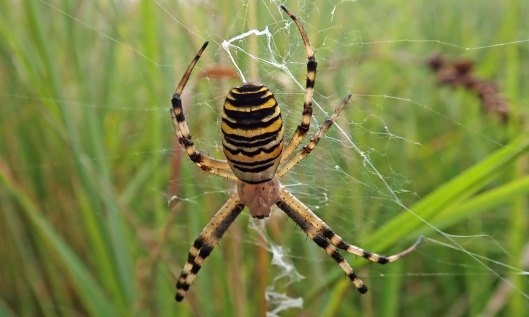
As you can guess from its name, the Wasp spider (Argiope bruennichi) sports wasp-like back-and-yellow stripes on both its upper abdomen (photo above) and under side (below), presumably a clever attempt to fool potential predators into not eating it. In a manner similar to the Common garden spider, the Wasp spider constructs a large web, strung between the tall grasses of its favoured grass- and heath-lands, and sits in the middle awaiting its prey. There is one striking difference with the Wasp spider’s web though; it usually has a white zig-zag stripe running down through the middle. The purpose of this ‘stabilimentum’ is much debated, ranging from a form of camouflage to attracting prey by reflecting ultraviolet light, but it is certainly distinctive.

The Wasp spiders I saw were all females, as the male’s lifespan is short – if he doesn’t get eaten by the female after mating, he dies soon after serving his purpose. He is smaller and lacks the distinctive markings of the female – the UKSafari website has a photo of the male, and much interesting information about these intriguing spiders.
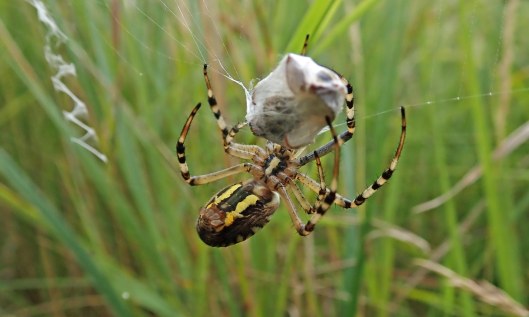
As you can see from the series of photos below, I was lucky to spot one Wasp spider wrapping up her recently caught lunch, an unlucky wasp. It’s a ‘Wasp eat wasp’ world out there, folks!


30 Monday Aug 2021
Tags
British leaf mines, British sawflies, leaf mines on Oak, leafminers, Oak leafmines, Profenusa pygmaea, sawfly leafmines
Believe it or not, #LeafmineMonday is a thing on Twitter, and last Monday I read with interest this tweet, with photos, posted by Rob Edmunds (@leafminerman, one of the people behind the excellent British Leafmines website):
a sawfly mine which is fairly easy to find, made by Profenusa pygmaea. Look for brown blotches on Oak leaves but with a wriggling start as shown in the photo … Initial mines are whitish but then fade to brown.

Profenusa pygmaea is a species of sawfly – you can read more about it and see photos of the adult on the Sawflies of Britain and Ireland website. As I’m often to be found checking out Oak leaves and there were no records for this particular sawfly in my local area, of course I had to go looking, and I’ve now found these leafmines in two separate locations. I’m guessing it’s yet another under-recorded species so if you spot it in your area, do please record it.


29 Sunday Aug 2021
Posted in flowers, wildflowers
Tags
bright summer wildflowers, British wildflowers, late summer wildflowers, yellow flowers, yellow wildflowers
A selection of the wildflowers in bloom during these last weeks of summer – last week, my video featured flowers of more mellow, subtle hues; this week, you’ll need your sunglasses as these are the brights!
Featuring Agrimony, Bird’s-foot trefoil, Bristly oxtongue, Creeping buttercup, Creeping cinquefoil, Dandelion, Fleabane, Gorse, Honeysuckle, Meadow buttercup, Meadow vetchling, Melilot, Mouse-ear hawkweed, Nipplewort, Ragwort, Scarlet pimpernel, Smooth sow-thistle. Tutsan, Wild parsnip, Wood avens, Yellow corydalis, and Yellow-wort.
28 Saturday Aug 2021
Posted in insects
I was heading home from Cosmeston after a lovely wander but not having seen much in the way of wildlife when this superb creature appeared on the pavement in front of me – actually, it was lucky I didn’t stand on it!

There was a family walking along not far behind me and I feared their combination of feet, pushchair and trike wheels might squish the creature so I quickly scooped it up and walked to a small area of waste ground where it might take shelter amongst the tall grasses, wildflowers and low scrub.

If you’ve never seen one, this is the caterpillar of the Elephant hawk-moth. It feeds on a variety of plants, particularly Rosebay willowherb, but also the other willowherbs, bedstraws, even Himalayan balsam, so can be found where those wildflowers grow. This particular caterpillar looked very well grown so may have been seeking a place to pupate (remember that pupal case I found back in April?). Let’s hope it found a cosy spot under the leaf litter in its new location.


27 Friday Aug 2021
Posted in fungi
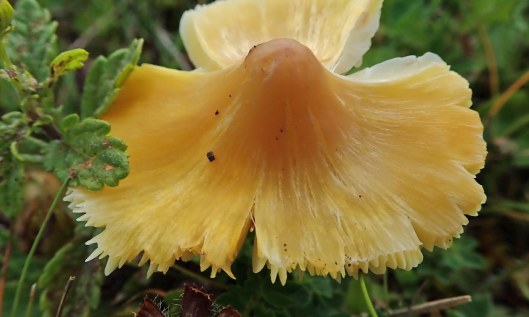
I used to love finding waxcaps in the grounds of my local cemetery when I lived in Cardiff but hardly see any in my current area. So, it was a delight to spot these Persistent waxcaps (Hygrocybe acutoconica) in one of the paddocks at Cosmeston earlier this week.

Their caps range in shade from yellow to orange and, though initially moist like most waxcaps, they soon dry out and often crack as they expand, especially when growing in an exposed location. The caps start off conical (hence the epithet acutoconica), which means these fungi can sometimes be confused with other species like the Blackening waxcap (Hygrocybe conica), but these Persistent caps don’t blacken.
The gills and stem of this fungus also range in colour from yellow to orange, and the stem sometimes looks grooved and fibrous.
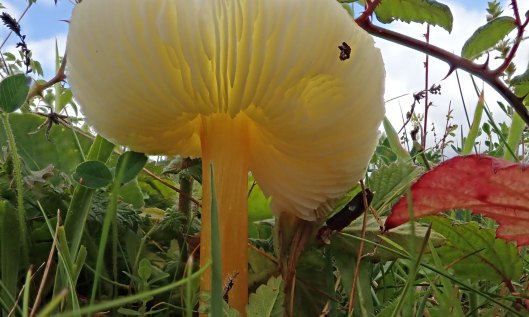
Persistent waxcaps are most often found in unfertilised grasslands, particularly on calcareous soils, and can also pop up on sandy soils and even amongst sand dunes.
26 Thursday Aug 2021
Posted in birds
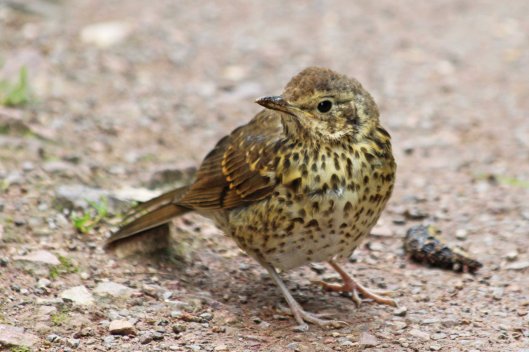
Hop, hop, hop. From its hiding spot amongst the path-side stinging nettles, out popped this juvenile Song thrush. I stopped immediately but it heard my final footstep and turned to look at me. And it stared … and stared … and stared. I could almost read its thoughts: ‘What is that? Should I be worried? Can I eat it? Does it have food?’ I could see a man walking two dogs down the path towards us and was concerned for this little juvenile, still learning about danger, so, after taking a few photos, I gently approached and shepherded the bird back in to the nettles.
25 Wednesday Aug 2021
Posted in insects
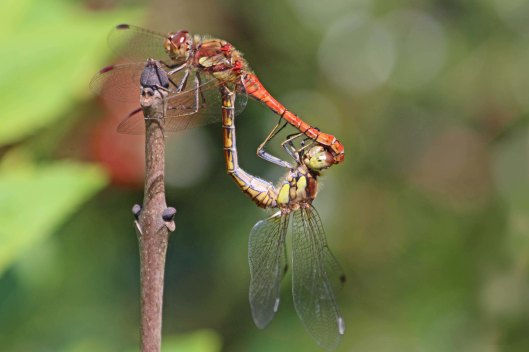
I think I can safely predict that there will be more Common darters at Casehill Woods next year after catching this pair procreating in today’s warm sunshine. The male had found himself the perfect perch on this Ash sapling and, as always with dragonflies, the female looks like she’s hanging on for dear life.
 earthstar
You must be logged in to post a comment.