Round Robin

Tags

, , , , ,

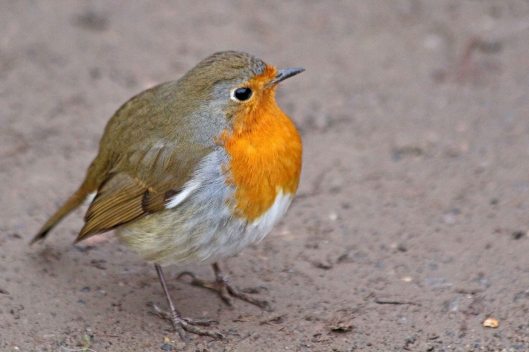
By ‘Round Robin’, I mean a Robin (bird) that looks round because it’s fluffed up all its feathers to increase trapped air to keep itself warm, as opposed to round-robin, a tournament where each contestant competes with every other contestant (rather than a knockout competition, where contestants get eliminated in stages, in, for example, a series of quarter- and semi-finals). And then I wondered if the two robins were somehow related but it turns out they’re not. According to Wikipedia, in round-robin the competition the word robin is a corruption of the French term ruban, which means ribbon, though, if you’re a word nut like me, you might like to check out The Phrase Finder website, which has even more interesting information about the origin of the term.
210107 round robin

Caspian gull

Tags

, , , , ,

Gulls are tricky – I’m sure I’ve said/written that on here before – so, when I heard that a 1st winter Caspian gull (Larus cachinnans) had been seen in Cardiff Bay, I enjoyed seeing other birders’ photos but didn’t for a moment consider going to see it. This was partly because it was only appearing at dusk, when it would fly in to spend the night with the other roosting gulls, and so I wouldn’t have time to see it and then walk home before it was fully dark, but mostly because I knew I wouldn’t be able to identify it even if I did go. So, imagine my amazement when, during a walk around Cardiff Bay on Monday, I bumped into my birding friend Graham, who was watching the Caspian gull, floating on the water only a hundred metres or so off the footpath, in the middle of the day. This was a lifer for me, so to say I was pleased would be something of an understatement!

210106 caspian gull

Fencepost lichen

Tags

, , , , ,

Just one old fencepost, wood species unknown, but look at the number of lichen species it’s home to, as well as the lichen-loving Springtails. It’s a multifarious microcosm of the wider environment, a miniature landscape of vibrant colour and diverse shapes. Old fenceposts are usually worth a closer look.

Water rail

Tags

, , , , ,

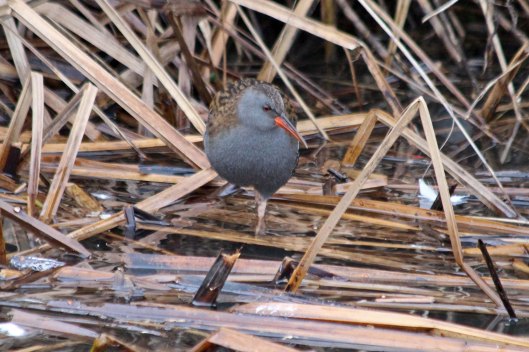
Much to my surprise and joy, one of the Water rails came out to play at Cardiff Bay Wetlands Reserve yesterday. Often skulking, more often heard than seen, Water rails are beautiful birds when you do get to see them. I recently learnt that their call, which some describe as resembling a screaming pig, is known as sharming, which apparently comes from ‘a now obsolete dialect word meaning “to scream shrilly and vociferously”’ (per Brett Westwood & Stephen Moss’s bestseller Wonderland: A Year of Britain’s Wildlife Day by Day). So, the Water rail, both sharming and charming!

210104 water rail (1)

New Year’s Plant Hunt

Tags

, , ,

The New Year Plant Hunt is happening again this year, from 1 to 4 January, but participants must, of course, stick to the Covid-19 restrictions in their areas. (In case you’re new to the idea of the Plant Hunt, all the details are on the BSBI website here.) I am taking part, of course, and, as a practice run, I used my meander around local streets and countryside footpaths on New Year’s Eve to see what I could find. It was very chilly, as you’ll see from the ice crystals still on a couple of the flowers, but I was very pleased to find 14 plants still in bloom: Alexanders, Bramble, Common vetch, Daisy, Dandelion, Gorse, Groundsel, Ivy, Knapweed, Primrose, Red clover, Red valerian, Shepherd’s purse, and Winter heliotrope.

Long-tailed duck

Tags

, , , , ,

This Long-tailed duck (Clangula hyemalis) was first spotted in Cardiff Bay by a local birder on 19 December, so I walked that way the following day but only managed very distant views of it as a black-and-white dot feeding far out in the Bay.

210103 long-tailed duck (1)

Luckily for me, though the duck wasn’t seen for several days, it appears to have lingered unseen, perhaps amongst the reed beds, until it was re-found on 27 December. So, on the 29th’s walk, I went looking once again and struck it lucky, as the bird was with the large Tufted duck flock in the Cardiff Bay Wetlands Reserve.

210103 long-tailed duck (2)

Initially, it was very distant but then it suddenly decided to fly over very close to where I was standing on the viewing platform. Almost as if it had ‘ants in its pants’ or was being nibbled from below, it acted very unsettled, flying back and forth a few times, before disappearing out beyond the moored boats, into the River Taff. What a treat it was to have such close views of this charming little winter visitor.

210103 long-tailed duck (3)

New year, new hope

Tags

, , , ,

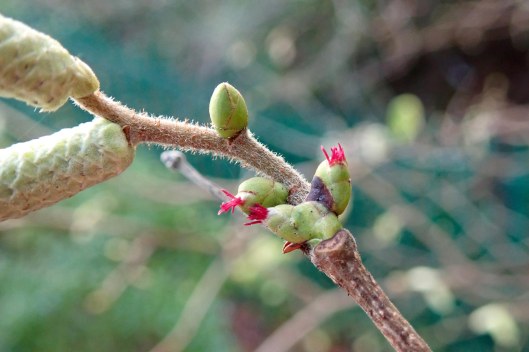
A new day, a new year, new life, new hope! One of the first things I noticed during today’s long New Year’s Day walk was these Hazel flowers, the tiny pink female flower and, nearby, the long droopy male catkin. And it made me feel hopeful. Though we humans enter 2021 beset by the devastation and grief of a global pandemic, the looming disasters of climate change and environmental destruction, and, in the UK, the self-inflicted damage of Brexit, yet Nature continues its cycles of life, shining a little glimmer of light in the darkness and gloom. Let’s cling to that light and let it inspire us to make 2021 a greener, more environmentally friendly year, for the future of our planet and ourselves.

210101 hazel flowers (1)

366/366 Transition

Tags

, , , ,

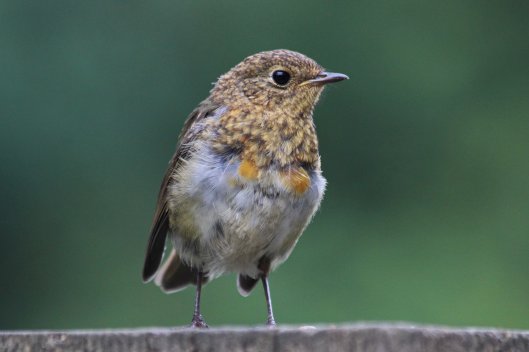
I consider this my best photo of 2020, partly for technical reasons – it’s sharp, the bird is looking at me, the background and composition are pleasing, but also because I caught this gorgeous wee Robin in a ‘between’ state, as it transitions from juvenile to adult, its head still showing the mottled beige and browns of its chick feathers but the first of its adult red breast feathers already present. And so this photo also seems appropriate for New Year’s Eve, as we humans transition from one calendar year to the next.

201231 robin

365/366 2020 insects

Tags

, , , , , , ,

These are some of the highlights of my year in insects:

201230 hoverfly larva

I found my First hoverfly larva (and I’ve since found another, though not been able to identify either) …

201230 helophilus trivittatus

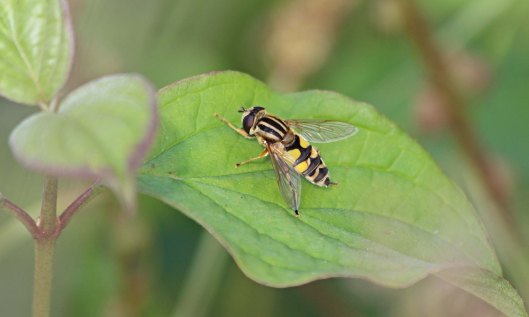
… and my first examples of the hoverfly species Helophilus trivittatus.

201230 Crypturaphis grassii

And, very recently, my first Italian Alder aphids, which I’ve since found on another Italian Alder tree on the other side of town.

201230 cicadella viridis

Here’s one I haven’t blogged – it’s a leafhopper, Cicadella viridis, which I saw for the first time during one of the two times this year that I actually caught a train to venture out of my local walking area (this was immediately after our first lockdown ended, when I dared to make two local train journeys – not been on a train or bus since).

364/366 A vibrant treat

Tags

, , ,

It would be fair to say that my fungi-finding year was fairly dismal: only about 20 of this year’s 366 blog posts were about fungi. The highlight, though, was brilliant – the vibrant, intense, almost unreal blue of the Cobalt crust (Terana caerulea) that I posted about earlier this month, in Not just any stick. I haven’t yet been back for a second look at it – I’ve been saving that for a New Year treat!