333/366 Striped snail

Tags

, , , , ,

And now for something completely different….

201128 striped snail (1)

I don’t often look at molluscs but these banded beauties caught my eye when I was walking across the Cardiff Bay Barrage earlier this week. I’m fairly sure they’re Cernuella virgata, Striped or Banded snails.

The presence of dark-on-light spiralling bands on their shells is one defining feature, as is their semi-spherical, rather than flat, shape, and the small open umbilicus. And they’re usually found on coastal sites, particularly in calcareous grassland, which fits the Barrage location.

201128 striped snail (2)

332/366 Redlead roundhead

Tags

, , ,

Redlead roundhead – try saying that name several times at speed – a real tongue-twister! Its scientific name is also a bit of a mouthful: Leratiomyces ceres, the ceres epithet a reference to the red of its cap, though I’ve found they’re more of a rusty red than cerise.

This fungus is an ‘alien from Australia’ that favours wood chip, particularly on sandy soil, and it owes its spreading distribution to the way many park departments cover areas of ‘gardens’ with chippings of trees from wide and varied sources. I found this particular specimen on the Cardiff Bay Barrage, growing on bits of wood washed down the Rivers Ely and Taff during flooding events.

331/366 Leafmines: Phyllonorycter leucographella

Tags

, , , , , , , , ,

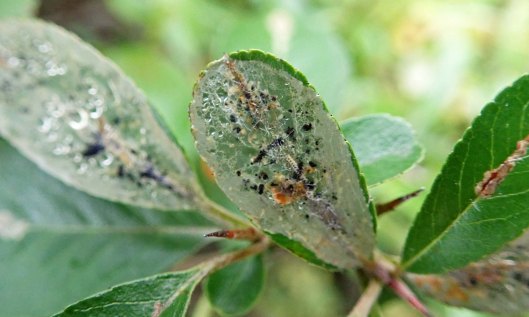
I stumbled across these leaf mines by accident but I simply can’t resist including them … because the tiny striped larvae are so darn cute!

201126 phyllonorycter leucographella (1)

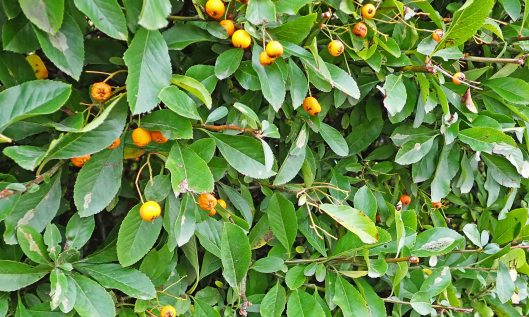
These are the larvae of the moth Phyllonorycter leucographella, the adult of which is also rather striking – you can see photos of it on the UK Moths website here. As the website reports, this moth is a recent arrival to Britain, first spotted in Essex just 40 years ago, but for such a small creature – its wingspan is only 7-9mm – it’s managed to fly and settle far and wide, from Yorkshire in the north of England to Pembrokeshire in the west of Wales, and all points in between. This may partly be due to the fact that its larvae feed on many garden plants: I found an abundance of leaf mines on an orange-berried variety of Firethorn (Pyracantha coccinea), which explains why the moth’s common name is Firethorn leaf miner.

As you can see from my pictures, the larval ‘mine’ is like a blister, centred over the midrib on the upper side of the leaf. The larva, which, with black blobs on a white body, is very distinctive, can often be seen through the membrane of the mine, especially when it’s feeding at the edge of the blister. You can read more about this leaf miner, its life cycle and preferred larval plants on the UK Fly Mines website here.

201126 pyracantha

330/366 The Bay on Monday

Tags

, , , , ,

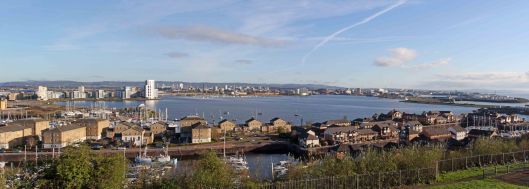
Monday’s walk saw me striding out on a circuit of Cardiff Bay, a walk of just under 8 miles that day as I meandered here and there to look at particular things. (This panorama of the Bay was taken in April a couple of years ago and a few things have since changed but I just wanted to give those unfamiliar with the Bay a general idea of my walk. The Bristol Channel is to the right; Cardiff city centre at the top, slightly left of centre; the view is as seen from the town of Penarth.)

201125 1 Cardiff Bay

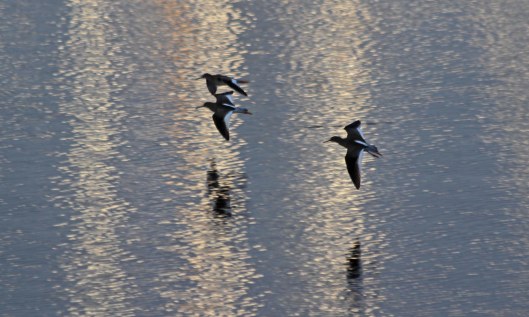
These are some of the birds I encountered on my circuit: three of four Redshanks that flew in to the embankment of the River Ely where it flows in to the Bay.

201125 2 redshank

A Grey heron using some of the old dock infrastructure as a lookout.

201125 3 grey heron

A pair of Goosanders on the embankment near Mermaid Quay – the red-headed female mostly snoozing, her partner using the time out of the water to spruce himself up.

201125 4 goosander female201125 5 goosander male

One of a pair of Mute swans also preening, then snoozing.

201125 6 mute swan

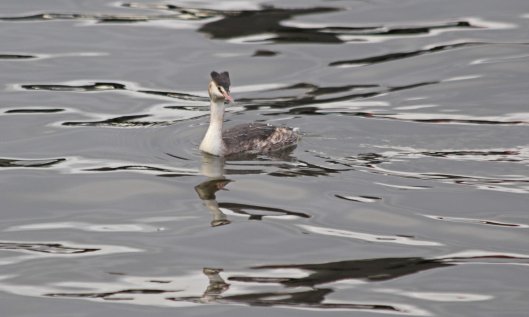
One of many Great crested grebes that make their home in the Bay.

201125 7 great crested grebe

I counted 20 Turnstones in total on Monday; this one had lost a chunk of feathers on its back, perhaps an encounter with a bird of prey that the Turnstone was fortunate to survive.

201125 8 turnstone

And, last but probably the most numerous, one of hundreds, perhaps thousands of Black-headed gulls to be seen around Cardiff Bay.

201125 9 black-headed gull

327/366 Around the town

Tags

, , ,

For this week’s wildfloral fest, I’ve taken a couple of meanders around my town to see what I could find along the back lanes, in cracks on stone walls, on the verges, bordering the pavements, in the churchyard and cemetery. And here are the bloomers: Bramble, Daisy, Dandelion, Field speedwell, Hedge bindweed and Hedge woundwort, Hemp agrimony, Herb Robert, Ivy-leaved toadflax, Nipplewort, Oxeye daisy, my first Primrose of the season, Purple toadflax, Red dead-nettle, Red valerian, and Wood avens. Not a bad haul for late November.

326/366 Leaf mines: on Beech

Tags

, , , , , , , ,

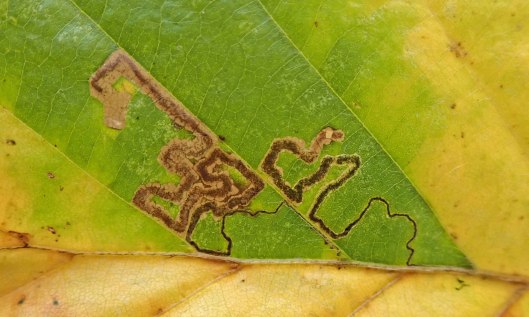
Five species of Lepidoptera larvae can be found in the leaves of Beech (Fagus species) and, with a lot of searching, much head-scratching, some rejections, and the much appreciated assistance of our county moth recorder Dave, I’ve now found and positively identified all five in my local area.

Stigmella tityrella: This moth’s larval leaf mines featured in last week’s post about green islands. The gallery (like a corridor) mine is usually compact and angular and, in particular, the larva stays between the veins when creating its mine – that is the feature I find helps most with its identification. As you can see from the two mines below, the galleries are very narrow to begin with, then broaden as the larvae grow.
OLYMPUS DIGITAL CAMERA

Stigmella hemargyrella: These larvae also create a gallery mine, but the mine is most often wider and longer than that of S. tityrella, and the larvae have no issue with crossing over the leaf veins.

Parornix fagivora: This is the mine I’ve found least in my local area, though I’m not sure if that’s a reflection on the moth’s rarity or my finding skills. Look for a blister, where the larva lives at first, and then a folded leaf edge, which it inhabits a bit like a cave.

Phyllonorycter messaniella: Both Phyllonorycter species on Beech create blisters; this one is usually an oval shape, almost rectangular, and quite broad. I’ve found the upper side of the leaf can be almost featureless but the blister on the underside is quite obvious so, if recording these, it’s best to include a photo of both sides of the leaf.

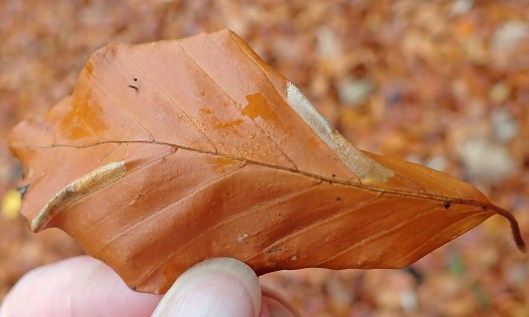
Phyllonorycter maestingella: This blister mine is long and quite narrow, and often placed between leaf veins. By spinning silk, the larva draws the leaf together to create a cosy tunnel, which looks a bit like a crease on the upper side of the leaf.
201121 Phyllonorycter maestingella (1)

I’ve attached to each of the moths’ names a link to the species description on the British Leafminers website, which is an excellent resource for anyone wanting to learn more.

325/366 White saddles

Tags

, , ,

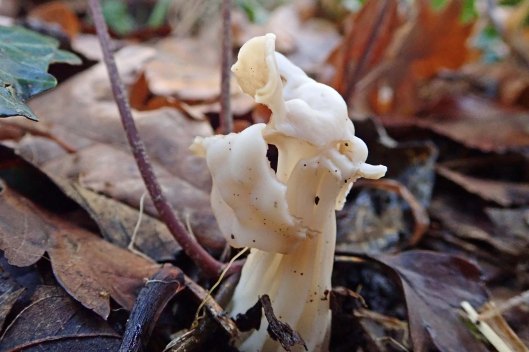
I was checking fallen leaves in a woodland clearing when I noticed something white poking through the leaves, a lucky break as it’s easy to miss these lovely little fungi. I had to clear away leaves to get these photos, but then mostly covered them up again.

201120 white saddle (1)

These are typical examples of White saddle (Helvella crispa), one of several species of ‘saddle’ fungi you can find in woodlands, these particular saddles growing most often where there are Beech trees.

201120 white saddle (2)

According to the First Nature website, ‘Helvella is an ancient term for an aromatic herb. The specific epithet crispa comes from Latin and means curled or wrinkled – a reference to the contorted cap or saddle’.

324/366 Simply red

Tags

, , , , ,

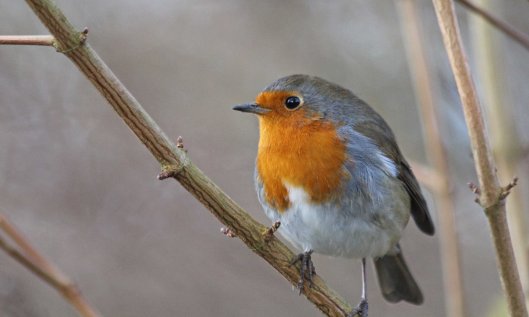
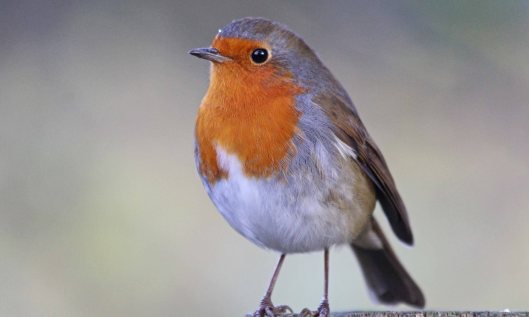
Stop! Danger! With green, Christmas. Anger (seeing red). Passion (red hot). And, in Nature, red leaves, red breasts (though I’ve always thought of the Robin as more of an orange breast), red fungi, red fruit, red feathers, red eyes…. Here’s a selection of reds from my recent meanders.