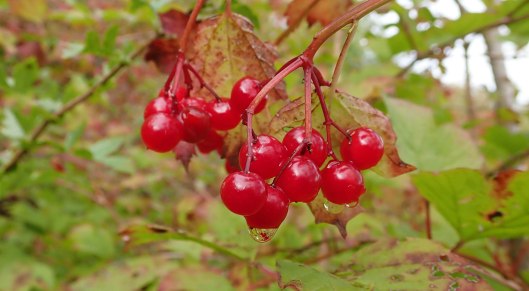
‘On the motionless branches of some trees, autumn berries hung like
clusters of coral beads, as in those fabled orchards where the fruit were jewels …’
~ Charles Dickens, The Life and Adventures of Martin Chuzzlewit



27 Friday Sep 2019
‘On the motionless branches of some trees, autumn berries hung like
clusters of coral beads, as in those fabled orchards where the fruit were jewels …’
~ Charles Dickens, The Life and Adventures of Martin Chuzzlewit
26 Thursday Sep 2019
Posted in 365DaysWildin2019, autumn, insects, nature
Tags
British hoverflies, Cosmeston Lakes Country Park, Eristalis nemorum, Eristalis species, Helophilus pendulus, hoverfly, Syrphus species
Despite the wind and rain of recent days, which continued through part of today, when the sun came out at Cosmeston there were still a few hoverflies about. I’ve forgotten everything I ever knew about hoverflies, which wasn’t much, but I think these are Syrphus sp. (these usually need microscopic examination to identify to species), Eristalis sp. (my photo doesn’t show enough details to be sure which species this is – maybe E. tenax), Eristalis nemorum, and ‘The footballer’, Helophilus pendulus.


25 Wednesday Sep 2019
Posted in autumn, nature, plants, wildflowers
Tags
Agrimonia eupatoria, Agrimony, Agrimony fruit, Agrimony seed heads, British wildflowers, burred fruit, seed dispersal
In recent weeks, every time I’ve returned from a country-park wander I’ve found my socks and shoes, and my hoodie if I’ve had it tied around my waist, covered in small burrs. These are the seed heads of Agrimony (Agrimonia eupatoria) and this is their ingenious method of spreading themselves around the countryside.

Just as some plants have seeds that have adapted to being blown in the wind, so others have devised methods of being transported by small (or, in this case, not so small) mammals. As you can see from my photos below, Agrimony fruit have a fringe of hooked bristles around their lower edge. These enable the fruit to become attached to the hides of cows, the wool of sheep, the fur of dogs, the socks of humans, to name just a few examples.


In my case, they mostly end up in the bin, but I’m sure a few will have fallen off during my walk home and, if I notice them on my hoodie, I pull them off as I’m walking along, thus doing my bit to help the plant go forth and multiply!
24 Tuesday Sep 2019
Tags
#365DaysWild, British craneflies, Cosmeston Lakes Country Park, crane fly, cranefly, Tipula oleracea
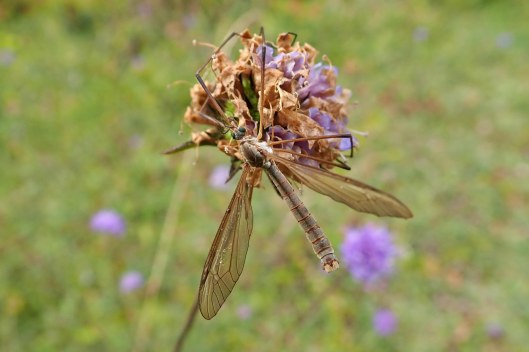
With every step I take through the dampish long grass and reed-filled ground in Cosmeston’s west paddock, small creatures flit up and away from my intrusive legs and feet. These are craneflies, probably the species Tipula oleracea.

I am no danger to them but they are right to flee: a couple of days ago, I was sitting eating my lunch at a picnic table in a nearby country park, watching as a Magpie strutted through the grass, picking off cranefly snacks for its lunch.
23 Monday Sep 2019
Posted in 365DaysWildin2019, birds, nature
Tags
#365DaysWild, birding, birdwatching, British birds, charm of Goldfinches, Cosmeston Lakes Country Park, Goldfinch
This charm of Goldfinches numbered at least 60.

They were feeding in the wildflower fields at Cosmeston this morning, plucking at fluffy seedheads, nibbling at the exposed seeds.

They were skittish though, constantly whirling about from one area to another, into the nearby trees and back again, chattering all the while. Such a pleasure to watch!

22 Sunday Sep 2019
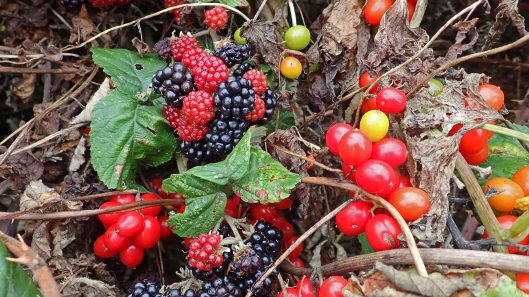
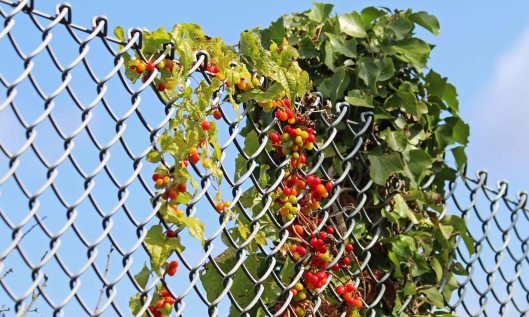
Draping and dangling, twisting and tangling, Black bryony’s luscious red berries can be found hanging from fences, winding in hedges, looping over bushes, climbing up trees. One of Autumn’s finest treasures.


21 Saturday Sep 2019
Posted in 365DaysWildin2019, autumn, insects, nature
Tags
#365DaysWild, British butterflies, butterfly, Common blue, Common blue butterfly, Lavernock Nature Reserve
It was looking faded, jaded and more than a little tatty but this Common blue butterfly has certainly got staying power. Most of its species have died off now in my local area so it was a delight to see this little one today at Lavernock.

20 Friday Sep 2019
Posted in 365DaysWildin2019, insects, nature
It seems Commas don’t know their road code: no stopping on double yellow lines 24/7 if no signage. Or maybe this Comma thought the sparkling yellow paint was a flower. Luckily, this was on a quiet country lane with little traffic so the butterfly was in no danger. And it did look rather pretty, highlighted by the bright sunshine.


19 Thursday Sep 2019
It’s been a while since I’ve walked past the dipping pond at Cosmeston but I’m glad I did today as one of the resident water voles made an appearance.

It was quite well concealed amongst the reeds at the side of the pond – that brown fur really helps them to blend in.

In the past I’ve only seen them eating lily pads but today this little chap was munching on reed stems.
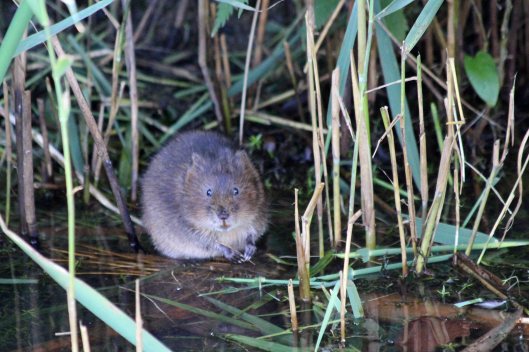
Eventually, it noticed me standing on the boardwalk but didn’t seem too bothered and carried on eating.

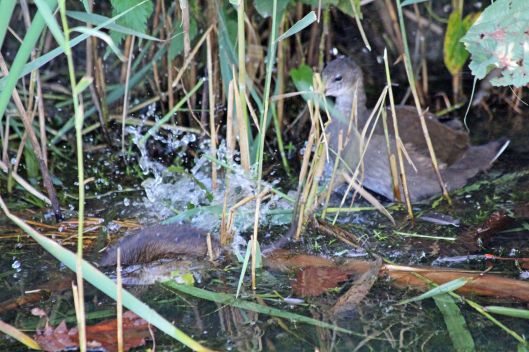
But it sure freaked out when one of the juvenile Moorhens came by to say hello!
18 Wednesday Sep 2019
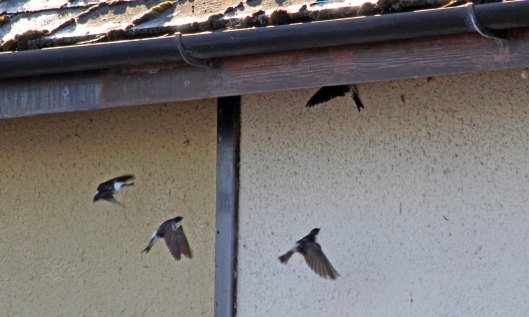
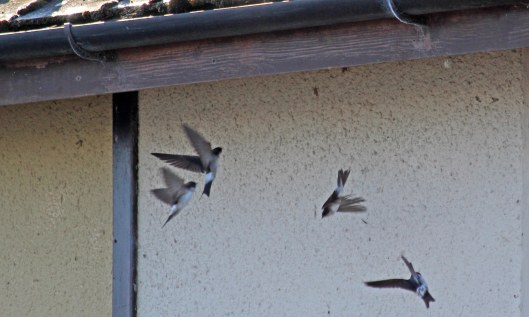
Two weeks ago, on 28 August, I spotted these House martin chicks still in their wonderfully engineered mud-built home, gaping greedily whenever their parents returned with niblets of food.


Today they, and the chicks from the neighbouring two nests, were out and about, practising their flying skills and catching their own insects to eat, but returning often to their nests as if not yet quite ready to break their bonds with the comfort and safety and security of home to fly the thousands of miles to over-winter in Africa. Soon though, their time will come …

 earthstar
You must be logged in to post a comment.